
UAE Aviation Sector Accelerates Dual Strategy as Air Arabia Launches Global Fare Sale
UAE carriers deploy a dual aviation strategy in 2026, pairing Air Arabia low-cost fare promotions with luxury cabin enhancements across Dubai, Abu Dhabi, and Sharjah.

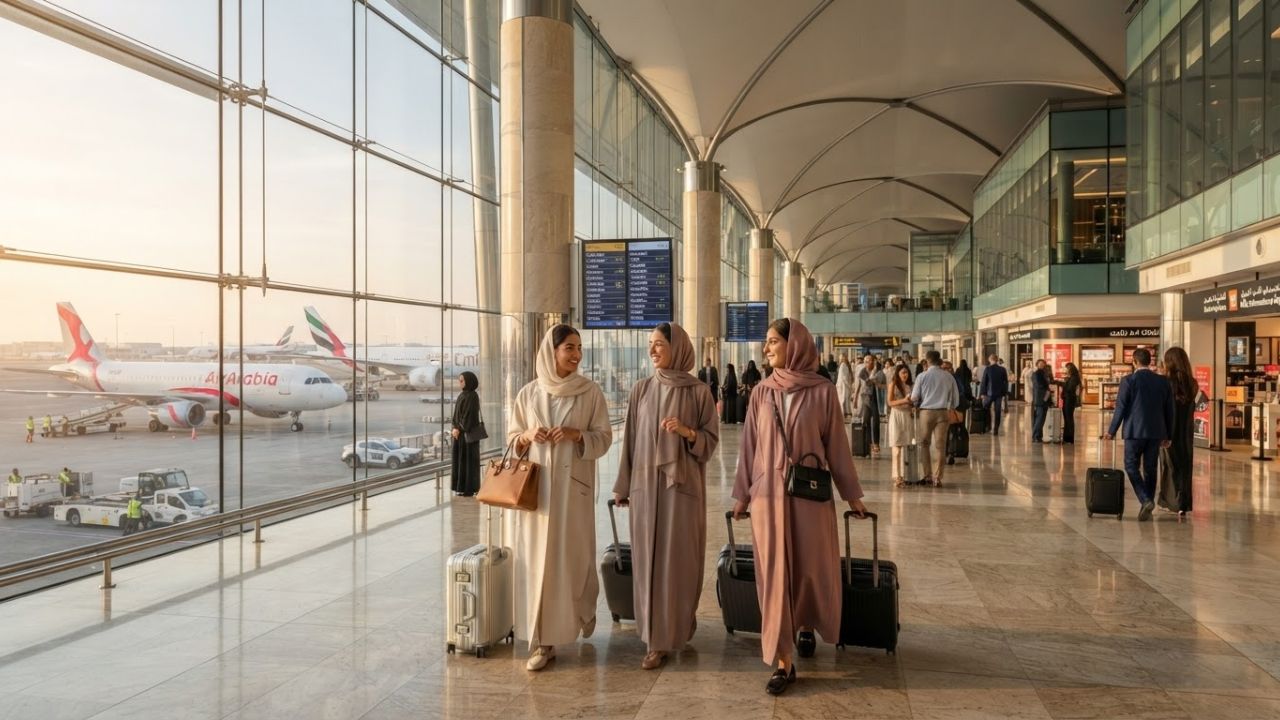
Image generated by AI
Airlines across Dubai, Abu Dhabi, and Sharjah have initiated a synchronized dual aviation strategy for late 2026, combining deep promotional ticket discounts from budget operators like Air Arabia with high-yield premium cabin investments on long-haul routes connecting Europe, Asia, Africa, and the Middle East.
Announced on September 5, 2026, the strategic pivot demonstrates the maturity and agility of the United Arab Emirates’ commercial aviation ecosystem. Rather than competing exclusively on rock-bottom ticket pricing or luxury amenities, UAE carriers are segmenting their commercial offerings to capture every tier of the global travel market. By deploying aggressive low-cost fare promotions through Sharjah-based Air Arabia while simultaneously introducing next-generation premium cabins, digital concierge apps, and enhanced loyalty programs across Dubai and Abu Dhabi flagships, the country is consolidating its status as the world’s foremost crossroads for international mobility.
The Local Trend Revealed: Segmented Competition Across Three Emirates
The UAE aviation market is undergoing a structural evolution characterized by intense, multi-tiered competition across its three primary aviation hubs: Sharjah International Airport (SHJ), Dubai International Airport (DXB), and Zayed International Airport (AUH).
The commercial pillars driving this market expansion include:
- Air Arabia Value Push: The Sharjah-based budget pioneer has rolled out a sweeping international fare sale, stimulating early advance bookings across its expansive single-aisle network to South Asia, Central Asia, the Middle East, and Eastern Europe.
- Dual-Tier Network Architecture: The UAE airline sector is deliberately splitting passenger capture: value-conscious leisure vacationers, diaspora workers, and regional budget travelers are funneled through low-cost platforms, while business travelers, long-haul connecting flyers, and luxury tourists are serviced through high-end cabins.
- Rapid Route Expansion: UAE carriers are inaugurating direct connections to emerging secondary gateways across Africa, Eastern Europe, and Central Asia, opening point-to-point markets previously reliant on multi-stop regional itineraries.
- End-to-End Passenger Investments: Premium competition has evolved beyond flatbed seats to encompass seamless biometric airport corridors, complimentary satellite Wi-Fi streaming, flexible ticket alteration policies, and curated regional dining menus.
UAE Multi-Hub Aviation Strategy Matrix
| Aviation Segment | Operating Carrier Focus | Primary Gateways | Targeted Passenger Demographics |
|---|---|---|---|
| Low-Cost Value Travel | Air Arabia (with regional budget peers) | Sharjah International (SHJ) | Budget vacationers, diaspora families, regional short-haul travelers |
| Full-Service Trunk Routes | Dubai & Abu Dhabi legacy carriers | Dubai International (DXB), Zayed Int'l (AUH) | Transcontinental connecting passengers, premium leisure, business travelers |
| Commercial Campaign | International fare sales & advance promotions | Nationwide network | Stimulating shoulder-season demand and locking in forward bookings |
| Cabin Innovation | Streamlined seating vs. private suites | Fleet-wide deployment | Balancing high-density economy with ultra-luxury first and business cabins |
| Geographic Corridors | Europe, Asia, Africa, and Middle East | Intercontinental crossroads | Connecting secondary origin cities directly into global trunk flows |
| Economic Objective | UAE Tourism Strategy 2031 | Federal alignment | Diversifying economic revenue and boosting domestic hospitality |
Cultural & Environmental Value: Responsible Aviation and Heritage Preservation
Balancing massive aviation throughput with environmental sustainability is central to the UAE’s national agenda under the UAE Net Zero by 2050 strategic initiative. The rapid expansion of regional flight networks is accompanied by rigorous fleet modernization:
- Next-Generation Aircraft Efficiency: Operators like Air Arabia utilize modern Airbus A320neo and A321neo LR aircraft equipped with aerodynamic Sharklets, cutting fuel burn and carbon emissions by up to 20% compared to previous-generation single-aisle jets.
- Eco-Tourism in the Northern Emirates: Budget connectivity into Sharjah facilitates travel to eco-conscious desert sanctuaries such as the Mleiha Archaeological Centre and the Khor Kalba Mangrove Reserve, where conservationists protect rare Arabian kingfishers and endangered green sea turtles.
- Cultural Decentralization: By utilizing Sharjah as a premier low-cost gateway, travelers are directly introduced to the UAE’s recognized cultural capital. Visitors can explore the preserved coral-stone merchant houses of the Heart of Sharjah, the Sharjah Art Museum, and traditional heritage souqs without adding automotive congestion to central Dubai roadways.
Visitor Insider Tips: Navigating the UAE's Multi-Airport System
Travelers looking to leverage the UAE's latest airline promotions can maximize savings and convenience with these practical strategies:
- Fly into Sharjah to Save on Dubai Trips: If you are booking a trip to Dubai, check flight pricing into Sharjah International Airport (SHJ) via Air Arabia. Airfare is often 30% to 50% cheaper than flights into Dubai International (DXB). Sharjah Airport is located just 15 to 20 kilometers (9 to 12 miles) from northern Dubai neighborhoods like Deira and Al Nahda, and terminal immigration queues are typically far shorter.
- Utilize Inter-Emirate Express Buses: Avoid expensive cross-emirate taxis by utilizing dedicated express bus routes. Air Arabia operates dedicated air-conditioned coach shuttles connecting Sharjah Airport directly with central Dubai, Ras Al Khaimah, and Al Ain. Alternatively, the Roads and Transport Authority (RTA) operates regular intercity buses (E303 and E306) connecting Sharjah and Dubai for just 10 to 12 AED ($2.70 to $3.30 USD) payable via a rechargeable Nol card.
- Sharjah Cultural Norms & Etiquette: Be aware that the Emirate of Sharjah observes strictly conservative traditions: alcohol is prohibited throughout the entire emirate, and modest attire is legally required in all public spaces, shopping centers, and souqs (shoulders and knees must remain covered).
- Sample Authentic Emirati Gastronomy: While in Sharjah and the northern emirates, seek out authentic local heritage dishes. Order Machboos—fragrant basmati rice seasoned with dried black limes (loomi), cardamom, and cinnamon, topped with slow-roasted chicken or lamb—or try Balaleet, a beloved breakfast dish of sweet cardamom-saffron vermicelli topped with a savory egg omelet. For dessert, indulge in warm, crispy Luqaimat dumplings drizzled with rich local date syrup and toasted sesame seeds.
- Book Advance Fare Sales: Air Arabia's promotional fare buckets fill rapidly. If you plan to travel between November and March (the UAE's prime winter weather season when temperatures hover between 20°C and 28°C / 68°F to 82°F), book promotional seats at least 60 to 90 days in advance to lock in base-tier promotional rates.
Tourism Outlook: Expanding the Global Travel Crossroads
The dual commercial push enacted by UAE airlines signals a sophisticated new era of passenger-focused aviation. Rather than viewing low-cost airlines and luxury carriers as competing adversaries, the United Arab Emirates has created a complementary aviation matrix that simultaneously lowers entry barriers for budget-conscious explorers while setting world benchmarks for luxury air travel.
As the country progresses toward its UAE Tourism Strategy 2031 targets—aiming to attract 40 million hotel guests and generate 450 billion AED in tourism sector GDP—this multi-faceted approach ensures that whether a traveler is flying on a discounted promotional fare into Sharjah or lounging in a luxury suite en route to Dubai or Abu Dhabi, the UAE remains the preeminent gateway linking the global travel economy.
Related Travel Guides
Disclaimer
This article is for informational and educational purposes only. It does not constitute legal, financial, or professional advice. While we strive to provide accurate and up-to-date information, travel policies, regulations, and conditions change rapidly. Always verify information with official sources before making travel decisions. Nomad Lawyer makes no representations about the accuracy, reliability, completeness, or suitability of the information provided. Readers should consult qualified professionals for advice specific to their circumstances. The views expressed in this article are those of the author and do not necessarily reflect the views of Nomad Lawyer.
Kunal K Choudhary
Co-Founder & Contributor
A passionate traveller and tech enthusiast. Kunal contributes to the vision and growth of Nomad Lawyer, bringing fresh perspectives and driving the community forward.
Learn more about our team →