
UAE Airspace Closure 2026: Global Aviation Disrupted by Drone Threats
UAE shuts its airspace again following repeated drone and missile threats targeting critical infrastructure, forcing nations like Italy, the UK, and India to find emergency aviation solutions.

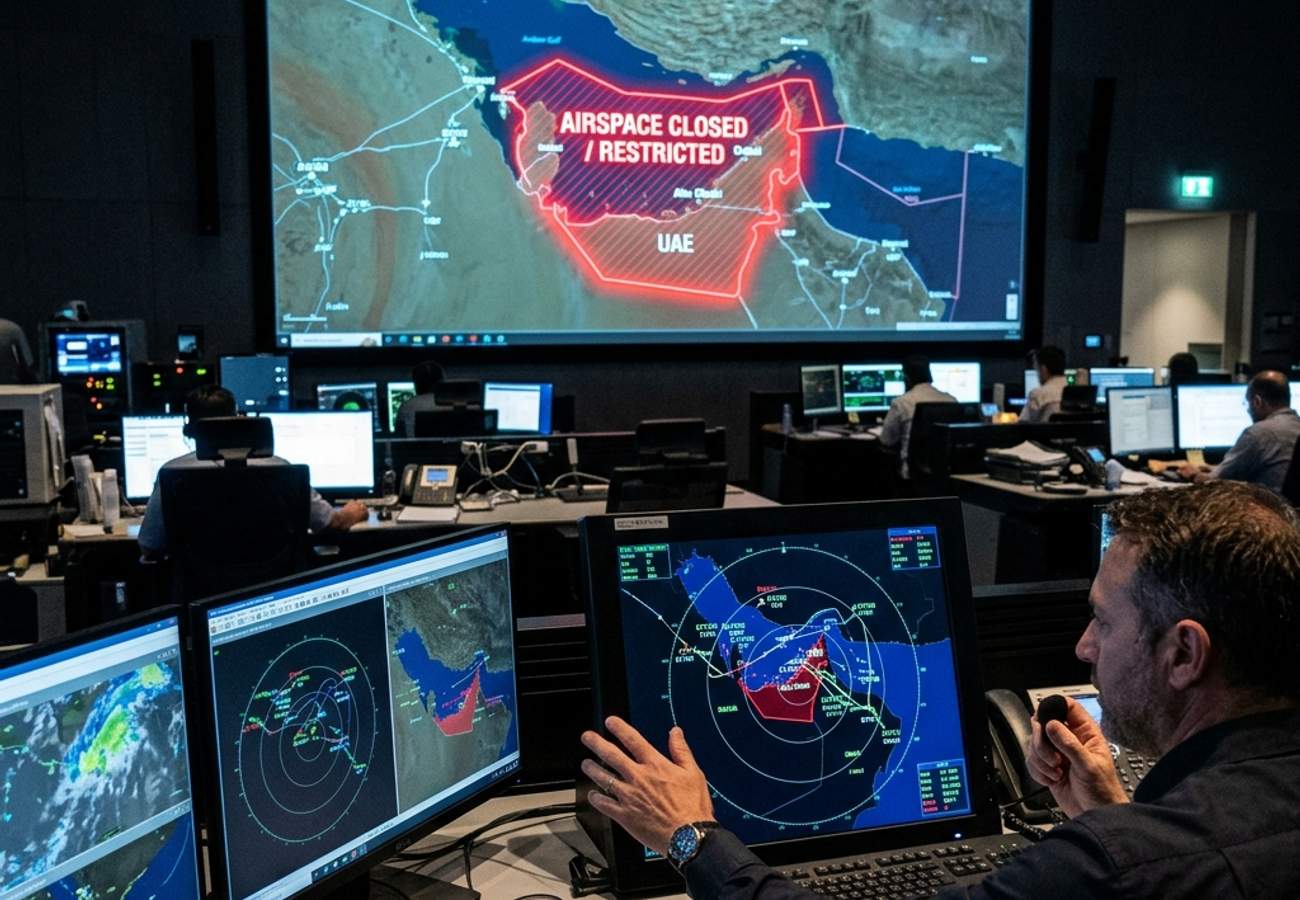
Image generated by AI
Quick Summary
- The UAE has officially closed its airspace for the second time in 2026 following relentless drone and missile attacks targeting critical aviation and energy hubs.
- The shutdown has triggered immediate global coordination from nations including Italy, the UK, Oman, India, Saudi Arabia, Azerbaijan, and Turkey to manage fallout.
- Aviation Impact: Airlines are rerouting flights across longer paths, leading to increased fuel consumption, rising ticket prices, and widespread cargo delays.
- Energy Impact: Volatility in the Strait of Hormuz oil transit routes is shaking energy markets, forcing governments to activate contingency fuel reserves.
The escalating security crisis in the Middle East has reached a critical flashpoint as the United Arab Emirates (UAE) is forced into another total airspace shutdown. As a vital global transit hub, the UAE’s operational pause has sent shockwaves through the international travel and trade sectors. Countries across Europe, Asia, and the Gulf are now implementing emergency safeguards to protect their citizens, secure supply chains, and stabilize energy markets in what is becoming a defining geopolitical challenge for 2026.
UAE Airspace Crisis: Regional Response & Strategic Impacts 2026
Nations are balancing aviation continuity with national security and economic protection.
| Country | Primary Action | Strategic Focus |
|---|---|---|
| Italy | Energy & Aviation Safeguards | Real-time monitoring; contingency fuel reserves |
| UK | Intelligence Coordination | Frequent travel advisory updates; rerouting carriers |
| India | Citizen Safety & Oil Security | Protecting residents in UAE; monitoring fuel supplies |
| Saudi Arabia | Defense Readiness | Air defense systems fully operational; surveillance |
| Oman | Maritime Monitoring | Coastal security; maritime trade route observation |
| Turkey | Military Readiness | Managing the "Aviation Bridge" between continents |
| Azerbaijan | Strategic Route Review | Reviewing air routes crossing into Europe/Asia |
Global Aviation Under Strain: Rerouting and Rising Costs
The closure of the UAE corridor—one of the world’s busiest aviation crossroads—has immediate consequences for international flight networks.
- Longer Flight Paths: Carriers connecting Europe to Asia and Africa are forced to use alternative routes, adding significant flight time and fuel requirements.
- Operational Strain: Passenger schedules are facing widespread collapses, while cargo operations for high-value goods are seeing delays that ripple through global supply chains.
- Insurance & Costs: Airline insurance risks have surged, leading to higher operational expenses and a corresponding rise in passenger ticket prices.
National Emergency Measures: Italy, UK, and India
Major global powers are taking proactive steps to mitigate the impact of the Gulf shutdown.
Italy has activated emergency aviation safeguards, tracking developments in real-time to stabilize its energy market. The United Kingdom has intensified intelligence coordination with Gulf allies to ensure the safety of British carriers. India, with its large resident population in the UAE, has prioritized citizen safety while closely monitoring its dependency on Gulf oil supplies, preparing contingency plans for any prolonged disruption.
Defensive Postures: Saudi Arabia, Oman, and Turkey
Regional stability has become the primary concern for the UAE’s neighbors. Saudi Arabia has heightened its defense posture, placing its advanced air defense systems on full operational status. Oman is dealing with spillover risks, strengthening security near coastal and maritime trade routes. Turkey, serving as a critical aviation bridge, is balancing flight continuity with national security priorities as it reroutes a massive volume of international traffic.
Energy Market Volatility and the Strait of Hormuz
The crisis is inextricably linked to global energy security. The Strait of Hormuz, which carries a significant share of the world’s oil supply, is now a high-risk zone. Volatility in oil prices is directly impacting global economies, with governments evaluating strategic reserves and alternative supply routes to counter the rising costs of aviation fuel and energy production.
FAQ: UAE Airspace Shutdown 2026
Why is UAE airspace closed? The closure is a defensive measure following repeated drone and missile strikes targeting critical infrastructure, including aviation and energy hubs.
How will this affect my flight from Europe to Asia? Expect significantly longer flight times (up to 2–4 extra hours), potential rerouting through different regions, and a possible increase in ticket surcharges due to higher fuel costs.
Is it safe to fly through the Middle East right now? Most airlines are proactively rerouting around high-risk zones. Always check real-time travel advisories from the IATA and your national government before traveling.
Related Travel Guides
Disclaimer
This article is for informational and educational purposes only. It does not constitute legal, financial, or professional advice. While we strive to provide accurate and up-to-date information, travel policies, regulations, and conditions change rapidly. Always verify information with official sources before making travel decisions. Nomad Lawyer makes no representations about the accuracy, reliability, completeness, or suitability of the information provided. Readers should consult qualified professionals for advice specific to their circumstances. The views expressed in this article are those of the author and do not necessarily reflect the views of Nomad Lawyer.
Kunal K Choudhary
Co-Founder & Contributor
A passionate traveller and tech enthusiast. Kunal contributes to the vision and growth of Nomad Lawyer, bringing fresh perspectives and driving the community forward.
Learn more about our team →