
Turkish Airlines Boeing 737-8 Flight TK646 Diverts to Antalya Airport Following Mid-Route Operational Interruption En Route to Mogadishu, Somalia
Turkish Airlines Flight TK646, a Boeing 737-8, diverted to Antalya Airport instead of continuing to Mogadishu following a mid-route operational change.

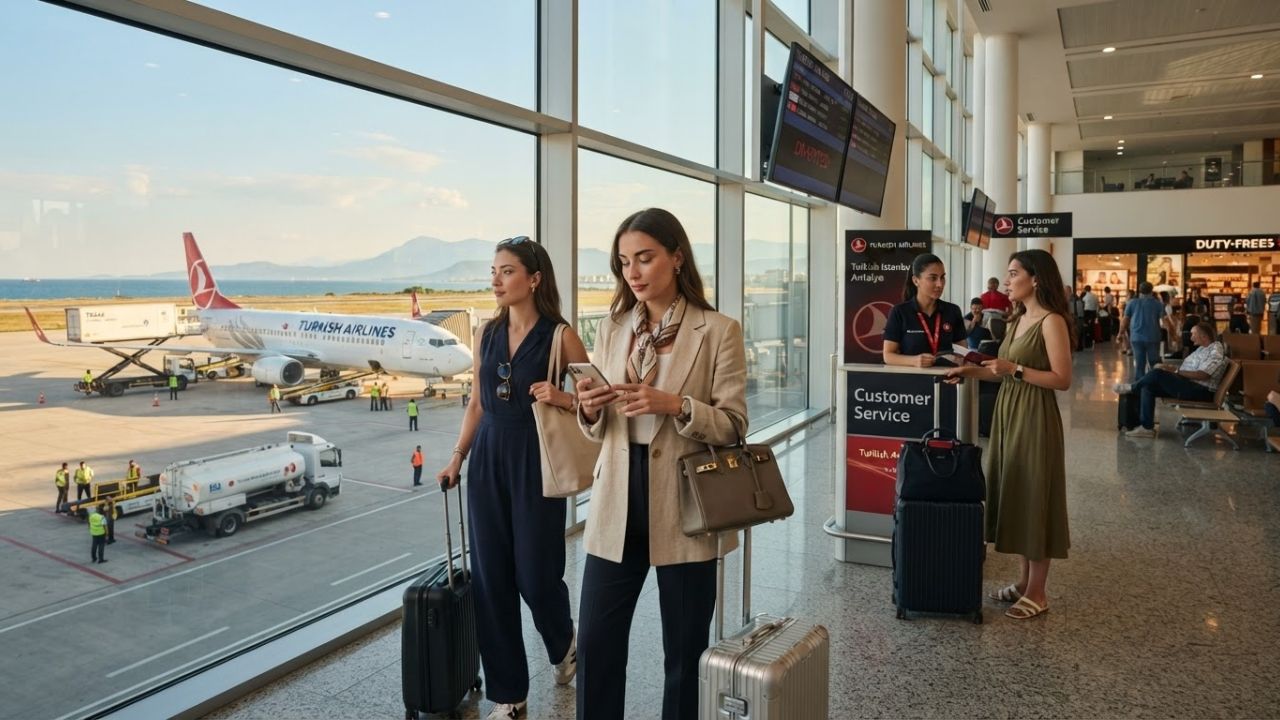
Image generated by AI
[Istanbul, July 9, 2026] — A scheduled international service operated by Turkish Airlines was forced to execute an unexpected route change, resulting in a Turkish Airlines flight TK646 diversion to Antalya Airport (AYT) on Wednesday, July 8, 2026. The flight, utilizing a Boeing 737-8 aircraft, departed Istanbul Airport (IST) bound for Mogadishu, Somalia, but altered its course en route. The plane landed safely at the alternative Turkish airport, where ground crews immediately began managing the unscheduled arrival.
The flight tracking data confirmed that the schedule shifts began early in the morning, although officials did not immediately announce the primary cause behind the airspace constraints. The crew followed standard procedures to manage the delays, maintaining the airline's safety-first operational policy when routing conditions deviate from normal parameters.
Flight TK646 Aborts Journey Over the Mediterranean Sea
Scheduled long-haul regional flights between Turkey and East Africa represent important diplomatic and commercial corridors. On July 8, 2026, Flight TK646 was operating the regular route from the airline's primary hub in Istanbul to Aden Adde International Airport in Mogadishu. The aircraft assigned to the sector was a modern Boeing 737-8 twin-engine jet.
According to flight tracking telemetry, the flight departed Istanbul Airport at 01:52 TRT. The aircraft climbed to its cruising altitude and was scheduled to arrive in Mogadishu at 08:45 East Africa Time. However, while transiting south, the flight crew received operational directives that necessitated a return or diversion. Rather than continuing across the Mediterranean toward the Horn of Africa, the crew initiated a turn and set a course for Antalya, a major coastal city in southern Turkey. Representatives from Turkish Airlines did not immediately release a public statement detailing the specific technical, operational, or safety factor that prompted the adjustment.
In commercial aviation, passenger safety and aircraft integrity remain the primary considerations when making operational adjustments. Crew members continuously monitor systems during pre-flight checks and the departure sequence. Any minor deviation from safety thresholds prompts a return to the gate or a delay to allow ground maintenance crews to complete full checks.
Chronology and Flight Timeline of the Antalya Diversion
Tracking telemetry recorded the movement of the Boeing 737-8 from its takeoff in Istanbul to its landing at Antalya. The diversion was completed efficiently, with the aircraft executing a safe touchdown at Antalya Airport. Ground handlers marshaled the narrow-body jet to a designated stand where engineers and airline operations staff began assessing the aircraft's status.
Airlines routinely monitor weather conditions, airspace restrictions, and technical telemetry during flights. When a parameter deviates from standard guidelines, crews coordinate with company dispatchers and air traffic control to select a suitable alternate airport. Selecting a major domestic base like Antalya ensures the airline maintains access to localized maintenance facilities and company support networks.
Flight TK646 Operation Telemetry
| Flight Milestone | Scheduled Time | Actual Telemetry Time | Operational Status |
|---|---|---|---|
| Istanbul Departure (IST) | — | 01:52 TRT (Wednesday) | Takeoff Completed |
| Mogadishu Arrival (MGQ) | 08:45 EAT | — | Cancelled due to Diversion |
| Antalya Arrival (AYT) | — | 08:05 TRT (estimated) | Safe Landing Completed |
| Assigned Aircraft Type | Boeing 737-8 | Boeing 737-8 | Narrow-body Twin-jet |
| Flight Status | Completed | Diverted | Unscheduled Return to Turkey |
Passenger Care and Airline Network Recovery Protocols
When an international flight diverts to a domestic outstation, airlines must activate comprehensive passenger recovery protocols. For travelers onboard flight TK646, the diversion meant their journey to Somalia was interrupted, requiring the airline to coordinate immigration clearance and transit support. Because Antalya is a major destination, the airport possesses the infrastructure needed to house passengers during extended delays.
The carrier's standard operating procedures during international diversions include:
- Aircraft Safety Inspections: Ground technicians conduct thorough mechanical checks on the Boeing 737-8 to ensure its airworthiness.
- Passenger Accommodation: Hotel vouchers and meal allowances are distributed if the delay extends overnight or requires a fresh flight crew.
- Crew Duty Limit Management: Dispatchers monitor crew duty hours to ensure the flight deck remains within regulatory limits before scheduling departure.
- Alternative Aircraft Deployment: If a technical issue is identified, the airline coordinates the ferry of a replacement airframe from the Istanbul hub.
These protocols ensure that even when disruptions occur, passengers have clear paths to resolve their travel status. By maintaining strict control over rebookings, airlines can quickly clear passenger backlogs once runway capacity begins to recover.
Geopolitical and Operational Dynamics of Somali Airspace
Mogadishu represents one of the more challenging destinations in the carrier's international network due to regional airspace complexities and ground handling logistics. Operating narrow-body twin-jets like the Boeing 737-8 over long sectors requires careful fuel planning and the designation of reliable alternate airports along the route. When a flight is interrupted, the airline must manage not only the diverted passengers but also the passengers waiting to board the return leg in Somalia.
The return sector, which operates from Mogadishu back to Istanbul, was delayed as a direct result of the diversion. This delay highlights the compounding impact of operational disruptions on thin regional routes. Unlike high-frequency European corridors where passengers can easily swap to later flights, services to Mogadishu are limited, meaning a single disruption can cause travel plans to slide by several days.
Why This Matters (Information Gain)
This diversion highlights the strategic importance of choosing domestic alternates when operating complex international routes. For flights heading from Turkey to East Africa, Antalya Airport serves as a final domestic safety net before entering African airspace. By diverting to Antalya rather than continuing into airspace with limited maintenance and support options, the flight crew minimized operational risk.
Additionally, the incident illustrates how airlines prioritize fleet integrity over schedule adherence. Operating a flight to a remote destination with an unresolved operational query can lead to an aircraft being grounded at an outstation without proper support. By returning to a major Turkish hub, the carrier preserved its ability to quickly swap aircraft, repair technical faults, and maintain overall network recovery, demonstrating why conservative flight management remains the standard in commercial aviation.
Finally, the incident underscores the financial and operational pressure regional airlines face during hub bottlenecks. Regional carriers operate with tighter fleet sizes and crew pools compared to mainline operators. When a regional flight is delayed or cancelled, it disrupts passenger flows at hubs, causing a drop in customer satisfaction and increased customer service costs for the mainline parent company.
FAQ: Turkish Airlines Flight TK646 Antalya Diversion 2026
What happened to Turkish Airlines flight TK646 on July 8, 2026? The Boeing 737-8 flight from Istanbul to Mogadishu diverted to Antalya Airport instead of continuing its journey to Somalia.
Why did the flight divert to Antalya instead of flying to Mogadishu? The exact operational or technical factor has not been publicly declared, but the diversion was executed in accordance with standard safety protocols.
How are passengers on the delayed Mogadishu route being assisted? Passengers were safely disembarked in Antalya, where the airline coordinated transit assistance, hotel accommodations, and re-routing options.
Related Travel Guides
- United States Aviation Network Disrupted as Major Carriers Suffer 86 Flight Cancellations and 1,951 Delays Across Critical Eastern and Midwestern Hubs
- Dubai International Airport Flight Disruptions Trigger 10 Cancellations and 158 Delays Across Emirates and FlyDubai Networks
- Delta Air Lines Flight DL1555 Airbus A220-100 Suffers Major Five-Hour Delay on Grand Rapids to Minneapolis Route Following Operational Interruption
Disclaimer
This article is for informational and educational purposes only. It does not constitute legal, financial, or professional advice. While we strive to provide accurate and up-to-date information, travel policies, regulations, and conditions change rapidly. Always verify information with official sources before making travel decisions. Nomad Lawyer makes no representations about the accuracy, reliability, completeness, or suitability of the information provided. Readers should consult qualified professionals for advice specific to their circumstances. The views expressed in this article are those of the author and do not necessarily reflect the views of Nomad Lawyer.
Kunal K Choudhary
Co-Founder & Contributor
A passionate traveller and tech enthusiast. Kunal contributes to the vision and growth of Nomad Lawyer, bringing fresh perspectives and driving the community forward.
Learn more about our team →