
Turkish Airlines Finalizes Order for Up to 150 Boeing 737 MAX Aircraft to Accelerate Global Network Expansion
Turkish Airlines has completed a landmark deal for up to 150 Boeing 737 MAX single-aisle jets, including 100 firm orders for 737-8 aircraft and 50 options.

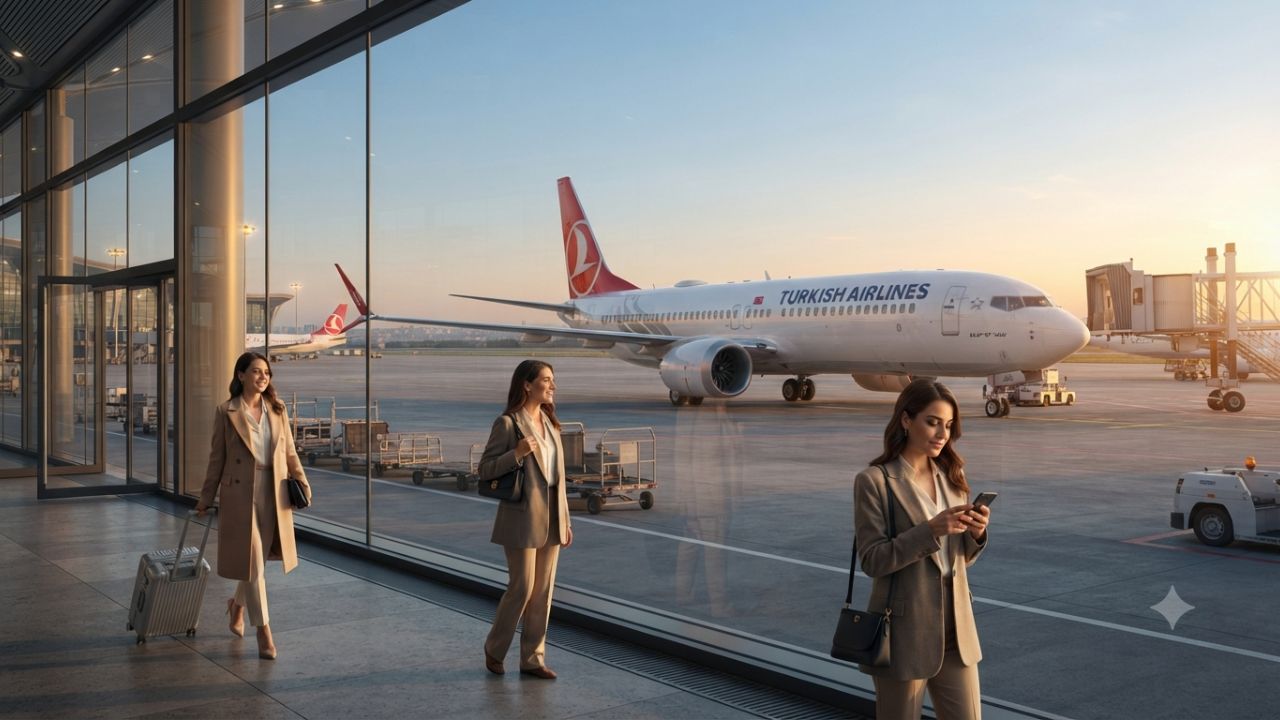
Turkish Airlines has finalized an order for up to 150 Boeing 737 MAX aircraft, signed in the presence of President Recep Tayyip Erdoğan.
Turkish Airlines has finalized its largest single-aisle aircraft commitment with Boeing, completing a major agreement for up to 150 Boeing 737 MAX aircraft. The transaction, signed in the presence of H.E. Recep Tayyip Erdoğan, President of the Republic of Türkiye, includes a firm order for 100 Boeing 737-8 jets alongside options for 50 additional 737 MAX aircraft. The acquisition incorporates substitution rights for the larger 737-10 variant, strengthening the flag carrier's short- and medium-haul fleet out of its global hub at Istanbul Airport (IST).
[ISTANBUL, Türkiye] — In a major expansion of its narrow-body fleet, Turkish Airlines has formally completed negotiations with Boeing for up to 150 737 MAX family aircraft. The firm agreement—building on negotiations initiated in 2025—positions the Turkish flag carrier to expand passenger capacity across high-density European, Middle Eastern, Central Asian, and African routes.
The deal includes a firm order for 100 Boeing 737-8 aircraft, 50 option rights, and flexible substitution clauses enabling conversion to the 737-10 model—the largest aircraft in the MAX family. Industry data published by the International Air Transport Association (IATA) highlights that narrow-body fleet modernizations offering 20 percent improvements in fuel burn and carbon emissions are critical for airlines scaling network operations while adhering to international decarbonization targets.
Fleet Structure and Technical Specifications of the 150-Aircraft Deal
The agreement secures flexible delivery slots that align with Turkish Airlines' long-term network growth targets through the decade:
- Firm Orders: 100 Boeing 737-8 aircraft designed for short- and medium-haul routes.
- Purchase Options: 50 additional 737 MAX family jets for future network expansion.
- Substitution Rights: Rights to convert orders to the larger 737-10 variant to increase seat capacity on constrained airport routes.
- Operational Improvements: Delivers an approximate 20 percent reduction in fuel burn and carbon emissions compared to previous-generation single-aisle aircraft, alongside reduced noise footprints.
| Agreement Component | Quantity / Specification | Operational Strategic Purpose |
|---|---|---|
| Firm Orders | 100 Boeing 737-8 aircraft | Core fleet replacement and route frequency expansion |
| Purchase Options | 50 Boeing 737 MAX aircraft | Growth buffer for peak regional passenger demand |
| Substitution Flexibility | Rights to 737-10 model | High-density slot utilization at constrained airports |
| Efficiency Gain | ~20% fuel & emissions reduction | Lowers unit operating costs and carbon footprint |
Executive Leadership Statements and Strategic Alignment
The signing ceremony highlighted the geopolitical and economic partnership between Türkiye's aviation ecosystem and the American aerospace manufacturer.
Prof. Murat Şeker, Chairman of the Board and the Executive Committee of Turkish Airlines, emphasized the strategic importance of the acquisition:
"This agreement marks another significant step in the continued expansion of our fleet. The new Boeing 737 MAX aircraft will bring greater efficiency and flexibility to our operations, supporting the extensive network we serve from our hub in Istanbul. We are pleased to build on our longstanding cooperation with Boeing through an agreement that also supports Türkiye’s aviation ecosystem."
Stephanie Pope, President and CEO of Boeing Commercial Airplanes, noted the shared industrial vision:
"This order reflects the trust and shared vision that have defined our long-standing partnership with Turkish Airlines. We’re proud to continue our support of Türkiye’s aviation ecosystem and Turkish Airlines as it grows its Istanbul-based network, connecting more people and destinations worldwide."
Deepening Industrial Participation and Local Aerospace Integration
Alongside the firm aircraft order, Turkish Airlines and Boeing signed a strategic Memorandum of Understanding (MoU) focused on Industrial Participation within Türkiye. The framework establishes long-term cooperation across three core pillars:
- Workforce Skill Development: Advanced training programs for Turkish aerospace engineers, technicians, and maintenance specialists.
- Local Value Creation: Supply chain integration for Turkish aerospace manufacturers producing aircraft components and structural assemblies.
- Business & Technology Collaboration: Joint research in sustainable aviation fuels (SAF), advanced manufacturing processes, and digital maintenance analytics.
Official corporate updates from Boeing indicate that Turkish suppliers already manufacture critical components for several Boeing commercial programs, making the industrial MoU a continuation of long-standing aerospace integration.
| Industrial MoU Pillar | Target Focus Area | Economic Impact in Türkiye |
|---|---|---|
| Skill Development | Technical training for aviation engineers & mechanics | Elevates local aerospace workforce qualifications |
| Value Creation | Local component manufacturing & assembly supply chains | Expands revenue for Turkish defense & aerospace suppliers |
| Business Opportunities | Sustainability research, SAF adoption, digital maintenance | Strengthens Türkiye as a regional aerospace manufacturing hub |
Fleet Context: Over 200 Boeing Aircraft in Group Operations
The 150-aircraft commitment builds upon a massive fleet expansion strategy executed by the carrier and its low-cost subsidiary, AJet.
Turkish Airlines Group currently operates a Boeing fleet exceeding 200 aircraft, including Boeing 737 MAX, 737 Next Generation (NG), 787-9 Dreamliner, 777-300ER, and 777 Freighter models. The latest single-aisle order follows a major 2025 order for 75 Boeing 787 Dreamliners, solidifying Boeing's role in the airline's long-haul and regional growth strategies.
Information from Turkish Airlines confirms that the incoming 737 MAX aircraft will feature upgraded cabin interiors, high-speed Wi-Fi connectivity, and ergonomically designed seating across both Business Class and Economy Class cabins.
| Aircraft Model in Turkish Fleet | Primary Role | Operational Network |
|---|---|---|
| Boeing 737-8 / 737-10 MAX | Short & medium-haul narrow-body | Europe, Middle East, Central Asia, North Africa |
| Boeing 737-800 / 737-900ER NG | Regional short-haul feeder | Domestic Türkiye, regional European routes |
| Boeing 787-9 Dreamliner | Long-haul wide-body | Americas, East Asia, Sub-Saharan Africa |
| Boeing 777-300ER | High-capacity long-haul wide-body | High-density long-haul intercontinental routes |
| Boeing 777 Freighter | Dedicated air cargo transport | Global Turkish Cargo logistics network |
Operational Implications for Global Passengers and Connecting Traffic
For international travelers transferring through Istanbul Airport (IST), the induction of 150 Boeing 737 MAX aircraft provides distinct passenger benefits:
- Expanded Flight Frequencies: Higher narrow-body fleet availability allows Turkish Airlines to increase daily flight frequencies to key secondary cities across Europe and Central Asia.
- Modernized Onboard Comfort: Passengers will experience quieter cabins, larger overhead luggage bins, modern mood lighting, and updated seatback entertainment systems.
- Improved Transfer Reliability: Enhanced aircraft reliability and lower maintenance downtime reduce schedule disruptions for connecting long-haul passengers.
Frequently Asked Questions
How many Boeing 737 MAX aircraft did Turkish Airlines order?
Turkish Airlines finalized an order for up to 150 aircraft, comprising 100 firm orders for the Boeing 737-8 model and options for 50 additional 737 MAX aircraft.
Does the deal allow Turkish Airlines to order different 737 MAX variants?
Yes, the agreement includes substitution rights allowing Turkish Airlines to convert orders to the larger Boeing 737-10 model based on capacity requirements.
How much more fuel-efficient is the Boeing 737 MAX compared to older jets?
The Boeing 737-8 provides approximately 20 percent lower fuel burn and carbon emissions compared to the previous-generation single-aisle aircraft it replaces.
What is the purpose of the Industrial Participation MoU signed between Boeing and Turkish Airlines?
The Memorandum of Understanding establishes long-term cooperation in technical workforce skill development, local supply chain value creation, and joint technology initiatives in Türkiye's aerospace sector.
Related Travel Guides
Disclaimer
This article is for informational and educational purposes only. It does not constitute legal, financial, or professional advice. While we strive to provide accurate and up-to-date information, travel policies, regulations, and conditions change rapidly. Always verify information with official sources before making travel decisions. Nomad Lawyer makes no representations about the accuracy, reliability, completeness, or suitability of the information provided. Readers should consult qualified professionals for advice specific to their circumstances. The views expressed in this article are those of the author and do not necessarily reflect the views of Nomad Lawyer.
Kunal K Choudhary
Co-Founder & Contributor
A passionate traveller and tech enthusiast. Kunal contributes to the vision and growth of Nomad Lawyer, bringing fresh perspectives and driving the community forward.
Learn more about our team →