
TSA Officers Paid Again: What Airport Security Lines Mean for March 2026 Travelers
Federal funding restores pay for thousands of TSA officers after weeks unpaid during government shutdown. What this means for airport security lines and traveler wait times in 2026.

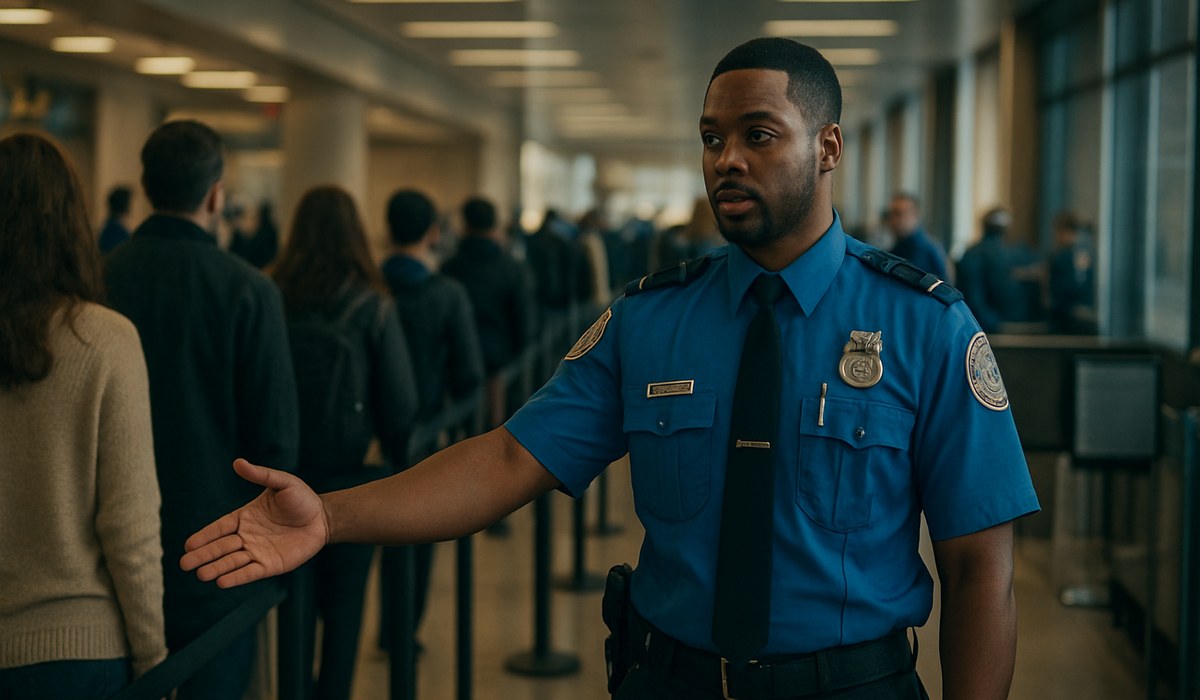
Image generated by AI
TSA Officers Paid Again: Security Lines Face Gradual Recovery as Federal Funding Restores Paychecks
The Transportation Security Administration workforce is finally receiving back pay after weeks of working without compensation during the federal government shutdown that began mid-February 2026. A federal funding deal signed on March 27, 2026, restores regular paychecks to tens of thousands of TSA officers nationwide. Travelers face a critical question: Will airport security checkpoint wait times finally improve, or will recovery take weeks longer?
Pay Restoration Halts TSA Officer Attrition at Major Hubs
Officers will now receive regular compensation for shifts worked during the shutdown period, marking the first immediate change for the TSA workforce. During the payment suspension, publicly documented evidence showed hundreds of officers resigning from major airports in Houston (IAH/HOU), New Orleans (MSY), Atlanta (ATL), and Philadelphia (PHL). Many officers called out sick or took temporary gig work to cover household bills during the financial crisis.
The most visible consequence appeared at security checkpoint lines across the nation. Peak-hour wait times exceeded 90 minutes regularly at major hubs, with some passengers reporting delays of two hours or longer. Entire checkpoint lanes closed due to insufficient staffing. The pay restoration should reverse the resignation spike and reduce callouts immediately. However, officers who already quit will not automatically return to the schedule. Rebuilding requires new hires to complete background checks, training programs, and on-the-job mentoring—a process lasting several months. For travelers, this means security lines will stabilize gradually rather than return to normal overnight. Check FlightAware for real-time wait time data at your departure airport.
TSA Workforce Already Under Pressure Before Shutdown Crisis
The checkpoint staffing shortage existed long before the government shutdown disrupted pay. Agency data released over the past two years revealed that TSA screening volumes now surpass pre-pandemic levels, with the agency processing 3 million passengers on multiple single days. Atlanta (ATL), one of the world's busiest airports, regularly experiences peak-hour traffic that tests TSA's internal 30-minute standard security wait time goal.
Entry-level TSA officer pay had improved slightly. In mid-2023, the agency implemented a compensation plan raising base salaries to the high $30,000 to low $40,000 range in many locations. Congressional briefings from 2024 showed this strategy improved hiring and retention temporarily. The shutdown pay lapse reversed these gains immediately. Officers visited food banks, delayed medical appointments, and faced eviction threats. Union statements documented the financial desperation. Restoring pay resumes—but does not complete—the effort to make TSA positions competitive with private-sector security roles and other federal agencies. Learn more about travel disruptions at IATA's official resource center.
Airport Security Line Recovery Timeline: Expect Gradual Improvement Through Spring
Wait times will decline gradually over the next four to six weeks rather than returning immediately to pre-shutdown conditions. Once officers receive paychecks, unscheduled absences typically drop sharply. Airports that closed entire checkpoint lanes can reopen them. Passenger flow will smooth as staffing stabilizes. However, major hubs will likely maintain "arrive three to five hours early" guidance until trend data confirms normal wait times have returned.
Spring break and early summer travel demand will complicate recovery. Higher passenger volumes will hit airports exactly when TSA attempts to rehire staff and train replacements for those who resigned. Smaller airports must balance staffing needs with lower passenger volumes. The checkpoint recovery at major hubs depends partly on whether airports have completed renovations or deployed new screening technology. Computed tomography scanners and automated screening lanes can boost throughput per officer, but not all airports have these upgrades operational yet.
What This Means for Travelers: Concrete Steps for March and April 2026
Travelers should take these specific actions to navigate uncertain security wait times:
- Check your airport's current wait times using FlightAware or the TSA's official mobile app before arriving at the terminal.
- Arrive at least three hours early for domestic flights at major hubs (ATL, JFK, LAX, ORD, DFW) through mid-April 2026.
- Enroll in TSA PreCheck or CLEAR if you travel more than twice annually—these programs provide faster security lanes with shorter queues.
- Monitor airline emails for updated baggage deadlines, as some carriers may adjust cutoff times if checkpoints remain congested.
- Avoid peak travel windows (early morning, late afternoon) during spring break and holiday weekends if your schedule permits.
- Pack carry-ons strategically—place all electronics and liquids in easy-access spots to accelerate screening.
- Verify payment status with your airline 24 hours before departure to confirm no schedule changes due to staffing issues.
| Airport Code | March 2026 Peak Wait Time (minutes) | Cause of Disruption | Expected Recovery Timeline | Staffing Status |
|---|---|---|---|---|
| ATL (Atlanta) | 105+ | TSA officer resignations | Late April 2026 | Critically low |
| IAH (Houston) | 92 | Pay suspension period | Mid-April 2026 | Moderate shortage |
| PHL (Philadelphia) | 88 | Checkpoint closures | Late April 2026 | Rebuilding |
| MSY (New Orleans) | 78 | Reduced shift coverage | Early April 2026 | Improving |
| LAX (Los Angeles) | 82 | Unpaid officer callouts | Mid-April 2026 | Below standard |
| JFK (New York) | 95 | Multiple checkpoint closures | Late April 2026 | Critical |
How Travelers Can Monitor TSA Officer Staffing and Wait Times
Real-time checkpoint wait data is essential during this recovery period. The TSA publishes current wait times on its website and mobile app, updated every 30 minutes at major airports. FlightAware also aggregates wait time reports from passengers and provides predictive analytics for busy hours. The [U.S. Department of Transportation's aviation consumer page](https://www.transportation.gov/airconsumer) publishes monthly reports on TSA performance metrics and passenger complaints.
Officers paid again represents a turning point, but passengers must plan for 4-6 weeks of above-normal delays. Smaller regional airports with fewer passengers will recover faster. Major hubs experiencing the worst disruptions will stabilize slower. Download the TSA PreCheck status app to track your eligibility benefits. Contact your airline directly if you have connecting flights—missed connections due to security delays can qualify you for hotel reimbursement under airline policies, though coverage varies by carrier and fare type.
Frequently Asked Questions About TSA Officers Paid Again in 2026
Will officers paid again immediately reduce wait times at my airport? No. While officers receiving paychecks will reduce callouts within days, security lines will improve gradually over 4-6 weeks. Staffing rosters stabilize first. Wait time reductions follow as officers complete makeup shifts and checkpoints reopen. Major hubs like Atlanta (ATL) may see improvement by late April 2026.
What does officers paid again mean for TSA PreCheck lines specifically? TSA PreCheck lanes will reopen sooner than standard security lines. Officers paid again removes the immediate attrition crisis, allowing the agency to prioritize expedited screening reopening. PreCheck wait times should return to under 10 minutes by mid-April 2026 at major hubs.
How long until airport security lines return to normal after officers paid again? Industry analysts expect 6-8 weeks for full recovery at major airports. Officers paid again stops the bleeding in week one. Staffing stabilizes by week three. Normal wait times return by late April or early May 2026, assuming spring break demand doesn't create secondary bottlenecks.
Will officers paid again affect flight cancellations or delays? No direct connection exists. Officers paid again addresses security checkpoint staffing only. Airlines schedule flights independently. However, if security delays force passengers to miss connections, airlines may experience cascading delays. The FAA tracks this data weekly—check FAA disruption reports for March-April 2026 trends.
Related Travel Guides for Navigating Airport Disruptions
TSA PreCheck Wait Times by Major U.S. Airport 2026 How Government Shutdowns Impact Air Travel and Security Emergency Flight Rebooking Rights During Airport Disruptions
Disclaimer
This article is for informational and educational purposes only. It does not constitute legal, financial, or professional advice. While we strive to provide accurate and up-to-date information, travel policies, regulations, and conditions change rapidly. Always verify information with official sources before making travel decisions. Nomad Lawyer makes no representations about the accuracy, reliability, completeness, or suitability of the information provided. Readers should consult qualified professionals for advice specific to their circumstances. The views expressed in this article are those of the author and do not necessarily reflect the views of Nomad Lawyer.
Preeti Gunjan
Contributor & Community Manager
A passionate traveller and community builder. Preeti helps grow the Nomad Lawyer community, fostering engagement and bringing the reader experience to life.
Learn more about our team →