
TSA Modernisation 2026: US Airports May Allow Full Water Bottles via CT Scanner Upgrades
The TSA is reviewing a shift toward Heathrow-style security, potentially allowing passengers to carry full water bottles through checkpoints using advanced 3D CT scanning technology.

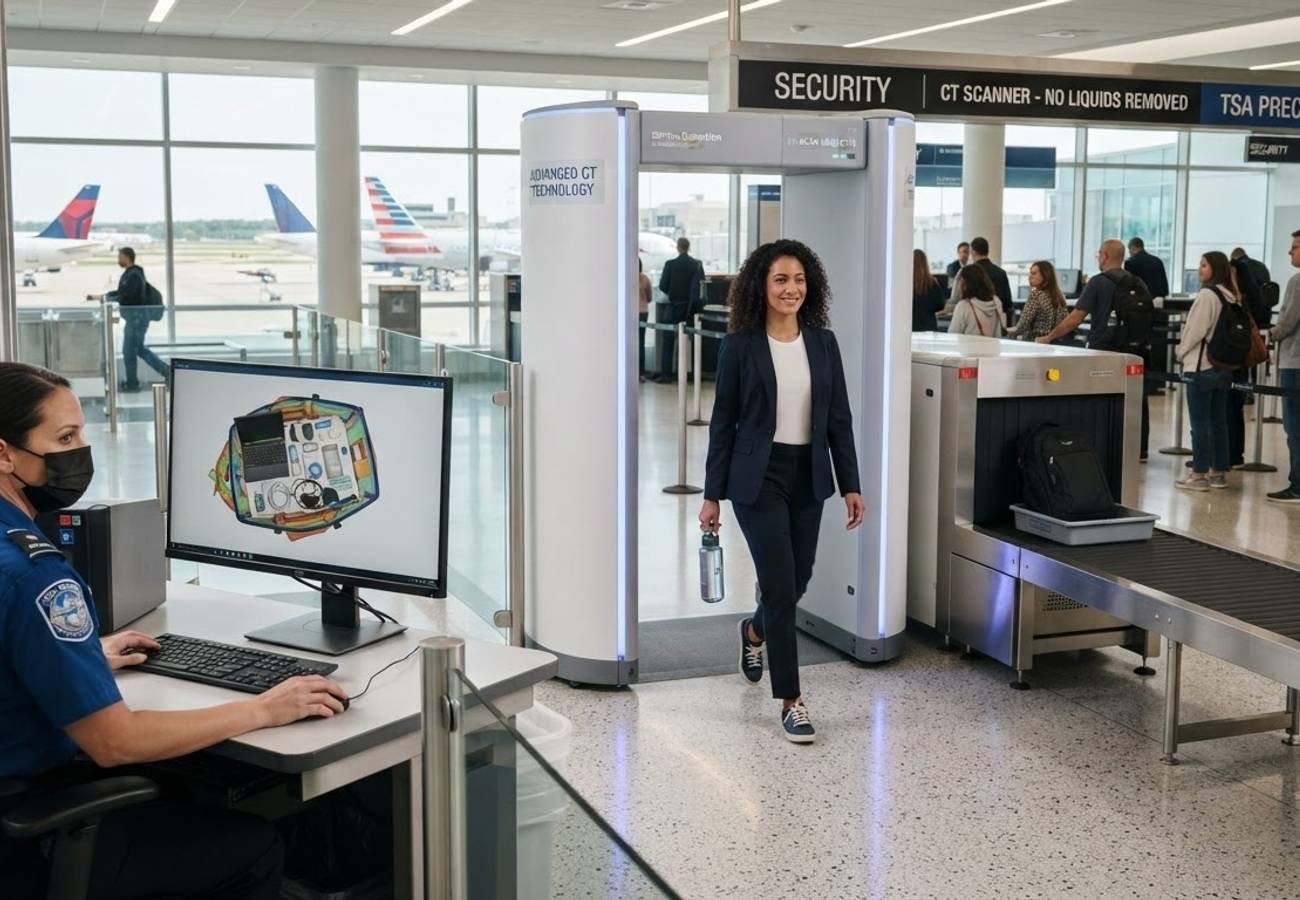
Image generated by AI
The dreaded ritual of emptying a reusable water bottle into a terminal drain or drinking it in a frantic rush before the security line may soon become a relic of the past. The Transportation Security Administration (TSA) is currently evaluating a policy shift that would allow travelers to carry full water bottles through security checkpoints, mirroring a system already operational at several major UK hubs.
The Shift Toward Heathrow-Style Security
For two decades, the "3-1-1" rule has dictated the flow of every US airport: liquids, gels, and aerosols must be 3.4 ounces (100ml) or smaller and fit within a single quart-sized clear bag. This rigid standard was born from a 2006 security threat involving liquid explosives on transatlantic flights. However, the TSA is now reviewing whether this rule can be relaxed thanks to the rollout of Computed Tomography (CT) scanners.
Unlike traditional X-ray machines, these modern CT scanners produce detailed 3D images of baggage contents. This allows security officers to analyze the density and composition of liquids with far greater precision, potentially eliminating the need for passengers to empty their bottles or remove electronics from their bags. While a nationwide mandate hasn't been issued, the agency is exploring pilot programs at selected airports to see if this "Heathrow-style" efficiency can be scaled across the US.
What Makes This Technology Different
The core of this transition is the move from 2D imaging to 3D volumetric scanning. Traditional scanners often require manual inspections if a liquid is too dense to identify, leading to the long queues and "bin-shuffling" that define the modern travel experience. CT technology allows for a more sophisticated analysis, which is why airports like London Heathrow (LHR) have already pushed their liquid limits up to 2 litres.
| Current TSA Standard | Potential Future Rule |
|---|---|
| Liquids above 100ml are restricted | Full bottles may be permitted |
| Reusable bottles must be emptied | Filled bottles could remain |
| Uniform nationwide application | Initial pilot testing at select hubs |
For the frequent flyer, this represents the most significant convenience upgrade since the inception of the 3-1-1 rule. If implemented, the TSA could potentially roll this out first for TSA PreCheck members, who already enjoy expedited screening and the ability to keep their shoes on.
Visitor Insider Tips
Navigating the transition period between old and new security rules requires a bit of strategy. Until a formal nationwide announcement is made, assume the 100ml rule is in effect.
- The "Safe Bet" Strategy: If you are flying out of a major hub like Atlanta (ATL), Los Angeles (LAX), or Dallas/Fort Worth (DFW), do not risk carrying a full bottle through security yet. These airports are prime candidates for pilot programs, but inconsistent signage can lead to delays.
- PreCheck Advantage: If you have PreCheck, keep a close eye on the specific lane instructions. Often, new technology is tested in PreCheck lanes before being rolled out to general screening.
- Hydration Hack: Until full bottles are allowed, carry a high-quality empty collapsible bottle. This saves space in your carry-on and allows you to use the free filtered water stations available in most terminals after you pass the checkpoint.
- International Transit: If you are connecting through the UK, remember that London City (LCY) and Teesside International (MME) have already removed the 100ml restriction. However, if your final destination is the US, ensure your liquids are compliant with US laws to avoid issues during return legs.
Cultural and Environmental Context
Beyond passenger convenience, this policy shift is deeply tied to the global push for sustainability. The current "empty and refill" cycle encourages a massive reliance on single-use plastic bottles sold at inflated prices inside the secure area of the terminal. By allowing reusable bottles to pass through, airports can significantly reduce the volume of plastic waste generated daily.
Furthermore, this modernization reflects a changing philosophy in aviation security—moving away from "blanket restrictions" and toward "intelligent screening." This approach acknowledges that technology can mitigate risk more effectively than manual restrictions, reducing the stress and friction that often define the start of a journey. For the Federal Aviation Administration (FAA), the goal is to maintain a gold standard of safety while acknowledging that the passenger experience is a critical component of infrastructure efficiency.
FAQ: Visiting US Airports 2026
Can I currently take a full water bottle through TSA security? No. As of now, the 3.4oz (100ml) limit remains the law. You must empty your bottle before the checkpoint or purchase a drink after passing through.
Which airports are most likely to test the new rule first? While not officially confirmed, high-volume hubs like Atlanta (ATL), Denver (DEN), and Salt Lake City (SLC) are likely candidates due to their existing infrastructure and passenger loads.
Will this change apply to everyone or just TSA PreCheck members? It is expected that TSA PreCheck members may be the first to benefit from these updates, though the ultimate goal is a broader rollout to all passengers.
How does this differ from the rules at London Heathrow? Heathrow has already implemented CT scanners that allow liquids up to 2 litres and permit electronics to stay inside bags—a level of convenience the TSA is currently studying for US implementation.
The era of the airport water-bottle scramble may finally be coming to an end.
Related Travel Guides
Disclaimer
This article is for informational and educational purposes only. It does not constitute legal, financial, or professional advice. While we strive to provide accurate and up-to-date information, travel policies, regulations, and conditions change rapidly. Always verify information with official sources before making travel decisions. Nomad Lawyer makes no representations about the accuracy, reliability, completeness, or suitability of the information provided. Readers should consult qualified professionals for advice specific to their circumstances. The views expressed in this article are those of the author and do not necessarily reflect the views of Nomad Lawyer.
Preeti Gunjan
Contributor & Community Manager
A passionate traveller and community builder. Preeti helps grow the Nomad Lawyer community, fostering engagement and bringing the reader experience to life.
Learn more about our team →