
TSA Deploys 1,000 Officers to Major US Airports as 2026 Passenger Volumes Hit Record Highs
The TSA has activated its National Deployment Force, sending over 1,000 additional officers to highly congested hubs like Atlanta, Chicago O'Hare, and LAX to manage a record-breaking 3 million daily passengers and keep wait times under 20 minutes.

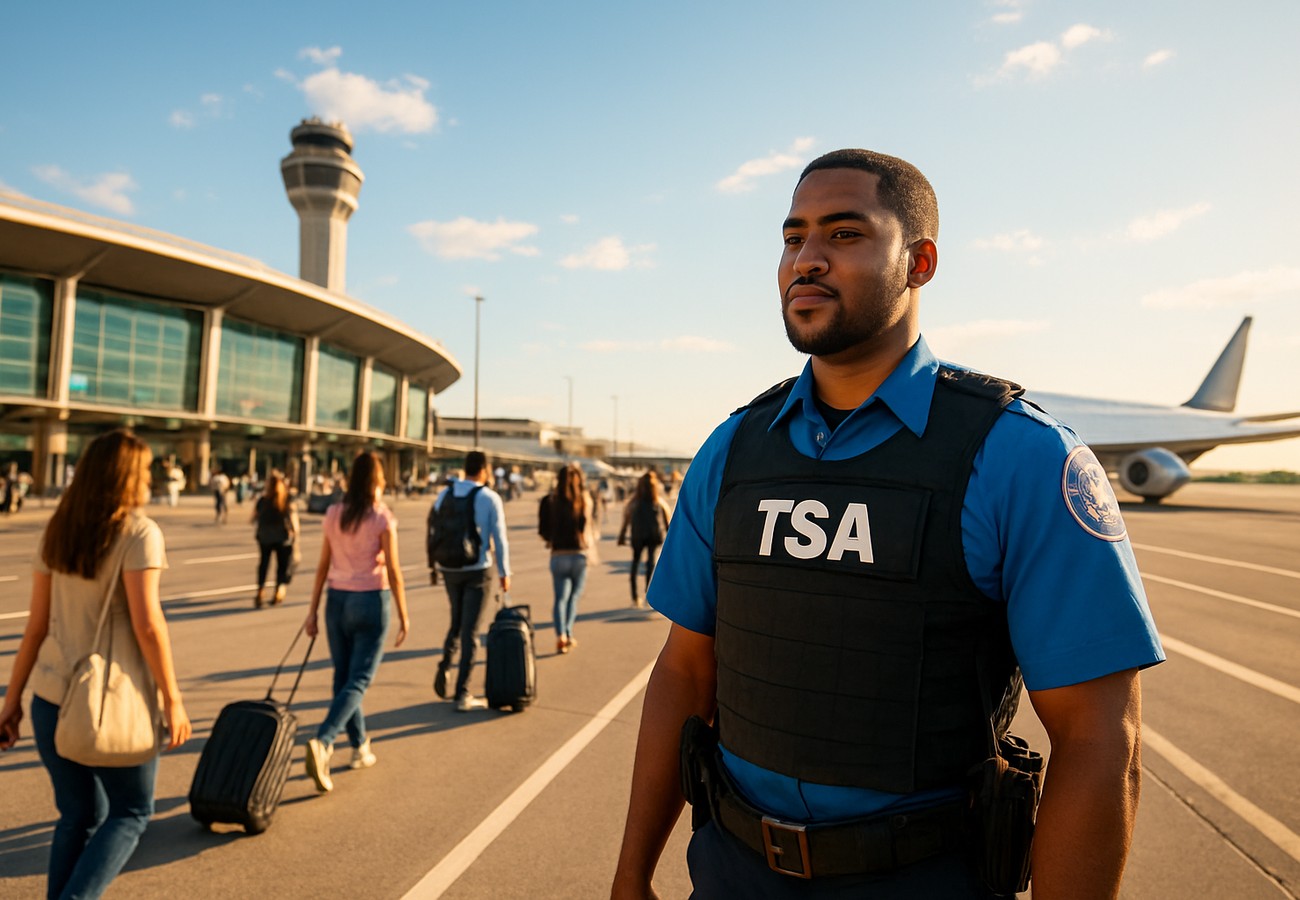
Image generated by AI
TSA Deploys 1,000 Extra Officers as 2026 Travel Hits 3 Million Daily Passengers — Here is What It Means for Your Airport Security Wait Times
With airport checkpoints routinely processing up to 3 million travelers a day, the Transportation Security Administration is shifting its strategy from reactive to proactive, unleashing a mobile strike force of veterans to America's busiest aviation hubs.
Quick Summary
- The TSA is deploying over 1,000 additional officers from its National Deployment Force (NDF) to major US airports for the record-breaking 2026 travel season.
- Daily passenger screening volumes are consistently hitting 2.8 to 3 million travelers, turning peak holiday numbers into the new midweek norm.
- "Hot zones" receiving extra staffing include Hartsfield-Jackson Atlanta, Chicago O'Hare, and Los Angeles (LAX).
- The agency aims to keep Standard wait times under 20 minutes and PreCheck under 5 minutes, aided by new 3D Computed Tomography (CT) scanners.
If you have stepped into a major American airport recently, the hum of unprecedented traveler volume is impossible to ignore. The post-pandemic "revenge travel" phenomenon has stabilized into a permanent, high-volume reality, creating the busiest travel season in United States history. At the forefront of this operational challenge is the Transportation Security Administration (TSA), which has just announced a massive strategic shift to prevent the nation's security checkpoints from becoming impenetrable bottlenecks.
To manage the historic crush of 2026, the TSA is deploying more than 1,000 extra officers to the most congested aviation hubs across the country. This calculated "surge capacity" aims to stabilize airport operations, support local checkpoint staff, and ensure that security lines keep moving safely and efficiently.
THE MATHEMATICS OF THE SURGE: 3 MILLION DAILY PASSENGERS
The sheer scale of the 2026 travel boom is staggering. According to operational data, the TSA is now routinely screening between 2.8 million and 3 million passengers per day. Just a few years ago, these figures were exclusively reserved for peak holiday weekends, such as the Sunday after Thanksgiving. Today, they represent the standard midweek baseline.
To handle this sustained pressure, the agency has activated its National Deployment Force (NDF). This mobile unit of over 1,000 officers does not consist of new recruits in training; rather, it is comprised of seasoned TSA veterans who voluntarily leave their home airports to staff national "hot zones." By dynamically shifting personnel to where the travel heat map is glowing brightest, the TSA can address congestion in real-time.
Major international hubs receiving this critical influx of personnel include:
- Hartsfield-Jackson Atlanta International Airport (ATL)
- Chicago O'Hare International Airport (ORD)
- Los Angeles International Airport (LAX)
HUMANIZING THE BADGE: VETERANS ON THE MOVE
While the TSA is often viewed through the lens of strict protocols and uniform blue shirts, the 2026 deployment highlights a deeply human effort. Hundreds of officers are spending their summers away from their families to support operations at unfamiliar, high-stress terminals.
For example, NDF officers typically stationed at smaller, regional airports in the Midwest are currently managing lines at Miami International Airport (MIA). Despite the dramatic shift in pace and culture, these deployed officers bring a critical level of expertise to struggling checkpoints, recognizing that travelers have invested significant time and money into their vacations.
This empathy is part of a broader 2026 culture shift within the agency focusing heavily on the "Passenger Experience" (PX). Modern TSA training emphasizes de-escalation, clear communication, and customer service just as heavily as high-tech screening protocols.
TECHNOLOGY AS THE SILENT PARTNER: CT SCANNERS
While putting 1,000 additional boots on the ground is a massive operational boost, these officers are being supported by the most advanced security technology the agency has ever fielded. The defining feature of the 2026 checkpoint is the widespread integration of Computed Tomography (CT) scanners.
Because this new CT technology creates a highly detailed, 3D image of a carry-on bag's contents, officers can rotate and analyze the image on a screen. This dramatically reduces the need for manual bag checks — the primary cause of line "stalls" and passenger frustration.
By combining seasoned NDF officers with efficient CT technology, the TSA is aggressively targeting strict wait-time goals even during peak surges:
- Standard Screening Lanes: Under 20 minutes
- TSA PreCheck Lanes: Under 5 minutes
THE ECONOMIC RIPPLE EFFECT OF STABLE CHECKPOINTS
The deployment of 1,000 surge officers carries benefits far beyond the security line itself. When checkpoint wait times are predictable and efficient, the entire travel economy benefits.
Travelers who clear security faster spend more time (and money) in airport concourses, supporting local vendors, restaurants, and retail staff. Furthermore, airlines rely on efficient security to prevent operational nightmares. A stabilized checkpoint drastically reduces the number of "missed connections" and delayed departures caused by passengers stuck in security queues, mitigating the dreaded "rolling delays" that can fracture nationwide flight schedules.
WHAT THIS MEANS FOR TRAVELERS: 3 TIPS FOR 2026
Even with the National Deployment Force working at maximum capacity, the TSA requires cooperation from the flying public to maintain efficiency. Here is what travelers need to know to navigate the 2026 checkpoints:
- Arrive Early, But Not Too Early: The traditional "Two-Hour Rule" for domestic flights remains the gold standard. Arriving four or five hours early does not help; it actually creates unnecessary congestion in the terminal for flights departing much sooner than yours.
- Respect the Liquid Logic: Despite the advanced 3D scanners, the 3-1-1 liquids rule is still heavily enforced in many terminals. Keeping your liquids properly sized and organized prevents manual searches that slow down the entire line behind you.
- Adopt the "Clear Pockets" Habit: Before you even reach the gray bins, place your keys, phone, wallet, and loose change directly into your carry-on bag. This is the single fastest way to clear the metal detector or body scanner without triggering a pat-down.
CONCLUSION: A PARTNERSHIP IN THE SKY
The activation of over 1,000 mobile officers proves that the TSA is no longer just reacting to travel trends; it is actively managing the reality of a 3-million-passenger daily average. As travelers navigate the bustling hubs of Atlanta, Chicago, and Los Angeles this year, the officer guiding them through the line may be hundreds of miles from home, specifically deployed to ensure the journey begins safely. In the record-breaking landscape of 2026, efficient airport security is a vital partnership between the traveler and the "Blue Shield."
KEY TAKEAWAYS
- The TSA has deployed over 1,000 additional officers via its National Deployment Force (NDF) for the 2026 summer season.
- Daily passenger screening volumes are routinely hitting record highs of 2.8 million to 3 million travelers.
- Congested "hot zones" receiving extra staff include Atlanta (ATL), Chicago O'Hare (ORD), and Los Angeles (LAX).
- NDF officers are seasoned veterans volunteering to leave regional home airports to assist major hubs like Miami International.
- Advanced Computed Tomography (CT) 3D scanners are heavily reducing the need for manual bag checks.
- The TSA's official goal is to keep Standard wait times under 20 minutes and PreCheck wait times under 5 minutes.
- Travelers are urged to stick to the Two-Hour Rule for domestic flights, adhere to the 3-1-1 liquids rule, and put pocket items in carry-on bags before reaching the bins.
Disclaimer
This article is for informational and educational purposes only. It does not constitute legal, financial, or professional advice. While we strive to provide accurate and up-to-date information, travel policies, regulations, and conditions change rapidly. Always verify information with official sources before making travel decisions. Nomad Lawyer makes no representations about the accuracy, reliability, completeness, or suitability of the information provided. Readers should consult qualified professionals for advice specific to their circumstances. The views expressed in this article are those of the author and do not necessarily reflect the views of Nomad Lawyer.
Kunal K Choudhary
Co-Founder & Contributor
A passionate traveller and tech enthusiast. Kunal contributes to the vision and growth of Nomad Lawyer, bringing fresh perspectives and driving the community forward.
Learn more about our team →