
Trump Spirit Airlines Buyout: Latest Bailout Negotiations April 2026
President Trump proposes federal acquisition of Spirit Airlines as bailout talks progress, betting on profitable resale once fuel costs decline in 2026.

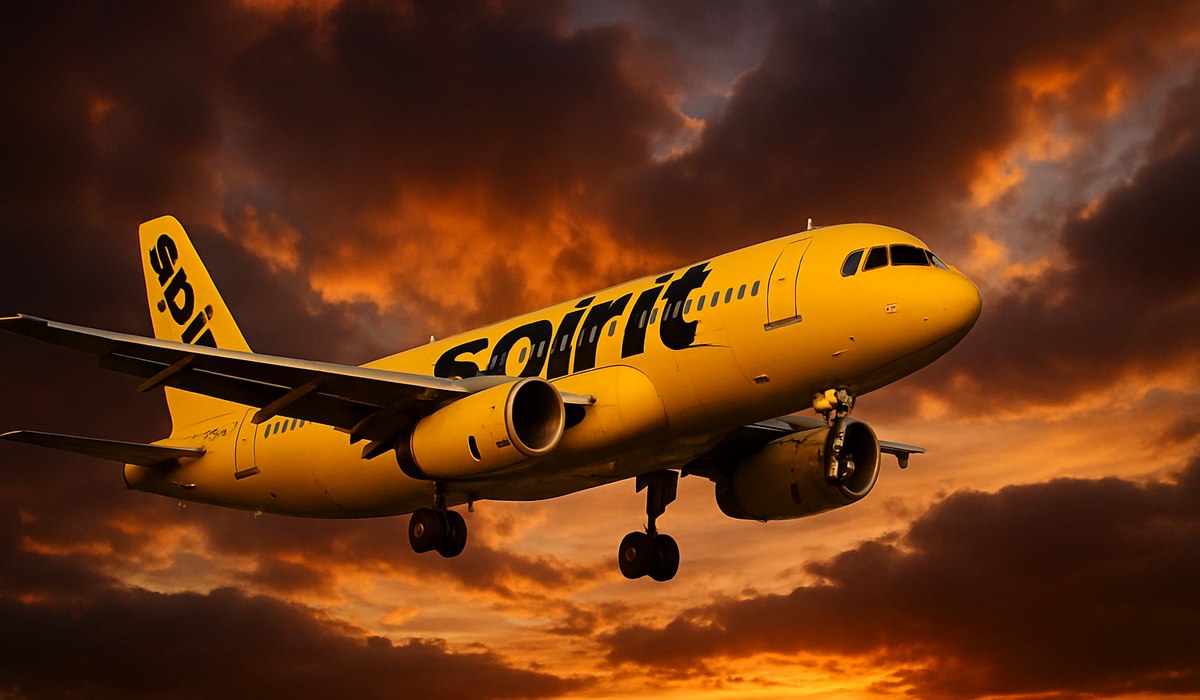
Image generated by AI
Federal Acquisition Proposal Reshapes Spirit Airlines Bailout Landscape
President Donald Trump announced Thursday that the federal government should purchase struggling Spirit Airlines outright, potentially reselling the carrier for profit once global oil prices stabilize. The proposal emerged amid intensifying negotiations over rescue packages for the ultra-low-cost carrier, which has faced persistent financial headwinds throughout 2026. Trump's unconventional acquisition strategy signals a dramatic shift in how U.S. policymakers approach airline industry crises, moving beyond traditional lending frameworks toward direct equity involvement.
Spirit Airlines operates from Fort Lauderdale-Hollywood International Airport as its primary hub, serving over 60 destinations across North America, the Caribbean, and Latin America. The carrier transported approximately 32 million passengers annually before financial deterioration accelerated operational challenges. Current bailout discussions reflect mounting concern over the airline's liquidity crisis and its potential impact on thousands of employees and millions of passengers who rely on Spirit's budget-friendly service.
Trump's Spirit Airlines Buyout Proposal Framework
The president's acquisition concept hinges on a fundamental economic assumption: petroleum costs will decline substantially within the next 18-36 months, creating a profitable exit opportunity for federal stakeholders. Trump characterized the proposal as a business-oriented approach rather than traditional government subsidy, emphasizing that taxpayer investment could generate returns rather than represent permanent expenditure.
The timing of this announcement coincides with escalating pressure on Spirit Airlines' balance sheet. The carrier has struggled with higher-than-expected fuel surcharges, reduced passenger demand, and competitive pressures from larger low-cost carriers. A federal acquisition would mark unprecedented direct government ownership of a commercial U.S. airline, positioning Washington as an active stakeholder rather than passive regulator or lender.
Industry analysts remain divided on feasibility. Some argue that federal ownership could streamline operational restructuring without bankruptcy proceedings. Others contend that government operation of an airline contradicts established free-market principles and creates problematic precedent for future corporate crises.
Current Bailout Negotiations Status and Timeline
Spirit Airlines bailout discussions entered their most intensive phase during late April 2026, with multiple stakeholders seeking resolution before the carrier's next quarterly financial reporting deadline. Federal regulators, congressional leadership, and aviation industry representatives convened for closed-door sessions focused on rescue package architecture.
Traditional bailout proposals being negotiated center on secured loans, equity stakes for government entities, and operational restructuring requirements. The Treasury Department reportedly commissioned independent analysis of Spirit's long-term viability under various scenarios. Congressional Transportation Committee members expressed concern about committing federal resources without guaranteed outcomes.
Trump's acquisition proposal emerged as an alternative framework, potentially superseding earlier bailout structures. Whether the government would hold the airline temporarily or indefinitely remained unclear. The proposal's legislative pathway appeared uncertain, as most direct airline acquisition authority resides with Congress rather than executive agencies.
Administrators from the Department of Transportation and Federal Aviation Administration coordinated on regulatory implications of potential federal ownership. Questions arose regarding Air Service Agreements with international partners, labor union negotiations, and operational independence from political influence.
Oil Prices, Fuel Costs, and Financial Viability Analysis
Spirit Airlines' financial crisis directly correlates with elevated fuel expenses, which typically consume 25-35% of ultra-low-cost carrier operating budgets. Petroleum prices exceeded $95 per barrel during spring 2026, straining margins for carriers operating predominantly fuel-inefficient regional aircraft.
Trump's resale strategy presumes oil prices will moderate toward $60-75 per barrel within the specified timeframe, substantially improving airline profitability metrics. Historical precedent shows petroleum costs do fluctuate significantly, though long-term projections remain uncertain amid geopolitical tensions and energy market volatility.
Energy economists remain skeptical about price decline certainty. Structural factors—including reduced OPEC production capacity, refinery constraints, and persistent global demand—suggest petroleum prices may remain elevated longer than optimistic projections assume. This uncertainty introduces substantial risk into acquisition profitability calculations.
Alternative fuel surcharges and dynamic pricing strategies have partially cushioned fuel cost impacts for competitors. Spirit's business model, however, emphasizes ultra-low base fares with transparent ancillary charges, limiting flexibility for fuel-related price adjustments without alienating budget-conscious passengers.
Federal Reserve monetary policy and macroeconomic growth rates will significantly influence fuel demand and pricing trajectories. Recession scenarios could depress petroleum costs dramatically, validating Trump's proposal, while continued economic expansion might sustain elevated energy prices indefinitely.
Industry Implications and Precedent for U.S. Airlines
Direct federal acquisition of Spirit Airlines would establish unprecedented governmental involvement in commercial aviation operations. The 2008-2009 financial crisis produced emergency lending programs and equity investments, but not outright ownership and operational control.
The proposal potentially impacts investor confidence across the airline sector. Capital markets may reassess regulatory risk and government intervention likelihood, affecting stock valuations and debt financing costs. Established carriers might face competitive disadvantages if federal resources disproportionately subsidize struggling competitors.
Labor unions have expressed cautious interest in restructuring scenarios that preserve employment stability. Federal ownership could provide leverage during contract negotiations, though government operators historically maintain lower wage scales than private carriers.
Route network implications require careful analysis. Spirit currently sustains service to secondary markets and leisure destinations that generate modest revenue. Federal stewardship might prioritize route profitability over network breadth, eliminating service to smaller communities dependent on Spirit's competitive fares.
International aviation agreements could face complications under government ownership. Partners may resist engagement with state-operated carriers, particularly regarding bilateral air service negotiations and reciprocal landing rights.
Key Data: Spirit Airlines Operational and Financial Metrics 2026
| Metric | Value | Status |
|---|---|---|
| Primary Hub | Fort Lauderdale-Hollywood International (FLL) | Operational |
| Annual Passengers (Pre-Crisis) | ~32 million | Declining |
| Destination Network | 60+ destinations (North America, Caribbean, Latin America) | Under pressure |
| Fleet Size | 145 Airbus A320-family aircraft | Aging, high fuel consumption |
| Fuel Cost Percentage | 25-35% of operating budget | Elevated in 2026 |
| Current Oil Price Assumption | $95+ per barrel | Pressuring margins |
| Target Resale Price Oil Level | $60-75 per barrel | Uncertain timeline |
What This Means for Travelers and Passengers
Spirit Airlines passengers face unprecedented uncertainty regarding service continuity, fare pricing, and schedule stability throughout 2026. Here's what you should monitor:
Immediate Considerations:
-
Book with flexibility – Prioritize refundable tickets and airline-flexible options until bailout resolution becomes definitive. Spirit's liquidity crisis creates operational risk.
-
Verify schedule stability – Confirm your flight through FlightAware within 48 hours of departure. Service changes may occur with limited advance notice.
-
Monitor price trends – Spirit's fare dynamics may shift dramatically depending on bailout structure and operational changes. Compare pricing against competing carriers (Frontier, Allegiant, Southwest).
-
Review baggage policies – Understand Spirit's current carry-on and checked baggage rules, which may change under new ownership structure.
-
Check frequent flyer status – If you participate in Spirit's frequent flyer program, understand that membership benefits could change significantly under federal management.
-
Contact traveler advocacy – For significant itinerary disruptions, file complaints with the U.S. Department of Transportation to create official record of passenger impacts.
Federal acquisition could eventually stabilize fares and schedules once operational restructuring completes, benefiting budget-conscious leisure travelers. However, transition periods typically involve service reductions and route eliminations in less-profitable markets.
Frequently Asked Questions
Q: What happens to my Spirit Airlines ticket if the airline is acquired by the federal government?
Existing tickets remain valid under government ownership. Federal law requires carriers to
Disclaimer
This article is for informational and educational purposes only. It does not constitute legal, financial, or professional advice. While we strive to provide accurate and up-to-date information, travel policies, regulations, and conditions change rapidly. Always verify information with official sources before making travel decisions. Nomad Lawyer makes no representations about the accuracy, reliability, completeness, or suitability of the information provided. Readers should consult qualified professionals for advice specific to their circumstances. The views expressed in this article are those of the author and do not necessarily reflect the views of Nomad Lawyer.
Kunal K Choudhary
Co-Founder & Contributor
A passionate traveller and tech enthusiast. Kunal contributes to the vision and growth of Nomad Lawyer, bringing fresh perspectives and driving the community forward.
Learn more about our team →