
Trinity Airways Launches Rebrand and SSC Strategy in South Korea
Trinity Airways (formerly T'way Air) announces its Selective Service Carrier strategy, offering tailored service levels for short-haul and long-haul international routes.

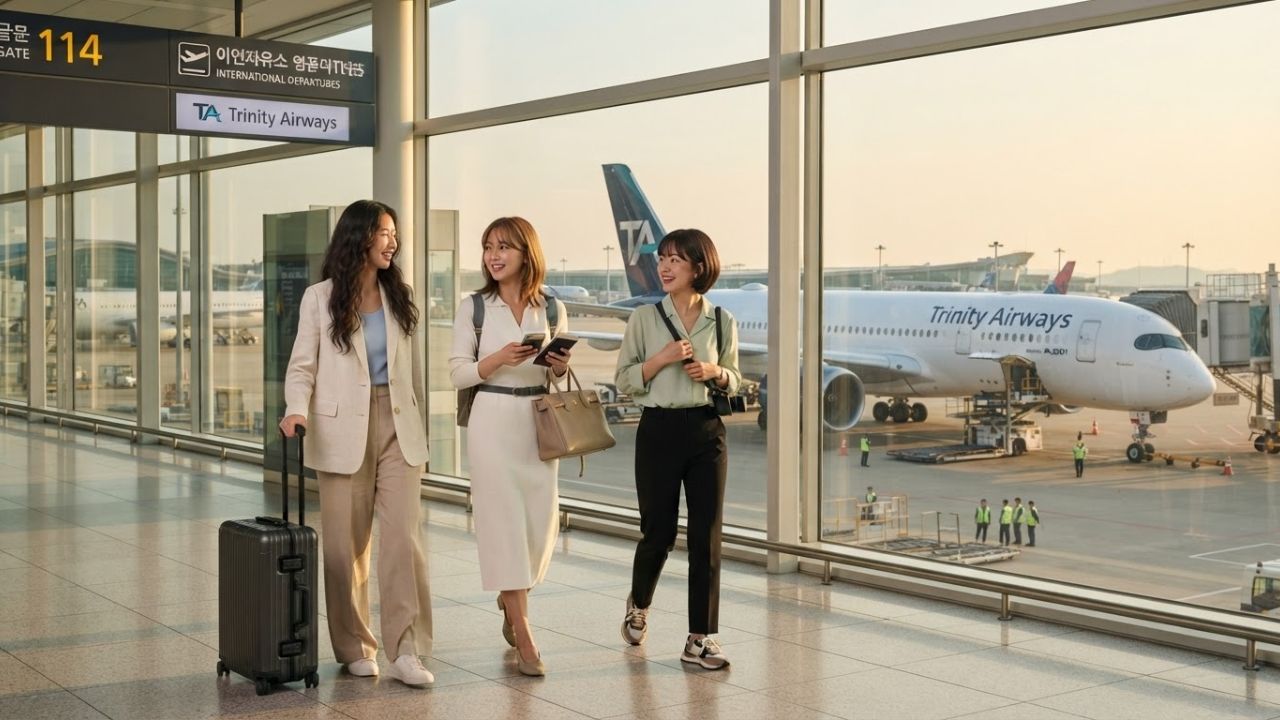
Image generated by AI
South Korea's newly rebranded Trinity Airways has introduced its Selective Service Carrier (SSC) strategy, attempting to merge low-cost efficiency with premium amenities on long-haul routes.
Redefining Low-Cost and Full-Service Aviation
The transformation of T'way Air into Trinity Airways represents a significant shift for the South Korean carrier as it expands beyond short-haul regional flights. Launched in Seoul on August 6, 2026, under the motto "Relaxed and Reliable," the brand is introducing a hybrid operational concept. The Selective Service Carrier (SSC) model aims to preserve budget-friendly fares on shorter routes while offering premium options on long-haul flights.
This commercial positioning is designed to address a changing market where traditional airline classifications are beginning to overlap. Traditional network carriers frequently offer unbundled basic fares, while budget airlines sell extra legroom, meals, and priority access. Trinity Airways is formalizing this trend by varying its service standards depending on journey length, destination requirements, and passenger preferences.
This strategy is not a new regulatory category, as licensing and safety oversight remain governed by aviation authorities. However, it represents a commercial model designed to optimize cost structures. Shorter regional flights will maintain a simple, price-conscious structure, whereas long-haul routes will receive broader comfort packages.
Inheriting T'way's Route Network and Passenger Base
The new brand inherits a large passenger base and extensive operational infrastructure from T'way Air. In late July, the carrier's public network included 5 domestic and 58 international routes. The long-haul network features flights from Seoul to Sydney in Australia, Vancouver in Canada, and European gateways including Paris, Rome, Barcelona, and Frankfurt.
This international reach exposes the airline to diverse passenger expectations compared to short-haul regional travel. Long-haul routes require a stronger focus on seat comfort, inflight dining, baggage handling, and wireless connectivity. The hybrid model is designed to deliver these comforts on long flights without adding unnecessary costs to short-haul sectors.
According to data from the Ministry of Land, Infrastructure and Transport, the carrier completed the amended domestic licensing process in May 2026. The rebrand will roll out gradually across international airports as overseas authorizations are finalized. During this transition, flight numbers and ticketing codes will remain aligned to ensure clear communication for passengers.
How the Selective Service Model Will Operate
The new service model is based on progressive enhancement rather than uniform changes across all routes. Shorter flights will focus on operational efficiency and competitive pricing, while long-haul services will add ground and onboard features. These include broader airport services, lounge access for eligible fares, upgraded catering, and inflight Wi-Fi.
The airline plans to restructure its catering program in 2026, offering two meal services on long-haul flights and one on medium-haul routes like Jakarta and Singapore. Economy catering will add upgraded side dishes, while business class will offer premium side dishes, beer, and wine. These adjustments aim to improve the passenger experience on journeys spanning many hours.
Inflight connectivity will be introduced gradually as aircraft are equipped with compatible Wi-Fi systems. Clear route-level disclosure will be vital so that customers understand whether connectivity is complimentary, paid, or limited to text messaging. To support consumer trust, the carrier intends to offer clear fare comparisons during the booking process.
Sector Statistics and Incheon Airport Connectivity
The airline's international strategy is supported by high passenger demand at Incheon International Airport. In June 2026, the airport handled 6,036,349 passengers across 34,697 flight movements, alongside 262,469 tonnes of cargo. The airport serves as a vital gateway, connecting over 100 airlines with more than 180 cities globally.
Incheon recorded a historic daily peak of 239,530 passengers on January 4, 2026, illustrating the scale of the market. Additionally, the carrier's cargo operations grew 37% year-on-year during the first half of 2026. This belly-hold cargo capacity provides essential auxiliary revenue on long-haul routes.
National industry statistics demonstrate the competitive environment in South Korea. The 2024 Transportation Survey recorded 80 air-transport enterprises, with employment rising to 43,604. While industry revenue grew 13.5% to 33.037 trillion won, operating expenses rose 15.3% to 29.253 trillion won, highlighting the importance of cost discipline.
Industry Consolidation Openings and Regulatory Steps
The carrier's long-haul expansion has been supported by regulatory remedies linked to the merger of Korean Air and Asiana Airlines. To preserve competition, authorities designated alternative airlines to take over routes where consolidation could limit consumer choice. The airline was selected as a replacement carrier for key international services, including routes to Frankfurt and Paris.
The carrier also expanded its Southeast Asian reach by launching flights to Jakarta on April 29, 2026, following regulatory allocations. While these remedies open up valuable routes, the airline must build operational capacity to ensure long-term commercial viability. This includes securing slots, aircraft, and trained crew to maintain schedule reliability across seasons.
Another strategic direction is the integration of air travel with the hotels and resorts of the parent group, Son Group. The airline plans to introduce a shared loyalty platform linking flight bookings with accommodation and recreation rewards. This ecosystem aims to offer convenient vacation packages, though transparency in pricing remains essential for consumer trust.
Monthly Passenger Volumes and Sector Financial Statistics
T'way Air 2026 Passenger Traffic Volume (H1)
| Month 2026 | Monthly Passenger Count |
|---|---|
| March 2026 | 968,387 |
| April 2026 | 866,713 |
| May 2026 | 830,848 |
| June 2026 | 764,791 |
South Korea Air Transport Industry Indicators (2024 Survey)
| Metric Type | Industry Statistics (Transportation Survey) |
|---|---|
| Active Enterprises | 80 air-transport businesses (up 3.9% year-on-year) |
| Total Employment | 43,604 workers (up 7.3% year-on-year) |
| Sector Revenue | 33.037 trillion won (up 13.5% year-on-year) |
| Operating Expenses | 29.253 trillion won (up 15.3% year-on-year) |
Key Takeaways for Travelers
- Hybrid Fare Options: The new Selective Service Carrier (SSC) model offers a middle ground, allowing passengers to add premium services on long-haul routes while keeping short-haul flights basic.
- Expanded Long-Haul Network: The airline offers direct flights from Seoul to major global hubs, including Paris, Rome, Sydney, and Vancouver.
- Integrated Vacation Rewards: Planned loyalty programs will link air travel rewards with Son Group's regional hotels and resorts for streamlined travel booking.
- Gradual Rebrand Transition: Passengers booking during the transition may see flights marketed under T'way Air but operated under the Trinity name; ticket validity remains unchanged.
Frequently Asked Questions: Trinity Airways Rebrand
What is the Selective Service Carrier (SSC) strategy?
The SSC strategy is a commercial model that tailors service levels to route length, keeping short-haul flights basic while adding premium dining, lounge access, and Wi-Fi on long-haul routes.
When did the Trinity Airways rebrand launch?
The airline officially announced its rebrand from T'way Air to Trinity Airways and launched its new business strategy on August 6, 2026.
What long-haul destinations does the airline serve?
Trinity Airways operates routes connecting Seoul (Incheon) with global destinations including Vancouver, Sydney, Paris, Rome, Barcelona, and Frankfurt.
Related Travel Guides
Disclaimer
This article is for informational and educational purposes only. It does not constitute legal, financial, or professional advice. While we strive to provide accurate and up-to-date information, travel policies, regulations, and conditions change rapidly. Always verify information with official sources before making travel decisions. Nomad Lawyer makes no representations about the accuracy, reliability, completeness, or suitability of the information provided. Readers should consult qualified professionals for advice specific to their circumstances. The views expressed in this article are those of the author and do not necessarily reflect the views of Nomad Lawyer.
Kunal K Choudhary
Co-Founder & Contributor
A passionate traveller and tech enthusiast. Kunal contributes to the vision and growth of Nomad Lawyer, bringing fresh perspectives and driving the community forward.
Learn more about our team →