
Travel Opinion Brands Must Shift From Crisis Response to Prevention in 2026
Travel opinion brands face mounting pressure to adopt proactive digital resilience strategies instead of reactive crisis management. Industry experts warn that modern outages threaten passenger experience and brand reputation in 2026.

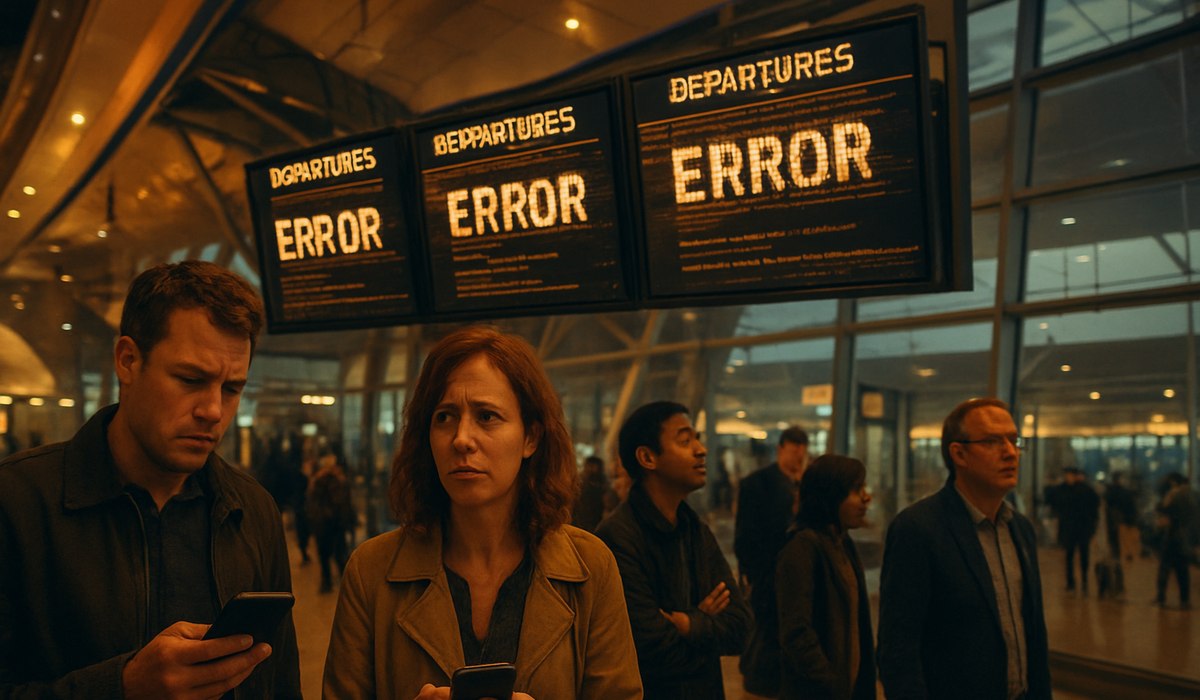
Image generated by AI
Modern Travel Brands Face Mounting Digital Fragility Risks
Travel opinion brands worldwide are confronting a critical vulnerability: their dependence on reactive crisis management rather than proactive system resilience. Recent high-profile airport and airline outages have exposed how quickly interconnected digital infrastructure can collapse, forcing organizations to resort to paper-based workarounds last used decades ago. In May 2026, a major New Zealand airport experienced a significant system failure that temporarily reverted operations to manual processes and physical ticket booklets—a shocking reminder of how fragile modern travel infrastructure has become. The incident affected thousands of passengers and dominated social media conversations about industry reliability. Industry leaders now argue that travel opinion brands must fundamentally restructure their incident response frameworks before the next major disruption impacts passenger experiences at scale.
The Fragility of Modern Travel Infrastructure
Today's interconnected travel ecosystem creates unprecedented vulnerability. Airlines depend on airport systems, which rely on hotel networks, baggage handlers, and third-party technology providers. When a single component fails, cascading effects ripple across the entire network within minutes. During recent outages at major global airports, check-in systems went offline, forcing staff to handwrite boarding passes manually. Baggage processing halted. Customer communication systems failed, leaving travelers stranded without journey updates.
The contrast with historical travel infrastructure is striking. Decades ago, paper ticket booklets contained four copies distributed among airlines, agents, and passengers. While cumbersome, this decentralized system proved resilient—losing one ticket rarely derailed entire operations. Modern digital systems achieve efficiency that paper never could, but they've introduced single points of failure that affect millions simultaneously. Travel opinion brands investing in infrastructure modernization often overlook redundancy planning and system isolation strategies that prevent cascading failures.
According to the International Air Transport Association, system reliability has become the primary differentiator for passenger satisfaction in 2026.
Why Reactive Crisis Management Fails Passengers
Reactive incident response operates on an outdated timeline that doesn't match the speed of modern outages. When systems fail, organizations typically mobilize response teams only after passengers experience disruptions. Engineers then scramble to gather fragmented data from disconnected systems, losing critical minutes during diagnosis and remediation phases.
By the time technical teams identify root causes, reputational damage has already occurred. Customers are frustrated, social media narratives have solidified, and trust in the travel brand has eroded. A 2026 industry survey found that 78% of travelers lose confidence in an airline within 30 minutes of a system outage. Recovery takes significantly longer—often weeks or months.
The New Zealand airport incident demonstrated this pattern clearly. Airport management had no contingency beyond reverting to 1990s-era manual processes. Staff lacked training on paper ticketing procedures. Queues extended for hours. Passengers complained of chaotic conditions and zero communication about delays or rebooking options. The airport's reactive approach—mobilizing response teams only after failure occurred—proved catastrophically slow given modern passenger expectations.
Travel opinion brands cannot afford this delay paradigm anymore. Modern passengers expect seamless, uninterrupted service. Any outage lasting more than 15 minutes generates negative social media sentiment that compounds reputational damage exponentially.
Building Proactive Digital Resilience Strategies
Forward-thinking travel opinion brands are adopting what industry experts call an "incident management lifecycle" approach. Rather than waiting for failures, organizations now use artificial intelligence and real-time monitoring to detect early warning signals before systems collapse.
Proactive strategies include continuous monitoring of operational metrics, predictive analytics identifying potential failures hours in advance, and pre-coordinated response teams standing ready across global locations. When AI-powered systems detect anomalies, they automatically notify engineers and recommend specific remediation steps based on historical data from thousands of previous incidents.
The most advanced travel brands implement AI-enabled incident management platforms that analyze operational signals in real-time, identify root causes automatically, and suggest optimal resolution strategies. Once incidents resolve, AI systems evaluate what worked effectively and what didn't, continuously refining response protocols through machine learning. Each disruption generates more data, improving the system's predictive accuracy and response speed.
Travel opinion brands adopting these strategies report dramatic improvements in mean time to resolution (MTTR). Some organizations have reduced outage duration from 4-6 hours to 15-30 minutes by implementing proactive monitoring and AI-assisted response coordination.
According to Forrester Research, travel organizations that shift from reactive to proactive incident management see a 40% improvement in customer satisfaction scores and a 35% reduction in reputational risk during incidents.
Learning From Past System Failures
The 2024 global IT outage that affected a major technologically advanced airport provided crucial lessons for the travel industry. Check-in kiosks went offline simultaneously, forcing agents to process thousands of passengers manually. Boarding passes were handwritten. Baggage tracking systems failed. Customers received no automated journey updates or rebooking assistance.
Analysis revealed that the airport lacked adequate system redundancy, had no isolated backup networks, and failed to pre-train staff on manual backup procedures. Response teams couldn't communicate effectively because primary communication systems were part of the failed infrastructure. Recovery took 18 hours, affecting 200,000+ passengers and generating global news coverage about airline industry fragility.
Similar incidents at major global carriers revealed consistent patterns: organizations maintained incident response procedures on paper documents, lacking digital accessibility during outages. First responders in different geographic regions couldn't coordinate because centralized communication infrastructure had failed. Management lacked real-time visibility into restoration progress.
Travel opinion brands studying these incidents now implement distributed incident management frameworks. Response teams operate from geographically isolated locations with independent communication networks. Incident playbooks exist in multiple formats accessible without internet connectivity. Staff receives regular training on manual workarounds and backup procedures.
Forward-thinking organizations now treat digital resilience as a core competitive advantage, investing in redundant systems, geographic distribution, and staff preparedness that rivals their investment in passenger-facing technology.
Key Data: Digital Outage Impact on Travel Industry
| Metric | 2024 Value | 2026 Projection | Industry Impact |
|---|---|---|---|
| Average outage duration (hours) | 4.2 | 0.5 | Proactive detection reduces MTTR by 88% |
| Passengers affected per major incident | 150,000+ | Variable | Smaller window = fewer cascading effects |
| Time to detect anomalies (minutes) | 45-60 | 2-5 | AI monitoring enables early intervention |
| Manual workaround capability (% of staff trained) | 12% | 68% | Organizations investing in backup procedures |
| Customer satisfaction recovery period (days) | 21-45 | 3-7 | Faster resolution = quicker trust restoration |
| Reputational damage score (1-10 scale) | 8.2 | 4.1 | Proactive response reduces social media impact |
What This Means for Travelers in 2026
Travel opinion brands' shift toward proactive digital resilience directly impacts your journey reliability and experience:
-
Improved Outage Prevention: Travelers will experience fewer complete system failures because airlines and airports detect problems before they cascade into passenger-facing disruptions. Advanced monitoring catches issues during early stages.
-
Faster Problem Resolution: When minor glitches do occur, response times shrink dramatically. What previously required 4-6 hours now resolves in 15-30 minutes, minimizing delays and rebooking complications.
-
Better Communication: Proactive systems include passenger notification protocols that activate immediately when issues arise. You'll receive accurate, timely updates about delays, rebooking options, and next steps rather than radio silence.
-
Reduced Manual Workarounds: Organizations reducing reliance on reactive crisis management eliminate the need for paper tickets and handwritten boarding passes. Your digital journey experience remains seamless even during minor infrastructure stress.
-
Enhanced Staff Preparedness: Travel opinion brands training staff comprehensively on incident response create better customer service during inevitable disruptions. Staff can assist effectively rather
Disclaimer
This article is for informational and educational purposes only. It does not constitute legal, financial, or professional advice. While we strive to provide accurate and up-to-date information, travel policies, regulations, and conditions change rapidly. Always verify information with official sources before making travel decisions. Nomad Lawyer makes no representations about the accuracy, reliability, completeness, or suitability of the information provided. Readers should consult qualified professionals for advice specific to their circumstances. The views expressed in this article are those of the author and do not necessarily reflect the views of Nomad Lawyer.
Preeti Gunjan
Contributor & Community Manager
A passionate traveller and community builder. Preeti helps grow the Nomad Lawyer community, fostering engagement and bringing the reader experience to life.
Learn more about our team →