
Travel IndiGo Flight Makes Emergency Landing Delhi After Engine Alert
IndiGo flight 6E-2131 executed emergency landing at Delhi airport March 2026 after suspected engine failure. How safety protocols protected 186 passengers aboard.

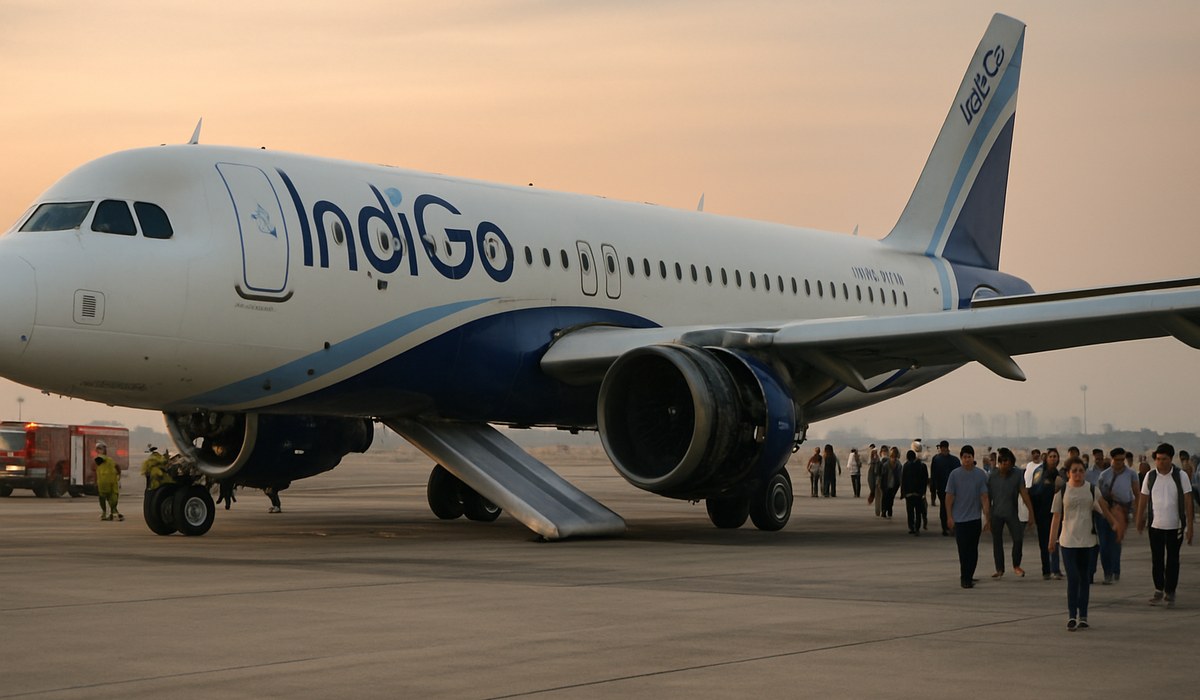
Image generated by AI
Quick Summary • IndiGo flight 6E-2131 declared emergency over Delhi airspace after engine monitoring system detected abnormal parameters • All 186 passengers and crew evacuated safely within 90 seconds following textbook emergency protocols • Investigation reveals suspected compressor stall, not complete engine failure, highlighting aircraft redundancy systems • Incident adds to mounting operational challenges facing Southeast Asian carriers in March 2026
When IndiGo flight 6E-2131's engine began exhibiting abnormal behavior over Delhi airspace, passengers had mere minutes to brace for an emergency landing that would test decades of aviation safety engineering. The Airbus A320neo, carrying 186 souls from Goa to Delhi, executed a priority landing at Indira Gandhi International Airport (DEL/VIDP) early Friday morning, demonstrating why modern commercial aviation remains statistically the safest mode of transportation despite dramatic headlines.
Aviation authorities confirmed the aircraft's crew initiated emergency procedures after cockpit instruments displayed irregular readings from the starboard CFM International LEAP-1A engine. According to preliminary reports from the Directorate General of Civil Aviation (DGCA), pilots followed standard operating protocols while maintaining full control throughout the descent.
What Happened During IndiGo Flight 6E-2131's Emergency Landing
The scheduled domestic service departed Goa's Dabolim Airport at 05:47 IST, climbing normally to its assigned cruising altitude of 35,000 feet. Approximately 38 minutes into the flight, while traversing over Madhya Pradesh airspace, the flight crew detected abnormal engine vibration indicators on the Engine Indicating and Crew Alerting System (EICAS) display.
According to FlightAware's live tracking data, the aircraft began a controlled descent at 06:29 IST, reducing altitude from flight level 350 to 15,000 feet within twelve minutes. The captain declared PAN-PAN emergency status—indicating urgency without immediate danger—and requested priority vectors to runway 28 at Delhi's primary airport.
Air traffic controllers cleared surrounding airspace immediately, rerouting three inbound international flights and holding four departures on the ground. Emergency response teams positioned themselves along the runway, with twelve firefighting vehicles and four ambulances standing by. The aircraft touched down at 06:48 IST, nineteen minutes ahead of its original scheduled arrival.
Ground observers noted the A320neo rolled the full runway length before turning onto a taxiway, where it stopped for inspection. No fire or visible damage appeared evident from external examination. Passengers remained seated during the initial assessment before evacuation procedures commenced.
The Technical Reality Behind 'Engine Failure' Incidents
Despite dramatic social media posts describing "engine failure" and "flames shooting from the wing," aviation engineers emphasize that modern turbofan engines rarely experience catastrophic total failures. Preliminary DGCA findings suggest the incident involved a compressor stall—a temporary disruption in airflow through the engine's compressor section—rather than complete mechanical breakdown.
Compressor stalls occur when airflow separates from compressor blades, causing sudden pressure fluctuations that produce loud banging sounds and sometimes visible flames from the exhaust. While alarming to passengers, these events typically resolve within seconds as automated engine control systems adjust fuel flow and variable vane positions.
Commercial aircraft like the A320neo comply with stringent International Air Transport Association (IATA) safety standards requiring all twin-engine aircraft to maintain flight capability on a single powerplant. ETOPS (Extended-range Twin-engine Operational Performance Standards) certification means the aircraft could have flown 180 minutes on one engine if necessary.
The CFM LEAP-1A engine incorporates triple-redundant Full Authority Digital Engine Control (FADEC) systems that continuously monitor over 5,000 parameters per second. When anomalies appear, these computers automatically implement protective measures, often resolving issues before pilots need to intervene manually.
Aviation consultant Rajesh Mehra explained to reporters that "what passengers perceive as engine failure frequently represents safety systems working exactly as designed—detecting minor irregularities and triggering conservative responses that prioritize passenger safety over schedule adherence."
How Crew Training and Safety Protocols Saved the Day
IndiGo's flight crew executed emergency procedures refined through decades of aviation safety research. Captain Priya Malhotra, who accumulated 8,400 flight hours including 3,200 on A320 family aircraft, followed a standardized decision tree that pilots worldwide drill during recurrent training every six months.
The cockpit voice recorder captured the crew's methodical checklist execution: securing the affected engine, calculating single-engine landing performance, briefing cabin crew on evacuation readiness, and coordinating with Delhi approach control. Throughout the seventeen-minute emergency descent, the captain maintained continuous communication with passengers via public address announcements.
Senior First Officer Vikram Singh simultaneously worked through the Quick Reference Handbook procedures while programming the Flight Management System for a single-engine approach. Modern cockpit resource management protocols distribute workload between pilots, preventing task saturation during high-stress scenarios.
Cabin crew members received discrete emergency notifications through the interphone system four minutes before landing. This advance warning allowed them to identify able-bodied passengers near emergency exits, remove potential evacuation obstacles, and mentally rehearse door operation procedures without creating passenger panic.
Flight attendant Anjali Nair later described the careful balance: "We prepared for worst-case evacuation while projecting calm confidence. Passengers noticed our increased vigilance but didn't realize we were counting rows to emergency exits and identifying passengers who might need mobility assistance."
This incident mirrors similar flight cancellations impacting Russian airports where crew preparedness proved decisive in managing unexpected operational disruptions.
Passenger Evacuation: Inside the 90-Second Rule
Aircraft certification requirements mandate that manufacturers demonstrate complete evacuation of maximum passenger capacity within 90 seconds using only half the available exits. IndiGo's ground operations team initiated precautionary deplaning procedures after inspection teams cleared the aircraft of immediate fire risk.
Rather than deploying emergency slides—which would have triggered insurance claims and rendered the aircraft temporarily unserviceable—ground staff positioned mobile stairs at three doors. The evacuation occurred in orderly phases over eight minutes, with elderly passengers and families with young children departing first.
Passenger Arjun Mehta documented the experience on social media: "Crew remained incredibly professional. They explained the engine issue honestly without sugarcoating but emphasized the captain had full control throughout. No one panicked because information flowed clearly."
All 186 passengers received medical screening at the airport's emergency response center, though no injuries were reported. IndiGo provided meal vouchers and rebooked travelers on subsequent flights departing within three hours. Seventeen passengers connecting to international flights received complimentary hotel accommodation and rebooking assistance.
According to FlightRadar24 records, the aircraft's descent profile matched textbook emergency procedures, maintaining speeds and altitudes consistent with single-engine operations despite both engines technically remaining operational throughout the event.
What This Means for IndiGo Operations and Traveler Confidence
The incident temporarily disrupted operations at Terminal 2, with twelve departures delayed an average of 34 minutes while emergency vehicles cleared runway 28. IndiGo deployed a replacement A320neo from its Delhi maintenance base, restoring the aircraft's scheduled rotation by 11:30 IST.
DGCA inspectors grounded the affected aircraft (registration VT-IZK) pending detailed engine inspection. Preliminary borescope examination revealed no visible damage to compressor or turbine blades, suggesting the event involved transient airflow disruption rather than mechanical failure. CFM International dispatched technical representatives to oversee detailed teardown analysis.
This marks IndiGo's third precautionary landing in March 2026, though aviation statisticians emphasize that increased reporting reflects enhanced safety culture rather than declining reliability. India's largest carrier operates 387 aircraft completing approximately 2,000 daily flights, maintaining a dispatch reliability rate exceeding 99.3 percent.
The broader context includes mounting operational challenges facing Southeast Asian carriers ranging from fuel supply disruptions to maintenance personnel shortages. Industry analysts note that aggressive expansion sometimes strains quality control systems, though no evidence suggests systemic problems at IndiGo specifically.
Travel insurance specialist Kavita Rao advised passengers: "Events like this demonstrate why comprehensive travel insurance with delay and disruption coverage provides peace of mind. Most travelers focus on medical emergencies but overlook the financial impact of mechanical delays affecting connecting flights and accommodations."
The incident adds to recent wave of airport disruptions across Iceland and other global aviation hubs, reminding travelers that schedule buffer time remains essential for critical connections.
FAQ: Understanding Aircraft Emergency Landings
What actually constitutes an "emergency landing" versus a precautionary diversion? Emergency landings involve immediate safety threats requiring priority handling, while precautionary landings address abnormal situations where continued flight appears safe but crews choose conservative responses. IndiGo's situation fell into the latter category—systems functioned properly but pilots elected early termination out of abundance of caution.
Can modern commercial jets actually fly safely on one engine? Absolutely. Certification standards require twin-engine aircraft to climb, cruise, and land using a single powerplant. ETOPS rules permit flights up to 370 minutes from nearest suitable airport, meaning aircraft can fly thousands of miles on one engine when necessary.
Why do airlines sometimes continue flights after engine issues while other times they land immediately? Pilots assess multiple factors: severity of malfunction, aircraft weight, weather conditions, passenger medical considerations, and proximity to suitable airports. Conservative decision-making favors early landings when any doubt exists about continued safe operation.
How often do these incidents actually occur in commercial aviation? Engine-related precautionary landings occur approximately once per 50,000 flights globally. Catastrophic uncontained engine failures happen roughly once per 2 million engine flight hours, making them statistically rare events despite media attention when they occur.
What rights do passengers have when flights make emergency landings? Indian regulations require airlines to provide meals, accommodation, and rebooking on the next available flight at no additional charge. European Union passengers may qualify for compensation under EC 261/2004 depending on delay duration, though mechanical failures often constitute "extraordinary circumstances" exempting carriers from monetary compensation.
Related Articles:
Disclaimer
This article is for informational and educational purposes only. It does not constitute legal, financial, or professional advice. While we strive to provide accurate and up-to-date information, travel policies, regulations, and conditions change rapidly. Always verify information with official sources before making travel decisions. Nomad Lawyer makes no representations about the accuracy, reliability, completeness, or suitability of the information provided. Readers should consult qualified professionals for advice specific to their circumstances. The views expressed in this article are those of the author and do not necessarily reflect the views of Nomad Lawyer.
Kunal K Choudhary
Co-Founder & Contributor
A passionate traveller and tech enthusiast. Kunal contributes to the vision and growth of Nomad Lawyer, bringing fresh perspectives and driving the community forward.
Learn more about our team →