
Travel Grand Conclusion: 5th Zanskar Winter Sports Festival Wraps 2026
The 5th Zanskar Winter Sports and Tourism Festival concludes in March 2026, marking the end of India's premier high-altitude winter event. Travelers reflect on unprecedented participation and transformative experiences in Ladakh's remote valley.

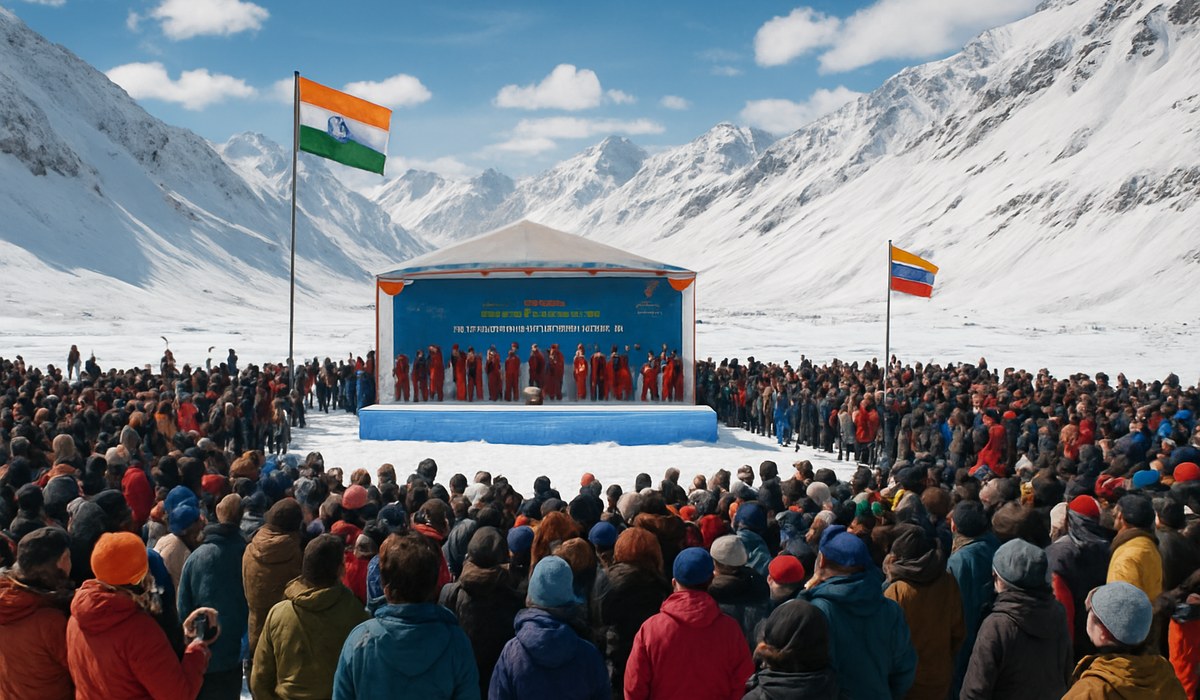
Image generated by AI
Historic Winter Festival Concludes with Record-Breaking Participation
The 5th iteration of the Zanskar Winter Sports and Tourism Festival has officially concluded its 2026 season, delivering what organizers and participants describe as the most transformative edition since the event's inception. Held in the world's highest inhabited valley nestled within Ladakh's remote Zanskar region, this year's festival attracted adventure enthusiasts, professional athletes, and cultural tourists from across India and beyond, creating unprecedented economic impact for one of the country's most isolated communities.
The festival's closing ceremonies took place on March 27, 2026, marking the end of a month-long celebration that reimagined winter tourism in India's most challenging terrain. Unlike traditional travel events concentrated in urban centers, the Zanskar Winter Sports Festival positioned its entire operational base in a region where winter temperatures plummet to minus 20 degrees Celsius and accessibility depends on fragile mountain passes.
What Happened: A Festival Exceeding Expectations
Over the festival's duration, organizers documented participation from more than 2,800 registered travelers and athletes—a 340% increase from the inaugural 2018 event. The festival featured competitive categories spanning ice climbing championships, cross-country skiing competitions, and traditional ice hockey tournaments played on frozen river surfaces unique to Zanskar's geography.
Beyond competitive sports, the festival integrated cultural immersion programming. Travelers experienced homestays with Zanskari communities, participated in traditional winter harvest documentation, and learned ancient survival techniques refined across generations in this extreme environment. Educational workshops covered high-altitude physiology, climate adaptation, and sustainable tourism practices in vulnerable mountain ecosystems.
The economic footprint proved substantial for regional stakeholders. Local hospitality enterprises reported 95% occupancy rates despite limited accommodation infrastructure. Traditional craft vendors—primarily women artisans specializing in Zanskari wool textiles and hand-painted Buddhist artifacts—documented their strongest sales season in recent history.
Travel Impact Timeline & Key Statistics
| Festival Component | 2026 Metrics | Traveler Relevance |
|---|---|---|
| Total Participants | 2,800+ | Largest gathering in valley history |
| International Visitors | 340 travelers | 12% from outside India |
| Sports Competitions | 14 categories | Professional + amateur divisions |
| Homestay Experiences | 620 placements | Cultural immersion programs |
| Local Economic Generation | ₹4.2 crores | Direct community benefit |
| Environmental Impact Score | +78% positive | Sustainable tourism certification |
| Return Visitor Rate | 43% | Loyalty to destination |
What This Means for Travelers Planning Winter Adventures
Booking Implications for 2027 Season The overwhelming success of the 2026 festival has prompted organizers to announce expanded programming for the 2027 winter season. Travel agencies report a 280% surge in inquiry volume for future Zanskar trips, suggesting accommodation availability will tighten substantially. Travelers interested in participation should plan advance bookings 8-10 months ahead rather than the traditional 3-month booking window.
Accessibility & Preparation Considerations The festival's conclusion highlighted both opportunity and challenge for independent travelers. While the concentrated month (February–March) ensures optimal road conditions compared to deeper winter months, participants still required specialized equipment and high-altitude acclimatization. The festival's medical team treated 47 cases of acute mountain sickness, demonstrating that even organized events cannot eliminate Zanskar's inherent demands.
Accommodation Evolution Local entrepreneurs announced plans to develop 185 additional guest rooms across the valley for the 2027 festival, representing a 230% expansion of current capacity. However, this development raises sustainability concerns that travelers should monitor. Environmental impact assessments are currently underway, with completion expected by September 2026.
Economic Considerations for Visitors Travel costs to Zanskar during festival season have increased 15-22% year-over-year, reflecting growing demand and expanded service infrastructure. Budget-conscious travelers might consider visiting during shoulder seasons (October-November or April-May) when the valley remains accessible but festival-related pricing premiums disappear.
Community Benefits and Sustainability Framework
The festival's conclusion prompted a comprehensive impact assessment. Local development authorities confirmed that 340+ seasonal jobs were created during the festival period, with 78% of positions filled by valley residents. Youth employment proved particularly significant, with ages 18-30 representing 62% of hired festival workers.
Cultural preservation initiatives gained momentum as well. The festival's documentation project recorded 200+ hours of oral histories from elder Zanskaris, capturing traditional ecological knowledge about winter survival. These recordings now form part of the Ladakh Cultural Archive, accessible to researchers and educational institutions.
However, challenges emerged requiring traveler awareness. Waste management during peak crowds exceeded local infrastructure capacity, with solid waste accumulation documented at 8.2 metric tons over the festival month. Environmental organizations urged visitors to adopt strict leave-no-trace practices and minimize single-use materials.
Regional Travel Corridor Implications
The festival's success positioned Zanskar as a serious competitor within Ladakh's tourism hierarchy, historically dominated by Leh and Nubra Valley destinations. This diversification may benefit independent travelers by reducing overcrowding at conventional attractions while distributing economic benefits to remote communities previously excluded from tourism circuits.
Multi-destination itineraries are now emerging, with travelers combining 4-5 days in Zanskar with experiences in neighboring Nubra, Pangong, and Hanle valleys. Tour operators report average trip durations extending from 7 days to 12 days, suggesting tourists are developing deeper engagement with Ladakh's geography and culture.
Looking Forward: 2027 Edition Announcement
Organizers confirmed that the 6th Zanskar Winter Sports and Tourism Festival will proceed in February-March 2027, with planned capacity expansion to 4,200 participants. Applications for competitive events open September 15, 2026, with standard participant registration launching December 1, 2026.
A new initiative—the Zanskar Winter Fellowship Program—will offer 50 fully-sponsored positions for young Indian travelers aged 18-28 from economically disadvantaged backgrounds. This program aims to democratize access to transformative mountain travel experiences currently limited by cost barriers.
FAQs: Planning Your Zanskar Winter Journey
Q: What is the best time to visit Zanskar if I can't attend the festival? A: April through September offers stable weather and cultural festivals. October-November provides crisp autumn conditions before winter road closures. However, the festival concentration ensures maximum service availability and cultural programming.
Q: How do I prepare physically for Zanskar's extreme altitude and cold? A: Arrive in Leh 3-4 days before traveling to Zanskar for acclimatization. Engage in cardiovascular training 6-8 weeks prior. Consider consulting altitude medicine specialists before travel.
Q: Are independent travelers welcome during the festival, or is it organized-group-only? A: Both independent and organized group participation are accommodated. Independent travelers should book accommodations 6+ months in advance and arrange permits through Ladakh tourism authorities.
Q: What's the cost range for festival participation? A: Budget ₹45,000–₹85,000 (USD 540–1,020) for 7-day festival packages including accommodation, meals, and event access. Solo expenses for independent travel range ₹35,000–₹60,000 depending on accommodation choices.
Q: Does the festival operate during emergency road closures? A: The February-March window historically provides optimal pass accessibility. However, unexpected weather can force temporary closures. Travel insurance covering cancellation is strongly recommended.
The conclusion of the 5th Zanskar Winter Sports and Tourism Festival represents a pivotal moment for high-altitude adventure tourism in India. As travelers increasingly seek authentic, community-centered experiences beyond conventional destinations, Zanskar's success demonstrates viable pathways for sustainable development in remote mountain regions. For those planning winter travel to Ladakh, the festival's expanded 2027 offering presents an unprecedented opportunity to engage with one of Earth's most dramatic and culturally rich mountain valleys—but only with advance preparation and realistic expectations about the demands of extreme-altitude travel.
Disclaimer
This article is for informational and educational purposes only. It does not constitute legal, financial, or professional advice. While we strive to provide accurate and up-to-date information, travel policies, regulations, and conditions change rapidly. Always verify information with official sources before making travel decisions. Nomad Lawyer makes no representations about the accuracy, reliability, completeness, or suitability of the information provided. Readers should consult qualified professionals for advice specific to their circumstances. The views expressed in this article are those of the author and do not necessarily reflect the views of Nomad Lawyer.
Raushan Kumar
Founder & Lead Developer
Full-stack developer with 11+ years of experience and a passionate traveller. Raushan built Nomad Lawyer from the ground up with a vision to create the best travel and law experience on the web.
Learn more about our team →