
Thailand Maha Songkran 2026: Water Festival Goes Global
Thailand elevates its ancient Songkran water festival to international prominence with the 2026 Maha Water Festival, drawing six-figure crowds to Bangkok and transforming cultural heritage into global tourism strategy.

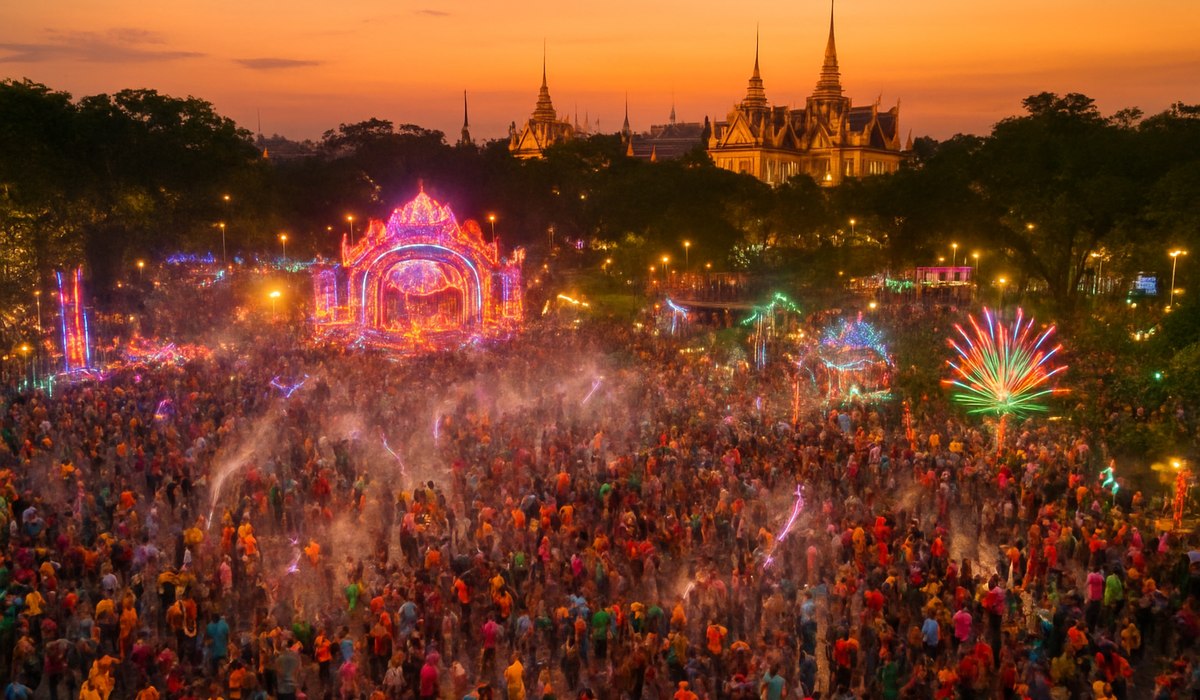
Image generated by AI
Thailand Maha Songkran 2026 Transforms Ancient Tradition Into Global Spectacle
Thailand is reimagining its iconic Maha Songkran water festival as a UNESCO-recognized cultural megaevent, positioning the 2026 celebrations as a defining moment for international tourism. The centerpiece—the Maha Songkran World Water Festival at Bangkok's Benjakitti Park—has already attracted six-figure visitor numbers in opening days, signaling unprecedented global appeal. This strategic expansion reflects Thailand's commitment to leveraging its intangible cultural heritage as soft power, drawing travelers worldwide to experience centuries-old traditions alongside modern festival infrastructure.
Maha Songkran World Water Festival Takes Center Stage
The Thailand Maha Songkran 2026 flagship event transforms Benjakitti Park into a cultural and entertainment nexus spanning parades, live concerts, synchronized light displays, and interactive water-play zones designed for diverse audiences. The Tourism Authority of Thailand has carefully curated programming to balance family-friendly cultural activities with evening entertainment that appeals to international party-goers.
Early attendance data confirms the strategy's success. Early reports indicate six-figure crowds arrived within the opening weekend, significantly exceeding projections. Programming extends across Bangkok's traditional nightlife districts—Silom and Khao San Road—while the Benjakitti venue offers structured cultural experiences unavailable on crowded street corners.
The "Maha" branding deliberately signals grandeur and international ambition. Unlike previous years' more localized celebrations, 2026 represents a coordinated national effort. Extended operating hours, expanded programming, and multi-district promotion create unprecedented scale. This transformation builds on 2025 pilot programs, now amplified with government backing and corporate sponsorship to position Thailand Maha Songkran as Asia's premier water festival destination.
For travelers, this means curated experiences alongside spontaneous street celebrations—choose between temple blessing ceremonies or water-soaked dance parties, depending on your travel style.
Multi-Province Expansion Spreads Economic Benefits Beyond Bangkok
Thailand's 2026 strategy deliberately disperses Maha Songkran celebrations across multiple provinces rather than concentrating all tourism spending in the capital. Major destinations including Phuket, Chiang Mai, and Ayutthaya host large-scale themed events featuring historical processions, elephant-led water blessings, and performances highlighting regional cultural traditions.
This networked approach serves multiple objectives. First, it distributes tourism revenue to provincial economies often underserved during peak seasons. Second, it reduces crowd density at single venues, improving visitor experience and public safety. Third, it encourages longer stays as international travelers explore multiple regions during their Thailand Maha Songkran journey.
The distributed model aligns with Thailand's National Soft Power Strategy Committee priorities. By showcasing diverse regional expressions of Songkran across the nation, Thailand strengthens its cultural narrative. Phuket's beach-integrated celebrations differ markedly from Chiang Mai's mountain temples or Ayutthaya's historical ruins, offering travelers varied experiences within one unified festival framework.
Economic projections suggest Maha Songkran spending reaching tens of billions of baht across all provinces, with significant multiplier effects for hospitality, transportation, and small enterprises nationwide. Hotel occupancy rates in secondary cities have surged compared to previous years.
UNESCO Recognition and Cultural Heritage Drive International Appeal
The Thailand Maha Songkran 2026 expansion gained decisive momentum following UNESCO's late-2023 inscription of Thai Songkran celebrations on the Representative List of Intangible Cultural Heritage of Humanity. This formal recognition transformed water-throwing from casual tourism spectacle into documented global cultural asset.
For international audiences, UNESCO status signals authenticity and historical depth. Behind the exuberant water battles lies sophisticated spiritual practice: water-pouring as blessing for elders, ritual bathing of Buddha statues, sand pagoda construction at temples, and sacred thread-tying ceremonies conferring blessings and merit. Songkran observances center on renewal, cleansing, and familial reunion—philosophical foundations far richer than casual visitors initially recognize.
Thailand's 2026 promotional campaigns deliberately emphasize this cultural narrative. Marketing materials highlight temple activities, traditional music and dance performances, and merit-making opportunities alongside street festival venues. This positioning differentiates Thailand Maha Songkran from other regional water festivals while appealing to travelers seeking authentic cultural immersion, not merely party atmospheres.
Tourism industry analysts note the strategy's effectiveness: travelers increasingly seek meaningful cultural engagement during festivals. By offering both exuberant celebrations and genuine spiritual experiences, Thailand attracts diverse demographic segments. According to UNESCO cultural heritage documentation, Songkran remains central to Thai identity and community practice, particularly in regions beyond major nightlife districts.
International media coverage emphasizing the UNESCO designation has substantially boosted global awareness. Travelers now recognize Maha Songkran as globally significant cultural practice, not merely Thai party tradition.
What Visitors Can Expect at Songkran 2026
The Thailand Maha Songkran 2026 experience combines structured programming with spontaneous street celebrations across multiple venue types:
Benjakitti Park Central Festival Hub features daily parades showcasing traditional dress and choreographed water performances, evening concerts with Thai and international artists, elaborate light installations activating after dark, and designated family zones with water games and cultural workshops. Admission details and schedules are available through the Tourism Authority of Thailand website.
Temple Circuit Experiences offer early-morning merit-making ceremonies, ritual bathing of Buddha statues, sand pagoda construction, and sacred thread blessings conducted by monks. These activities require respectful dress (covered shoulders and knees) and modest behavior.
Street Celebrations in Silom, Khao San Road, and neighborhood sois (alleys) feature spontaneous water battles, food vendor clusters, live music from rooftop bars, and social energy that peaks evening hours. These areas attract younger crowds and require flexibility regarding water exposure.
Provincial Venues showcase regional variations: Phuket's beach-integrated celebrations, Chiang Mai's temple-centric programming, and Ayutthaya's historical processions featuring traditional costumes and elephant participation.
Practical Considerations: Peak crowds occur April 13-15; advance hotel bookings are essential. Waterproof bags protect valuables. Comfortable walking shoes handle wet conditions. Sunscreen and insect repellent prove invaluable. Respect temple dress codes and photography restrictions.
The Thailand Maha Songkran 2026 calendar extends beyond April 13-15, with preliminary events beginning early April and extended celebrations through mid-month at Benjakitti Park.
Key Data: Thailand Maha Songkran 2026 By The Numbers
| Metric | Details |
|---|---|
| Festival Name | Maha Songkran World Water Festival 2026 |
| Primary Venue | Benjakitti Park, Bangkok |
| Opening Weekend Attendance | Six-figure visitor counts (100,000+) |
| UNESCO Recognition Date | Late 2023 (Representative List, Intangible Cultural Heritage) |
| Projected Economic Impact | Tens of billions of baht nationwide |
| Secondary Venues | Phuket, Chiang Mai, Ayutthaya, multiple provinces |
| Operating Period | Early April through mid-April 2026 |
| Event Types | Parades, concerts, cultural ceremonies, water-play zones, light shows |
| Target Audiences | Families, cultural travelers, adventure seekers, international visitors |
| Core Festival Dates | April 13-15 (Thai New |
Disclaimer
This article is for informational and educational purposes only. It does not constitute legal, financial, or professional advice. While we strive to provide accurate and up-to-date information, travel policies, regulations, and conditions change rapidly. Always verify information with official sources before making travel decisions. Nomad Lawyer makes no representations about the accuracy, reliability, completeness, or suitability of the information provided. Readers should consult qualified professionals for advice specific to their circumstances. The views expressed in this article are those of the author and do not necessarily reflect the views of Nomad Lawyer.
Raushan Kumar
Founder & Lead Developer
Full-stack developer with 11+ years of experience and a passionate traveller. Raushan built Nomad Lawyer from the ground up with a vision to create the best travel and law experience on the web.
Learn more about our team →