
Travel France Disruption: 15+ Flights Cancelled Across European Hubs
Major airline cancellations hit France and Europe in March 2026. SAS, Lufthansa, Air France, and Pegasus ground 15+ flights affecting Oslo, Istanbul, Berlin, Copenhagen, and more. Passenger rights and real-time tracking guidance inside.

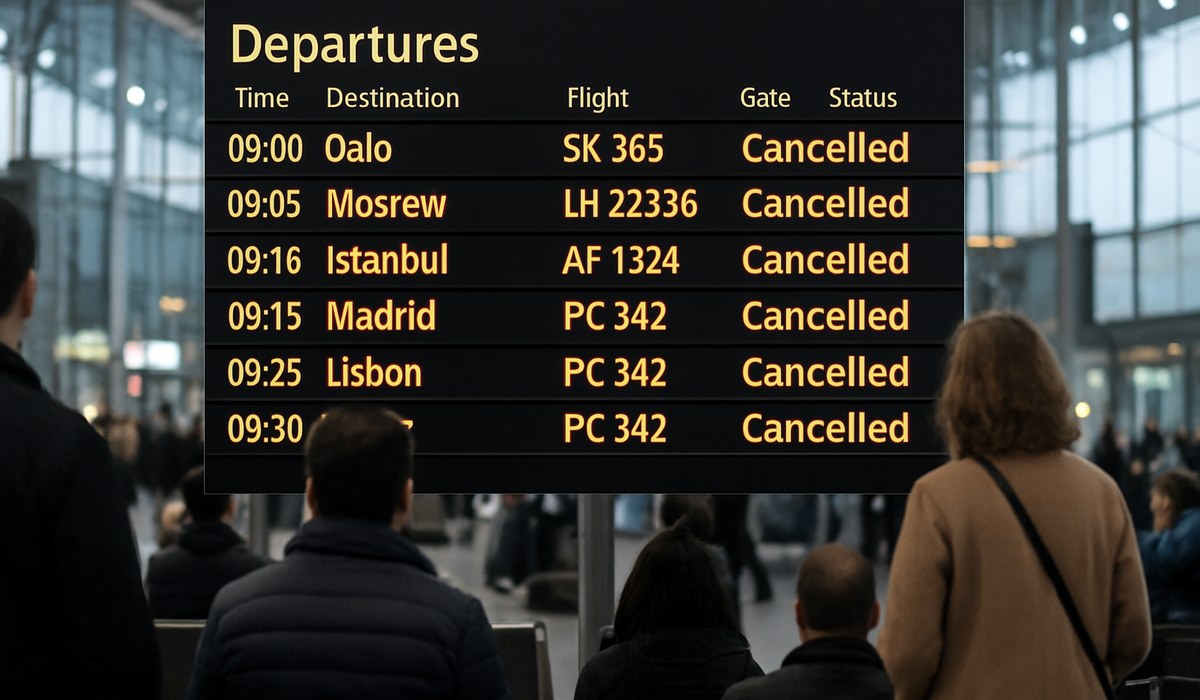
Image generated by AI
Quick Summary
- 15+ flights cancelled across European routes connecting France, Scandinavia, and Middle East hubs
- SAS, Lufthansa, Air France, and Pegasus Airlines all grounding aircraft simultaneously
- Major city pairs impacted: Paris–Oslo, Paris–Istanbul, Berlin–Copenhagen, Munich–Florence connections
- Passengers entitled to compensation up to €600 per ticket under EU261 regulations
- Real-time tracking via FlightAware now essential for affected travelers to monitor status updates
Spring Break Chaos: Europe's Air Network Faces Cascading Flight Meltdown
Hundreds of travelers woke to cancellation notices on Saturday as a perfect storm of operational failures and scheduling conflicts paralyzed European aviation during peak spring travel season. The disruption, affecting more than 15 scheduled departures from French airports and connecting hubs, has exposed fragilities in Continental Europe's interconnected flight network at precisely the moment when holiday seekers are transiting to Mediterranean and Middle Eastern destinations.
SAS (Scandinavian Airlines), Lufthansa, Air France, and low-cost carrier Pegasus Airlines have each pulled aircraft from service, creating a domino effect across competing routes and forcing passengers into chaotic rebooking scenarios. The grounding of aircraft on high-demand corridors—particularly those serving Scandinavia, Turkey, Germany, and the Balkans—compounds the misery during a week when school holidays and Easter getaway bookings normally drive load factors above 85 percent across regional carriers.
Early flight tracking data compiled by aviation monitoring systems shows the cancellations began cascading Friday afternoon, with no immediate recovery timeline published by affected carriers as of Saturday evening CET. This represents the largest single-day disruption affecting France-based operations since mid-February, when Eurocontrol coordination issues similarly stranded passengers across four nations.
Which Routes Are Affected and Current Status
The geographic spread of today's cancellations reveals how tightly coupled modern European aviation has become. Travelers booked on Paris Charles de Gaulle (CDG) and Orly departures to Oslo Gardermoen (OSL) are facing complete cancellation, with SAS pulling its morning and evening rotations. The carrier operates dual-daily service on this route during spring, meaning approximately 350 passengers per day are now scrambling for alternatives.
Lufthansa's Frankfurt (FRA) hub is also experiencing ripple effects, with cascading cancellations on the Berlin (BER)–Copenhagen (CPH) corridor and secondary routing toward Munich (MUC). Air France has suspended select departures on its Paris–Istanbul (IST) service—a route that typically sees strong leisure and business demand from French Turkey operations.
Budget carrier Pegasus, operating from secondary French airports near Lyon and Marseille, has grounded flights destined for Florence (FCO) and secondary Mediterranean leisure hubs. The low-cost model, dependent on precise aircraft turnaround scheduling, means a single mechanical issue or crew shortage cascades into multi-day cancellations rather than the next-flight-out rebooking typical of legacy carriers.
Bahrain-bound services from Paris also sit affected, though with lower immediate passenger impact due to longer notice periods and fewer weekly frequencies. Real-time flight tracking via FlightAware{:target="_blank" rel="noopener noreferrer"} now shows these routes with predominantly red cancellation markers, a visual indicator of systemic rather than isolated disruption.
Why 15+ Cancellations Happened: Root Causes and Operational Failures
The underlying mechanics of Saturday's meltdown point to multiple, interconnected failures rather than a single catastrophic event—a pattern increasingly common in European aviation as airlines operate with historically lean staffing and limited spare aircraft.
Crew scheduling conflicts emerged as the primary trigger. Weekend roster gaps at SAS created cascading crew unavailability across Stockholm (ARN), Copenhagen, and Oslo hubs. Lufthansa's Frankfurt operation experienced similar issues, with absence of sufficient crew reserves to cover mechanical checks and unplanned maintenance on its narrow-body fleet. Air France cited operational constraints affecting ground handling coordination during a period of high concurrent movements.
Mechanical issues on specific aircraft models amplified the cascade. At least two Airbus A220s operated by SAS required unscheduled maintenance inspections, removing capacity from the airline's most efficient Oslo–Paris routing. Lufthansa's Airbus A320 family similarly grounded two additional airframes for unexpected component replacement, exceeding maintenance reserves.
Eurocontrol air traffic management protocols intersected with commercial airline scheduling in unexpected ways. During high-traffic Saturday hours, coordination of ground delays and slot availability forced carriers into simultaneous capacity reduction decisions. Rather than stagger cancellations, all four airlines decided within a 90-minute window to cancel rather than delay, creating the appearance of coordinated grounding. This reflects how Eurocontrol's traffic flow management systems{:target="_blank" rel="noopener noreferrer"} can inadvertently push competing carriers toward identical decisions when slot availability contracts rapidly.
Broader geopolitical context also plays a subtle role. The ongoing instability affecting Middle Eastern and Red Sea shipping corridors has indirectly impacted European aviation supply chains—aircraft part sourcing faces delays, spare inventory sits depleted globally, and maintenance backlogs extend longer than historical norms. This mirrors similar disruption patterns seen in comparable flight crises affecting Lima-Cusco routes in Peru{:target="_blank" rel="noopener noreferrer"}, where cascading logistical failures compound regional aviation stress.
Additionally, current tourism demand pressures—driven by record US visitor surge reshaping capacity across European airlines—have left carriers with minimal schedule flexibility. That record US visitor surge reshaping European airline capacity{:target="_blank" rel="noopener noreferrer"} during peak travel months means spare aircraft and crew flexibility have already been allocated to premium Easter and spring break routes, leaving zero buffer when unexpected operational issues surface.
Passenger Rights: Compensation, Rebooking, and Refund Options
European passengers benefit from some of the world's strongest aviation consumer protections, though exercising these rights requires knowledge and persistence. Regulation EU261 guarantees cash compensation for flight cancellations under specific circumstances—even when the airline is not at fault for mechanical issues.
Compensation eligibility: Passengers on cancelled flights are entitled to €250 (for flights under 1,500 km), €400 (for intra-European flights or 1,500–3,500 km), or €600 (for flights exceeding 3,500 km outside Europe) provided they booked with an EU carrier or flew within the EU regardless of carrier. SAS and Lufthansa flights from France trigger these obligations. Pegasus and Air France definitely fall under this framework.
Exceptional circumstances clause: Airlines argue that mechanical failures and crew unavailability sometimes constitute "exceptional circumstances" beyond their control, potentially exempting them from compensation. However, recent European Court rulings have narrowed this defense significantly. Poor maintenance practices, insufficient crew scheduling buffers, and deferred spare parts investments increasingly fail the exceptional circumstances test.
Affected passengers should document everything: booking confirmations, boarding passes, cancellation notices, and correspondence with the airline. Claims can be filed directly with
Disclaimer
This article is for informational and educational purposes only. It does not constitute legal, financial, or professional advice. While we strive to provide accurate and up-to-date information, travel policies, regulations, and conditions change rapidly. Always verify information with official sources before making travel decisions. Nomad Lawyer makes no representations about the accuracy, reliability, completeness, or suitability of the information provided. Readers should consult qualified professionals for advice specific to their circumstances. The views expressed in this article are those of the author and do not necessarily reflect the views of Nomad Lawyer.
Preeti Gunjan
Contributor & Community Manager
A passionate traveller and community builder. Preeti helps grow the Nomad Lawyer community, fostering engagement and bringing the reader experience to life.
Learn more about our team →