
Tampa International Airport Hit by 35 Flight Delays to Miami and New York: Southwest, American, and Delta Squeezed as Travel Chaos Affects Florida Tourism
A wave of 35 flight delays has hit Tampa International Airport today, causing moderate travel chaos for Southwest, American, and Delta passengers.

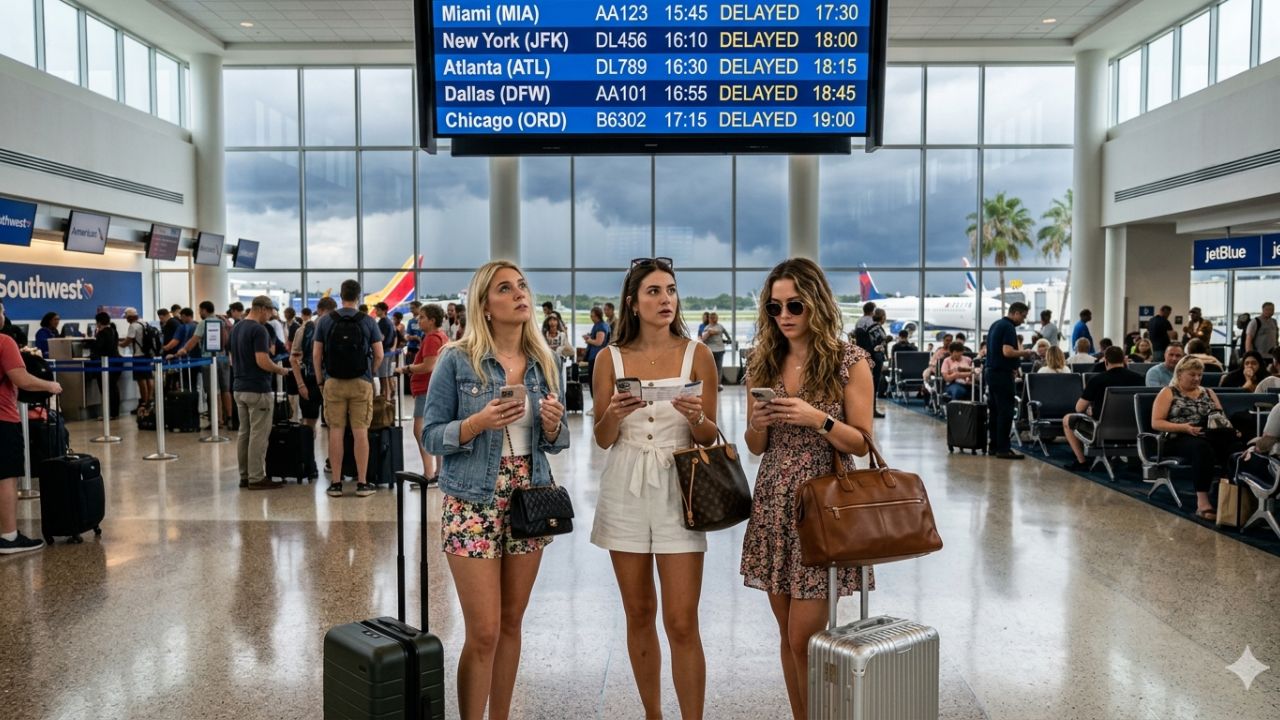
Image generated by AI
In an operational environment defined by booming Florida tourism and highly concentrated domestic connection networks, the premier gateway to the Tampa Bay region has experienced significant scheduling friction. This critical airline news update, breaking this May 17, 2026, reveals that Tampa International Airport (TPA) is currently struggling to manage at least 35 flight delays. While outright flight cancellations were successfully kept at a perfect zero (0) across all scheduled airlines, the accumulated scheduling pressure has introduced moderate travel chaos for passengers bound for high-volume destinations like Miami, New York, and beyond. Prominent carriers—including Southwest Airlines, American Airlines, and Delta Air Lines—are working feverishly to stabilize their fleet rotations as localized airport disruptions ripple throughout their regional networks.
Breaking: The 'Tampa Bay Squeeze' and the Challenge of Peak-Hour Throughput
According to real-time status reports compiled from Federal Aviation Administration (FAA) and consolidated flight status systems, the scheduling pressure at TPA has created notable bottlenecks across both domestic and international operations. The official logs confirm that 35 flights faced delays, with departures and arrivals pushed past their scheduled slots, despite a perfect 0 percent flight cancellation rate.
This is a vital aviation update for the 2026 Florida travel corridor. Because TPA serves as a large hub airport under FAA classification—processing more than 24.8 million passengers as of 2025—any delay backlog quickly propagates. While keeping cancellations at absolute zero represents an admirable operational achievement, the accumulation of delays has created boarding gate bottlenecks, strained terminal seating capacities, and forced passengers to adjust tight transit plans.
Expanded Overview: Ground Operations and Travel Interdependence
The total of 35 delays and 0 cancellations highlights how quickly a minor schedule slip can disrupt airport throughput:
- The Southwest Dominance: As the primary operator at TPA, Southwest Airlines bore the absolute brunt of today's scheduling friction, accounting for 14 of the delayed flights.
- The Legacy Squeeze: Legacy giants American Airlines and Delta Air Lines each reported multiple delays, complicating corporate travel connections.
- The International and Boutique Squeeze: Major and regional boutique carriers—including Breeze Airways, Cayman Airways, Discover, JetBlue, Frontier, and WestJet—also recorded delays, albeit in smaller numbers.
Airlines are urging travelers to utilize their official mobile applications to monitor gate assignments and departure status, as airport ground logistics personnel work to clear the departure queue.
Section-Wise Breakdown: Evaluating the Carrier Impact
Southwest Airlines: Managing the TPA Point-to-Point Network
With Tampa operating as a major crew and aircraft base for Southwest, the carrier’s 14 delayed departures severely tested its regional scheduling resilience. Because Southwest relies heavily on quick point-to-point turnaround times, a minor gate delay in the morning easily cascades into multiple delays across the country by late afternoon, complicating crew rotations and maintenance planning.
Legacy Giants: American and Delta Operational Bottlenecks
Legacy giants American Airlines and Delta Air Lines reported 6 and 4 delays respectively today. These delays primarily affected high-yield business flights bound for major transit hubs, forcing corporate travelers to adjust their arrival times and layover plans.
Frontier & JetBlue: Florida Vacation Corridors Delayed
Discount operators Frontier Airlines and JetBlue Airways experienced notable scheduling friction today, logging 4 and 3 delays respectively. With high load factors on their Florida vacation routes, these delays left families and tourists searching for gate updates at TPA.
International and Boutique Operators: Cayman, Discover, and WestJet
Smaller international and boutique lines featured on the delay logs in smaller numbers but with notable operational percentages. Cayman Airways reported 1 delay (representing 50% of its scheduled operations), German leisure carrier Discover logged 1 delay (25%), and Canadian carrier WestJet registered 1 delay (50%), while local startup Breeze Airways logged 1 delay.
Ground Operations and Tourism Impact
Even without cancellations, TPA's passenger terminals experienced severe gate clustering, crowded boarding lounges, and real-time smartphone alert surges. As a major travel gateway to Tampa Bay, flight delays carry direct economic consequences, complicating logistics for local hotels, ground transport services, and premium tourist attractions like Busch Gardens and the Florida Aquarium as guests arrive late.
Flight Details: TPA Airport Disruption Profile
The following table details the precise, uncompromised operational metrics of the flight delays and cancellations recorded at Tampa International Airport on May 17, 2026, under FlightAware tracking.
TPA Airport Disruption Matrix
| Operating Carrier | Cancellations Recorded | Cancellation % | Delays Logged | Delayed % / Performance |
|---|---|---|---|---|
| Southwest Airlines | 0 | 0% | 14 | Core Regional Squeeze |
| American Airlines | 0 | 0% | 6 | Moderate Legacy Backlog |
| Delta Air Lines | 0 | 0% | 4 | Moderate Legacy Backlog |
| Frontier Airlines | 0 | 0% | 4 | Discount Corridor Hold |
| JetBlue Airways | 0 | 0% | 3 | Discount Corridor Hold |
| Cayman Airways | 0 | 0% | 1 | 50% of Operations |
| Discover | 0 | 0% | 1 | 25% of Operations |
| WestJet | 0 | 0% | 1 | 50% of Operations |
| Breeze Airways | 0 | 0% | 1 | Startup Route Friction |
| Total TPA Operations | 0 | 0% | 35 | 100% Cancellation Protection |
Passenger Impact: Responding to TPA Delays
For the Florida traveler, navigating flight delays requires proactive preparation and knowledge of consumer rights:
- Antidote to Travel Chaos: Do not head to the airport without verifying your flight status. Prioritize carrier-specific mobile alerts over terminal flight boards, as airlines push updates to digital channels first.
- Allow Ample Time: The BNA and TPA official travel advisories recommend that travelers check flight statuses directly with their air carriers, use mobile tracking tools, and allow ample time for check-in and security procedures.
- Inform Travel Partners: Because Tampa is a crucial gateway for major conventions and leisure tourism, delayed passengers should proactively inform local hotels and ground transportation drivers about adjusted arrival times to avoid cancellation penalties.
- Flexible Itineraries: Keep your travel schedule as flexible as possible, and carry essential chargers, toiletries, and medications in your carry-on luggage in case of extended terminal waits.
Industry Analysis: Root Causes of National Airspace Congestion
Aviation specialists believe today's Tampa delays illustrate a classic "National Airspace System" (NAS) challenge:
- FAA Airspace and Traffic Spacing Constraints: Tampa operates under dense airspace, and FAA airspace performance data shows how localized weather conditions or thunderstorms in the Gulf of Mexico easily trigger arrival delays into TPA.
- Late-Arriving Inbound Cascades: The primary driver of domestic delays is the late arrival of inbound aircraft from other crowded hubs like Atlanta, Dallas, or Newark. Minor delays there quickly cascade into Florida.
- Point-to-Point Fleet Utilization: Low-cost operators like Southwest and Frontier maintain exceptionally high fleet utilization rates, meaning that a minor gate hold-up instantly cascades into multiple domestic delays across the day.
Conclusion: Tampa Bay Travel System Shows Resilience
The current state of aviation updates for May 17, 2026, confirms that while Tampa International Airport faced significant operational friction today, the hub's infrastructure remains exceptionally robust. The 35 delays and 0 cancellations represent a challenging afternoon, but the coordinated response of TPA’s air traffic control tower, terminal staff, and airline dispatchers is successfully managing the passenger flow. As aircraft continue to push back into the Florida skies, the focus remains firmly on ensuring that passenger safety remains the ultimate measure of TPA’s recovery.
Key Takeaways
- The Numbers: 35 flight delays recorded at Tampa International (TPA) Airport today.
- The Cancellations: Perfect 0% cancellation rate across all scheduled carriers.
- Primary Carrier Affected: Southwest Airlines accounted for 14 of the delayed departures.
- Other Impacted Carriers: American (6 delays), Delta (4 delays), Frontier (4 delays), and JetBlue (3 delays).
- Target Routes: Delays primarily impacted high-volume corridors to Miami and New York.
- The Cause: Saturated national air traffic flow constraints, Gulf weather, and cascading inbound delays.
- Advice: Monitor carrier mobile apps closely and allow ample terminal check-in buffer times.
- Status: Moderate domestic delays have successfully cleared.
Related Travel Guides
Disclaimer
This article is for informational and educational purposes only. It does not constitute legal, financial, or professional advice. While we strive to provide accurate and up-to-date information, travel policies, regulations, and conditions change rapidly. Always verify information with official sources before making travel decisions. Nomad Lawyer makes no representations about the accuracy, reliability, completeness, or suitability of the information provided. Readers should consult qualified professionals for advice specific to their circumstances. The views expressed in this article are those of the author and do not necessarily reflect the views of Nomad Lawyer.
Kunal K Choudhary
Co-Founder & Contributor
A passionate traveller and tech enthusiast. Kunal contributes to the vision and growth of Nomad Lawyer, bringing fresh perspectives and driving the community forward.
Learn more about our team →