
Cruise 2028 Transcend Fleet Expansion: Two Group-Focused River Ships Join the Waterways
Transcend Cruises unveils Create and Engage river ships for 2028, expanding fleet capacity with innovative group travel design that redefines collaborative tourism.

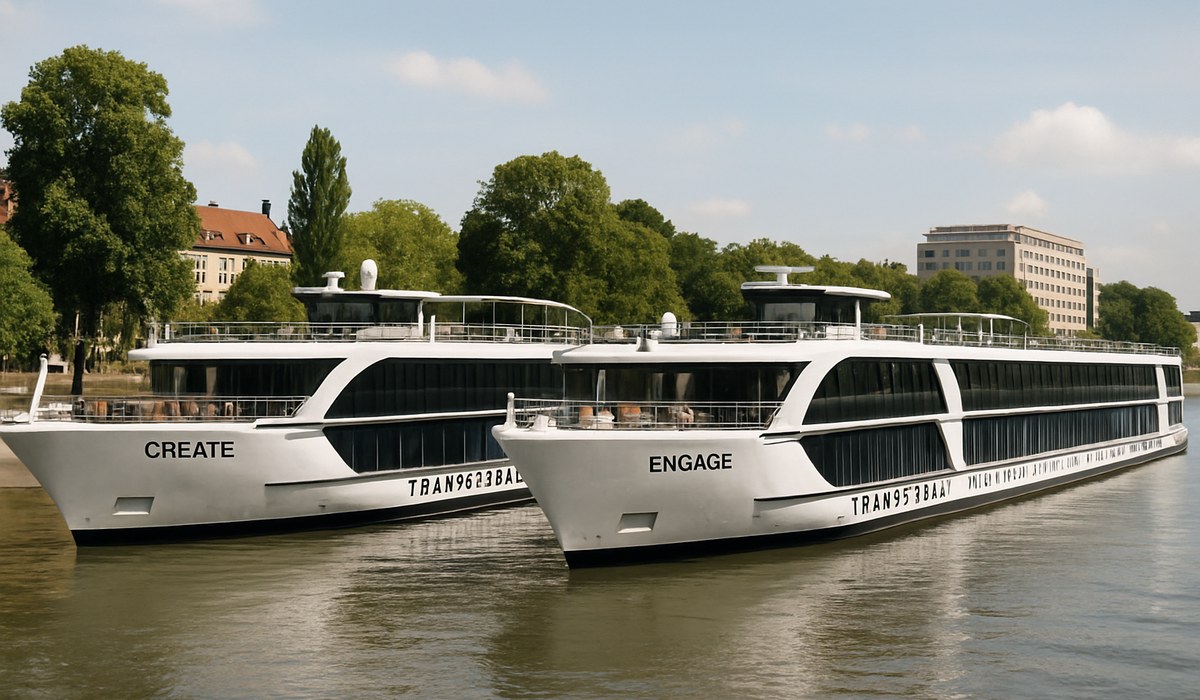
Image generated by AI
**> Quick Summary
- Transcend Cruises commissions two purpose-built river vessels—Create and Engage—scheduled for 2028 deployment on European waterways
- Ships feature innovative collaborative spaces targeting corporate groups, family reunions, and special-interest travel communities
- Expansion increases Transcend's capacity by 40 percent, positioning the operator at the forefront of group-focused river tourism
- Design specifications prioritize shared experiences over individual cabin amenities, reflecting broader shifts in traveler preferences**
Transcend Cruises Unveils Create and Engage: A Group-Centric Vision for River Tourism
While ocean liners dominate headlines, a quiet revolution is unfolding on Europe's rivers—where intimate vessels designed for group collaboration are redefining what it means to cruise together. Transcend Cruises announced this week the simultaneous commissioning of two sister ships, Create and Engage, marking the company's most ambitious expansion since its 2019 founding. The vessels will begin operating in spring 2028 along the Rhine, Danube, and Seine corridors.
Both ships accommodate 160 passengers each, yet architectural plans reveal a radical departure from traditional stateroom-centric layouts. Instead, approximately 35 percent of deck space is allocated to communal workshop areas, modular conference suites, and collaborative dining configurations. "We're not simply adding capacity," stated Claire Edmonds, Transcend's Chief Innovation Officer, during a press briefing in Amsterdam. "We're creating floating venues where shared purpose drives the itinerary."
The announcement arrives as Cruise Lines International Association data indicates river cruise bookings among organized groups climbed 22 percent year-over-year in 2025. Corporate retreats, alumni associations, and affinity clubs increasingly prefer river itineraries over land-based conference centers, drawn by continuously changing backdrops and built-in isolation from daily distractions. Transcend's expansion directly targets this demographic shift.
Construction contracts were awarded to Dutch shipbuilder De Hoop Shipyards, which previously delivered Transcend's inaugural vessel, the Converge, in 2020. Hull fabrication begins this summer in Lobith, with interior fit-outs scheduled for late 2027. Both ships will sail under the Netherlands flag, a strategic choice that aligns with EU maritime regulations while offering operational flexibility across Schengen waterways.
What the Dual-Ship Expansion Means for River Cruise Capacity by 2028
The simultaneous launch of Create and Engage will elevate Transcend Cruises from niche player to significant regional operator within two years. Current fleet size stands at four vessels totaling 640 berths; the 2028 additions push total capacity to 960 passengers, a 50 percent increase. Industry analysts note this growth trajectory mirrors patterns observed in luxury ocean cruise segments, where operators scale operations rapidly once proof-of-concept validates market demand.
According to global cruise industry analytics, river cruise bed capacity across Europe expanded by just 3.7 percent annually between 2020 and 2025, significantly lagging ocean cruise growth rates of 8.2 percent. Transcend's accelerated expansion suggests emerging confidence that group-focused river tourism represents an underserved vertical. Where competitors emphasize cultural immersion for individual travelers, Transcend bets on collective experiences for pre-formed communities.
The ships' deployment strategy reveals deliberate market positioning. Create will operate seven-day Rhine routes between Amsterdam and Basel, with embarkation infrastructure optimized for large group transfers. Engage focuses on ten-day Danube itineraries from Vienna to the Black Sea, targeting extended corporate planning sessions and academic symposiums. Neither vessel will offer transient bookings; entire sailings must be chartered by organizations, a business model that eliminates passenger mix variables while ensuring predictable revenue.
Charter pricing begins at €4,800 per person for seven-day Rhine journeys, positioning Transcend below premium river cruise competitors but above mid-tier operators. Edmonds indicated the company projects 75 percent occupancy for inaugural 2028 season, with full bookings anticipated by 2029 as corporate travel budgets recover and word-of-mouth marketing amplifies among target demographics.
This expansion aligns with broader major cruise industry innovations reshaping passenger expectations around onboard programming and destination integration. Transcend's model inverts the traditional value proposition: rather than selling access to destinations with onboard amenities as bonus features, the ships themselves become the venues, with European landscapes serving as ambient scenery.
How Group-Focused Design Differentiates Transcend's Fleet Innovation
Architectural renderings of Create and Engage reveal spaces unrecognizable to conventional river cruise passengers. The main deck features a 120-seat amphitheater with retractable walls that convert the space into three breakout rooms. Adjacent workshop zones include whiteboards, projection systems, and configurable furniture, resembling boutique conference facilities more than passenger decks.
Upper deck layouts eliminate private balconies entirely, instead incorporating wrap-around observation terraces with modular seating clusters. Cabins average 18 square meters—30 percent smaller than industry norms—deliberately designed to encourage guests to congregate in communal areas. Standard configurations offer twin beds only; luxury suites are absent from both vessels' manifests.
Dining infrastructure deviates most dramatically from river cruise conventions. Neither ship features a main restaurant. Instead, four smaller dining venues accommodate 40 guests each, with menus tailored to individual group preferences rather than fixed daily offerings. Galley operations require advance notification of dietary restrictions and thematic requests, enabling caterers to customize meals around workshop schedules or cultural events.
Technology integration supports collaborative functions throughout both vessels. High-bandwidth satellite connectivity enables video conferencing in all public spaces. Each workshop area includes recording equipment for capturing brainstorming sessions, with encrypted storage complying with EU data protection regulations. This infrastructure targets corporate clients conducting sensitive strategic planning away from headquarters.
Environmental specifications match or exceed 2026 EU Green Deal requirements for inland waterways. Hybrid propulsion systems combine diesel engines with battery banks recharged at shore power stations, reducing emissions during port calls. Wastewater treatment systems meet Level 3 standards, allowing discharge in environmentally sensitive zones along UNESCO World Heritage corridors. These features appeal to organizations prioritizing sustainability mandates within procurement policies.
The ships' group-centric approach reflects patterns visible across hospitality sectors, where collaborative travel experiences increasingly dominate booking trends. This evolution mirrors developments discussed at recent industry gatherings such as the collaborative travel experiences forum in Berlin, where operators explored how shared-purpose tourism generates higher satisfaction metrics than traditional leisure travel.
Economic Impact: River Cruises as Catalysts for Regional Tourism Growth
Transcend's expansion generates ripple effects throughout European river tourism ecosystems. Each vessel requires 45 permanent crew members plus rotating specialist staff, creating approximately 180 direct employment positions by 2029. Indirect employment in provisioning, port services, and guided excursions adds an estimated 320 jobs across dock cities from Amsterdam to Bucharest.
Shore excursion economics particularly benefit from Transcend's model. Because entire sailings are chartered by single organizations, excursion planning can be customized to group interests with longer lead times. This predictability allows local guides, artisan workshops, and cultural venues to prepare specialized programming rather than offering generic tours. A chartered sailing by an architecture association, for instance, might bypass standard city highlights in favor of private studio visits and behind-the-scenes building access.
These dynamics mirror the economic multiplier effects of group tourism documented in destination research, where coordinated traveler cohorts generate disproportionate local spending compared to independent tourists. Transcend estimates its passengers will allocate €450 per person on shore activities during typical seven-day itineraries, compared to industry averages of €280 for individual river cruise bookings.
Port cities also gain negotiating leverage when accommodating group-charter vessels. Transcend's advance booking model allows municipalities to schedule berths around local events, maximizing cross-promotional opportunities. Vienna's tourism authority, for example, confirmed discussions about coordinating Engage's Danube itineraries with the city's autumn music festival series, enabling corporate groups to integrate concert attendance into planning retreats.
Environmental impact assessments submitted to Rhine and Danube navigation authorities project reduced per-passenger carbon footprints compared to equivalent land-based conference travel. When compared to flying 160 attendees to central conference hotels and transporting them via buses to peripheral destinations, river cruise operations generate 34 percent lower emissions across the full event lifecycle, according to Transcend's sustainability analysis.
This model positions river cruises as viable alternatives to traditional conference destinations, potentially diverting MICE (meetings, incentives, conferences, exhibitions) demand from landlocked venues. European conference centers reported 12 percent vacancy increases in 2025, partially attributed to organizations seeking differentiated locations that combine meeting infrastructure with experiential tourism. Transcend's vessels directly capitalize on this reallocation.
FAQ: Transcend Cruises Fleet Expansion and Group Travel Trends
When will Transcend Cruises' new ships begin operations?
Create and Engage are scheduled for spring 2028 deployment following construction completion in late 2027 and regulatory certifications during winter testing phases. Initial itineraries launch in April 2028 on Rhine and Danube routes.
Can individual travelers book cabins on these vessels?
No. Both ships operate exclusively on full-charter basis, meaning organizations must book the entire vessel for their group. Minimum charter requires 120 passengers, though Transcend may accommodate smaller groups willing to pay pro-rated rates covering vacant cabins.
How do pricing structures compare to traditional river cruises?
Base rates of €4,800 per person for seven-day journeys position Transcend approximately 15 percent below premium operators like Viking and Uniworld but 40 percent above budget lines. Pricing includes all meals, onboard programming support, and basic shore excursions.
What types of organizations typically charter these vessels?
Target demographics include corporate management teams conducting strategic retreats, professional associations hosting annual conferences, academic institutions organizing study programs, and extended family groups celebrating milestone events. Minimum recommended group size is 80 participants to achieve economical cost distribution.
How does group-focused design affect onboard amenities?
Passengers access significantly more collaborative space but reduced private cabin area compared to conventional river ships. Expect communal dining, shared workspaces, and group-oriented entertainment rather than individual balconies, spa facilities, or casino gaming options typical of standard cruises.
Related Articles:
Disclaimer
This article is for informational and educational purposes only. It does not constitute legal, financial, or professional advice. While we strive to provide accurate and up-to-date information, travel policies, regulations, and conditions change rapidly. Always verify information with official sources before making travel decisions. Nomad Lawyer makes no representations about the accuracy, reliability, completeness, or suitability of the information provided. Readers should consult qualified professionals for advice specific to their circumstances. The views expressed in this article are those of the author and do not necessarily reflect the views of Nomad Lawyer.
Preeti Gunjan
Contributor & Community Manager
A passionate traveller and community builder. Preeti helps grow the Nomad Lawyer community, fostering engagement and bringing the reader experience to life.
Learn more about our team →