
Transatlantic U-Turn: Delta Air Lines Flight Returns to Boston After 30 Minutes Due to Smoke in Cabin
Delta Air Lines transatlantic flight returned to Boston Logan after 30 minutes due to smoke detected aboard, highlightin

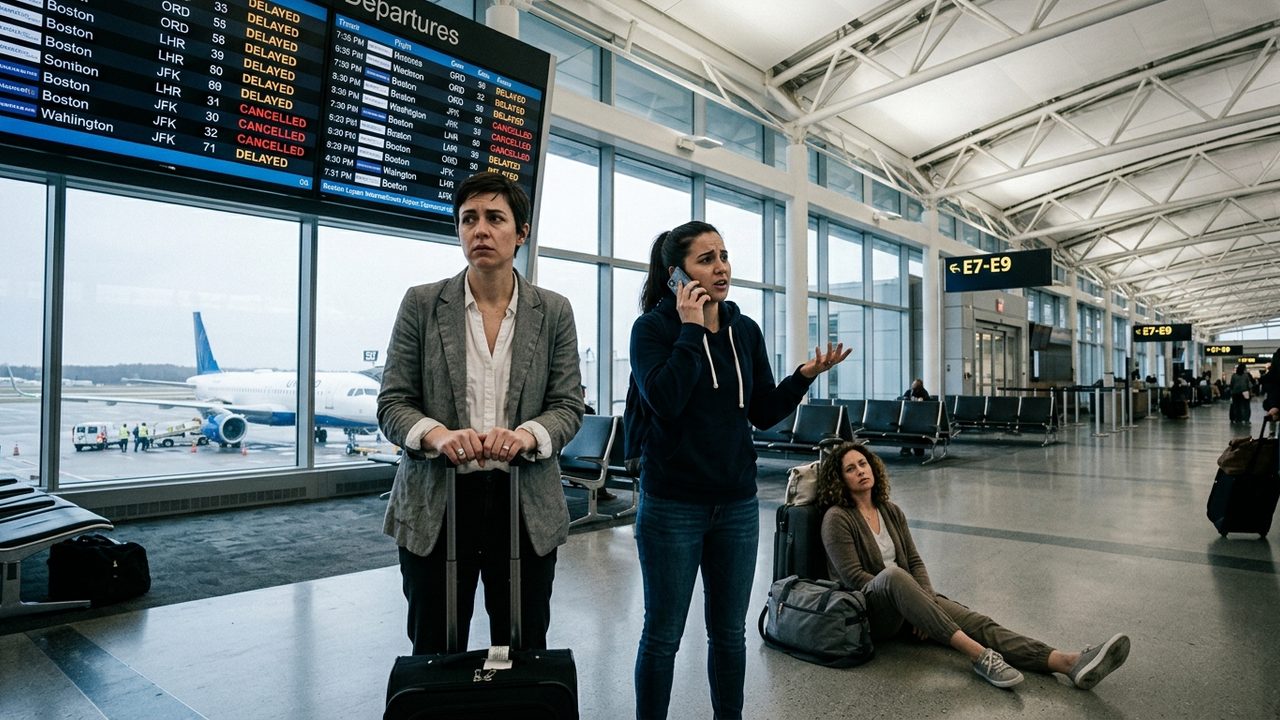
Image generated by AI
[Boston, June 26, 2026] — A Delta Air Lines transatlantic departure was abruptly halted on June 26, 2026, when the crew detected smoke aboard the aircraft roughly 30 minutes after takeoff, forcing the pilots to execute an immediate return to Boston Logan International Airport. The incident underscores the persistent challenges airlines face with in-flight smoke events, which rank among the most serious non-routine scenarios commercial flight crews manage over the Atlantic.
The Delta Air Lines flight had departed Boston Logan International Airport (BOS) bound for a transatlantic destination when the situation developed approximately half an hour into the climb. Flight tracking data and reports from industry observers confirm the aircraft reversed course and landed safely back at the departure airport. No injuries were reported among passengers or crew, according to preliminary information.
Delta Air Lines Transatlantic Departure Interrupted by Smoke Detection
The flight was operating a transatlantic route from Boston, one of Delta's key East Coast gateway airports for European service. Boston Logan serves as a major hub for Delta's international network, connecting passengers to destinations across Europe and beyond. The airline maintains a significant presence at Logan, with daily departures to multiple overseas cities.
According to reports, the crew identified smoke within the aircraft cabin or cockpit environment approximately 30 minutes after wheels-up. The exact source of the smoke was not immediately disclosed. Aviation safety protocols require flight crews to treat any visible smoke or unusual odor as a potential emergency, particularly on overwater departures where diversion options are limited once the aircraft is beyond the coastline.
The decision to return to Boston was made rapidly, consistent with standard airline operating procedures for smoke or fire events. Once an aircraft is still within range of its departure airport during the initial phase of flight, returning to that airport is often the most operationally sound choice, given that the aircraft is familiar with the airport, fuel loads are still high, and ground support is readily available.
Boston Logan International Airport Response and Aircraft Recovery
Boston Logan International Airport, identified by IATA code BOS and ICAO code KBOS, is equipped to handle such diversions and emergency returns. The airport's emergency response teams are trained for a wide range of aviation incidents, including smoke and fire-related events. On this occasion, the aircraft landed without further complication, and passengers were able to deplane normally upon arrival.
Industry sources indicate that the aircraft involved was inspected by maintenance personnel after landing. Smoke events can originate from multiple sources, including electrical systems, air conditioning packs, galley equipment, or hydraulic fluids encountering hot surfaces. Identifying the root cause typically requires a thorough maintenance inspection, and the aircraft may be removed from service pending that investigation.
Delta Air Lines has not yet released a detailed public statement regarding the specific cause of the smoke, the aircraft type involved, or the number of passengers aboard. The airline is expected to conduct a full internal review in coordination with relevant aviation safety authorities.
In-Flight Smoke Events Remain a Critical Safety Priority
Smoke in the cabin or cockpit is treated as one of the most urgent situations in commercial aviation. The Federal Aviation Administration (FAA) and international regulators require airlines to maintain detailed procedures for smoke and fire detection, isolation, and elimination. Flight crews undergo recurrent training to handle these scenarios, which can escalate rapidly if the source is not identified and addressed.
On transatlantic routes, the stakes are higher because aircraft operate over vast stretches of open ocean where diversion airports are sparse. The North Atlantic track system, which governs eastbound and westbound traffic between North America and Europe, routes aircraft over areas where the nearest suitable alternate airport could be hundreds of nautical miles away. For this reason, any smoke event detected during the early portion of a transatlantic flight — before the aircraft has committed to the oceanic crossing — almost always results in a return to the departure airport or diversion to a nearby suitable airfield.
The first 30 to 45 minutes of any long-haul flight represent a critical window. During this phase, the aircraft is still relatively close to its origin, fuel weight is at its maximum, and the crew has not yet entered the oceanic airspace where communication and diversion options become more constrained. Returning during this window is a standard and prudent operational decision.
Delta Air Lines' Boston Transatlantic Network and Operational Implications
Delta Air Lines operates a robust transatlantic schedule from Boston Logan, serving multiple European destinations with a mix of widebody and narrowbody aircraft depending on route requirements. The airline has invested significantly in its Boston operations in recent years, positioning the airport as a secondary East Coast international gateway alongside its primary hub at New York's John F. Kennedy International Airport (JFK).
When an aircraft is removed from service due to a smoke event, the operational ripple effects can be substantial. Depending on the aircraft type and the severity of the underlying issue, the aircraft may be out of service for several hours or even days while maintenance teams diagnose and repair the problem. If no spare aircraft is available, the airline may need to delay or cancel subsequent flights, rebook passengers on alternative routings, or substitute a different aircraft type.
For transatlantic operations, the impact can be magnified because long-haul aircraft are typically scheduled tightly, with limited downtime between rotations. A single aircraft going out of service can disrupt multiple flights across a 24- to 48-hour period, affecting hundreds of passengers.
Passenger Experience and Airline Communication During Diversion Events
For passengers aboard the flight, a sudden return to the departure airport after just 30 minutes in the air can be disconcerting, even when the landing is uneventful. Airlines are required to keep passengers informed during irregular operations, though the level of detail provided varies depending on the situation and the phase of flight.
In smoke-related events, cabin crews are trained to manage passenger communication carefully, balancing transparency with the need to avoid unnecessary alarm. Passengers typically receive updates from the flight deck once the aircraft is on the ground and the situation has stabilized.
Following such incidents, airlines generally arrange accommodations, rebooking, or alternative transportation for affected travelers. The timeline for resuming the affected route depends on aircraft availability, crew duty limitations, and the outcome of the maintenance inspection.
Aviation Safety Record and Broader Industry Context
The broader aviation industry has made significant strides in reducing in-flight smoke and fire events over the past two decades. Modern aircraft are equipped with advanced smoke detection systems in cargo holds and lavatories, and cabin materials are subject to stringent flammability standards. However, smoke events still occur, often linked to aging electrical components, galley malfunctions, or environmental factors such as hydraulic fluid leaks.
Regulatory bodies including the FAA, the European Union Aviation Safety Agency (EASA), and the International Civil Aviation Organization (ICAO) continue to refine requirements for smoke detection and suppression systems. Incidents like the Delta return to Boston contribute to the industry's safety database, helping regulators and manufacturers identify trends and implement preventive measures.
Why This Matters: The Broader Impact on Transatlantic Aviation Safety
The Delta Air Lines return to Boston highlights a fundamental reality of transatlantic operations: the early phase of any long-haul overwater flight is a decision point that crews must manage with precision. When smoke is detected within the first 30 minutes, the operational calculus is straightforward — the aircraft is still close to a major airport, fuel is heavy but manageable, and the risk of continuing over the Atlantic with an unidentified smoke source is unacceptable by any standard.
This incident also illustrates the layered safety architecture that modern commercial aviation relies upon. Flight crews are trained to respond decisively, air traffic control coordinates the return efficiently, airport emergency services stand ready, and maintenance teams begin their diagnostic work immediately upon landing. Each layer functions as a backup to the others, ensuring that even unexpected events like smoke in the cabin resolve without harm to passengers or crew.
For the traveling public, incidents like this serve as a reminder that aviation safety is not static. Every smoke event, every diversion, and every emergency return generates data that feeds back into training programs, maintenance protocols, and aircraft design improvements. The fact that the Delta flight returned safely to Boston is not luck — it is the product of decades of accumulated safety knowledge, rigorous crew training, and an industry culture that prioritizes caution over schedule when the situation demands it.
As transatlantic traffic continues to recover and grow, particularly from major East Coast gateways like Boston, the frequency of such events — while rare on a per-flight basis — will remain a reality that airlines, regulators, and passengers must understand. The system's ability to handle these events safely is what distinguishes modern commercial aviation as one of the safest forms of transportation in the world.
Related Travel Guides
Disclaimer
This article is for informational and educational purposes only. It does not constitute legal, financial, or professional advice. While we strive to provide accurate and up-to-date information, travel policies, regulations, and conditions change rapidly. Always verify information with official sources before making travel decisions. Nomad Lawyer makes no representations about the accuracy, reliability, completeness, or suitability of the information provided. Readers should consult qualified professionals for advice specific to their circumstances. The views expressed in this article are those of the author and do not necessarily reflect the views of Nomad Lawyer.
Preeti Gunjan
Contributor & Community Manager
A passionate traveller and community builder. Preeti helps grow the Nomad Lawyer community, fostering engagement and bringing the reader experience to life.
Learn more about our team →