
Toronto Pearson Delays Snarl Canadian and U.S. Routes in April 2026
Toronto Pearson International Airport experienced 113 delays and 9 cancellations on April 11, 2026, disrupting major routes to Chicago, St. John's and beyond. Air Canada, WestJet and Porter Airlines faced significant schedule impacts across Canada and U.S. corridors.

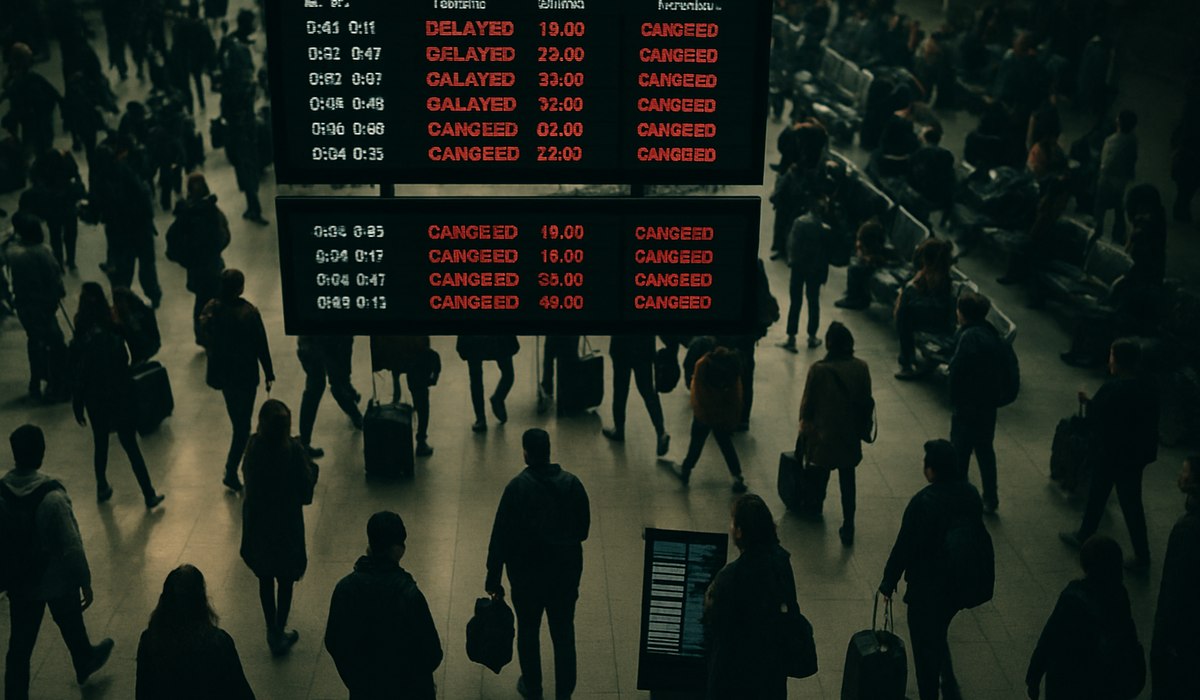
Image generated by AI
Major Operational Disruption Hits Canada's Largest Aviation Hub
Toronto Pearson International Airport logged a staggering 113 delayed flights and 9 cancellations on April 11, 2026, creating a cascade of schedule disruptions across critical Canadian and U.S. travel corridors. The incident affected multiple carriers including Air Canada, WestJet, Porter Airlines and Jazz Aviation, with ripple effects extending to high-traffic routes serving Chicago, St. John's, Newfoundland and Labrador, and dozens of other destinations. This operational strain underscores the mounting pressure facing North America's busiest cross-border gateway during peak spring travel season.
Fresh Wave of Disruptions at Canada's Busiest Hub
Toronto Pearson's April 11 disruption represents another significant capacity challenge for the airport, which has reported triple-digit delay totals on multiple occasions throughout early April 2026. Flight tracking data from services like FlightAware captured the real-time operational breakdown as ground holds and aircraft rotation delays compounded throughout the day.
The concentration of delays during morning and midday banking periods—when airlines schedule coordinated flight waves—proved particularly damaging. Once irregular operations take root early in a travel day, recovery becomes exponentially more difficult. Evening departures often absorb accumulated delays from morning disruptions, creating a domino effect that extends passenger impact well into the night.
Industry observers tracking Pearson's recent performance note a troubling pattern of operational strain that has persisted beyond typical seasonal variation. The combination of high passenger demand, tightly choreographed crew rotations, and constrained ground infrastructure continues to challenge the airport's ability to handle peak-period traffic volumes.
Which Airlines Were Most Affected
Air Canada and its subsidiary Air Canada Rouge absorbed the largest share of April 11's disruptions, reflecting their dominant network presence at Toronto Pearson. The carrier operates multiple daily frequencies on core domestic and transborder routes, meaning schedule disruptions ripple across hundreds of connecting passengers.
WestJet, which relies on Pearson as a critical eastern Canadian hub, experienced numerous delayed departures and arrivals. While outright cancellations remained limited compared to earlier weather-related events in 2026, extended delays created cascading crew scheduling challenges throughout the airline's eastern network.
Porter Airlines, expanding its Pearson operations alongside its City Airport presence, reported multiple delayed flights during peak periods. The carrier's business-focused schedule operates on tight timing margins, making it particularly vulnerable to ground congestion and air traffic control holds.
Jazz Aviation, operating regional flights on capacity purchase agreements, contributed several delayed departures and at least one cancellation to the overall disruption tally. Regional carrier delays carry disproportionate impact since many Jazz flights feed passengers into longer-haul connections.
What's Causing the Operational Strain
Operational experts identify several converging factors driving Pearson's recent performance challenges. Aircraft rotation constraints—the tight scheduling required to keep planes flying—leave minimal buffer time when unexpected delays occur. Crew availability limitations, particularly following intensive spring scheduling, further restrict airlines' ability to deploy recovery aircraft and crews.
Peak travel banking periods, when multiple airlines schedule departure waves simultaneously, concentrate demand on ground infrastructure including gates, pushback equipment and runway access. Toronto Pearson's physical capacity constraints during these busy windows create the conditions for cascading delays when even minor disruptions occur.
Weather-related spacing requirements and air traffic control flow management directives from the FAA can amplify local disruptions, particularly on cross-border routes where U.S. airspace constraints affect Canadian flights.
What Travelers Should Know
Passengers affected by Toronto Pearson delays deserve clear guidance on their rights and recovery options. Under U.S. Department of Transportation regulations and Canadian transportation rules, carriers must provide specific accommodations for delays and cancellations.
Delays exceeding three hours on international flights entitle passengers to potential compensation under applicable regulations. Carriers must rebook affected passengers on alternative flights at no additional cost or provide refunds. Hotels, meals and ground transportation may be reimbursable depending on circumstances and carrier policy.
Travelers should document all out-of-pocket expenses with receipts, photograph boarding passes and delay notices, and maintain detailed travel records. Contact airline customer service immediately upon learning of disruptions rather than waiting for automated communications.
Traveler Action Checklist
- Verify your flight status on FlightAware or your airline's official app before heading to the airport
- Document all disruption details including flight number, scheduled departure time, actual departure and the reason provided by airline staff
- Request written confirmation from airline staff of the delay or cancellation and collect agent names and badge numbers
- Gather receipts for all expenses including meals, hotels, ground transportation and communications
- Photograph your boarding pass, the departure board showing the delay, and any airline communications about the disruption
- Contact your airline's customer service department within 48 hours with your claim and supporting documentation
- File a formal complaint with your national aviation authority if the carrier denies reasonable compensation requests
- Review your travel insurance policy for potential coverage of missed connections or overnight accommodation
- Contact your credit card issuer to report the disruption if you paid by card; some cards offer travel delay protection
- Keep copies of all correspondence with airlines and authorities for potential future disputes or additional claims
Affected Routes and Traffic Impacts
The Toronto Pearson disruption particularly impacted travelers on several major corridors. The Toronto-St. John's route, served by Air Canada, WestJet and Porter, experienced significant delays affecting evening arrivals in Newfoundland and Labrador. Late-arriving aircraft created knock-on scheduling challenges for regional rotations serving Atlantic Canada.
Chicago-Toronto traffic, representing one of North America's busiest cross-border markets, saw multiple delayed departures feeding into peak periods at O'Hare and Chicago Midway airports. Ground constraints at Chicago facilities amplified delays experienced by connecting passengers heading to further U.S. destinations.
Domestic routes connecting Toronto with Western Canadian cities via WestJet experienced schedule compression as delayed inbound aircraft and crew conflicts cascaded through afternoon and evening departures. Regional Jazz Aviation flights feeding traffic onto major carrier hubs faced similar disruption-driven rescheduling.
Key Performance Data
| Metric | Value | Impact |
|---|---|---|
| Total Delayed Flights | 113 | Highest daily count for early April 2026 |
| Total Cancellations | 9 | Approximately 1,200-1,500 passengers directly affected |
| Primary Affected Carriers | Air Canada, WestJet, Porter, Jazz Aviation | Network-wide schedule disruption |
| Critical Routes Impacted | Toronto-Chicago, Toronto-St. John's | Major cross-border and domestic traffic |
| Busiest Period | Morning and midday banking windows | Peak volume hours maximized impact |
| Recovery Timeline | Full operational recovery by next business day | Residual delays into following day |
What This Means for Travelers
April 11's Toronto Pearson delays underscore the reality of spring travel disruption risk for passengers using Canada's largest airport. With capacity constraints becoming more apparent as demand increases, travelers should plan accordingly.
Book flights during off-peak periods when possible to reduce disruption vulnerability. Morning departures, while earlier, often experience fewer cascading delay effects compared to afternoon and evening flights. Build connection time buffers of at least three hours on international flights and two hours on domestic connections.
Purchase travel insurance covering delays, cancellations and missed connections. Many comprehensive policies cover meals, accommodation and transportation when airlines' liability limits fall short. Review policy fine print regarding coverage triggers and required documentation before travel.
Monitor your flight status starting three days before departure using airline apps and [Fl
Disclaimer
This article is for informational and educational purposes only. It does not constitute legal, financial, or professional advice. While we strive to provide accurate and up-to-date information, travel policies, regulations, and conditions change rapidly. Always verify information with official sources before making travel decisions. Nomad Lawyer makes no representations about the accuracy, reliability, completeness, or suitability of the information provided. Readers should consult qualified professionals for advice specific to their circumstances. The views expressed in this article are those of the author and do not necessarily reflect the views of Nomad Lawyer.
Raushan Kumar
Founder & Lead Developer
Full-stack developer with 11+ years of experience and a passionate traveller. Raushan built Nomad Lawyer from the ground up with a vision to create the best travel and law experience on the web.
Learn more about our team →