
Flight Cancellations Snarl Omaha Eppley During Peak Spring Travel 2026
Flight cancellations snarl operations at Omaha Eppley Airfield in May 2026 as severe Midwest storms collide with peak travel season, cascading delays across the central US network and stranding thousands of regional passengers.

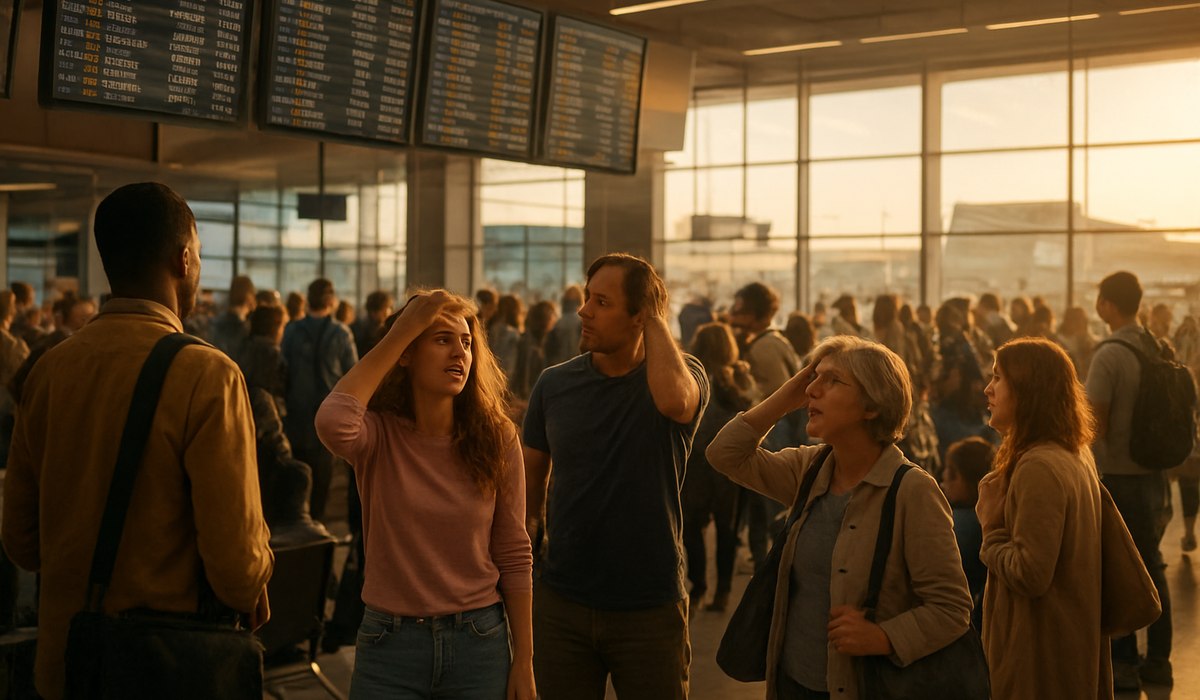
Image generated by AI
Severe Spring Storms Trigger Cascading Cancellations at Omaha Eppley
Omaha Eppley Airfield is experiencing significant operational disruption as severe spring storms sweep across the Midwest during peak travel season in May 2026. Regional thunderstorm clusters and tornadic activity across Nebraska, Iowa, and Kansas are forcing airlines to cancel flights, divert aircraft, and reroute passengers through distant hubs. The convergence of volatile weather patterns and maximum capacity operations has created a perfect storm: airlines are running fuller schedules than anytime since pre-pandemic levels, leaving zero margin for error when convective weather arrives.
Travelers heading to or from the Omaha region face mounting delays and cancellations that extend far beyond the airport itself. Because many flights departing Eppley connect through major hubs like Chicago, Denver, and Dallas, ground-delay programs initiated at those larger airports cascade backward to stranded passengers in Nebraska. The ripple effect means a thunderstorm outbreak in Kansas can trigger cancellations of flights that never come near the storm.
Hub Dependency Amplifies Disruption for Regional Travelers
Omaha's role as a spoke airport in the national network means that disruptions at distant hubs create immediate consequences for local passengers. When severe weather strikes major connection points like Chicago-Midway or Denver International, ground-delay programs slow the flow of inbound aircraft to Eppley. Outbound flights destined for those same hubs face departure holds, sometimes stretching into hours, as airlines attempt to protect crew duty time and future connections.
Airlines have adopted ground holds and rolling delays as primary response tactics, hoping to avoid the operational chaos of last-minute cancellations. However, this strategy frequently backfires during peak travel windows, particularly on Friday and Sunday evenings when families and business travelers converge on Eppley. Evening cancellations strand passengers for the night, forcing rebooking onto flights that may not depart until the following day. Regional carriers operating narrow-body jets—the backbone of Omaha's schedule—face especially tight restrictions during severe weather, with wind thresholds and visibility minimums that ground flights faster than wide-body aircraft at major hubs.
For travelers across Nebraska, Iowa, Kansas, and the Dakotas who depend on Omaha as their primary commercial gateway, this hub dependency means limited alternative routing options. A storm system affecting multiple connection points simultaneously can wipe out entire travel days with few local alternatives available.
Geographic and Capacity Constraints Compound Operations Challenges
Eppley Airfield's physical geography and constrained capacity amplify the impact of weather disruptions during peak season. Surrounded by the Missouri River and adjacent water bodies, the airport's runway configuration makes it exceptionally sensitive to wind direction shifts, low-level turbulence, and visibility changes that accompany strong frontal systems. When severe weather moves through the central United States, Eppley becomes particularly vulnerable due to its approach corridors and limited runway infrastructure compared to larger regional airports.
During fair-weather conditions, Eppley operates efficiently without chronic delays, according to Federal Aviation Administration summaries. The airport ranks as on-time during stable weather stretches, proving that capacity constraints alone don't drive disruptions. Rather, the combination of weather-sensitive approaches, standard runway maintenance windows, and aggressive scheduling leaves virtually no operational buffer. When a severe weather event develops, airlines have no flexibility to absorb delays without triggering a cascade of cancellations.
Narrow-body regional jets—the predominant aircraft type serving Omaha—operate under conservative limits during storms. Crosswind thresholds, hail encounter protocols, and visibility minimums kick in faster than large-body aircraft can tolerate, meaning Eppley services shut down sooner and restart later than busy hubs. This asymmetry means regional passengers experience longer weather-related groundings than travelers at major metropolitan centers.
Peak Season Intensifies Pressure Across Midwest Routes
May and early summer represent maximum-demand travel windows at Omaha Eppley, with pronounced surges occurring daily during morning banks (6am–9am) and evening pushes (4pm–7pm). Airlines concentrate departures into these narrow windows to maximize aircraft utilization and connection opportunities, leaving no slack when storms arrive. Security lines, gate congestion, and taxiway bottlenecks all compress, meaning that even modest weather delays cascade into missed connections and schedule reshuffling.
Industry reports confirm that 2026 carrier operations are running some of the fullest schedules since the pandemic, with most airlines operating aircraft to near-100% capacity. This aggressive scheduling leaves few spare aircraft available for substitution when an airplane gets stranded out of position. A single diverted flight can unravel an entire day's schedule, affecting dozens of subsequent connections.
Route data for Omaha shows a broad nonstop network serving destinations across the central US, from Denver and Chicago to Kansas City and Dallas. These routes depend entirely on regional and narrow-body jet operations, making them especially vulnerable to the operational limitations that severe weather imposes on smaller aircraft.
What Travelers Can Expect During Peak Season
Spring and early summer disruptions at Omaha Eppley are becoming more frequent as climate patterns shift and airline networks operate at maximum density. Travelers should expect that weather alerts issued anywhere across the central US—not just Omaha itself—can affect their flights. Ground-delay programs at Chicago or Denver can manifest as cancellations in Omaha four to six hours later.
Booking morning departures offers a modest advantage, as overnight weather systems typically move through by early morning and airlines can resume operations before peak travel windows. Conversely, late-afternoon and evening flights face higher cancellation risk during volatile weather periods. Passengers should monitor FlightAware obsessively during severe weather forecasts, as airline systems often lag behind visible airport conditions by 30–60 minutes.
Check the FAA National Airspace System Status page for real-time ground-delay program information affecting major hubs connected to Omaha routes. Airlines are required to issue travel waivers when severe weather impacts large geographic regions, allowing rebooking without penalty fees. Passengers should proactively contact their carrier when weather forecasts predict significant disruption, rather than waiting until cancellation notices appear.
Traveler Action Checklist
- Monitor weather forecasts for the central US 7–10 days before travel, not just Omaha conditions
- Check FlightAware for real-time airport status and ground-delay program announcements
- Book morning departures when possible to avoid weather systems that develop later in the day
- Register for airline text and email alerts to receive cancellation notices before calling customer service
- Identify your airline's current travel waiver policy for your specific route via their website
- Photograph your airline confirmation and have the airline's 1-800 number saved in your phone
- Arrange ground transportation directly if your connecting hub is within 400 miles of Omaha
- Pack essential medications, chargers, and one complete outfit change in your carry-on bag
- Review your airline's rebooking policy for weather-related cancellations (most protect last-minute connections)
- Keep your ID and passport accessible; new identification requirements take effect for some travelers in summer 2026
Impact Data: Omaha Eppley Peak Season Disruptions
| Metric | Details |
|---|---|
| Airport Code | Eppley Field (OMA) |
| Primary Weather Threat | Spring/early summer thunderstorms, tornadic activity |
| Peak Disruption Period | May–June 2026 |
| Affected Passenger Base | ~2.1 million annual passengers (2025 baseline) |
| Primary |
Disclaimer
This article is for informational and educational purposes only. It does not constitute legal, financial, or professional advice. While we strive to provide accurate and up-to-date information, travel policies, regulations, and conditions change rapidly. Always verify information with official sources before making travel decisions. Nomad Lawyer makes no representations about the accuracy, reliability, completeness, or suitability of the information provided. Readers should consult qualified professionals for advice specific to their circumstances. The views expressed in this article are those of the author and do not necessarily reflect the views of Nomad Lawyer.
Raushan Kumar
Founder & Lead Developer
Full-stack developer with 11+ years of experience and a passionate traveller. Raushan built Nomad Lawyer from the ground up with a vision to create the best travel and law experience on the web.
Learn more about our team →