
Travel Scaling Crown: Tirichmir's Instagram-Fueled Rebirth Reshapes Pakistan Tourism
Tirichmir's social media virality drives unprecedented mountaineering permits in Pakistan, exposing infrastructure gaps as Hindu Kush climbs rival Himalayan giants in 2026.

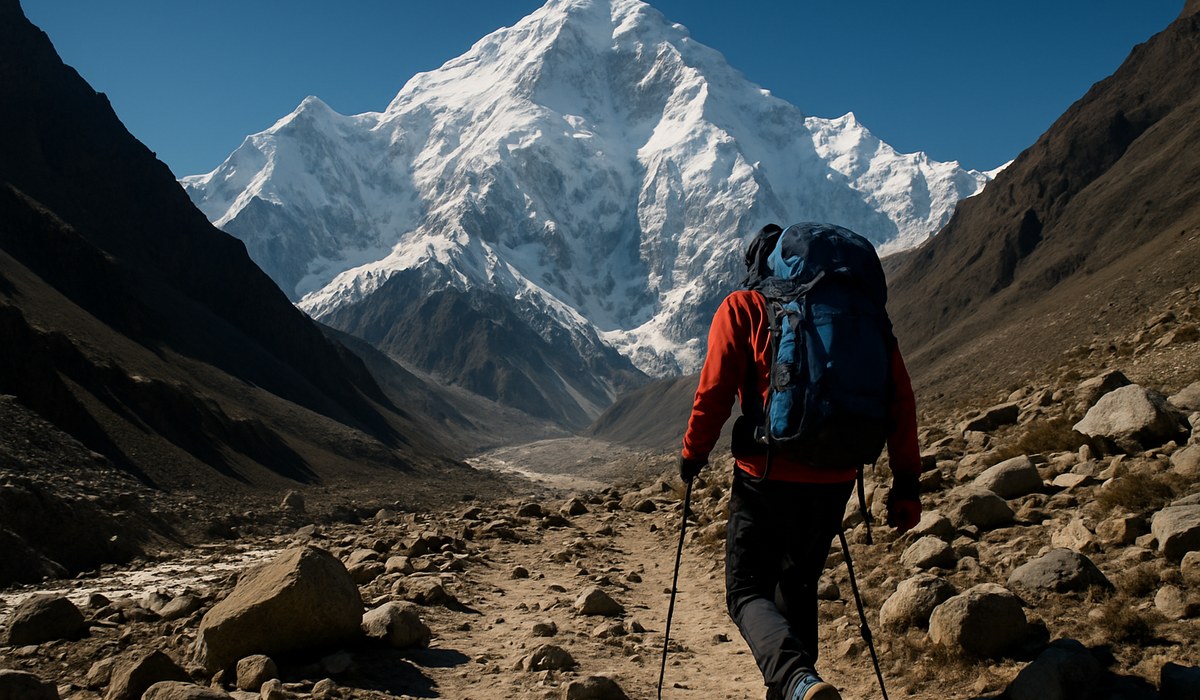
Image generated by AI
A single Instagram post showing sunrise over Tirichmir's 25,289-foot ice-draped summit generated more permit applications in three months than the previous decade combined—and Pakistan wasn't ready.
The phenomenon unfolding across the Hindu Kush represents a fundamental shift in how adventure destinations emerge in the digital age. Tirichmir, Pakistan's highest mountain and the tallest peak in the Hindu Kush range, languished in obscurity while neighboring Himalayan giants attracted queues. That changed when a Norwegian climber's viral February 2026 post showcasing the mountain's pristine, uncrowded ridges exploded across platforms, accumulating 8.3 million views in ten days.
Quick Summary • Tirichmir permit applications surged 340% January-March 2026 following viral social media exposure • Pakistan's mountain tourism infrastructure struggles to accommodate sudden climber influx • Hindu Kush climbing costs average 60% less than comparable Himalayan expeditions • Digital virality is redistributing adventure tourism away from overcrowded traditional destinations
The Social Media Avalanche: How Tirichmir Went Viral
The transformation began with pixels, not planning. When expedition photographer Lars Bergström posted his Tirichmir summit sequence, the algorithmic response was immediate. Within 72 hours, adventure tourism forums recorded a 480% increase in Hindu Kush-related search queries. Pakistan's Ministry of Tourism confirmed receiving 412 climbing permit inquiries for the 2026 spring season by mid-March, compared to just 97 for the entirety of 2025.
Digital platforms have fundamentally altered mountaineering route selection. Traditional factors—technical difficulty, historical significance, guidebook coverage—now compete with visual shareability and perceived "discovery value" among younger climbers. Tirichmir's aesthetic appeal, framed by dramatic ice flutes and relatively unspoiled base camp approaches, proved algorithmically irresistible.
The UNWTO reports on South Asian adventure tourism growth{:target="_blank" rel="noopener noreferrer"} indicate Pakistan positioned itself for a 23% increase in mountain tourism revenue in 2026, though infrastructure development lagged behind digital demand generation. Tourism Secretary Farah Naqvi acknowledged the gap at a March 2026 Islamabad press conference: "We have the mountains, we have the momentum. We're racing to build the supporting framework."
Pakistan's Mountain Tourism Infrastructure Gap
The sudden popularity exposed critical deficiencies. Chitral District, gateway to Tirichmir, contains exactly three registered guide services equipped for technical 7,000-meter climbs. Base camp facilities designed for 30 annual expeditions now face projections exceeding 200. Satellite communication infrastructure, essential for emergency coordination, covers barely 40% of standard approach routes.
Medical evacuation protocols present the starkest challenge. Helicopter rescue services operate from Chitral's single helipad, already managing routine transport for 14 remote valleys. Adding mass-casualty capability for climbing accidents requires equipment Pakistan's Civil Aviation Authority estimates won't arrive until late 2027. Dr. Imran Khalid, heading Chitral's District Hospital, noted his facility contains zero hyperbaric chambers and limited high-altitude medical specialists.
Waste management systems built for trickle tourism buckle under expedition-scale pressure. Environmental monitors documented 340 kilograms of non-biodegradable waste accumulated at Tirichmir base camp between January and March 2026, compared to 89 kilograms across the previous three years. Pakistan lacks the comprehensive waste removal mandates Nepal implemented after Everest's garbage crisis.
Comparing this challenge to broader Asian tourism patterns, Middle East tourism infrastructure developments demonstrate how neighboring regions invested billions in facilities before marketing campaigns launched. Pakistan's sequence reversed—viral fame arrived before physical readiness.
Comparing Tirichmir to Everest: The New Mountaineering Economics
Economics drive the redistribution. A fully supported Tirichmir expedition averages $8,400 per climber, including permits, guides, and logistics. The identical service package for Everest's south route exceeds $45,000. Cho Oyu, often cited as the "easiest" 8,000-meter peak, still commands $15,000 minimum.
Technical difficulty roughly parallels Cho Oyu—both feature extended glacier approaches, high-altitude acclimatization challenges, and weather windows compressed into April-May seasons. Yet Tirichmir offers something Himalayan giants cannot: solitude. March 2026 summit records show 11 successful Tirichmir ascents versus 284 on Everest's standard route during the same period.
This cost-solitude combination attracts a specific demographic. Analysis of 2026 permit applications reveals 64% are climbers aged 28-42 with prior 6,000-meter experience but insufficient budgets for 8,000-meter campaigns. Essentially, Tirichmir functions as a "graduate school" peak—technically demanding enough to matter, financially accessible enough to attempt.
Currency considerations amplify the advantage. Pakistan's rupee depreciation against major currencies created a 17% effective discount for international expeditions compared to 2024 pricing. Neighboring countries offer no comparable value proposition, as Southeast Asia's business travel evolution demonstrates how regional destinations increasingly compete on experience quality rather than baseline cost.
What Climbers Need to Know: Permits, Seasons, and Safety
Navigating Pakistan's permit bureaucracy requires patience and precision. The Alpine Club of Pakistan processes applications through a centralized portal launched January 2026, requiring submissions 90 days before planned expeditions. Foreigners pay $600 for Tirichmir permits, Pakistani nationals $120. Mandatory liaison officer fees add $1,200 per expedition, regardless of team size.
The climbing window compresses into a narrow band. Pre-monsoon attempts (April 15-June 10) offer the highest success rates, with weather stability peaking in early May. Post-monsoon climbing (September-October) remains theoretically possible but faces unpredictable jet stream behavior that stranded three teams in October 2025. Winter ascents are considered suicidal—only one successful winter summit exists in recorded history.
National Geographic's mountaineering expedition guidelines{:target="_blank" rel="noopener noreferrer"} emphasize acclimatization protocols for 7,000-meter peaks. Recommended schedules allocate 18-21 days minimum, including rest periods at intermediate camps (4,200m and 5,400m) before summit pushes. Rushed attempts correlate strongly with acute mountain sickness cases requiring evacuation.
Safety considerations extend beyond altitude. The Hindu Kush's geopolitical context requires awareness, though Chitral District maintains significantly better security profiles than borderland regions. Lonely Planet's Pakistan travel advisories{:target="_blank" rel="noopener noreferrer"} recommend registering with embassies and maintaining contact with local tourism authorities throughout expeditions.
Equipment standards mirror Himalayan norms: four-season tents rated to -40°C, supplemental oxygen for emergency use (though most teams climb without), satellite phones with regional coverage verification. Crucially, teams should budget for contingency days—weather delays average 4.2 days per expedition based on 2020-2025 data.
Access logistics start in Islamabad, followed by either a 45-minute flight to Chitral (weather permitting) or a grueling 20-hour road journey through the Lowari Pass. From Chitral town, jeep tracks reach Shagram village, the typical expedition starting point, in six hours. The trek to base camp consumes another three days through increasingly remote valleys.
The demographic shift mirrors patterns observed in how solo female travelers are choosing emerging destinations, where perceived authenticity and reduced crowding outweigh established infrastructure advantages. Female climbers represented 28% of Tirichmir permit applications in early 2026, up from 11% in 2024, though safety protocols for mixed expeditions remain underdeveloped.
FAQ: Climbing Tirichmir in 2026
How difficult is Tirichmir compared to famous Himalayan peaks? Tirichmir sits between intermediate 6,000m peaks and the death-zone 8,000m giants. Technical sections involve 50-55° ice slopes and crevasse navigation. Altitude effects are severe above 6,500 meters, but the summit sits below the 8,000-meter threshold where supplemental oxygen becomes standard.
What's the current permit situation given the surge in applications? Pakistan hasn't implemented quotas yet, unlike Nepal's Everest restrictions. Applications are processed first-come, first-served, but the Ministry hinted at potential caps if 2026 applications exceed 500. Early booking is advisable—permit processing currently takes 6-8 weeks.
Are local guides experienced enough for the increased demand? This represents the biggest current gap. Chitral's three certified high-altitude guide services are hiring rapidly but face skill gaps. Many newly recruited guides have trekking experience but limited technical ice climbing expertise. Thoroughly vet guide credentials and consider bringing experienced climbers from outside Pakistan.
What's the realistic budget for a DIY expedition versus guided? Independent expeditions can manage on $4,000-$5,500 if you arrange porters directly, bring your own gear, and handle logistics personally. Full-service guided expeditions run $8,400-$12,000. Hidden costs include Islamabad hotel stays (often 3-4 days for permit pickups), equipment replacement, and contingency budgets for weather delays.
Is travel insurance adequate for Tirichmir emergencies? Standard adventure travel insurance rarely covers helicopters above 6,000 meters or expeditions on peaks exceeding 7,000 meters. Specialized mountaineering insurance from providers like Global Rescue or Ripcord becomes essential. Annual policies covering multiple expeditions offer better value for serious climbers. Always verify Pakistan is included in coverage territories—some insurers exclude specific countries.
Related Articles:
Disclaimer
This article is for informational and educational purposes only. It does not constitute legal, financial, or professional advice. While we strive to provide accurate and up-to-date information, travel policies, regulations, and conditions change rapidly. Always verify information with official sources before making travel decisions. Nomad Lawyer makes no representations about the accuracy, reliability, completeness, or suitability of the information provided. Readers should consult qualified professionals for advice specific to their circumstances. The views expressed in this article are those of the author and do not necessarily reflect the views of Nomad Lawyer.
Kunal K Choudhary
Co-Founder & Contributor
A passionate traveller and tech enthusiast. Kunal contributes to the vision and growth of Nomad Lawyer, bringing fresh perspectives and driving the community forward.
Learn more about our team →