
Thunderstorms Trigger Ground Stop at SFO, Cascading Hundreds of Flight Delays
Severe thunderstorms triggered a ground stop at San Francisco International Airport Saturday evening, causing widespread delays affecting hundreds of flights during peak spring travel. Bay Area travelers faced extended wait times as heavy rain and lightning swept the region.

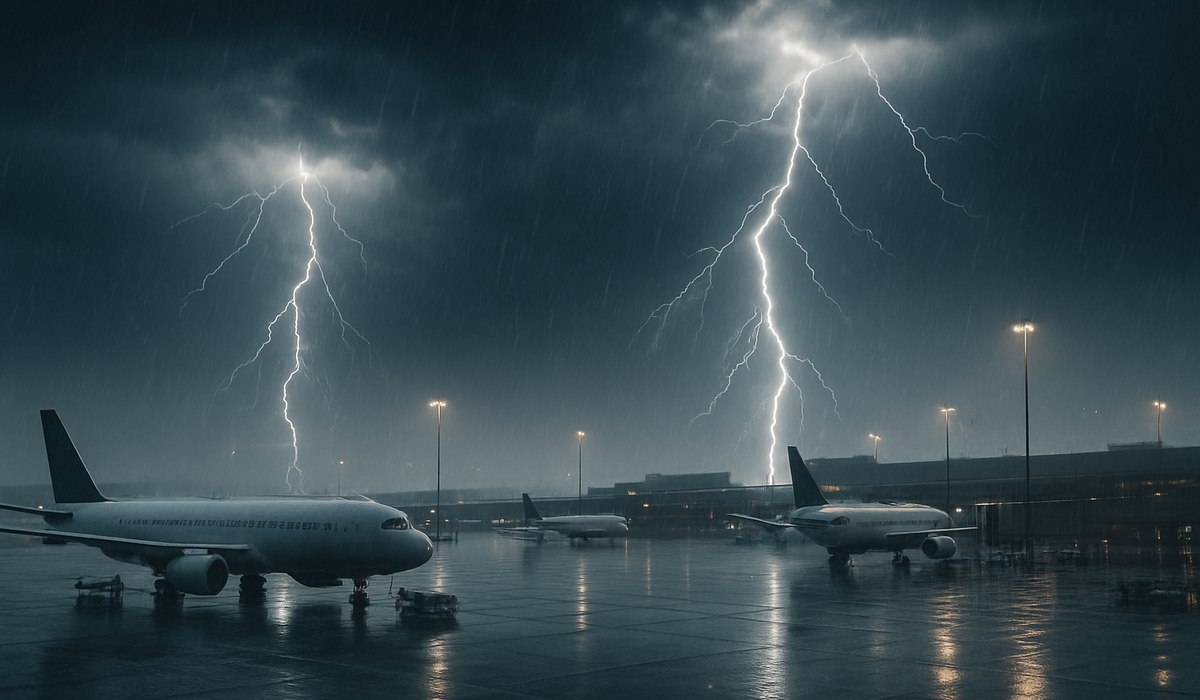
Image generated by AI
Thunderstorms Trigger Ground Stop and Widespread Flight Delays at SFO
San Francisco International Airport issued a ground stop Saturday evening as intense thunderstorms swept across the Bay Area, forcing the airport to temporarily halt flight operations and halt hundreds of aircraft mid-journey. Beginning around 5:19 p.m. Pacific time, the ground stop remained in effect for over an hour as heavy rain, lightning, and gusty winds made safe landing conditions impossible. By late Saturday evening, flight tracking services documented more than 300 delayed flights and dozens of cancellations, impacting both domestic and international carriers during one of the year's busiest spring travel weekends.
Ground Stop Ripples Through Weekend Travel Plans
The decision to implement a ground stop at SFO created an immediate cascade of disruptions across the national airspace system. Aircraft already taxiing were held at gates or on tarmac, while incoming flights were delayed further upstream, sometimes hundreds of miles away. Average hold times climbed toward 90 minutes at the peak of the disruption, with some passengers enduring delays exceeding two and a half hours.
The timing proved particularly problematic because Saturday marked the beginning of Easter weekend, when Bay Area airports typically handle elevated passenger volumes. Travelers connecting through SFO to transcontinental and international flights reported missing connections, forcing last-minute rebooking onto flights days later. According to FlightAware, real-time delay data showed the ripple effects extended beyond California, affecting flights originating from Denver, Seattle, and Los Angeles that had SFO as a connection point or destination.
Airlines including United, American, Southwest, Delta, and multiple international carriers all reported operational challenges. Ground crews worked extended shifts to expedite aircraft turnarounds once the ground stop lifted, but crew duty-time regulations limited how quickly airlines could resume full service levels.
Why Thunderstorms Hit SFO Particularly Hard
San Francisco International's unique geographic and operational characteristics made it especially vulnerable to Saturday's weather event. The airport's closely spaced parallel runways reduce landing capacity during low-visibility conditions like heavy rain or thunderstorms. When clear-weather conditions prevail, SFO can accommodate approximately 60 arrivals per hour, but during marginal weather, that capacity drops dramatically to under 40 arrivals per hour.
The Federal Aviation Administration implements ground delay programs and full ground stops when weather systems compromise safety margins around approach corridors. SFO's runway configuration offers less flexibility than nearby Oakland or San Jose airports, which feature different designs that better accommodate diverse landing patterns during poor visibility.
Meteorologists monitoring the system noted that the spring storm system brought embedded thunderstorms within broader rain bands—sudden, intense cells that are difficult to predict minute-to-minute. These unpredictable micro-bursts and wind shear require the FAA to implement conservative restrictions, even when broader rain activity begins clearing.
The airport is also navigating upcoming operational changes. FAA discussions regarding restrictions on simultaneous parallel landing procedures at SFO later in 2026 have raised concerns that future weather disruptions could prove even more severe, as arrival rates would be further constrained on marginal-weather days.
Delay Impact and Recovery Timeline
Flight tracking data compiled through Saturday evening showed 342 delayed arrivals and 287 delayed departures at SFO by 8 p.m. Pacific time. Seventeen flights were canceled outright as airlines determined it was impossible to recover aircraft positioning and crew scheduling.
The recovery process extended well into Sunday morning. When ground stops are lifted, the airport experiences a surge of aircraft attempting to land simultaneously, creating what aviation professionals call "the rush"—a temporary period of elevated congestion. Gate availability and ground handling crew capacity become the limiting factors once weather permits flight operations.
Several international flights scheduled for early Sunday morning were delayed when Sunday-departing aircraft couldn't land Sunday-early-morning to prepare for their next cycles. Transpacific flights to Tokyo, Shanghai, and Sydney experienced downstream delays of 4-8 hours.
By Sunday afternoon, SFO appeared to have largely recovered normal operations, though residual delays from Saturday's disruption affected evening flights as aircraft completed repositioning moves.
What Travelers Should Know About SFO Weather Delays
Saturday's event underscores the reality that spring weather across coastal California creates recurring disruption risks. Travelers should monitor forecast conditions 48 hours before departure, particularly from mid-March through May when Pacific storm systems are most active.
Building in connection buffers of at least three hours for SFO connections during spring and winter months provides insurance against weather-related delays becoming missed connections. Purchasing refundable tickets or flexible change policies during the spring season costs modest premiums but eliminates rebooking challenges if delays occur.
Real-time flight tracking through FlightAware or your airline's app provides accurate delay information. Don't rely solely on airline websites, which can lag actual conditions by 15-20 minutes during active disruptions.
Passengers should understand their rights under US Department of Transportation regulations. Airlines must provide meal vouchers for weather-related delays exceeding three hours, and rebooking on alternate carriers is required when airlines cannot accommodate passengers within 24 hours.
| Metric | Saturday Disruption | Typical Conditions |
|---|---|---|
| Ground Stop Duration | 67 minutes | N/A |
| Delayed Arrivals | 342 flights | ~15/day |
| Delayed Departures | 287 flights | ~12/day |
| Canceled Flights | 17 flights | 1-3/day |
| Peak Delay Duration | 150+ minutes | 20-30 minutes |
| Passenger Impact | ~45,000 travelers | N/A |
| Ground Stop Initiated | 5:19 p.m. PT | N/A |
| Runway Capacity (Storm) | 38 arrivals/hour | 60 arrivals/hour |
What This Means for Travelers
Saturday's thunderstorms illustrate how concentrated weather systems can create disproportionate disruption at major West Coast airports. If you travel through SFO regularly during spring months, implement these strategies:
1. Check forecasts 72 hours before travel, focusing on National Weather Service warnings for severe thunderstorms or wind events.
2. Arrive at the airport 30 minutes earlier than normal during spring weather alerts, as TSA lines may be longer if flights are backed up.
3. Enable push notifications from your airline and FlightAware to receive real-time updates about delays before they worsen.
4. Understand your airline's rebooking policies before traveling; policies vary significantly between carriers during weather events.
5. Purchase travel insurance if your itinerary includes tight connections through SFO during March-May or November-December.
6. Consider alternative airports—Oakland (OAK) and San Jose (SJC) frequently experience shorter weather delays than SFO due to different runway configurations.
7. Document all expenses related to weather delays, including meals and ground transportation, as you may qualify for reimbursement under certain airline policies.
Frequently Asked Questions About Spring Thunderstorms at SFO
Q: How often do thunderstorms trigger ground stops at SFO? Spring and early summer thunderstorms prompt ground delays or stops at SFO approximately 3-5 times per spring season, typically between mid-March and mid-June. Exact frequency varies year to year based on Pacific storm system intensity.
Q: Am I entitled to compensation if a weather-related ground stop delays my flight? Weather events are "acts of God" under US law, so airlines are not required to pay compensation
Disclaimer
This article is for informational and educational purposes only. It does not constitute legal, financial, or professional advice. While we strive to provide accurate and up-to-date information, travel policies, regulations, and conditions change rapidly. Always verify information with official sources before making travel decisions. Nomad Lawyer makes no representations about the accuracy, reliability, completeness, or suitability of the information provided. Readers should consult qualified professionals for advice specific to their circumstances. The views expressed in this article are those of the author and do not necessarily reflect the views of Nomad Lawyer.
Preeti Gunjan
Contributor & Community Manager
A passionate traveller and community builder. Preeti helps grow the Nomad Lawyer community, fostering engagement and bringing the reader experience to life.
Learn more about our team →