
Thousands Stranded Flight Disruptions Hit Six Major U.S. Hubs April 19
Over 3,000 flight delays and 109 cancellations swept through major U.S. airport hubs on April 19, 2026, leaving thousands of passengers stranded and exposing critical vulnerabilities in peak-traffic corridor operations.

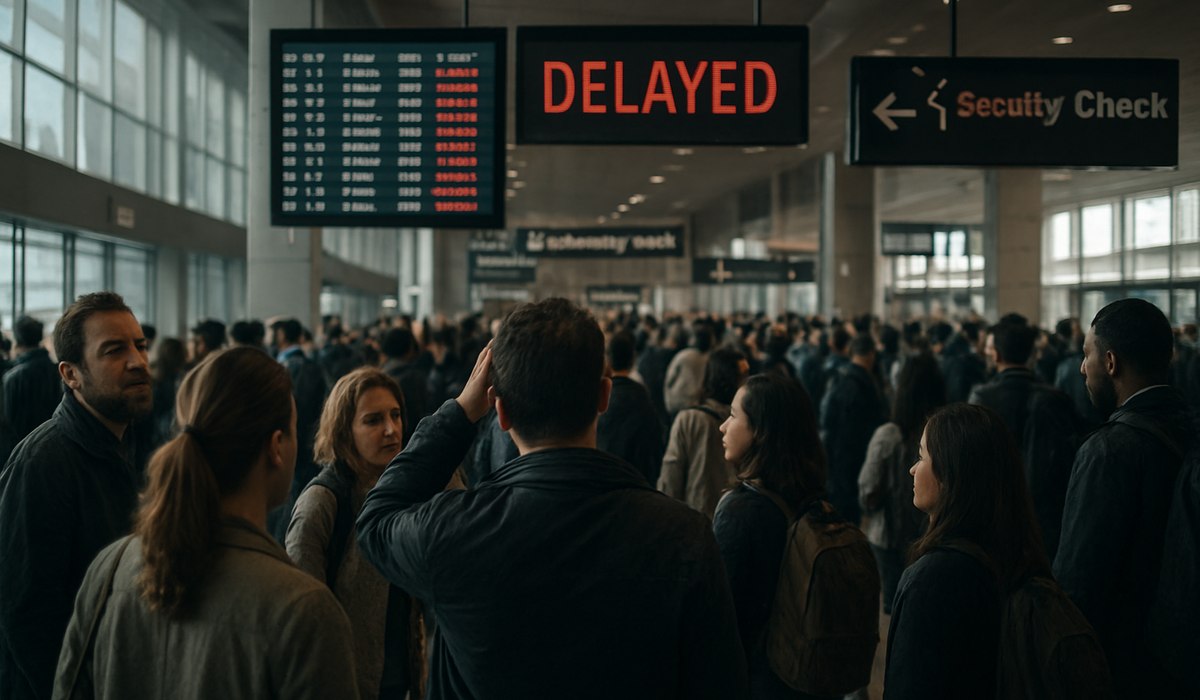
Image generated by AI
Thousands Stranded as Massive Flight Disruptions Cascade Across America
More than 3,000 flight delays and 109 cancellations crippled six major U.S. airport hubs on April 19, 2026, leaving thousands of passengers facing missed connections, extended airport waits, and unexpected hotel stays nationwide. The disruption rippled through Atlanta Hartsfield-Jackson, Chicago O'Hare, Dallas-Fort Worth, New York-area airports, San Francisco International, and Newark Liberty, affecting Delta Air Lines, American Airlines, Southwest Airlines, United Airlines, SkyWest, and regional carriers. This single-day cascade highlighted how vulnerable America's busiest aviation corridors remain when multiple systemic pressures converge during peak travel periods.
Sunday, April 19 became a cautionary tale about capacity constraints at the nation's largest transportation hubs. Though no single catastrophic event triggered the disruption, thousands stranded flight incidents rippled across the country as weather, airspace management, and overtaxed schedules collided simultaneously.
Scope of Disruption: 3,052 Delays Across Six Major Hubs
On Sunday, April 19, 2026, publicly available aviation tracking data revealed 3,052 delayed departures and arrivals paired with 109 cancellations, concentrating the worst disruption at six critical nodes in the U.S. aviation network. These hubs—Atlanta, Chicago, Dallas, New York area, San Francisco, and Newark—handle approximately 40% of domestic passenger traffic nationwide, meaning disruptions here instantly reverberate across regional and secondary airports.
The scale underscores a critical vulnerability: when weather patterns, airspace constraints, or irregular operations strike multiple mega-hubs simultaneously, the entire system struggles to absorb the shock. Delays spanning 30 minutes to multiple hours forced passengers to miss tight connections, creating cascading bottlenecks that took the entire day to unwind. Historical data from the Federal Aviation Administration confirms these same airports consistently rank among America's most delay-prone facilities, precisely because they operate near maximum capacity during peak hours.
Each additional cancellation compressed passenger loads onto subsequent flights, which then departed late themselves, sending waves of delay upstream and downstream throughout the day. For travelers, the experience meant long customer service lines, limited rebooking options, and overnight stays far from their intended destinations.
Which Airlines and Airports Are Most Affected
The thousands stranded flight crisis struck hardest at carriers and airports already operating under tight operational margins. Delta Air Lines experienced exceptional pressure at its largest hub in Atlanta and across the New York area, where ground holds translated quickly into rolling delays affecting transcontinental and international schedules.
American Airlines encountered significant disruption at Dallas-Fort Worth, its major operational hub, where late-arriving aircraft forced cascading rescheduling of connecting flights. Southwest Airlines, despite operating point-to-point rather than traditional hub-and-spoke networks, felt severe impacts as aircraft and crews cycled through congested facilities including Chicago Midway and Dallas Love Field.
United Airlines faced bottlenecks at Chicago O'Hare, Newark, and San Francisco, where packed transcontinental and international schedules left minimal operational slack. SkyWest and regional carriers absorbed outsized disruption because single delayed aircraft can trigger multiple cascading cancellations on small-market routes with limited daily frequencies, leaving passengers with few alternative rebooking pathways.
Smaller regional airports dependent on hub connections found their operations degraded indirectly, as passengers unable to reach their originating hubs experienced domino-effect cancellations throughout the day.
Why Peak-Traffic Hubs Are Vulnerability Hotspots
Modern commercial aviation operates on razor-thin margins at America's largest hubs. During peak hours on busy days like Sunday, April 19, Atlanta Hartsfield-Jackson, Chicago O'Hare, Dallas-Fort Worth, Newark, San Francisco, and New York-area airports approach or exceed practical capacity. This means minimal buffer exists when weather, airspace management programs, or unexpected operational issues emerge.
Unsettled spring weather triggered the disruptions on April 19, with scattered thunderstorms, low cloud ceilings, and variable wind patterns forcing air traffic control to implement ground delay programs. These measures space arrivals and departures farther apart, intentionally reducing throughput to maintain safety margins. Across multiple major hubs simultaneously, such programs create compound effects: aircraft queue for takeoff slots, taxi times extend, and arrival banks become compressed, forcing subsequent waves of delay.
When these hubs operated under less intensive scheduling, extra capacity buffers could absorb such disruptions. Today, as carriers have expanded schedules post-pandemic, those buffers have largely evaporated. Research from the Transportation Department and FAA indicates that several major hubs now operate above sustainable capacity during peak hours, transforming minor disruptions into system-wide problems affecting thousands of passengers.
What Passengers Should Know and Do Now
If you were ticketed through any of the affected airports on April 19, understanding your rights and options becomes critical. Check real-time flight status through FlightAware, which provides minute-by-minute updates on delays and cancellations. The FAA maintains current airport status information at faa.gov, while the U.S. Department of Transportation enforces passenger protection rules through its official airconsumer division at transportation.gov/airconsumer.
Airlines are obligated to rebook passengers on the next available flight at no additional charge. If that flight departs more than three hours after your original schedule, you're entitled to compensation up to $775 depending on flight distance. Meal vouchers, hotel accommodations, and ground transportation must be provided when your airline cancels or significantly delays a flight due to its own operational issues (though weather may limit these obligations).
Document everything: boarding passes, delay notices, receipts for meals and hotels, and correspondence with the airline. File complaints with the Department of Transportation if your airline denies passenger protections, though weather events may limit your case under current regulations.
Traveler Action Checklist
-
Check flight status immediately on FlightAware or your airline's official app—avoid airport waits without confirmation of status changes.
-
Contact your airline's customer service line directly; social media responses often lag during system-wide disruptions.
-
Request rebooking on the next available flight, confirming seat assignments before ending the call.
-
Request written confirmation of delay or cancellation and all compensation to which you're entitled under DOT rules.
-
Photograph and retain all receipts for meals, hotels, ground transportation, and other expenses incurred due to disruption.
-
Obtain the airline's incident reference number and the name/ID of the customer service representative assisting you.
-
File a DOT complaint if the airline denies compensation, submitting documentation within 60 days of the incident.
Why Systemic Vulnerability Matters for Future Travel
The April 19 disruption revealed uncomfortable truths about American aviation infrastructure. The six affected hubs concentrate roughly 40% of domestic traffic into interconnected networks where single-point failures cascade instantly across regions. As climate patterns intensify spring storm severity and passenger demand continues rebounding, conditions mirror those that will produce similar disruptions with increasing frequency.
Airports like Atlanta, Chicago, and Dallas were engineered decades ago for lower throughput volumes. Capacity expansion requires years of construction, environmental review, and funding—processes incompatible with rapid demand growth. Airspace constraints in busy metropolitan areas such as New York and San Francisco reflect geography and safety requirements that cannot be easily remedied. Yet carriers continue packing schedules tighter, assuming normal operations will absorb minor disruptions.
The thousands stranded flight incidents from April 19 suggest the industry's structural resilience has eroded.
Disclaimer
This article is for informational and educational purposes only. It does not constitute legal, financial, or professional advice. While we strive to provide accurate and up-to-date information, travel policies, regulations, and conditions change rapidly. Always verify information with official sources before making travel decisions. Nomad Lawyer makes no representations about the accuracy, reliability, completeness, or suitability of the information provided. Readers should consult qualified professionals for advice specific to their circumstances. The views expressed in this article are those of the author and do not necessarily reflect the views of Nomad Lawyer.
Preeti Gunjan
Contributor & Community Manager
A passionate traveller and community builder. Preeti helps grow the Nomad Lawyer community, fostering engagement and bringing the reader experience to life.
Learn more about our team →