
Thousands Travelers Affected as Major U.S. Airlines Ground 200+ Flights in March 2026
Over 2,400 flights disrupted across U.S. hubs in March 2026. Southwest, Alaska, Republic, Endeavor, and Delta cancel and delay services. LaGuardia, Atlanta, Chicago hit hardest. Passenger rights explained.

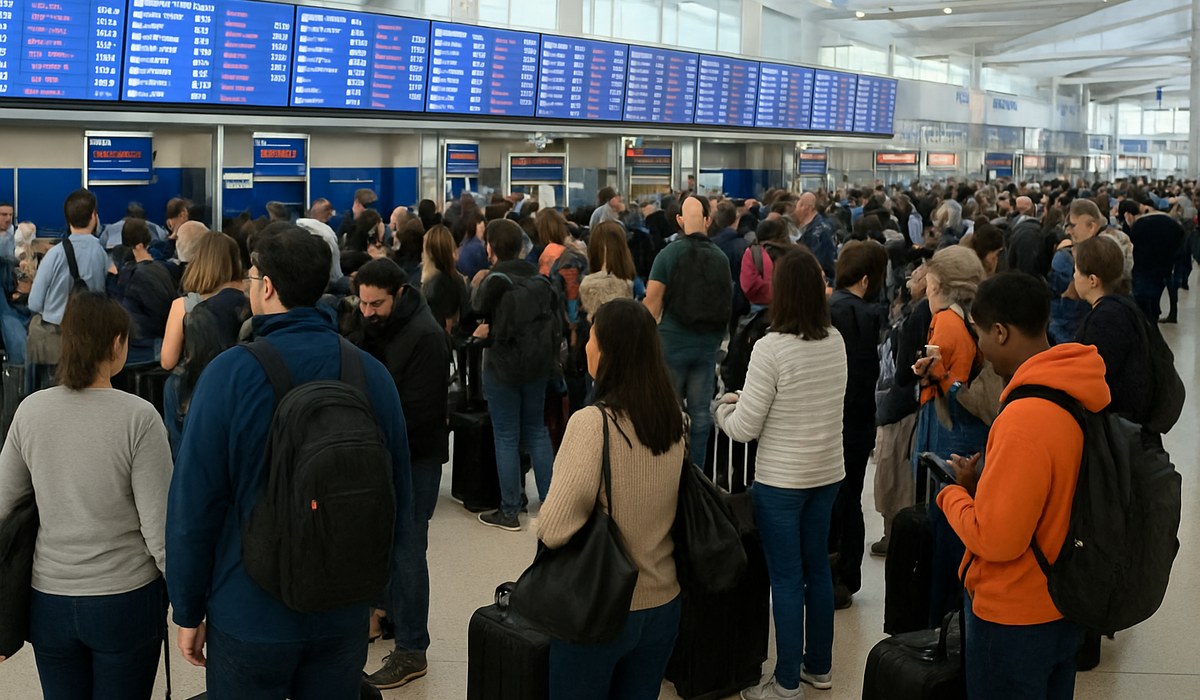
Image generated by AI
Quick Summary
- Over 2,400 flights cancelled or delayed across seven major U.S. airports during late March 2026
- Southwest Airlines, Alaska Air, Republic Airways, Endeavor Air, and Delta services disrupted simultaneously
- LaGuardia, Hartsfield-Jackson Atlanta, Chicago O'Hare, and Philadelphia hit hardest by cascading delays
- Passengers eligible for DOT compensation, meal vouchers, and rebooking on competing carriers
A cascade of flight cancellations and delays has sent shockwaves through America's aviation system, grounding more than 200 flights and delaying roughly 2,285 others across the nation's busiest travel corridors.
The disruption, impacting carriers including Southwest Airlines, Alaska Air Group, Republic Airways, Endeavor Air, and Delta Air Lines, has stranded thousands of passengers during peak spring travel season. Seven major metropolitan airports—LaGuardia in New York, Hartsfield-Jackson in Atlanta, Chicago O'Hare, Philadelphia International, Orlando International, Anchorage Ted Stevens, and additional hubs—reported significant operational strain on March 30, 2026.
Real-time flight data from FlightAware{:target="_blank" rel="noopener noreferrer"} confirms widespread service interruptions across regional and mainline networks, with no immediate resolution timeline announced by the airlines involved.
Which Airlines and Airports Are Affected—And When
The operational crisis spans multiple airline groups simultaneously. Southwest Airlines, historically known for operational reliability, experienced substantial cancellations affecting routes from its largest hubs. Alaska Air's extensive Pacific and West Coast network faced cascading delays, with Anchorage Ted Stevens International Airport reporting severe congestion.
Republic Airways, operating regional services under contracts with larger carriers, grounded numerous flights, while Endeavor Air—Delta's regional affiliate—cancelled multiple departures. Delta Air Lines itself announced significant disruptions across its hub operations.
LaGuardia Airport, already operating near capacity, emerged as the hardest-hit facility, with inbound and outbound flights backed up for hours. Atlanta's Hartsfield-Jackson, Chicago O'Hare, Philadelphia, and Orlando similarly reported extended gate delays, missed connections, and subsequent waves of secondary cancellations.
Chicago O'Hare operations superintendent confirmed that ground stops lasted intermittently throughout the day, citing operational constraints. The disruption began escalating in early afternoon hours and persisted through evening operations.
Your Passenger Rights: Compensation and Rebooking Options
Affected travelers possess defined legal protections under federal aviation regulations. The US Department of Transportation passenger rights{:target="_blank" rel="noopener noreferrer"} framework mandates that carriers must provide rebooking options, meal vouchers, and—in qualifying circumstances—direct compensation.
For cancellations exceeding three hours, passengers on domestic flights may claim compensation of $250 to $1,350 depending on flight distance and whether the airline attributes the disruption to circumstances beyond its control. Weather, mechanical failures tied to deferred maintenance, and system failures typically qualify for compensation eligibility.
Rebooking provisions require airlines to place disrupted passengers on alternative flights at no additional cost. Carriers may rebook on competing airlines if their own flights cannot depart within a reasonable timeframe. Passengers traveling with families retain the right to remain together on rebooking itineraries.
Meal and lodging vouchers become mandatory when delays exceed three hours on overnight flights. Hotels must be provided at carrier expense, along with ground transportation to the facility. Passengers may also request refunds for ancillary services (baggage fees, seat selections) if their trip is ultimately abandoned.
The DOT enforcement office has intensified scrutiny of airline compliance with rebooking obligations, particularly for regional carriers managing high disruption volumes.
Real-Time Tools to Track Your Flight and Monitor Updates
Passengers seeking immediate information should access live flight status platforms. FlightAware{:target="_blank" rel="noopener noreferrer"} provides minute-by-minute updates on aircraft position, gate assignments, estimated departure times, and delay reasons. The platform's mobile application allows push notifications for critical status changes.
FlightRadar24 offers alternative real-time tracking functionality, displaying aircraft registration numbers, altitude, and route progress. Both platforms integrate ADS-B transponder data from the FAA{:target="_blank" rel="noopener noreferrer"}, ensuring near-instantaneous accuracy.
Airline mobile applications remain the fastest route to rebooking confirmation. Southwest, Alaska Air, and Delta all support in-app rerouting during operational disruptions. Passengers unable to access mobile platforms should contact carrier customer service hotlines; however, extreme call volumes may produce extended wait times exceeding one hour during crises of this magnitude.
Twitter/X and airline public relations accounts often post operational updates faster than official channels. Following @SouthwestAir, @AlaskaAir, @DeltaAssist, and @FAANews ensures receipt of priority messaging during disruptions.
What's Causing These Widespread Disruptions
Root causes for simultaneous multi-airline disruptions typically stem from external factors—weather systems, air traffic control constraints, or cascading equipment failures. Preliminary reports suggest that airport infrastructure limitations at key hubs, combined with peak scheduling density, created a compounding effect.
Staffing shortages among ground handlers and air traffic controllers have emerged as secondary accelerants across several affected facilities. LaGuardia, operationally congested even under normal conditions, lacks redundancy in gate assignments and departure queue management. When one carrier experiences delays, the ripple effect cascades through adjacent airline operations.
The FAA{:target="_blank" rel="noopener noreferrer"} has acknowledged that operational throughput at LaGuardia, Atlanta, and Chicago remains below theoretical maximum capacity, forcing reactive traffic management rather than proactive scheduling. Atlanta's Hartsfield-Jackson, despite investment in new runway construction, continues operating at nearly 100 percent utilization during peak hours.
Aircraft utilization patterns exacerbate disruptions. When a single aircraft breaks down and sits overnight for repairs, the cascading effect strands additional crews and aircraft scheduled to operate with that airframe. This phenomenon is particularly acute for regional carriers managing smaller fleets with limited spare inventory.
Fleet reliability concerns have surfaced as an underlying structural issue. Some aircraft models within regional carrier inventories have experienced elevated mechanical write-ups. This is particularly relevant given recent industry discussions surrounding Boeing 737 MAX Flight Control System vulnerabilities and how systemic aircraft concerns translate into operational disruption. Boeing 737 MAX Flight Control System{:target="_blank" rel="noopener noreferrer"} challenges have prompted increased inspection intervals, reducing available aircraft and compressing operational capacity.
Real-World Recovery Strategies for Disrupted Travelers
Passengers stranded overnight should immediately request hotel accommodations from the airline duty manager—typically located at airport operations desks. Do not book hotels independently unless the carrier explicitly denies housing responsibility; reimbursement claims for self-arranged accommodation face significantly higher denial rates.
Meal vouchers carry dollar-value ceilings: typically $12 for short delays, $20 for extended disruptions, and $
Disclaimer
This article is for informational and educational purposes only. It does not constitute legal, financial, or professional advice. While we strive to provide accurate and up-to-date information, travel policies, regulations, and conditions change rapidly. Always verify information with official sources before making travel decisions. Nomad Lawyer makes no representations about the accuracy, reliability, completeness, or suitability of the information provided. Readers should consult qualified professionals for advice specific to their circumstances. The views expressed in this article are those of the author and do not necessarily reflect the views of Nomad Lawyer.
Kunal K Choudhary
Co-Founder & Contributor
A passionate traveller and tech enthusiast. Kunal contributes to the vision and growth of Nomad Lawyer, bringing fresh perspectives and driving the community forward.
Learn more about our team →