
Thousands Stranded Across Europe as 944 Flights Delayed in Aviation Crisis
Nearly 1,000 flights delayed across Europe's busiest airports left thousands stranded overnight in 2026. Weather, staffing shortages, and operational bottlenecks triggered cascading disruptions across the continent's already-strained aviation network.

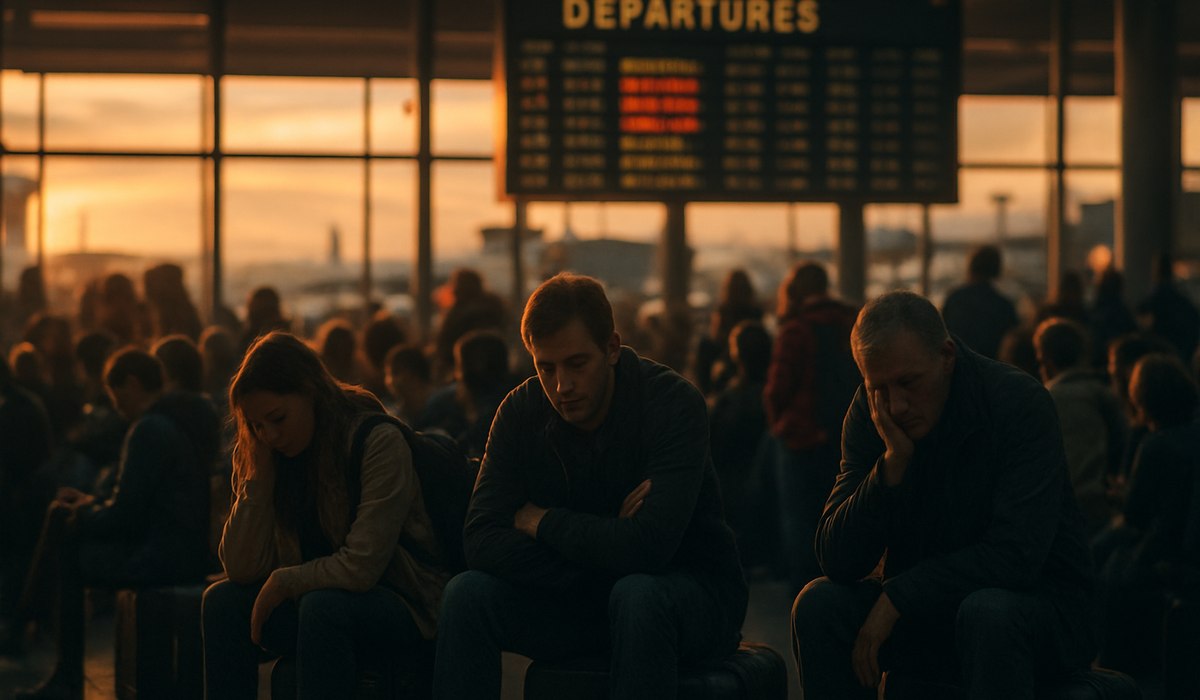
Image generated by AI
Thousands Stranded Across Europe's Aviation Network
Nearly 1,000 flights delayed across Europe's busiest airports left thousands stranded overnight as cascading disruptions overwhelmed terminals from London to Lisbon. The breakdown, which unfolded across major hubs in the United Kingdom, France, Spain, Portugal, and Germany on April 17, 2026, exposed critical vulnerabilities in Continental Europe's overstretched aviation infrastructure. Weather systems combined with staffing shortages and operational constraints to create what aviation experts describe as a "perfect storm"—one that left passengers sleeping in terminals, missing international connections, and scrambling for alternative routes across the globe.
Cascading Failures Across Europe's Major Hubs
The 944 delayed flights rippled through Europe's most critical aviation corridors, with departure boards at Heathrow, Charles de Gaulle, El Prat, Humberto Delgado, and Frankfurt all reporting extended backlogs throughout the afternoon and evening. Some aircraft departed more than three hours behind schedule, while late-arriving inbound services forced ground handlers and air traffic managers to reset departure slots repeatedly. The greatest pressure fell on southern European airports handling high volumes of holiday traffic and low-cost carrier operations, where tightly timed turnarounds completely unraveled under the strain.
According to real-time data from FlightAware, the disruption continued well into the following day, with secondary delays affecting routes that had not been directly impacted by initial weather systems. Industry analysis from Eurocontrol indicates that European aviation network movements are now at or above pre-pandemic levels, leaving virtually no spare capacity to absorb operational shocks. When even a single major hub experiences extended delays, the cascading effects spread rapidly as aircraft and crews fail to reach their next scheduled legs.
Why Europe's Aviation Network Has No Room for Error
Europe's aviation system operates near maximum theoretical capacity, leaving minimal buffer for unexpected events. Current traffic volumes across the continent now match or exceed pre-2020 levels, yet infrastructure improvements have not kept pace with demand growth. This structural imbalance means that modest disruptions quickly snowball into system-wide gridlock.
Bad weather compounded these vulnerabilities during the April 17 incident. Intense rain and high winds over Western Europe reduced arrival and departure rates at constrained airports, prompting holding patterns that consumed available slots within hours. Weather patterns forced aircraft into holding stacks, effectively shrinking runway capacity without any change to physical infrastructure. The timing proved particularly damaging, as the disruption struck during peak afternoon and evening departure windows when terminals were already operating near breaking point. Additional capacity reductions from adverse conditions pushed several major airports into complete gridlock, directly contributing to the 944 delayed departures and arrivals recorded across the region.
Operational Breakdown: Crews and Ground Handlers Hit Breaking Point
Staff shortages in ground handling, security screening, and air traffic control amplified the weather-related disruption significantly. Longer security queues delayed passenger processing, while reduced ground handler availability slowed baggage loading, boarding, and aircraft pushback operations. These seemingly minor delays compressed available turnaround windows, preventing aircraft from departing within revised takeoff slots by mere minutes.
Crew fatigue also emerged as a critical factor. As initial delays accumulated, flight crews exhausted their legal working hour limits, forcing airlines to reassign aircraft and delay scheduled services further. The shortage of available crew rotations prevented airlines from simply substituting fresh crews for delayed flights, since many regional staffing bases were already fully allocated. Air traffic control delays compounded the problem, as slot restrictions prevented aircraft from pushing back even when ground operations were complete. This combination of constraints—weather, staffing, crew fatigue, and air traffic restrictions—created conditions where individual operational failures multiplied into system-wide collapse.
What This Means for Future Travel Through European Airports
The April 2026 disruption reveals systemic weaknesses that are unlikely to resolve quickly. European aviation authority capacity studies suggest that peak-hour demand at major hubs now regularly exceeds available runway and terminal slots. Airlines operating through these congested airports face an increasingly difficult choice: accept regular delays during peak periods or reduce frequency and capacity.
For nomadic professionals and frequent travelers planning European routes, the practical implications are significant. Connections through major hubs carry substantially higher risk during peak travel windows (typically 3 PM to 9 PM local time). Alternative routing through smaller, less-congested airports—such as secondary gateways in Germany, Italy, or the Netherlands—may reduce delay risk, though often at the cost of longer total journey times. Travelers should build additional connection time into itineraries, especially when connecting between separate airlines or when traveling during spring and summer peak seasons when weather disruption and traffic volume combine most severely.
Travel through thousands stranded across Europe's busiest corridors requires advance contingency planning. Multi-day conferences or time-sensitive business meetings should not depend on same-day European connections through London, Paris, or Frankfurt. Remote workers with flexible schedules should consider traveling during off-peak periods (weekday mornings or entire midweek days) when disruption probability drops substantially.
Traveler Action Checklist
- Monitor your flight's real-time status using FlightAware or your airline's app beginning 24 hours before departure
- Contact your airline immediately if your flight shows more than 30 minutes delay to understand rebooking options before long queues form
- Check passenger compensation eligibility under EU261 regulations using the U.S. Department of Transportation's guide at US DOT for applicable routes
- Request hotel accommodation and meals from your airline if stranded overnight due to their operational delays (EU261 requirement for qualifying delays)
- Take photographs of departure boards and collect written delay confirmation from your airline gate agent for compensation claims
- Book connections with minimum 3-hour intervals when traveling through major European hubs during April-September
- Purchase travel delay insurance that covers disruption caused by weather or operational failures, not just airline bankruptcy
- Register your phone number with your airline to receive push notifications of schedule changes before airport arrivals
- Avoid booking through online travel agencies when making European connections; instead use airline websites to ensure rebooking across codeshare partners
- Document all meals, hotel, and transportation expenses with receipts to support EU261 compensation claims filed within 3 years of disruption date
Key Data: Europe's April 2026 Aviation Disruption
| Metric | Figure | Impact |
|---|---|---|
| Total Delayed Flights | 944 flights | Thousands stranded across major hubs |
| Maximum Individual Delay | 3+ hours | Aircraft departed significantly behind schedule |
| Primary Affected Countries | UK, France, Spain, Portugal, Germany | Continental disruption across multiple borders |
| Contributing Factors | Weather, staffing, crew fatigue, ATC slots | Cascading failures across entire network |
| Overnight Stranded Passengers | Thousands | Missed connections on long-haul routes to North America, Middle East, Asia |
| Network Capacity Status | At or above pre-pandemic levels | Zero spare capacity to absorb disruption |
| Secondary Disruptions | Next-day rotations from Africa and Americas | Global knock-on effects beyond Europe |
FAQ: Thousands Stranded Across Europe
What airline compensation can I claim for the April 2026 European flight delays? Under EU261 regulations, passengers on delayed flights departing from European airports are entitled to compensation of €250-€600 depending on route length, provided the delay exceeded three hours at final destination and resulted from airline operational issues (not extraordinary circumstances). File claims directly with your airline or through specialized claims handlers. The US DOT provides detailed eligibility criteria for international routes.
How should I plan European connections to avoid thousands stranded situations? Build minimum three-
Disclaimer
This article is for informational and educational purposes only. It does not constitute legal, financial, or professional advice. While we strive to provide accurate and up-to-date information, travel policies, regulations, and conditions change rapidly. Always verify information with official sources before making travel decisions. Nomad Lawyer makes no representations about the accuracy, reliability, completeness, or suitability of the information provided. Readers should consult qualified professionals for advice specific to their circumstances. The views expressed in this article are those of the author and do not necessarily reflect the views of Nomad Lawyer.
Raushan Kumar
Founder & Lead Developer
Full-stack developer with 11+ years of experience and a passionate traveller. Raushan built Nomad Lawyer from the ground up with a vision to create the best travel and law experience on the web.
Learn more about our team →