
One Airline's Premium Economy Outpaces Industry Leaders With Significantly Enhanced Legroom
Breaking airline news and aviation industry updates for 2026.

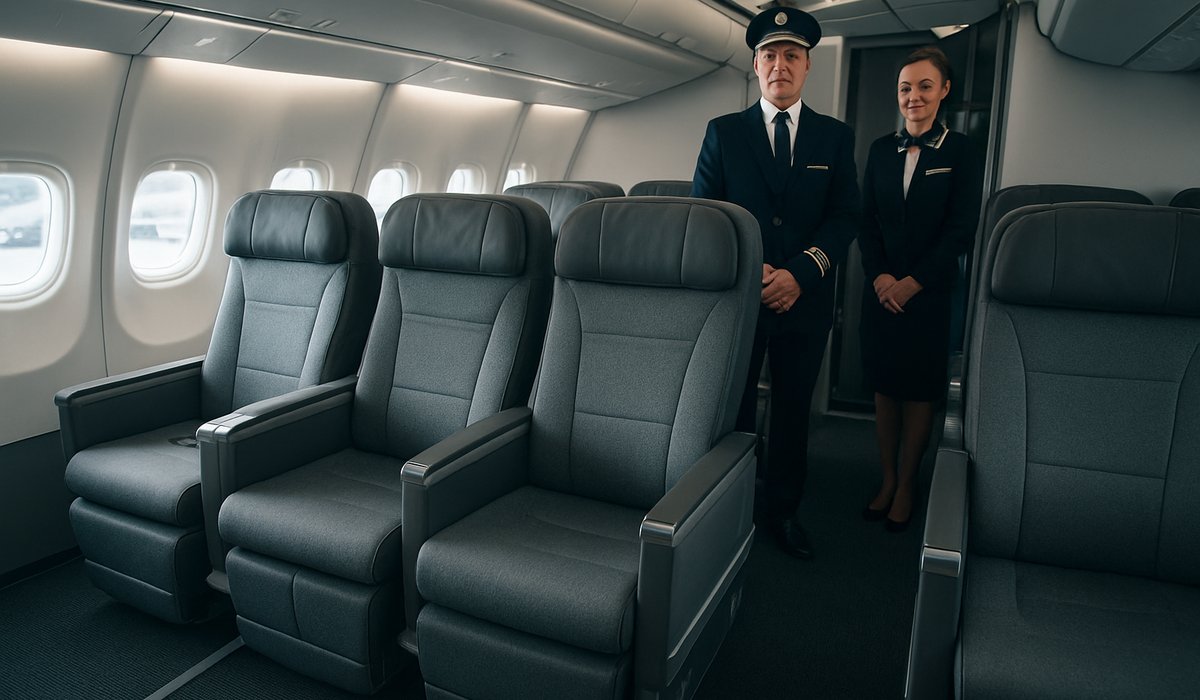
Image generated by AI
One Airline's Premium Economy Outpaces Industry Leaders With Significantly Enhanced Legroom
As carriers vie for premium economy dominance, a bold legroom advantage reshapes competitive positioning in aviation's fastest-growing cabin class
Premium Economy Emerges as Aviation's Most Competitive Battleground
Premium economy has rapidly transformed into commercial aviation's most fiercely contested market segment, capturing growing demand from business and leisure travelers seeking comfort beyond standard economy without the substantial price premium of business class. As the sector experiences unprecedented expansion, carriers are deploying increasingly sophisticated strategies to differentiate their offerings and capture market share in this lucrative cabin category.
While the industry's established leaders—including the multiple award-winning programs at Emirates and Qantas—have invested heavily in culinary excellence, cutting-edge entertainment systems, and enhanced airport amenities, one international carrier has identified a fundamental passenger pain point and seized the opportunity to establish a competitive advantage: legroom.
The Four-Inch Advantage Reshapes Market Expectations
This carrier's premium economy configuration delivers substantially more personal space than competing products from Emirates and Qantas, offering four additional inches of legroom—a quantifiable difference that passengers experience immediately upon boarding. This physical advantage addresses one of the most persistent passenger complaints across the aviation industry: spatial constraints in premium cabin configurations.
The strategic decision reflects a broader industry recognition that while amenities matter, fundamental comfort factors often influence passenger satisfaction and repeat bookings more significantly than supplementary services. As jet fuel prices fluctuate and aviation economics remain volatile, airlines increasingly recognize that maximizing seat efficiency while enhancing spaciousness creates a compelling value proposition for price-conscious premium passengers.
Industry Recognition and Competitive Implications
Both Emirates and Qantas have garnered significant industry accolades for their premium economy programs, yet the emphasis on hospitality and in-flight services may have inadvertently created an opening for competitors prioritizing physical space. This development underscores the evolving nature of premium economy competition, where differentiation increasingly hinges on measurable, tangible factors rather than subjective service quality.
The implications extend beyond individual carrier competitiveness. As airlines navigate post-pandemic demand recovery and manage rising operational costs—including historically volatile jet fuel expenses—the premium economy segment has emerged as a critical revenue driver. Carriers investing in superior space configurations may capture price-sensitive passengers previously committed to business class alternatives.
What This Means for Travelers
For consumers evaluating premium economy fares across competing carriers, this legroom differential represents a material consideration in purchasing decisions. As the segment continues expanding globally, passengers can expect increasingly granular comparisons of seat pitch, width, and cabin configurations as key decision-making variables alongside traditional amenity assessments.
Frequently Asked Questions
What is premium economy seating in commercial aviation? Premium economy is an intermediate cabin class positioned between standard economy and business class, offering enhanced comfort features, improved meals, better entertainment systems, and priority airport services at moderate price premiums.
How does legroom impact long-haul flight comfort? Legroom directly affects passenger comfort during extended flights, reducing circulation issues and improving overall travel experience. An additional four inches of legroom represents approximately 20-30% more space in many premium economy configurations.
Why are airlines competing on legroom rather than amenities? Legroom provides a quantifiable, immediately noticeable advantage that directly impacts passenger satisfaction. While amenities are subjective, physical space offers measurable differentiation in premium economy markets.
Which airlines offer the most competitive premium economy products currently? Multiple carriers including Emirates, Qantas, and this unnamed competitor offer award-winning premium economy, each emphasizing different value propositions including dining, entertainment, and now, spatial configuration advantages.
How do jet fuel prices influence airline seating strategies? Rising fuel costs pressure airlines to optimize revenue per available seat-mile, making premium economy increasingly important. Carriers must balance seat count with premium pricing power, making legroom a strategic differentiator.
Related Travel Guides
External Resources
Disclaimer
This article is for informational and educational purposes only. It does not constitute legal, financial, or professional advice. While we strive to provide accurate and up-to-date information, travel policies, regulations, and conditions change rapidly. Always verify information with official sources before making travel decisions. Nomad Lawyer makes no representations about the accuracy, reliability, completeness, or suitability of the information provided. Readers should consult qualified professionals for advice specific to their circumstances. The views expressed in this article are those of the author and do not necessarily reflect the views of Nomad Lawyer.
Kunal K Choudhary
Co-Founder & Contributor
A passionate traveller and tech enthusiast. Kunal contributes to the vision and growth of Nomad Lawyer, bringing fresh perspectives and driving the community forward.
Learn more about our team →