
Airbus A321XLR Set to Reshape Global Aviation Routes in 2026: Airlines Seize Ultra-Long-Range Opportunity
Breaking airline news and aviation industry updates for 2026.

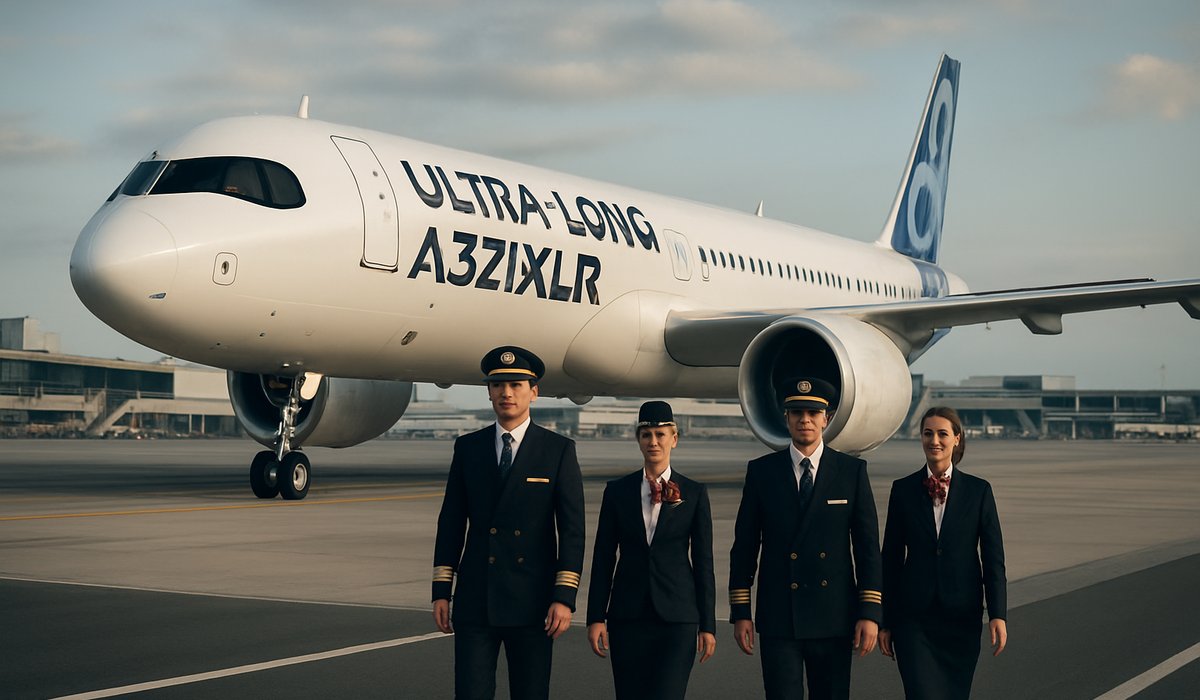
Image generated by AI
Airbus A321XLR Set to Reshape Global Aviation Routes in 2026: Airlines Seize Ultra-Long-Range Opportunity
The game-changing narrowbody aircraft promises to slash operating costs while connecting secondary cities previously reserved for widebody jets
Revolutionary Aircraft Transforms Route Economics
A pivotal shift is underway in global aviation as the Airbus A321XLR prepares for widespread deployment beginning in 2026, fundamentally altering how airlines structure international networks and manage operational expenses. The aircraft represents a watershed moment for the industry, bridging the gap between conventional narrowbody efficiency and traditional widebody long-haul capability—a combination that is reshaping carrier strategy and travel accessibility worldwide.
The A321XLR's arrival marks the first time carriers can economically sustain intercontinental routes without the expensive overhead of true widebody aircraft like the Boeing 787 or Airbus A350. This technological breakthrough addresses a critical gap in aviation economics: secondary city pairs and emerging markets that previously lacked sufficient passenger volume to justify widebody operations now become commercially viable.
Operational Efficiency Meets Long-Range Capability
Industry analysts highlight that the aircraft's narrowbody configuration delivers substantial cost advantages compared to widebody alternatives. Airlines operating these jets can expect significantly reduced fuel consumption per seat, lower maintenance expenses, and improved crew scheduling flexibility—benefits that directly translate into competitive pricing for consumers while preserving carrier profitability.
The A321XLR's extended range capability—approximately 4,700 nautical miles—unlocks opportunities for carriers to launch new transoceanic routes, bypass traditional hub-and-spoke models, and penetrate markets previously dominated by larger aircraft operators. Airlines can now serve point-to-point city pairs across the Atlantic and beyond without meeting the strict demand thresholds historically required for widebody deployment.
Competitive Advantage and Network Expansion
Carriers securing A321XLR orders gain first-mover advantage in capturing emerging travel markets. The aircraft enables airlines to establish direct connections between secondary hubs and international destinations, reducing connection times while cutting per-passenger operating costs by 20-30% compared to widebody alternatives on equivalent routes.
This transition also carries implications for jet fuel pricing exposure. Narrowbody efficiency provides natural hedging against volatile crude oil markets—a critical advantage given aviation fuel's sensitivity to geopolitical disruptions and supply chain volatility.
Industry-Wide Transformation Ahead
The A321XLR deployment wave arrives at a transformational moment for global aviation. As carriers navigate post-pandemic demand recovery and inflationary pressures on labor and materials, the aircraft's economic profile offers breathing room for route expansion and price competitiveness—factors directly influencing passenger affordability in the coming years.
Frequently Asked Questions
Q: When will Airbus A321XLR flights begin operating commercially? A: Airlines expect initial A321XLR service launches in 2026, with gradual fleet expansion through the late 2020s.
Q: How much cheaper is the A321XLR to operate than widebody aircraft? A: Operating costs per seat are 20-30% lower than comparable widebody jets on equivalent long-haul routes.
Q: What routes are airlines planning for the A321XLR? A: Transatlantic connections, secondary city pairs, and emerging market routes that previously required widebody aircraft.
Q: How does the A321XLR affect baggage fees and airline pricing? A: Lower operating costs provide carriers flexibility to offer more competitive fares and potentially more favorable baggage policies on A321XLR routes.
Q: What is the A321XLR's maximum range? A: The aircraft can operate routes up to approximately 4,700 nautical miles, enabling true intercontinental narrowbody service.
Related Travel Guides
- Budget Private Aviation Takes Flight: Affordable Luxury Jet Experiences Now Available Under $1,000
- Malaysia Airlines Adds April 2026 Flights on Kuala Lumpur-London Route as Asia-Europe Travel Surges 10%+ Year-on-Year
- KLM's Fleet Renewal Milestone: First Airbus A350-900 to Arrive by Summer 2026, Transforming Amsterdam to Toronto Flights
Disclaimer
This article is for informational and educational purposes only. It does not constitute legal, financial, or professional advice. While we strive to provide accurate and up-to-date information, travel policies, regulations, and conditions change rapidly. Always verify information with official sources before making travel decisions. Nomad Lawyer makes no representations about the accuracy, reliability, completeness, or suitability of the information provided. Readers should consult qualified professionals for advice specific to their circumstances. The views expressed in this article are those of the author and do not necessarily reflect the views of Nomad Lawyer.
Preeti Gunjan
Contributor & Community Manager
A passionate traveller and community builder. Preeti helps grow the Nomad Lawyer community, fostering engagement and bringing the reader experience to life.
Learn more about our team →