
Cathay Pacific Plans Ambitious Expansion With 10 New Ultra-Long-Haul Routes by 2026, Pushing Aviation's Endurance Limits
Breaking airline news and aviation industry updates for 2026.

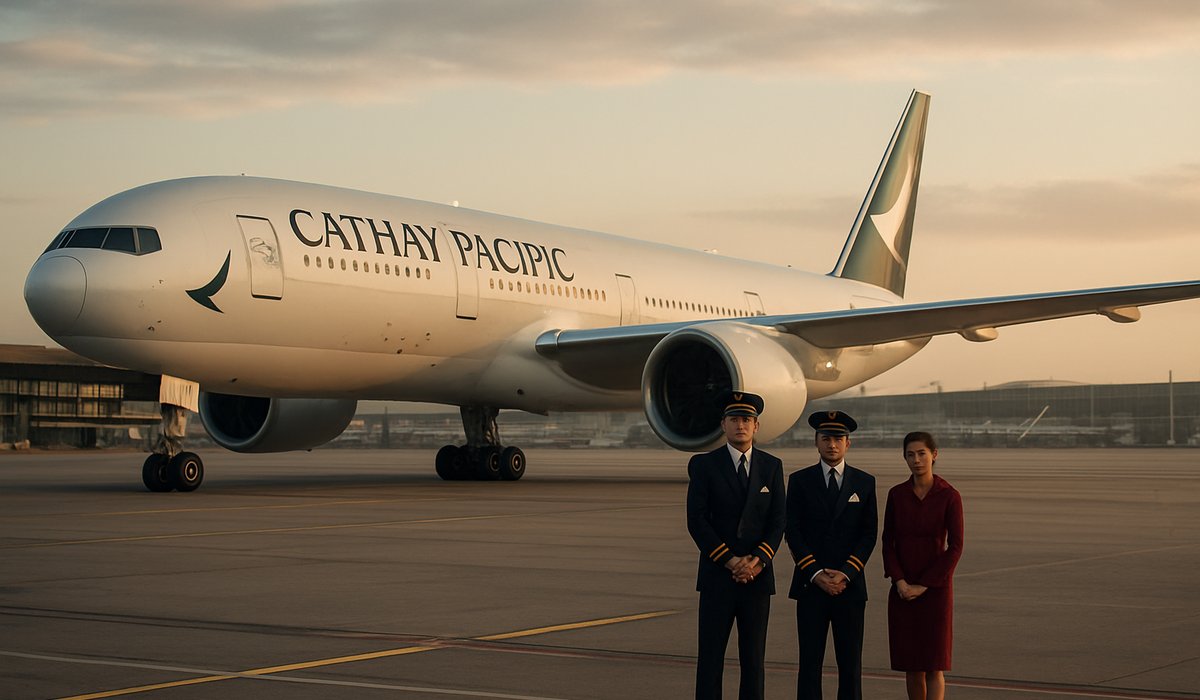
Image generated by AI
Cathay Pacific Plans Ambitious Expansion With 10 New Ultra-Long-Haul Routes by 2026, Pushing Aviation's Endurance Limits
Hong Kong carrier aims to extend global reach with marathons flights lasting up to 17 hours nonstop
Historic Expansion Plans Signal Shift in Long-Haul Strategy
Cathay Pacific Airways is charting an ambitious course into ultra-long-haul aviation, announcing plans to launch 10 new nonstop routes by 2026—a strategic expansion that underscores the airline's commitment to extending its global connectivity from its Hong Kong hub. The carrier, already ranked as the world's 19th-largest international operator, is positioning itself to capture growing demand for direct transatlantic and transpacific services that would eliminate costly layovers.
The announcement arrives as the aviation industry grapples with sustained operational challenges, including elevated jet fuel prices and persistent labor cost pressures. Yet Cathay Pacific's aggressive expansion signals confidence in post-pandemic travel recovery and the commercial viability of ultra-long-haul flying—flights approaching or exceeding 17 hours—despite the operational complexity and crew fatigue management requirements such routes demand.
Strengthening Oneworld Position and Market Competitiveness
As the third-largest international carrier within the oneworld alliance, Cathay Pacific's expansion directly challenges competitors including American Airlines, British Airways, and Japan Airlines for long-haul market share. The new routes are expected to enhance connectivity for passengers across the alliance network, offering seamless connections through Hong Kong International Airport—a strategic advantage that positions the carrier as a critical hub player in Asia-Pacific aviation.
Industry analysts note that ultra-long-haul expansion typically requires significant capital investment in modern, fuel-efficient aircraft. Airlines pursuing such routes increasingly deploy Boeing 787 Dreamliners and Airbus A350 aircraft, which offer superior fuel economy and cabin comfort—critical factors for passenger retention on journeys exceeding 15 hours.
Navigating Economic Headwinds
The expansion comes amid volatile aviation economics. Jet fuel prices, though moderating from pandemic-era peaks, remain elevated compared to pre-2020 levels. Additionally, baggage charges and ancillary revenue streams have become essential components of airline profitability, offsetting thinner margins on premium long-haul services.
Cathay Pacific's strategy reflects broader industry trends: carriers worldwide are increasingly focusing on point-to-point ultra-long-haul routes rather than hub-and-spoke models, driven by passenger demand for convenience and the improving economics of direct flights.
The carrier's 2026 launch timeline suggests phased aircraft deliveries and route development, with implementation likely dependent on successful crew scheduling protocols and regulatory approvals for extended flight operations.
FAQ: Understanding Cathay Pacific's Ultra-Long-Haul Expansion
What are ultra-long-haul flights, and how do they differ from traditional long-haul routes? Ultra-long-haul flights typically exceed 15 hours of flight time, requiring specialized aircraft, enhanced crew rest provisions, and complex logistics. Traditional long-haul routes average 8-12 hours.
How do jet fuel prices impact airlines' ability to operate 17-hour nonstop flights? Elevated jet fuel prices compress profit margins on long-haul routes, requiring airlines to optimize fuel efficiency through modern aircraft and operational planning to maintain competitiveness and cover increased airline fees and ancillary costs.
Which aircraft are best suited for ultra-long-haul operations? The Boeing 787 Dreamliner and Airbus A350 dominate ultra-long-haul markets due to superior fuel efficiency, cabin pressurization capabilities, and passenger comfort features essential for extended flights.
How does Cathay Pacific's expansion affect its oneworld alliance partners? New routes strengthen the alliance's connectivity and offer passengers more direct travel options, enhancing competitiveness against rival alliances like Star Alliance and SkyTeam.
What role do baggage charges and ancillary revenue play in ultra-long-haul route profitability? Ancillary revenue—including baggage fees, seat selection, and premium services—offsets thin operating margins on ultra-long-haul flights, sometimes contributing 25-35% of total airline revenue on these routes.
Related Travel Guides
Flight Delay Compensation Guide 2026
Understanding Airline Route Changes
Airport Security Process Updated (2026)
External Resources
Disclaimer
This article is for informational and educational purposes only. It does not constitute legal, financial, or professional advice. While we strive to provide accurate and up-to-date information, travel policies, regulations, and conditions change rapidly. Always verify information with official sources before making travel decisions. Nomad Lawyer makes no representations about the accuracy, reliability, completeness, or suitability of the information provided. Readers should consult qualified professionals for advice specific to their circumstances. The views expressed in this article are those of the author and do not necessarily reflect the views of Nomad Lawyer.
Preeti Gunjan
Contributor & Community Manager
A passionate traveller and community builder. Preeti helps grow the Nomad Lawyer community, fostering engagement and bringing the reader experience to life.
Learn more about our team →