
British Airways and Virgin Atlantic Deploy Competing Visions for Airbus A350-1000 Fleet Strategy
Breaking airline news and aviation industry updates for 2026.

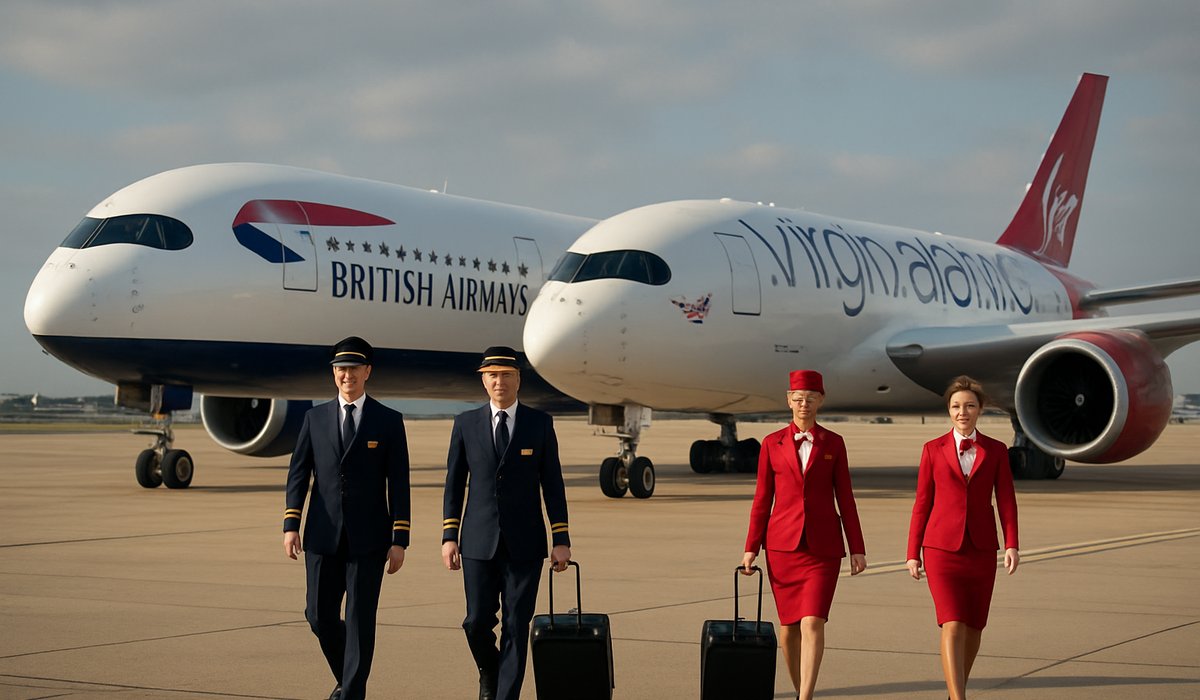
Image generated by AI
British Airways and Virgin Atlantic Deploy Competing Visions for Airbus A350-1000 Fleet Strategy
Two UK carriers chart dramatically different courses with identical aircraft, signaling broader industry divergence in long-haul premium travel
Competing Premium Models Emerge on Identical Platforms
British Airways and Virgin Atlantic, the United Kingdom's two dominant full-service carriers, operate near-identical Airbus A350-1000 wide-body jets yet have engineered fundamentally opposing passenger experiences aboard the same aircraft type. The strategic divergence underscores a critical inflection point in aviation's premium cabin sector, where competing philosophies on luxury, capacity, and revenue optimization are reshaping the transatlantic market.
BA Prioritizes Privacy and Corporate Consistency
British Airways has configured its A350-1000 fleet as a long-haul flagship, emphasizing individual privacy and a streamlined, business-oriented premium environment. The carrier's approach reflects its traditional positioning as a corporate travel leader, with cabin design prioritizing enclosed suites and consistent service standards across its international network.
The decision underscores BA's strategic bet on high-yield business travelers and premium leisure passengers willing to pay for discretion and personal space. This configuration aligns with the airline's broader rebranding efforts and its competitive positioning against Gulf carriers and other European legacy airlines on premium long-haul routes.
Virgin Atlantic Pursues Differentiated Luxury Strategy
In contrast, Virgin Atlantic has deployed its A350-1000 fleet with an alternative premium philosophy, signaling the carrier's commitment to experiential differentiation rather than corporate conformity. The airline's cabin architecture reflects its brand identity: younger, more lifestyle-focused, and emphasizing distinctive amenities over traditional privacy-first design.
This strategic fork reflects Virgin Atlantic's evolving market positioning and its efforts to capture premium leisure travelers and experiential-minded corporate passengers who value brand personality alongside comfort.
Industry Implications and Market Segmentation
The divergent A350 configurations illustrate how aircraft manufacturers' identical platforms enable wildly different airline strategies. Both carriers face identical structural constraints yet produce entirely distinct competitive offerings, creating a natural laboratory for understanding premium aviation's future.
The contrast also signals the aviation industry's ongoing bifurcation: legacy carriers like BA lean toward risk-averse, traditionally corporate positioning, while carriers like Virgin Atlantic embrace brand-led differentiation. As fuel costs fluctuate and travel demand remains uneven post-pandemic, these cabin-configuration choices will significantly impact revenue generation and market competitiveness on contested long-haul routes.
Both airlines must justify their A350 investments through premium pricing and capacity management, making their cabin strategies critical to financial performance and network profitability.
FAQ: Airbus A350-1000 Deployment and Airline Strategy
What is the Airbus A350-1000 and why do airlines choose it for long-haul routes? The A350-1000 is a wide-body jet engineered for ultra-long-haul efficiency, with advanced fuel economics and modern avionics. Airlines deploy it on premium routes where fuel costs and seat revenue directly impact profitability.
How does British Airways' A350 cabin differ from Virgin Atlantic's configuration? BA emphasizes privacy-focused, corporate-leaning design with enclosed suites, while Virgin Atlantic prioritizes lifestyle amenities and experiential differentiation aligned with its brand identity.
Does cabin configuration affect airline revenue and profitability? Yes significantly. Premium seat design, capacity allocation, and ancillary revenue opportunities directly influence yield and per-flight profitability on long-haul routes.
Which cabin strategy is more profitable: privacy-focused or experience-focused? Both models generate revenue differently—BA targets high-yield business travel, while Virgin Atlantic targets premium leisure. Market demand and route selection determine profitability.
How do fuel prices influence aircraft configuration decisions? Rising jet fuel costs pressure airlines to optimize seat density and premium pricing, making cabin design a critical component of network economics and route viability.
Related Travel Guides
- Aviation Updates: VietJet Thailand Resumes Kolkata to Bangkok Flights to Ease Regional Travel Chaos
- Qatar Airways Resumes Nagpur to Doha Flights Mitigating Long-Haul Airport Disruptions and Transatlantic Travel Chaos with Five Weekly Services: New Airline News and Aviation Updates
- Hong Kong to Europe Flight Routes Shift: New Corridors via Finland, Singapore, Thailand Replace Middle East Hubs in 2026
Disclaimer
This article is for informational and educational purposes only. It does not constitute legal, financial, or professional advice. While we strive to provide accurate and up-to-date information, travel policies, regulations, and conditions change rapidly. Always verify information with official sources before making travel decisions. Nomad Lawyer makes no representations about the accuracy, reliability, completeness, or suitability of the information provided. Readers should consult qualified professionals for advice specific to their circumstances. The views expressed in this article are those of the author and do not necessarily reflect the views of Nomad Lawyer.
Raushan Kumar
Founder & Lead Developer
Full-stack developer with 11+ years of experience and a passionate traveller. Raushan built Nomad Lawyer from the ground up with a vision to create the best travel and law experience on the web.
Learn more about our team →