
F-35 Lightning II Emerges as World's Second Most Deployed Fighter Jet Despite Ongoing Developmental Challenges
Breaking airline news and aviation industry updates for 2026.

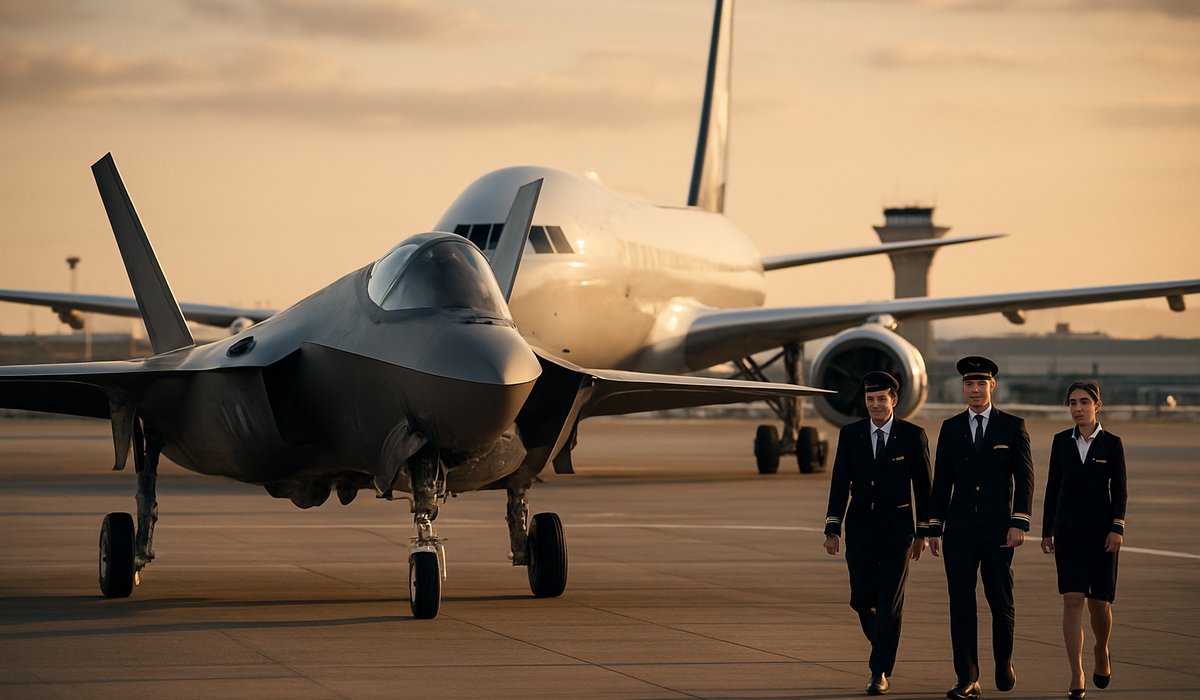
Image generated by AI
F-35 Lightning II Emerges as World's Second Most Deployed Fighter Jet Despite Ongoing Developmental Challenges
The Lockheed Martin combat aircraft solidifies its global dominance while grappling with persistent technical maturity issues
Rapid Ascension in Global Military Aviation
The Lockheed Martin F-35 Lightning II has cemented its position as the world's second most widely deployed frontline fighter jet, marking a significant milestone in modern military aviation. This achievement comes as the aircraft continues to play an increasingly central role in high-stakes military operations, including recent strikes against Iranian air defense systems in multinational operations spanning 2024 through 2026.
Despite its commanding presence across multiple nations' air forces, defense analysts point to a striking contradiction: the F-35 remains functionally immature as a weapons platform, having failed to fully realize its operational capabilities more than a decade after initial service entry.
Operational Success Against Strategic Targets
The F-35's combat credentials were demonstrated decisively in recent military campaigns involving Israeli and United States forces. The aircraft proved instrumental in neutralizing sophisticated Iranian air defense infrastructure, showcasing advanced capabilities in electronic warfare, stealth operations, and precision targeting—areas where the platform was specifically engineered to excel.
These successful operations underscore why international military procurement offices have embraced the F-35 despite its developmental shortcomings. The aircraft's performance in contested airspace has reinforced confidence among allied nations investing in the program.
The Paradox of Capability and Maturity
Military analysts highlight an unusual phenomenon: the F-35 simultaneously represents cutting-edge combat capability and an incomplete technological platform. Engineers continue working through fundamental developmental challenges that, in conventional terms, would typically be resolved before widespread operational deployment.
The platform's complexity—integrating advanced avionics, sensor fusion systems, and stealth technologies—has extended its maturation timeline considerably beyond initial projections. These technical hurdles persist despite billions in development and procurement investments across multiple partner nations.
Global Proliferation and Strategic Implications
The F-35's status as the second most common fighter jet globally reflects deliberate procurement decisions by NATO allies, Indo-Pacific partners, and other strategic allies of the United States. This widespread adoption fundamentally shapes modern air superiority dynamics and interoperability across allied air forces.
As nations continue integrating F-35 squadrons into operational service, military strategists grapple with optimizing a platform that promises generational advancement while still undergoing refinement. The tension between current operational demands and future capabilities defines the F-35 program's ongoing trajectory.
Frequently Asked Questions
What makes the F-35 Lightning II the world's second most common fighter jet? The F-35 has achieved widespread adoption across multiple nations' air forces due to NATO standardization requirements, strategic alliance commitments, and proven combat effectiveness in modern operational theaters.
Why is the F-35 considered immature despite its operational deployment? The aircraft's extraordinarily complex integrated systems—including sensor fusion, electronic warfare capabilities, and stealth technology—continue undergoing developmental refinement more than a decade after entering service.
How has the F-35 performed in recent military operations? The platform demonstrated significant capability in 2024-2026 operations against Iranian air defenses, proving effective in electronic warfare and precision strike missions.
What countries currently operate the F-35? Multiple NATO members, plus Australia, Japan, South Korea, and other U.S.-aligned nations operate or are procuring F-35 aircraft for their air forces.
Will the F-35 eventually become fully mature, and what does that timeline look like? Defense officials indicate ongoing development will continue for several years, with full operational capability targets shifting periodically as technical challenges emerge.
Related Travel Guides
Flight Delay Compensation Guide 2026
Understanding Airline Route Changes
Airport Security Process Updated (2026)
External Resources
Disclaimer
This article is for informational and educational purposes only. It does not constitute legal, financial, or professional advice. While we strive to provide accurate and up-to-date information, travel policies, regulations, and conditions change rapidly. Always verify information with official sources before making travel decisions. Nomad Lawyer makes no representations about the accuracy, reliability, completeness, or suitability of the information provided. Readers should consult qualified professionals for advice specific to their circumstances. The views expressed in this article are those of the author and do not necessarily reflect the views of Nomad Lawyer.
Kunal K Choudhary
Co-Founder & Contributor
A passionate traveller and tech enthusiast. Kunal contributes to the vision and growth of Nomad Lawyer, bringing fresh perspectives and driving the community forward.
Learn more about our team →