
Qantas' Ultra-Long-Range A350 Sacrifice: Why Fewer Seats Mean Direct Routes to London
Breaking airline news and aviation industry updates for 2026.

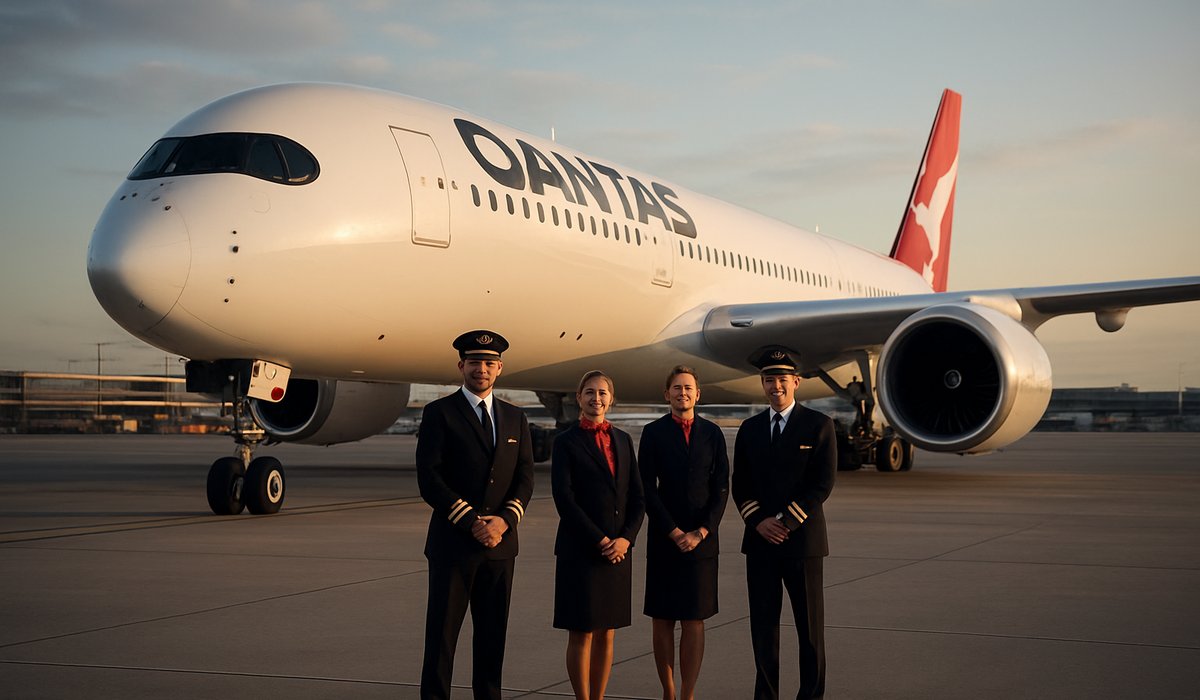
Image generated by AI
Qantas' Ultra-Long-Range A350 Sacrifice: Why Fewer Seats Mean Direct Routes to London
How aviation's most ambitious non-stop route demands radical cabin compromises and reshapes the economics of extreme-distance flying
The Payload Paradox: Engineering's Fundamental Tradeoff
Qantas has made a striking strategic decision with its Project Sunrise fleet: sacrificing nearly 100 seats to achieve something previously impossible in commercial aviation. The Australian carrier's Airbus A350-1000 Ultra-Long-Range (ULR) aircraft will carry just 238 passengers—a dramatic reduction from the standard A350-1000's 350-seat configuration—to enable nonstop flights spanning 9,700 nautical miles (18,000 kilometers) between Sydney and London.
The engineering reality behind this choice is unforgiving. The aircraft requires a massive 20,000-liter (5,283-gallon) auxiliary fuel tank positioned in the rear fuselage specifically designed to push beyond the standard model's already exceptional range capabilities. This additional fuel capacity, essential for maintaining safe reserves across the world's longest commercial routes, represents dead weight that directly competes with passenger-carrying capacity.
"There is no such thing as a free lunch in aerospace engineering," the principle demonstrates itself across every metric. Every additional gallon of jet fuel—weighing approximately 6.7 pounds—must itself be lifted by the engines, creating a cascading reduction in available payload for revenue-generating passengers and cargo.
A Commercial Gamble on Route Exclusivity
For Qantas, the mathematics remain compelling despite the seat-count penalty. The ability to eliminate fuel stops between Australia's east coast and Europe's financial hub creates unprecedented scheduling flexibility and passenger appeal. This competitive advantage in the premium and business cabin segments—where per-seat economics dramatically outperform economy configurations—justifies the lower overall capacity.
The Project Sunrise fleet redesign prioritizes high-yield passengers on routes where demand for direct service commands premium pricing, fundamentally shifting how airlines approach ultra-long-range network planning. Rather than maximizing seats per departure, Qantas optimizes revenue per available seat mile through route exclusivity and schedule frequency.
Broader Aviation Industry Implications
This aircraft configuration signals a broader industry shift toward specialized aircraft utilization. As jet fuel prices remain volatile and geopolitical factors continue influencing global aviation routes, carriers increasingly view extreme-distance capability as a market differentiator rather than a commodity feature.
The A350-1000ULR configuration challenges conventional wisdom about aircraft optimization, proving that sometimes flying fewer people farther generates greater shareholder value than traditional capacity-maximization strategies.
FAQ: Ultra-Long-Range Aircraft and Aviation Economics
Q: Why can't Qantas simply add more fuel without removing seats? A: Additional fuel weight requires proportionally greater engine thrust to lift, creating diminishing returns. At extreme distances, every kilogram of payload sacrificed enables the extra fuel necessary to reach destination with mandatory safety reserves.
Q: How much more expensive is a ULR aircraft compared to standard models? A: While exact figures vary by manufacturer and customization, specialized ultra-long-range conversions typically command 8-15% price premiums through engineering, certification, and structural modifications.
Q: Will other airlines adopt similar ultra-long-range configurations? A: Industry analysts expect selective adoption on premium routes where direct service commands sufficient pricing power to offset reduced seat counts and higher operating costs.
Q: How do jet fuel prices impact ultra-long-range route viability? A: Sustained fuel price increases directly threaten ULR route profitability, as these aircraft consume significantly more fuel per departure than conventional models despite carrying fewer passengers.
Q: What's the environmental impact of ultra-long-range flights? A: While eliminating one fuel stop reduces overall emissions per passenger, ULR aircraft burn substantially more total fuel due to weight penalties, creating a complex sustainability tradeoff.
Related Travel Guides
Flight Delay Compensation Guide 2026
Understanding Airline Route Changes
Airport Security Process Updated (2026)
External Resources
Disclaimer
This article is for informational and educational purposes only. It does not constitute legal, financial, or professional advice. While we strive to provide accurate and up-to-date information, travel policies, regulations, and conditions change rapidly. Always verify information with official sources before making travel decisions. Nomad Lawyer makes no representations about the accuracy, reliability, completeness, or suitability of the information provided. Readers should consult qualified professionals for advice specific to their circumstances. The views expressed in this article are those of the author and do not necessarily reflect the views of Nomad Lawyer.
Preeti Gunjan
Contributor & Community Manager
A passionate traveller and community builder. Preeti helps grow the Nomad Lawyer community, fostering engagement and bringing the reader experience to life.
Learn more about our team →