The Moorings Upgrades British Virgin Islands Yacht Fleet with High-Speed Support Boats: Rapid Marine Assistance for Caribbean Charters

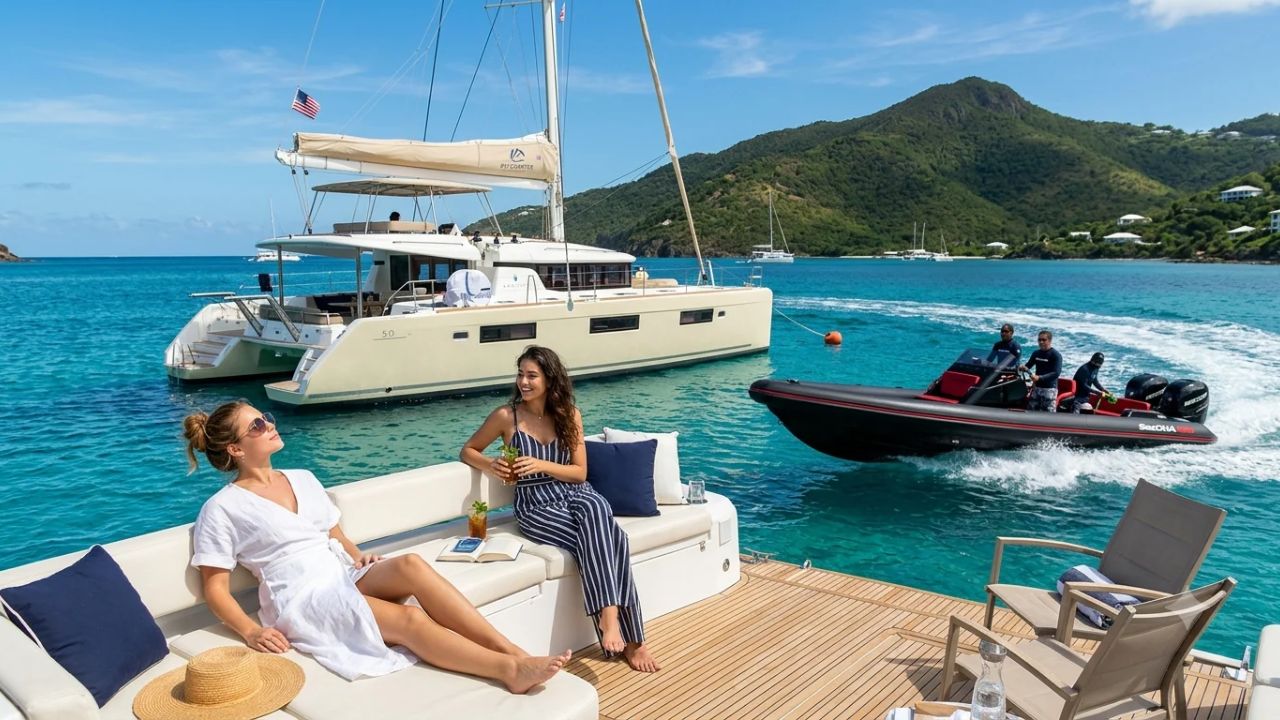
The Moorings has introduced a new fleet of high-speed technical chase boats to provide rapid on-water assistance throughout the British Virgin Islands
[ROAD TOWN, Oct 30, 2026] — Expanding maritime technical support across the Caribbean's premier sailing grounds, The Moorings has launched a newly upgraded fleet of dedicated high-speed support chase boats based out of Tortola, engineered to deliver rapid on-water technical dispatch and guest assistance across the British Virgin Islands archipelago.
[!NOTE] Operational Upgrade Overview: Headquartered at Wickhams Cay II in Road Town, Tortola, The Moorings has deployed high-speed deep-V response craft designed to cut across open channels in diverse sea conditions. The fleet provides rapid engineering intervention for both independent bareboat charterers and fully crewed luxury catamarans, addressing electrical, mechanical, plumbing, and rigging challenges directly at anchor without forcing vessels to return to port.
THE MOORINGS BVI RAPID RESPONSE MARITIME ARCHITECTURE
| Column 1 |
|---|
| [ HEADQUARTERS & MARINA BASE: WICKHAMS CAY II, ROAD TOWN, TORTOLA ] |
| v |
| [ HIGH-SPEED SUPPORT CHASE FLEET ] |
| High-powered, deep-V twin-outboard support craft equipped for multi-condition sea transit |
| +----------------------------+-----------------------------+ |
| v [ IMMEDIATE TECHNICAL DISPATCH ] v [ EMBARKED SPECIALIST TEAMS ] |
| - Direct transit across Sir Francis Drake Channel - Certified marine diesel engineers |
| - Point-to-point response to isolated anchorages - Electrical & refrigeration experts |
| - Average response window: 30 to 75 minutes - Rigging & sail restoration crew |
| +----------------------------+-----------------------------+ |
| v v |
| [ INDEPENDENT BAREBOAT SAILORS ] [ FULLY CREWED LUXURY YACHTS ] |
| - Quick fix for watermakers & battery banks - Seamless guest service continuity |
| - Uninterrupted vacation schedules - Direct coordination with skippers |
| - Elevated confidence for self-captained trips - Provisioning & technical backup |
| [ TARGET COVERAGE ZONE: BRITISH VIRGIN ISLANDS ARCHIPELAGO ] |
Maritime Infrastructure Upgrade: High-Speed Response Across the Archipelago
The British Virgin Islands has long held the title of the world's premier bareboat sailing capital, celebrated for consistent easterly trade winds, protected deep-water sounds, and line-of-sight navigation between more than 50 islands and cays. Yet operating a charter fleet of hundreds of luxury sailing yachts, power catamarans, and monohulls presents significant logistical complexities. Modern multi-hull yachts are floating luxury villas equipped with intricate mechanical, electrical, and electronic installations, ranging from reverse-osmosis desalination watermakers and onboard generators to digital touchscreen navigation suites and multi-zone air conditioning.
When mechanical hiccups occur—such as an anchor windlass circuit tripping in a crowded bay, an outboard tender engine failing to start, or a marine head developing a pressure seal issue—the traditional charter response often involved either a slow service vessel dispatch or requiring the charterer to haul anchor and motor hours back to Road Town. Such delays disrupt tightly planned holiday itineraries, causing frustration and cutting into precious leisure hours.
The Moorings' investment in a brand-new fleet of high-speed support craft fundamentally transforms this operational dynamic. Engineered with specialized deep-V hull geometry, twin high-horsepower four-stroke outboard propulsion, and advanced commercial navigation suites, these purpose-built support vessels are designed to maintain high cruising speeds even across choppy open passages such as the Sir Francis Drake Channel.
By stationing technical teams on high-speed platforms, The Moorings ensures that expert marine engineers, replacement parts, and emergency gear can be dispatched at a moment's notice. Technicians arrive directly alongside charter vessels at anchor within minutes rather than hours, preserving the rhythm of guest vacations while maintaining high standards of maritime reliability.
SERVICE VESSEL DISPATCH COMPARISON AT SEA
| Column 1 |
|---|
| TRADITIONAL CHANGER/DISPATCH CRAFT NEW HIGH-SPEED SUPPORT FLEET (2026) |
| ---------------------------------- ---------------------------------- |
| - Heavy displacement or displacement hull - Lightweight deep-V composite planning hull |
| - Cruising speed: 10 to 14 knots - Cruising speed: 28 to 36 knots |
| - Transit Road Town to Virgin Gorda: ~90 min - Transit Road Town to Virgin Gorda: ~28-35 min |
| - Vulnerable to head seas in choppy channels - High wave-piercing stability in trade wind chop |
| - Basic mechanical toolkit on board - Modular diagnostics, parts drawers & power units |
| - Disrupts guest vacation for half a day - Rapid resolution with minimal guest downtime |
Fleet Composition and Operational Reach: From Wickhams Cay II to Outlying Cays
The operational core of The Moorings’ Caribbean footprint is located at Wickhams Cay II in Road Town, Tortola. This facility serves as one of the largest purpose-built yacht charter bases on the planet, encompassing deep-water berths, comprehensive provisioning centers, dedicated guest reception lounges, sail lofts, and advanced marine engineering repair bays.
From this central command center, the newly deployed support fleet commands an expansive operating radius that covers every key cruising corridor in the British Virgin Islands:
- The Southern Island Chain: Spanning Norman Island (The Bight and The Caves), Peter Island (Great Harbour and Sprat Bay), Salt Island, and Cooper Island (Manchioneel Bay). These anchorages represent the classic first- and last-night stops for charter groups departing Tortola.
- The Virgin Gorda Corridor: Encompassing the granite boulder formations of The Baths, the tranquil waters of Spanish Town, and the sheltered yachting haven of North Sound, home to luxury resorts, marinas, and fine-dining anchorages.
- The Northern Barrier and Jost Van Dyke: Stretching west across Cane Garden Bay on Tortola's north shore to Great Harbour and White Bay on Jost Van Dyke, famous for its beachside taverns and pristine coral reefs.
- Outer Perimeter Approaches: Extending toward the Dog Islands, Guana Island, Marina Cay, and the southern approaches leading toward the low-lying coral atoll of Anegada.
| Cruising Anchorage | Nautical Miles from Base | Avg. Old Dispatch Time | New High-Speed Response Time | Primary Intervention Types |
|---|---|---|---|---|
| Norman Island (The Bight) | 5.8 NM | 45 – 55 mins | 15 – 20 mins | Dinghy outboards, windlass resets, battery monitoring |
| Cooper Island (Manchioneel Bay) | 7.4 NM | 50 – 65 mins | 18 – 25 mins | Solar-generator sync, refrigeration, freshwater pumps |
| Virgin Gorda (Spanish Town / Baths) | 11.2 NM | 75 – 90 mins | 25 – 32 mins | Desalination maintenance, marine heads, chartplotter updates |
| North Sound (Virgin Gorda) | 17.5 NM | 110 – 135 mins | 35 – 45 mins | Air conditioning service, generator repairs, rigging |
| Jost Van Dyke (White Bay / Great Harbour) | 13.8 NM | 85 – 105 mins | 28 – 35 mins | Anchor retrieval assistance, electrical resets, tenders |
| Cane Garden Bay (Tortola North) | 14.1 NM | 90 – 115 mins | 30 – 38 mins | Sail furlers, running rigging, outboard replacements |
This swift response radius means that charterers are never truly isolated, even when anchored in secluded coves behind uninhabited barrier islands. The ability of support teams to cross 15 nautical miles of open water in approximately 30 minutes bridges the gap between serene offshore wilderness and immediate shore-side engineering capability.
Dual Charter Support: Bareboat Navigators vs. Fully Crewed Luxury Catamarans
The fleet upgrade delivers targeted operational benefits across both ends of the yacht charter spectrum: self-operated bareboat adventures and professionally crewed luxury voyages.
DUAL-TIER CHARTER SUPPORT INTEGRATION
| Column 1 |
|---|
| [ OPERATIONAL DISPATCH COMMAND ] |
| VHF Channel 12 / Dedicated Cellular Marine Line / Satellite Tracking Interface |
| +---------------------+---------------------+ |
| v v |
| [ INDEPENDENT BAREBOAT SAILORS ] [ FULLY CREWED LUXURY EXPEDITIONS ] |
| - Eliminates self-repair anxiety - Professional captain-to-base coordination |
| - Direct technician hands-on fix - Immediate spare part replenishment |
| - Preserves navigation autonomy - Preserves seamless luxury guest hospitality |
| - Avoids costly charter downtime - Dedicated specialist backup for major systems |
| - Ideal for families and private groups - Discreet dockside or anchorage servicing |
Empowering Independent Bareboat Navigators
For bareboat charterers—licensed sailors or experienced boaters who charter a yacht without a professional skipper—the vessel is under their direct command. While bareboating offers total personal freedom to set custom itineraries, select secluded moorings, and drop anchor under starry skies, it also places all mechanical and operational responsibilities on the charterer's shoulders.
Even experienced skippers can find it daunting to troubleshoot a complex digital electrical inverter or diagnose a raw-water cooling blockage on an auxiliary diesel engine in the middle of a Caribbean vacation. In the past, mechanical anxieties could lead charterers to hesitate exploring distant bays.
With high-speed support boats patrolling the cruising grounds, bareboat navigators gain an invisible safety net. If a system requires attention, a simple radio call to base brings a fully equipped master technician directly to their transom. Instead of spending hours reading technical manuals or attempting improvised repairs with a small onboard tool kit, the charterer can step aside, enjoy a swim or snorkel session, and allow certified professionals to resolve the issue swiftly.
Enhancing Crewed Luxury Catamaran Services
On fully crewed charters—where guests enjoy the services of an onboard captain, private chef, and steward—expectations for seamless luxury are exceptionally high. Guests booking crewed catamarans expect five-star resort standards: continuous chilled air conditioning, fresh drinking water from onboard reverse-osmosis plants, gourmet culinary preparation, and round-the-clock water sports activities.
When a technical issue arises on a crewed yacht, the onboard crew must balance diagnosing the machinery with maintaining attentive guest service. A malfunctioning galley induction cooktop, a chilled beverage storage failure, or a compromised watermaker could quickly diminish the luxury atmosphere.
The high-speed support fleet provides professional captains with immediate shoreside backing. Rather than pulling the crew away from their hospitality duties, the support boat arrives loaded with pre-configured replacement units—such as spare tender engines, replacement pump assemblies, or specialized refrigeration modules. The technician performs the swap quickly and quietly, enabling the onboard crew to concentrate entirely on delivering exceptional guest experiences without interruption.
INCIDENT RESOLUTION WORKFLOW: AT-SEA ASSISTANCE
| Column 1 |
|---|
| 1. GUEST NOTIFICATION |
| Skipper or bareboat client identifies issue (e.g., tender motor fails to ignite) |
| Contacts The Moorings Base Operations via VHF Ch 12 or dedicated marine phone line. |
| v |
| 2. BASE TRIAGE & PARTS ALLOCATION |
| Duty engineering officer conducts immediate remote diagnosis. |
| Allocates appropriate technician, specialized diagnostic gear, and replacement parts. |
| v |
| 3. HIGH-SPEED DISPATCH |
| Support boat departs Wickhams Cay II at 30+ knots, following GPS waypoint to vessel. |
| Reaches outer anchorages across Sir Francis Drake Channel within 20 to 45 minutes. |
| v |
| 4. ON-WATER RESOLUTION & TESTING |
| Technician boards vessel, executes repair or swaps modular component (e.g., spare motor). |
| Conducts operational testing; logs digital clearance with base. |
| v |
| 5. UNINTERRUPTED VOYAGE CONTINUATION |
| Charter party resumes planned sailing itinerary with zero lost days or missed anchorages. |
Technical Systems at Sea: Addressing Modern Catamaran Complexity
The necessity for specialized high-speed support vessels reflects the technological evolution of the charter fleet itself. The modern charter fleet operated by The Moorings—principally built in partnership with premier South African boatbuilder Robertson & Caine—features sophisticated engineering systems designed to provide off-grid residential comfort:
- Reverse-Osmosis Watermakers: Producing hundreds of gallons of fresh potable water daily directly from sea water, reducing the need to visit commercial docks for water fills.
- High-Capacity Marine Generators and Inverters: Powering multi-zone reverse-cycle chilled air conditioning, electric induction galleys, and household electrical outlets throughout the vessel.
- Lithium Iron Phosphate (LiFePO4) Battery Banks: Replacing legacy lead-acid batteries to provide continuous, whisper-quiet electrical energy without running diesel generators during quiet nighttime anchorages.
- Integrated Touchscreen Digital Switching: Systems that monitor tank levels, electrical loads, bilge pumps, and navigation lights through centralized digital interfaces.
- Heavy-Duty Electric Windlasses and Winches: Enabling effortless sail trimming and anchor deployment at the press of a foot switch or remote control.
While these systems elevate comfort to unprecedented levels, their complexity means field repairs require specialized electronic diagnostic tools and model-specific replacement components.
COMMON CHARTER INTERVENTIONS & RAPID CHASE CAPABILITIES
| Column 1 |
|---|
| SYSTEM CATEGORY COMMON FIELD ISSUE RAPID CHASE BOAT INTERVENTION |
| ---------------------------------------------------------------------------------------------- |
| Auxiliary Propulsion Raw water impeller failure / On-site impeller replacement and |
| fuel line airlock fuel system bleeding in 20 minutes |
| Tender Outboard Flooded carburetor / fouled Immediate on-water tender swap with |
| spark plug / line snag pre-tested spare unit on chase deck |
| Anchor Windlass Tripped high-amp thermal breaker / In-bay electrical reset, solenoid |
| solenoid contact corrosion replacement, or manual override |
| Desalination Plant High salinity auto-shutdown / Sensor recalibration, membrane flush |
| pre-filter silt obstruction or cartridge swap in 30 minutes |
| Galley & Refrigeration Thermostat cycling failure / Compressor pressure top-up and |
| inverter relay fault modular electronic board replacement |
By stocking the high-speed chase craft with standardized components, technicians can execute modular swaps immediately on the water. If an outboard engine on a guest tender proves stubborn, the support boat simply offloads an identical, fully tested replacement motor and takes the faulty unit back to the marina workshop for bench servicing. This modular methodology keeps guests moving without delaying their daily snorkeling, paddleboarding, or onshore dining plans.
Fifty-Five Years in the BVI: The Evolution of Caribbean Charter Tourism
The deployment of this new support fleet represents the latest chapter in a 55-year operational legacy that essentially birthed the modern bareboat charter industry.
In 1969, naval veteran Charlie Cary and his wife Ginny arrived in Tortola with six Pearson 35 sailing yachts. At that time, Road Town was a quiet colonial outpost with minimal marine infrastructure, no charter booking networks, and few navigational charts dedicated to leisure sailors. Recognizing the natural advantages of the British Virgin Islands—a cluster of mountainous volcanic islands encircling a protected, calm waterway protected from Atlantic swells—the Carys founded The Moorings.
CHRONOLOGY: THE MOORINGS BVI CHARTER EVOLUTION
| Column 1 |
|---|
| 1969: INCEPTION AT ROAD TOWN |
| Charlie & Ginny Cary establish The Moorings with 6 Pearson 35 yachts; pioneers bareboat concept. |
| v |
| 1970s - 1980s: MARINA EXPANSION AT WICKHAMS CAY II |
| Constructs dedicated marina, provisioning center, and boatyard; introduces custom Moorings 39. |
| v |
| 1990s: ROBERTSON & CAINE CATAMARAN REVOLUTION |
| Partners with South African shipbuilder; launches wide-beam catamarans that revolutionize space. |
| v |
| 2010s: POWER CATAMARANS & DIGITAL FLEET MANAGEMENT |
| Introduces high-efficiency power catamarans; integrates digital navigation and booking systems. |
| v |
| 2026: HIGH-SPEED ON-WATER SUPPORT INFRASTRUCTURE |
| Deploys dedicated high-speed support chase fleet across BVI; redefines at-sea service delivery. |
Over five and a half decades, the company transformed private yachting from an exclusive pastime reserved for wealthy yacht owners into an accessible luxury holiday for international travelers. Today, The Moorings operates worldwide across the Mediterranean, South Pacific, and Americas, yet the British Virgin Islands remains its global flagship and largest single operational base.
The impact of this marine infrastructure extends far beyond the marina docks. Yacht charter tourism serves as one of the primary pillars of the British Virgin Islands' gross domestic product. Every yacht that sets sail from Wickhams Cay II contributes directly to the archipelago's local economic ecosystem:
- Local Provisioning and Logistics: Supermarkets, bakeries, beverage distributors, and boutique gourmet suppliers in Tortola supply hundreds of vessels weekly with locally sourced goods and provisions.
- Island Anchorages and Shoreside Establishments: Visiting sailors patronize independent waterfront restaurants, beach bars, boutique hotels, dive shops, and craft markets on Jost Van Dyke, Virgin Gorda, Cooper Island, and Anegada.
- Marine Environmental Stewardship: Charter fees and mooring permits directly support the BVI National Parks Trust, funding the maintenance of environmentally protective mooring buoys that prevent anchor damage to delicate coral reefs and seagrass beds.
- Skilled Local Employment: The Moorings employs hundreds of British Virgin Islanders as licensed captains, marine mechanics, fiberglass specialists, electricians, base managers, and customer experience coordinators.
By investing in high-speed support boats, The Moorings reinforces the overall infrastructure of the territory, ensuring the BVI remains the benchmark against which all global charter destinations are judged.
BVI Cruising Geography: Microclimates, Anchorages, and Navigation Realities
To understand why rapid marine support is so transformative, one must appreciate the geographic layout and unique maritime conditions of the British Virgin Islands.
BVI CRUISING WATERS: GEOGRAPHIC BLUEPRINT
| Column 1 |
|---|
| [ ANEGADA CORAL ATOLL ] |
| (15 NM North of Virgin Gorda) |
| ^ |
| v |
| [ JOST VAN DYKE ] <----------------- [ TORTOLA ] -----------------> [ VIRGIN GORDA ] |
| - White Bay (Soggy Dollar) - Wickhams Cay II (Base) - The Baths & Devils Bay |
| - Great Harbour (Foxy's) - Cane Garden Bay - North Sound Yacht Hub |
| v Sir Francis Drake Channel |
| +--------------------------------------------------+ |
| +--------------------------------------------------+ |
The archipelago is structured around the Sir Francis Drake Channel, a deep, 30-mile-long maritime waterway framed by Tortola to the north and a continuous barrier of smaller islands to the south. This geography creates ideal sailing conditions:
- Trade Wind Consistency: Reliable easterly and north-easterly trade winds generally average between 15 and 22 knots from November through May, providing consistent sailing breeze with minimal squall activity.
- Sheltered Wave Action: The outer islands absorb the heavy swells of the Atlantic Ocean, keeping channel waters relatively calm with chop rarely exceeding three to four feet under normal weather patterns.
- Line-of-Sight Piloting: Almost every anchorage is visible from the next, eliminating long, arduous offshore passages and allowing skippers to navigate primarily by visual landmarks supported by electronic chartplotters.
However, navigation in the BVI is not entirely without challenge. The waters are punctuated by shallow coral heads, submerged rock pinnacles (such as the Indians and the Chimney near Great Dog), and strong tidal currents that sweep through passes like the Virgin Gorda Cut and Round Rock Passage. In winter, the arrival of northern Atlantic groundswells can create surge in north-facing anchorages like Cane Garden Bay, requiring charterers to relocate to sheltered southern coves.
In this environment, having dedicated high-speed support vessels active in the area provides immense security. Should a charterer misjudge a mooring approach, tangle a painter line in a propeller, or require advice on shifting anchorages ahead of a localized weather front, The Moorings’ support personnel can reach them rapidly with both physical assistance and local nautical guidance.
Practical Planning for Yacht Charter Guests: Preparation, Safety, and Best Practices
A successful Caribbean yachting vacation combines reliable on-water support with sound seamanship and diligent pre-trip planning. For travelers preparing to charter with The Moorings in the British Virgin Islands, following established operational best practices ensures an enjoyable experience from start to finish.
CHARTER EXPEDITION PREPARATION CHECKLIST
| Column 1 |
|---|
| PHASE 1: PRE-DEPARTURE BRIEFING & SYSTEMS CHECKOUT |
| [ ] Attend mandatory chart briefing at Wickhams Cay II covering restricted anchorages. |
| [ ] Complete comprehensive vessel walkthrough with dockmaster (watermaker, inverter, bilges). |
| [ ] Confirm operation of primary and backup VHF radios (Channels 16 and 12). |
| [ ] Verify dinghy outboard startup, safety lanyard functionality, and fuel reserve. |
| PHASE 2: DAILY OFFSHORE ROUTINES AT ANCHOR |
| [ ] Inspect auxiliary engine oil and raw-water strainers before starting morning departures. |
| [ ] Monitor freshwater tank levels; run watermaker during engine operation or generator cycles. |
| [ ] Check house battery bank voltage prior to evening quiet hours. |
| [ ] Inspect mooring pennant lines for chafe and double-tie security at National Park balls. |
| PHASE 3: ON-WATER SUPPORT DISPATCH PROTOCOL |
| [ ] Identify exact GPS coordinates and anchorage name (e.g., Cooper Island, Ball #24). |
| [ ] Hail "Moorings Base" on VHF Channel 12 or dial dedicated operations WhatsApp helpline. |
| [ ] Describe symptoms clearly to base duty engineer (sights, sounds, error codes). |
| [ ] Maintain vessel position; prepare side deck or stern swim platform for technician boarding. |
Pre-Departure Briefings and Vessel Inductions
Before any yacht casts off its lines from Wickhams Cay II, guests participate in an intensive two-part orientation:
- The Chart Briefing: A detailed review of the BVI cruising area conducted by an experienced local navigator. The briefing highlights local hazards, shallow coral formations, National Parks mooring regulations, designated sound limits, and seasonal weather patterns.
- The Boat Briefing: A hands-on, dockside walkthrough where a technician demonstrates every onboard system. Guests learn how to operate the anchor windlass, manage the electrical distribution panel, switch battery banks, monitor bilge pumps, and operate the reverse-osmosis watermaker.
Establishing Immediate Communications
In the event that an operational issue develops while at sea, charterers have multiple redundant communication channels to connect with base operations:
- Marine VHF Radio: Monitored continuously by The Moorings base dispatchers on Channel 12, with emergency hailing on international distress Channel 16.
- Dedicated Cellular Operations Helpline: High-speed 4G and 5G cellular coverage extends across almost all BVI cruising waters, allowing skippers to message or voice-call base engineers directly via mobile phone or WhatsApp.
- Satellite Tracking: Fleet vessels are equipped with marine telemetry systems that allow base operations to pinpoint a yacht’s precise geographic coordinates within seconds of a call.
Understanding Mooring Ball Protocols
To protect fragile coral reefs from anchor damage, the BVI National Parks Trust and private bay operators maintain hundreds of color-coded mooring buoys across popular bays. Guests are advised to pick up mooring balls rather than dropping anchor in sensitive areas:
- White Buoys: Standard overnight non-commercial moorings managed by the BVI National Parks Trust or private anchorages (fees typically range from $30 to $55 per night).
- Orange Buoys: Designated for day-use only to facilitate diving and snorkeling at sensitive marine preserves such as The Indians, Pelican Island, and The Baths. Anchoring or overnight stays are strictly prohibited.
- Yellow Buoys: Reserved for commercial dive operators.
- Red Buoys: Indicating non-mooring navigational hazard markers or boundary perimeters.
Using mooring balls properly—rigging two separate lines through the mooring pennant loop from each bow cleat to create a balanced bridle—prevents chafe and ensures the yacht remains secure throughout the night.
Frequently Asked Questions (PAA)
What new service has The Moorings launched in the British Virgin Islands?
The Moorings has deployed a newly upgraded fleet of dedicated high-speed marine support boats based at Wickhams Cay II in Road Town, Tortola. These specialized chase vessels are designed to travel at high speeds across open channels to provide rapid on-water technical service, equipment repairs, and assistance to charter guests throughout the British Virgin Islands.
How do the high-speed support boats assist bareboat and crewed charter guests?
The high-speed craft transport certified marine engineers, specialized diagnostic gear, and replacement parts directly to yachts anchored across the BVI. For bareboat charterers, this eliminates the stress of troubleshooting mechanical or electrical systems alone. For crewed luxury yachts, it allows onboard captains and private chefs to maintain seamless guest hospitality while shoreside technicians handle equipment swaps swiftly on the water.
Where is The Moorings’ primary charter base located in the Caribbean?
The primary flagship charter base of The Moorings is situated at Wickhams Cay II in Road Town, Tortola, British Virgin Islands. This expansive marine complex features deep-water docks, a full-service marina, guest reception facilities, a provisioning supermarket, hotel accommodations, and marine maintenance workshops.
What types of yachts are available for charter with The Moorings in the BVI?
The Moorings offers an extensive fleet of modern vessels, primarily custom-built by South African boatbuilder Robertson & Caine. The fleet includes luxury sailing catamarans (ranging from 40 to 50 feet), high-performance power catamarans (such as the Moorings 403PC and 534PC), classic monohull sailing yachts, and fully crewed luxury catamarans staffed with professional captains and private chefs.
How do charterers request technical assistance while sailing in the BVI?
Guests encountering operational difficulties or equipment questions can contact The Moorings Base Operations directly using onboard VHF radio (Channel 12), a dedicated cellular operations helpline, or WhatsApp. Fleet telemetry systems enable base dispatchers to identify the vessel's exact anchorage and send a high-speed support boat directly to the location.
Related Travel Guides
This article is for informational purposes. Flight routes, passenger regulations, visa rules, and transit advisories are subject to change by airlines and aviation authorities. Readers are advised to verify schedules and travel documentation with relevant carriers and border agencies before departure.
Related Stories
TUI Cruises Unveils Mein Schiff Flow Winter 2027-28 Itineraries: Explore Europe and Caribbean from Germany
Poseidon Expeditions to Introduce New Polar Cruise Ship in 2028 as Sea Spirit Goes Up for Sale