
The Hidden Architecture of Airline Cabins: What You Really Get Across Four Distinct Travel Classes
Breaking airline news and aviation industry updates for 2026.

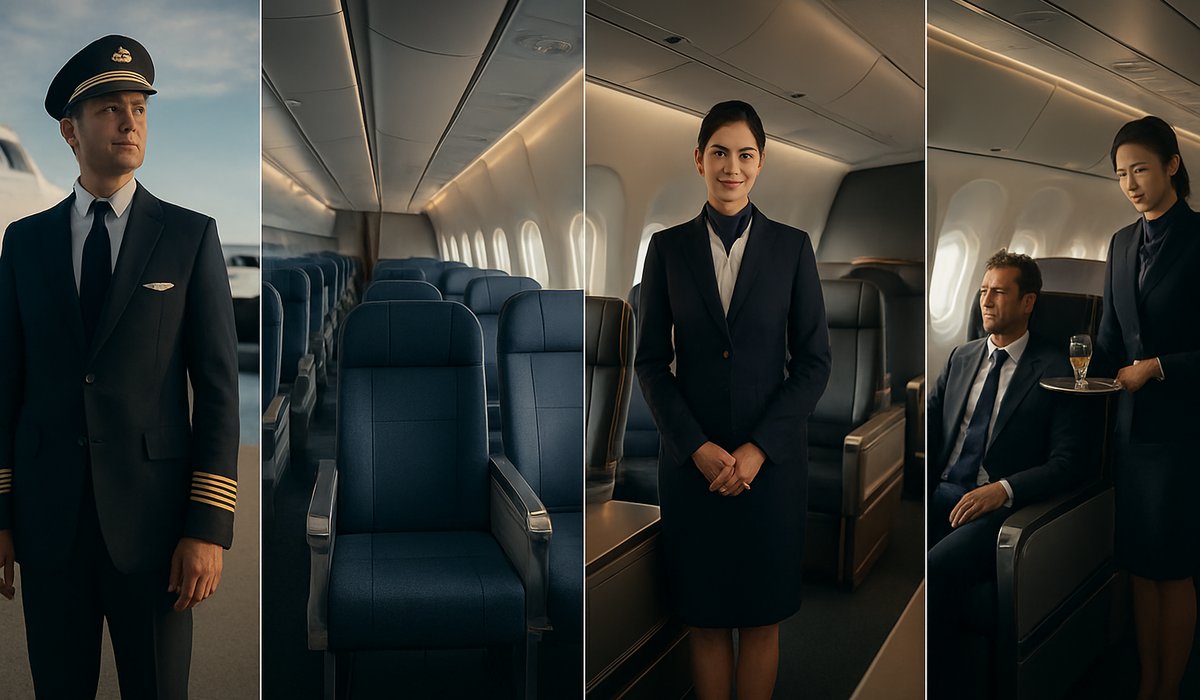
Image generated by AI
The Hidden Architecture of Airline Cabins: What You Really Get Across Four Distinct Travel Classes
Inside the sophisticated cabin stratification system that defines modern air travel—and why airlines structure their seating to maximize both comfort and revenue
The Strategic Segmentation of Modern Aircraft
Today's commercial airliner represents far more than a flying machine—it's a carefully engineered revenue optimization platform divided into distinct passenger zones, each meticulously designed to extract maximum value from limited fuselage space. As travelers navigate their walk from jetway to cabin, they're entering an intricately hierarchical system that airlines have refined over decades, one that extends well beyond seat width and food quality into the fundamental economics of modern aviation.
The division of aircraft cabins into economy, premium economy, business, and first class reflects a sophisticated understanding of passenger psychology, willingness to pay, and operational logistics. Understanding these delineations has become essential knowledge for the contemporary traveler—whether you're a frequent business flyer maximizing loyalty programs or a leisure passenger seeking the best value proposition.
Economy Class: The Foundation of Airline Revenue
Economy remains the backbone of aviation economics, generating the majority of passenger volume and baseline revenue. Passengers in this cabin experience the standard seating configuration: compact seats typically measuring 17-18 inches wide with 31-32 inches of legroom. While often dismissed as austere, economy's efficiency is precisely what enables airlines to operate profitable routes and maintain competitive fares.
Amenities in economy have contracted in recent years, with complimentary meals largely eliminated on shorter routes and carry-on baggage allowances increasingly restricted. This gradual service reduction reflects industry-wide pressure on jet fuel costs and operational margins, compelling carriers to shift ancillary revenue toward à la carte pricing models.
Premium Economy: The Rising Middle Tier
Premium economy has emerged as a genuinely distinct cabin category over the past decade, offering a substantive middle ground. Passengers enjoy notably wider seats (typically 18-19 inches) with considerably expanded legroom (38-40 inches), alongside priority boarding and enhanced meal service. This cabin attracts business travelers on economy budgets and leisure passengers willing to invest incrementally for tangible comfort improvements.
Business Class: The Professional Standard
Business class represents the enterprise travel standard, featuring fully lie-flat beds on long-haul aircraft, premium catering, priority ground handling, and exclusive lounge access. These cabins directly target corporate accounts and high-yield leisure passengers, with pricing structures that remain highly profitable despite lower passenger volumes.
First Class: Exclusivity and Premium Positioning
First class occupies the absolute pinnacle of cabin hierarchy, delivering uncompromising luxury through personalized service, exclusive amenities, and ultra-premium seating configurations. Few airlines maintain dedicated first cabins, instead integrating limited first-class seats within business configurations.
The Economics Behind the Curtain
This sophisticated stratification enables airlines to serve diverse passenger segments while maximizing aircraft utilization and per-seat revenue generation. Each cabin tier represents a deliberate engineering decision with profound implications for airline profitability and competitive positioning.
FAQ: Understanding Cabin Classes
What are the main differences in legroom between economy and business class? Economy typically provides 31-32 inches of legroom, while business class offers 40+ inches, with fully lie-flat beds available on long-haul flights.
Is premium economy worth the extra cost? Premium economy provides tangible benefits—wider seats, better meals, and priority boarding—making it a genuine value proposition for medium-haul routes and passengers seeking comfort without business-class pricing.
Why do airlines charge separately for carry-on baggage in economy? Baggage fees represent airlines' response to rising operational costs and represent a strategic shift toward unbundled pricing models that allow flexible cost structures.
How do airline revenue models depend on cabin stratification? Multi-class cabins allow airlines to segment demand, maximize yield management, and extract differentiated pricing from passengers with varying willingness to pay.
What's driving the shift toward premium economy expansion? Airlines recognize growing demand from affluent leisure travelers and business passengers seeking enhanced comfort at intermediate price points, making premium economy increasingly central to fleet strategies.
Related Travel Guides
-
Cebu Pacific Manila to Riyadh: A330-900neo Launch Reshapes Middle East Travel
-
Australia Jetstar Boeing 787 Doubles Business Class Seats: $180 Upgrade System Launches
External Resources
Disclaimer
This article is for informational and educational purposes only. It does not constitute legal, financial, or professional advice. While we strive to provide accurate and up-to-date information, travel policies, regulations, and conditions change rapidly. Always verify information with official sources before making travel decisions. Nomad Lawyer makes no representations about the accuracy, reliability, completeness, or suitability of the information provided. Readers should consult qualified professionals for advice specific to their circumstances. The views expressed in this article are those of the author and do not necessarily reflect the views of Nomad Lawyer.
Raushan Kumar
Founder & Lead Developer
Full-stack developer with 11+ years of experience and a passionate traveller. Raushan built Nomad Lawyer from the ground up with a vision to create the best travel and law experience on the web.
Learn more about our team →