
Boeing 757 Powers US Vice Presidential Flights: Why This Cold War-Era Design Remains Irreplaceable in Modern Aviation
Breaking airline news and aviation industry updates for 2026.

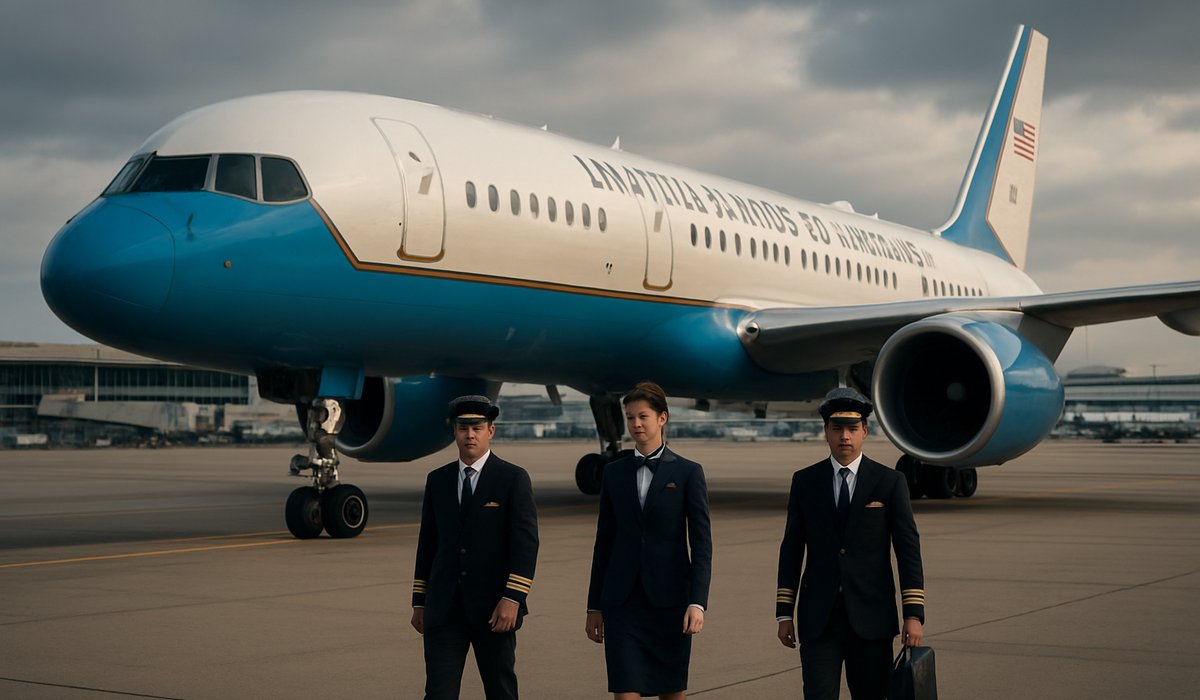
Image generated by AI
Boeing 757 Powers US Vice Presidential Flights: Why This Cold War-Era Design Remains Irreplaceable in Modern Aviation
The C-32A's unique engineering solves a critical operational challenge that contemporary aircraft cannot match
An Engineering Marvel Still Without Equal
The United States Air Force's continued reliance on the Boeing 757-derived C-32A for vice presidential transport underscores a striking reality in modern aviation: no contemporary aircraft can simultaneously deliver the specific performance characteristics that this decades-old design provides. The narrowbody jet's combination of powerful engines, expansive wing surfaces, and lightweight frame creates a rare operational advantage that has kept it in frontline service despite newer alternatives available to military planners.
The C-32A's dual capability—operating from constrained airfields while carrying intercontinental range—addresses a gap that aircraft manufacturers have largely abandoned pursuing, according to aviation analysts familiar with military procurement decisions. This has profound implications for how the U.S. government structures high-level executive transport.
Unmatched Runway Performance and Range
The aircraft's engineering specifications unlock two mission-critical capabilities simultaneously. First, it can execute takeoffs and landings from shortened, elevated, or geographically remote runways across the globe—environments where larger, modern widebody jets cannot operate. Second, it maintains a range exceeding 5,500 nautical miles while fully loaded with classified defense systems, advanced communications suites, and security equipment weighing thousands of additional pounds.
This combination proves essential for vice presidential mobility. International diplomatic missions frequently require access to smaller regional airports lacking the infrastructure for larger jets. The C-32A bridges this operational requirement without sacrificing the intercontinental range necessary for unrefueled transatlantic and transpacific missions.
Why Modern Aircraft Fall Short
Contemporary commercial and military alternatives represent engineering compromises. Larger narrowbodies optimize efficiency on high-capacity routes. Modern regional jets sacrifice range and payload capacity. Widebody aircraft require longer runways and more sophisticated ground infrastructure. The Boeing 757's original 1980s design philosophy—developed before modern fuel-efficiency mandates reshaped aviation engineering—created a unique performance envelope that today's manufacturers have largely moved away from.
Pentagon officials have acknowledged that replacing the C-32A would require either accepting reduced operational flexibility or investing in entirely new aircraft development—a costly proposition for a single mission set.
Strategic Implications for U.S. Government Aviation
The aircraft's continued service reflects broader challenges in military aviation acquisition and sustainment. As the U.S. Air Force ages its fleet and modernizes presidential transport capabilities, the C-32A remains operationally irreplaceable, forcing maintenance and engineering investments that extend its service life well into the coming decades.
FAQ: Boeing 757 and U.S. Presidential Aviation
Why hasn't the Air Force replaced the C-32A with newer aircraft? No modern jet combines short-runway capability with intercontinental range while carrying heavy classified equipment—the specific requirements the 757 uniquely fulfills.
How long can the C-32A fly without refueling? The aircraft achieves approximately 5,500 nautical miles of range while fully loaded with military communications systems and security equipment.
What makes the Boeing 757 design unique for government aviation? Its high-thrust engines, large wing surface area, and narrowbody frame create a performance profile abandoned by modern manufacturers focused on commercial efficiency.
Could newer widebody jets replace the C-32A for vice presidential transport? Widebodies require longer, more sophisticated runways, limiting access to the smaller international airports where vice presidential missions frequently operate.
Is the U.S. developing replacement aircraft for the C-32A? Current plans focus on extending the C-32A's operational life rather than pursuing new development, reflecting the high costs of matching its unique capabilities.
Related Travel Guides
External Resources
Disclaimer
This article is for informational and educational purposes only. It does not constitute legal, financial, or professional advice. While we strive to provide accurate and up-to-date information, travel policies, regulations, and conditions change rapidly. Always verify information with official sources before making travel decisions. Nomad Lawyer makes no representations about the accuracy, reliability, completeness, or suitability of the information provided. Readers should consult qualified professionals for advice specific to their circumstances. The views expressed in this article are those of the author and do not necessarily reflect the views of Nomad Lawyer.
Raushan Kumar
Founder & Lead Developer
Full-stack developer with 11+ years of experience and a passionate traveller. Raushan built Nomad Lawyer from the ground up with a vision to create the best travel and law experience on the web.
Learn more about our team →