
Boeing 777X to Feature Revolutionary Safety Lock: Aircraft Physically Prevented from Takeoff With Folded Wings
Breaking airline news and aviation industry updates for 2026.

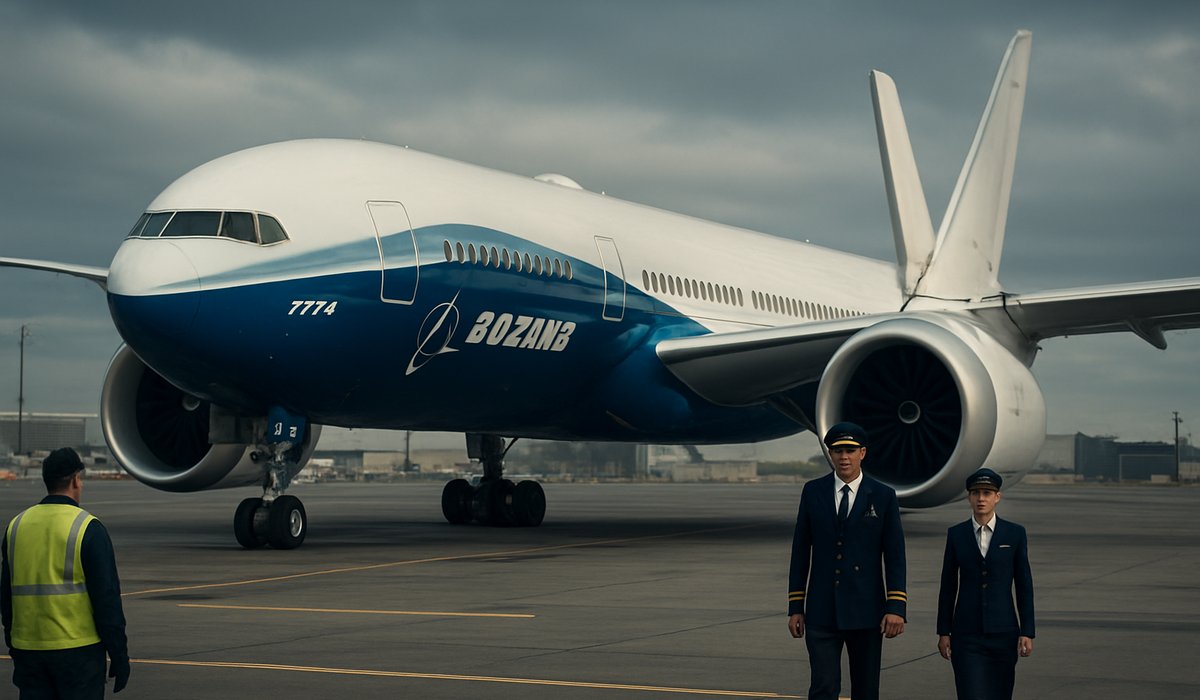
Image generated by AI
Boeing 777X to Feature Revolutionary Safety Lock: Aircraft Physically Prevented from Takeoff With Folded Wings
Advanced automation technology marks major shift in commercial aviation engineering as Boeing prioritizes operational safety
Groundbreaking Design Feature Addresses Critical Operational Risk
Boeing's next-generation 777X will incorporate an innovative automated safety mechanism that physically prevents the aircraft from taking off if its distinctive folding wingtips remain in the retracted position, according to engineering specifications for the long-haul widebody jet. The safety interlock represents a significant advancement in aviation technology, designed to eliminate human error during pre-flight procedures on what Boeing positions as the most advanced aircraft in its iconic 777 family.
The Engineering Innovation Behind Folding Wingtips
The 777X's folding wingtip design represents a first for commercial passenger aviation, addressing persistent challenges around airport gate compatibility and operational flexibility. The mechanism allows the aircraft's 235-foot wingspan to compress for ground operations at standard airport facilities, before the wingtips extend automatically during pre-flight procedures. However, Boeing's engineers recognized that relying solely on pilot oversight for this critical step created an unacceptable safety risk.
To mitigate this vulnerability, Boeing integrated a mechanical and electronic failsafe system that prevents engine startup and takeoff clearance until the wingtips achieve full extension. This automation-first approach aligns with broader industry trends toward eliminating single-point failures in aircraft systems.
Strategic Implications for the Aviation Industry
The 777X's safety architecture underscores how modern commercial aviation increasingly prioritizes automated systems to prevent catastrophic operational errors. As aircraft become more technologically sophisticated—and as pilot workload intensifies during complex operations—manufacturers like Boeing are embedding critical safety functions directly into aircraft systems rather than depending on procedural compliance alone.
The folding wingtip innovation itself addresses a longstanding aviation industry constraint: airport gate dimensions. By allowing the wings to retract during taxiing and ground operations, the 777X gains access to standard gate infrastructure that would otherwise accommodate only smaller widebody jets, substantially improving operational efficiency for airlines worldwide.
What This Means for Airlines and Passengers
For carriers operating the 777X on ultra-long-haul routes—where the aircraft's extended range and fuel efficiency offer significant competitive advantages—the automated safety system reduces operational risk while simultaneously enhancing scheduling flexibility. Airlines can deploy the aircraft across a broader network of airports without requiring specialized gate facilities or extended ground handling procedures.
The 777X represents Boeing's response to Airbus's A350 dominance in the premium long-haul market segment, and these engineering refinements signal the manufacturer's commitment to operational excellence alongside raw performance metrics.
FAQ: Boeing 777X Folding Wings and Aviation Safety
Q: Why does the Boeing 777X have folding wingtips? A: The folding mechanism allows the aircraft's 235-foot wingspan to fit standard airport gates and ground infrastructure, improving operational flexibility and reducing the need for specialized facilities.
Q: How does the safety lock prevent accidents? A: An integrated mechanical and electronic system physically prevents engine startup and takeoff authorization unless the wingtips are fully extended, eliminating human error during pre-flight procedures.
Q: When will the Boeing 777X enter commercial service? A: Boeing has faced certification delays, though the aircraft represents the manufacturer's flagship response to long-haul efficiency demands in the 2020s commercial aviation market.
Q: What airlines have ordered the Boeing 777X? A: Major carriers including Emirates, Cathay Pacific, and Singapore Airlines have placed substantial orders for the aircraft, targeting deployment on premium international routes.
Q: How does this compare to other modern commercial aircraft? A: The 777X's automated safety systems represent industry-leading engineering for commercial aviation, setting new standards for autonomous safety mechanisms on next-generation widebody jets.
Related Travel Guides
Disclaimer
This article is for informational and educational purposes only. It does not constitute legal, financial, or professional advice. While we strive to provide accurate and up-to-date information, travel policies, regulations, and conditions change rapidly. Always verify information with official sources before making travel decisions. Nomad Lawyer makes no representations about the accuracy, reliability, completeness, or suitability of the information provided. Readers should consult qualified professionals for advice specific to their circumstances. The views expressed in this article are those of the author and do not necessarily reflect the views of Nomad Lawyer.
Kunal K Choudhary
Co-Founder & Contributor
A passionate traveller and tech enthusiast. Kunal contributes to the vision and growth of Nomad Lawyer, bringing fresh perspectives and driving the community forward.
Learn more about our team →