
Landing Gear Engineering: How Boeing's 787-10 and Airbus A350-900 Differ in Critical Ground Operations
Breaking airline news and aviation industry updates for 2026.

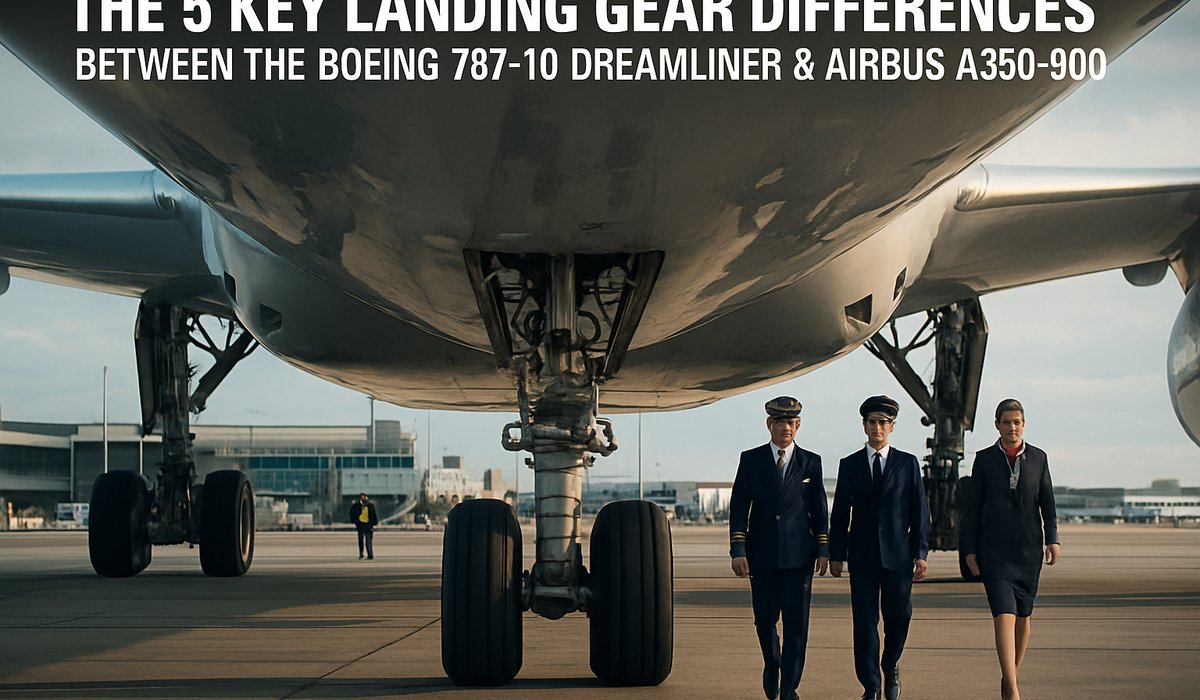
Image generated by AI
Landing Gear Engineering: How Boeing's 787-10 and Airbus A350-900 Differ in Critical Ground Operations
Two aviation titans employ fundamentally different mechanical approaches to one of aircraft's most demanding systems
The Overlooked Critical Systems Shaping Modern Aviation
Landing gear systems represent one of aviation's most engineering-intensive yet underappreciated technological achievements. For two of the industry's most advanced wide-body aircraft—the Boeing 787-10 Dreamliner and Airbus A350-900—these undercarriage systems must perform extraordinarily demanding functions: managing the violent forces of touchdown, enabling precise ground maneuvers, and dissipating extreme thermal energy during intensive braking operations on runways worldwide.
The engineering differences between these systems extend far beyond simple mechanical variations. They reflect fundamentally divergent design philosophies developed by two competing aerospace giants, each optimizing their approach based on operational priorities, maintenance strategies, and real-world airline requirements.
Structural Design and Load Distribution
The Boeing 787-10 employs a landing gear configuration engineered specifically to distribute aircraft weight across its frame with enhanced efficiency during ground contact. Airbus's A350-900 takes a contrasting approach, prioritizing independent gear leg strength to manage concentrated loads during asymmetrical landing scenarios—a critical consideration for safety in crosswind operations.
This distinction influences how maintenance crews service these aircraft and affects long-term structural integrity across thousands of flight cycles.
Brake System Architecture and Heat Dissipation
Perhaps the most significant operational divergence emerges in braking technology. The 787-10 utilizes advanced carbon-carbon brake assemblies designed to shed extreme temperatures more aggressively, reducing wear rates during consecutive high-intensity landings typical of commercial scheduling. The A350-900 implements a different thermal management philosophy, with brake configurations that prioritize consistent performance across varying weather conditions and runway surfaces.
Wheel and Tire Specifications
Tire compound compositions and wheel rim specifications differ substantially between these aircraft. The 787-10 employs lighter composite wheel structures to reduce unsprung weight, while Airbus engineered the A350-900 with heavier-duty wheels optimized for extended service intervals—directly impacting airline operational costs and maintenance scheduling.
Damping and Shock Absorption Innovations
Oleo pneumatic strut configurations vary significantly. The 787-10 features enhanced damping ratios addressing long-range operations over extended runways, whereas the A350-900's shock absorption systems prioritize short-field capability and rapid ground-turn efficiency.
Maintenance Accessibility and Design Philosophy
Perhaps most critically for airlines operating these fleets, the landing gear systems reflect opposing maintenance strategies. Boeing's design emphasizes modular component replacement, reducing downtime and servicing complexity. Airbus prioritizes extended inspection intervals through robust material selection, reducing frequency of maintenance checks but potentially extending individual service events.
Frequently Asked Questions
What is landing gear engineering and why does it matter for modern aircraft? Landing gear systems are the interface between aircraft and ground, managing takeoff rotation, landing impact, and braking forces—requiring exceptional engineering to ensure safety and minimize maintenance costs.
How do Boeing 787-10 and Airbus A350-900 landing gears differ? The aircraft differ in structural load distribution, brake thermal management, wheel specifications, shock absorption design, and maintenance accessibility strategies based on competing operational philosophies.
Which landing gear system is more reliable? Both systems meet identical international safety standards; reliability depends on specific operational conditions, maintenance protocols, and airline scheduling practices rather than inherent design superiority.
How do landing gear differences affect airline operating costs? Varying brake compositions, wheel specifications, and maintenance requirements directly influence unscheduled downtime, component replacement frequency, and overall fleet productivity for commercial operators.
Why haven't landing gear systems received more engineering attention historically? Landing gear systems function reliably under normal operations, receiving less industry focus than propulsion or flight control systems—though modern wide-body aircraft demand increasingly sophisticated ground interface technologies.
Related Travel Guides
Flight Delay Compensation Guide 2026
Understanding Airline Route Changes
Airport Security Process Updated (2026)
External Resources
Disclaimer
This article is for informational and educational purposes only. It does not constitute legal, financial, or professional advice. While we strive to provide accurate and up-to-date information, travel policies, regulations, and conditions change rapidly. Always verify information with official sources before making travel decisions. Nomad Lawyer makes no representations about the accuracy, reliability, completeness, or suitability of the information provided. Readers should consult qualified professionals for advice specific to their circumstances. The views expressed in this article are those of the author and do not necessarily reflect the views of Nomad Lawyer.
Kunal K Choudhary
Co-Founder & Contributor
A passionate traveller and tech enthusiast. Kunal contributes to the vision and growth of Nomad Lawyer, bringing fresh perspectives and driving the community forward.
Learn more about our team →