
Etihad Airways Retires A380 From Singapore Route, Shifts Fleet Strategy to European Hubs
Breaking airline news and aviation industry updates for 2026.

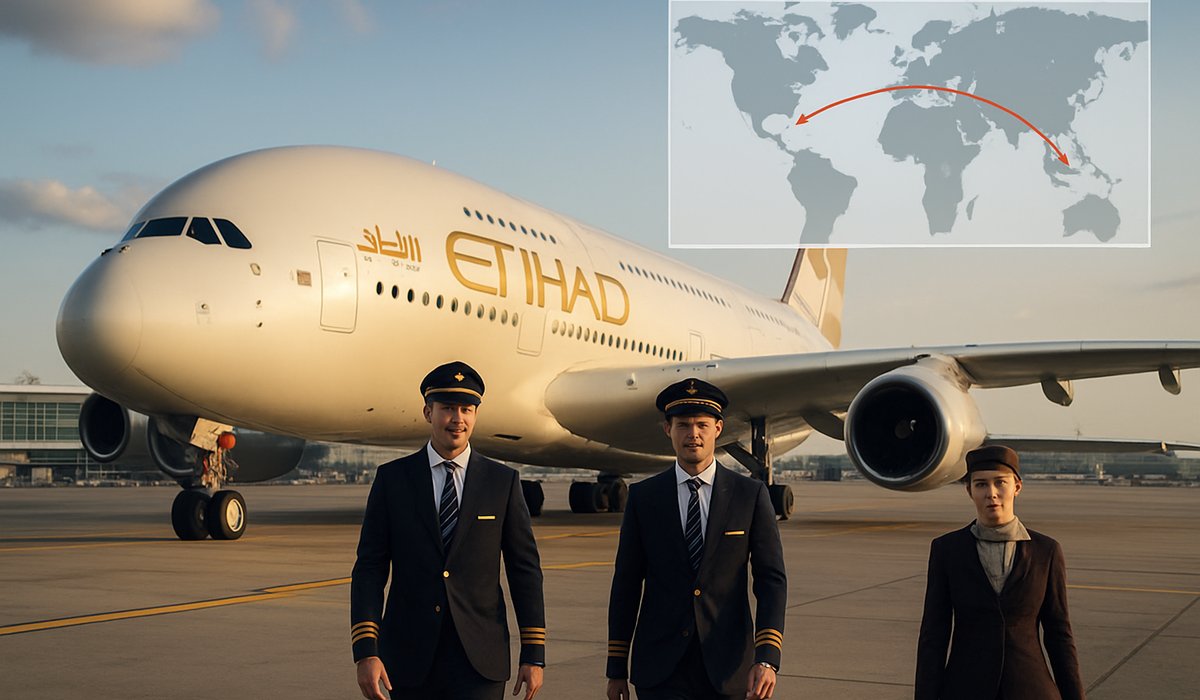
Image generated by AI
Etihad Airways Retires A380 From Singapore Route, Shifts Fleet Strategy to European Hubs
UAE carrier pivots long-haul network planning as Boeing Dreamliner becomes preferred aircraft for Asian markets
Abu Dhabi-based Etihad Airways has announced significant aircraft redeployment changes for its summer schedule, marking a strategic shift in how the carrier manages capacity across its global network. The airline will replace its double-deck Airbus A380 service on the Abu Dhabi-Singapore corridor with Boeing 787 Dreamliner aircraft, effectively ending superjumbo operations on this key Asian route.
Strategic Fleet Redeployment Signals Shift in Demand
The decision reflects broader adjustments within Etihad's long-haul operations as the carrier recalibrates its fleet deployment to align with current market dynamics and passenger demand patterns. Rather than maintaining the A380's four-class configuration on the Southeast Asian sector, Etihad will utilize the fuel-efficient 787 Dreamliner, which offers greater operational flexibility and lower per-seat operating costs—a critical advantage amid volatile jet fuel prices and competitive pressure in premium travel segments.
Simultaneously, the carrier is doubling down on its European strategy by deploying an additional A380 to Paris during the summer period, underscoring the continued appeal of the superjumbo aircraft on transatlantic and European routes where premium leisure and business travel demand remains robust.
Capacity Optimization Amid Industry Pressures
The reallocation strategy exemplifies how major carriers are fine-tuning network economics in response to shifting travel patterns post-pandemic. While Asian markets have rebounded strongly, airlines are increasingly scrutinizing capacity deployment on individual routes to optimize load factors and revenue management—particularly as airline fees and ancillary revenue strategies remain under intensifying regulatory and consumer scrutiny.
The Singapore route, traditionally a strong performer for Middle Eastern carriers, evidently presents different demand characteristics than Paris, where the A380's 555-seat capacity continues to deliver strong yield potential during peak summer travel periods. This disparity underscores the granular approach carriers must adopt in fleet planning decisions.
What This Means for Travelers
Passengers on the Abu Dhabi-Singapore corridor will experience different cabin configurations and in-flight product offerings under the 787 operation, though Etihad's premium service standards are expected to remain consistent. The Boeing Dreamliner offers modern amenities, improved cabin pressure systems, and enhanced lighting technology—features that may partially offset the loss of the A380's distinctive upper-deck experience.
For Etihad, the move signals pragmatic portfolio management as the aviation industry continues navigating complex variables including fuel cost volatility, labor pressures, and shifting geopolitical factors affecting Asian travel demand.
Frequently Asked Questions
Why is Etihad replacing the A380 with the Boeing 787 on Singapore flights? The Dreamliner offers superior fuel efficiency and lower operating costs, delivering better economic performance on routes where demand doesn't justify the A380's maximum capacity. The aircraft provides greater schedule flexibility while maintaining Etihad's premium service standards.
What are the main differences between flying the A380 versus the 787? The A380 carries approximately 555 passengers across four cabin classes and features the iconic upper deck. The 787 seats around 242-330 passengers depending on configuration, offers modern cabin technology, superior fuel efficiency, and better connectivity features, though carries fewer total passengers.
Is Etihad retiring its A380 fleet entirely? No. By deploying an additional A380 to Paris, Etihad demonstrates continued commitment to the superjumbo for premium long-haul routes where strong demand justifies its capacity and operating costs.
How do airline fleet changes impact baggage fees and ticket prices? Aircraft redeployment can influence airline fees and pricing strategies, though decisions typically reflect multiple factors including fuel costs, demand forecasts, and competitive positioning rather than a single aircraft change.
Which routes are most profitable for A380 operations? Established European and North American hubs with premium business travel demand and strong leisure traffic generally provide optimal yield environments for superjumbo aircraft deployment.
Related Travel Guides
Disclaimer
This article is for informational and educational purposes only. It does not constitute legal, financial, or professional advice. While we strive to provide accurate and up-to-date information, travel policies, regulations, and conditions change rapidly. Always verify information with official sources before making travel decisions. Nomad Lawyer makes no representations about the accuracy, reliability, completeness, or suitability of the information provided. Readers should consult qualified professionals for advice specific to their circumstances. The views expressed in this article are those of the author and do not necessarily reflect the views of Nomad Lawyer.
Preeti Gunjan
Contributor & Community Manager
A passionate traveller and community builder. Preeti helps grow the Nomad Lawyer community, fostering engagement and bringing the reader experience to life.
Learn more about our team →