
Boeing's $2 Billion T-7A Red Hawk Trainer Jet Faces Critical Production Delays and Cost Overruns
Breaking airline news and aviation industry updates for 2026.

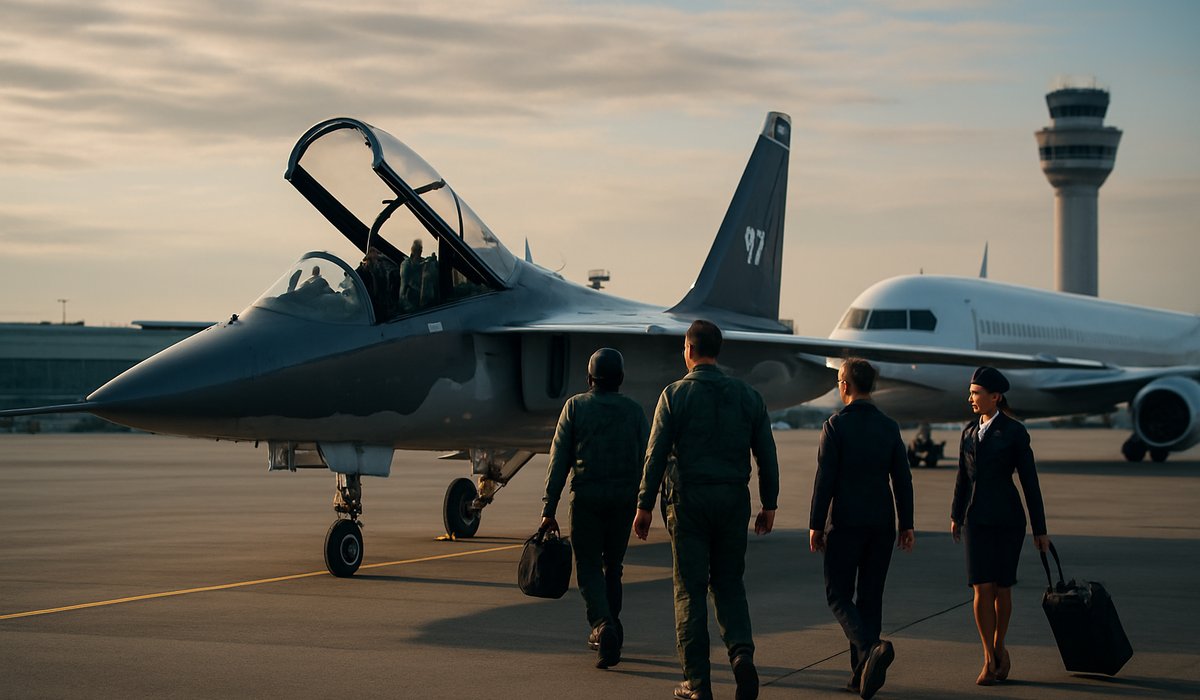
Image generated by AI
Boeing's $2 Billion T-7A Red Hawk Trainer Jet Faces Critical Production Delays and Cost Overruns
Defense contract troubles signal deeper manufacturing challenges at embattled aerospace giant
Program Plagued by Delays and Technical Setbacks
Boeing's ambitious T-7A Red Hawk advanced trainer aircraft program has encountered significant obstacles that threaten its timeline and budget, marking another setback for the aerospace manufacturer already grappling with quality control and production issues across its commercial and defense divisions.
The next-generation jet trainer, designed to revolutionize United States Air Force pilot preparation for modern fifth-generation combat operations, has experienced repeated schedule delays and necessitated extensive technical rework. These challenges have pushed cumulative program costs substantially higher than originally projected by industry analysts, casting doubt on the project's financial viability and raising fresh concerns about Boeing's execution capabilities in the defense sector.
Technical Complexity Outpaces Production Reality
The T-7A Red Hawk represents an ambitious leap forward in pilot training technology, incorporating advanced digital systems and a comprehensive training ecosystem designed for contemporary aerial warfare. However, translating sophisticated design concepts into operational hardware has proven more difficult than anticipated.
Rather than progressing smoothly toward full-rate production as scheduled, the program has stalled at multiple junctures. Technical complications requiring significant redesign work have consumed both time and financial resources. The complexity of integrating cutting-edge avionics, weapons system training capabilities, and next-generation cockpit architecture has exposed manufacturing and integration challenges that weren't adequately anticipated during the initial planning phases.
Broader Implications for Defense Contracting
The Red Hawk program's troubles add to mounting pressure on Boeing's defense and space security division, which has faced intensifying scrutiny from Pentagon auditors and Congressional oversight committees. As defense budgets tighten globally and military modernization priorities shift, costly overruns on flagship programs invite difficult questions about contractor accountability.
The Air Force, already committed to modernizing its pilot training infrastructure, faces a dilemma: continue supporting the program through its current trajectory or reassess alternatives. Either path carries substantial political and operational consequences, particularly as military aviation training remains critical to maintaining air superiority capabilities.
Boeing has not publicly detailed specific remediation plans or revised completion timelines, though company officials acknowledge the need for enhanced focus on production efficiency and quality assurance. The contractor's reputation for on-time, on-budget delivery—once an industry hallmark—continues to erode with each delayed milestone.
FAQ: Understanding the T-7A Red Hawk Program Crisis
1. What is the Boeing T-7A Red Hawk and why does it matter? The T-7A is an advanced trainer aircraft designed to prepare U.S. Air Force pilots for fifth-generation fighter operations. It represents a critical modernization of military pilot training infrastructure.
2. How much has the program cost overrun exceeded? Program costs have climbed billions of dollars above initial estimates, with analysts citing $2 billion in additional expenditures as the program experiences repeated delays and technical rework.
3. What technical issues are causing the delays? Integration of advanced digital systems, weapons training capabilities, and next-generation cockpit architecture has proven more complex than anticipated, requiring substantial design modifications.
4. How does this impact U.S. military readiness? Delayed implementation of the Red Hawk extends reliance on older trainer aircraft, potentially affecting pilot proficiency development and readiness timelines for modern air combat operations.
5. What are Boeing's options moving forward? The manufacturer must either accelerate production efficiency efforts, restructure the program scope, or face potential contract renegotiation with Pentagon leadership and Congressional scrutiny.
Related Travel Guides
-
Flight Thailand Disruptions: Gulf Air, Qatar Airways Cancel 12+ Routes
-
United Airlines Fleet Upgrades: Revolutionary 2026 Modernization Unveiled
External Resources
Disclaimer
This article is for informational and educational purposes only. It does not constitute legal, financial, or professional advice. While we strive to provide accurate and up-to-date information, travel policies, regulations, and conditions change rapidly. Always verify information with official sources before making travel decisions. Nomad Lawyer makes no representations about the accuracy, reliability, completeness, or suitability of the information provided. Readers should consult qualified professionals for advice specific to their circumstances. The views expressed in this article are those of the author and do not necessarily reflect the views of Nomad Lawyer.
Raushan Kumar
Founder & Lead Developer
Full-stack developer with 11+ years of experience and a passionate traveller. Raushan built Nomad Lawyer from the ground up with a vision to create the best travel and law experience on the web.
Learn more about our team →