
Thailand Tourism Tax Sparks Hospitality Alarm as Hotels Warn of Rising Travel Costs Amid 20% ASEAN Visitor Drop: Latest Update
Thailand weighs new tourist levies that could push travel fees to 3,000 baht per person as hotels battle a 20% plunge in short-haul ASEAN arrivals.

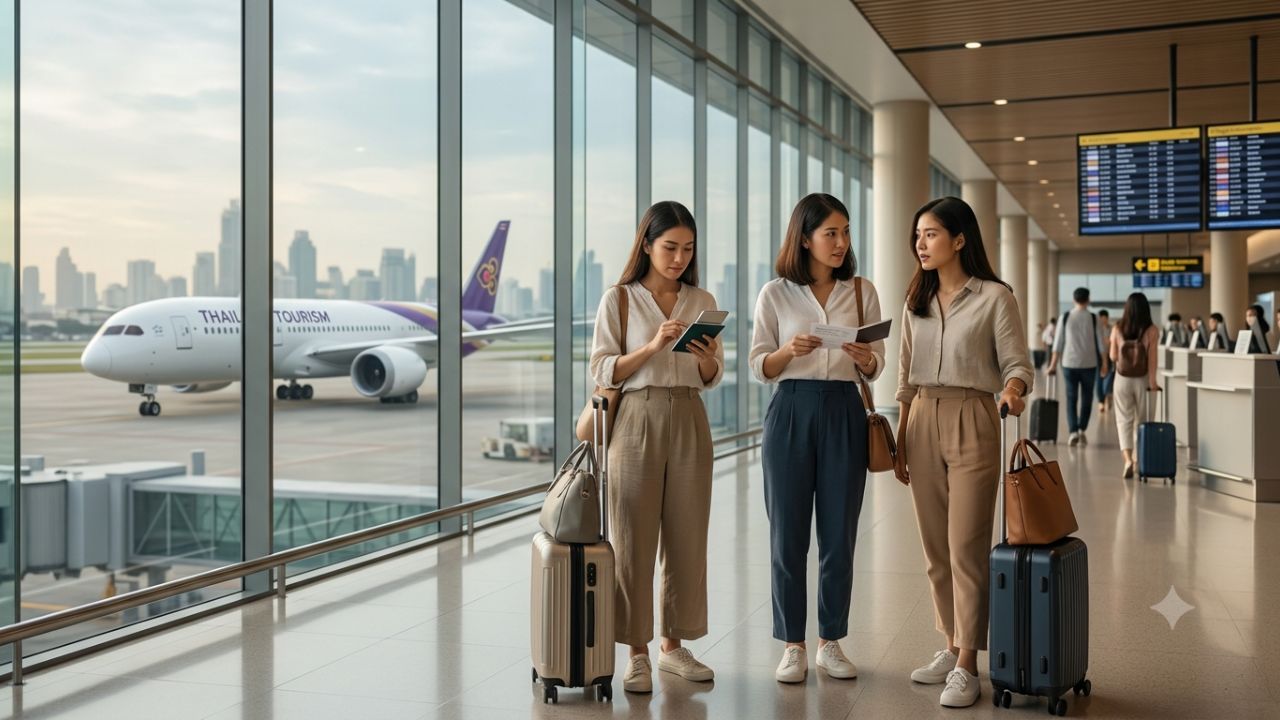
Thailand's hospitality sector raises concerns over proposed tourism taxes and rising visitor fees as peak season approaches.
Thailand has entered an escalating international tourism taxation controversy as proposed travel surcharges threaten to push total entry fees near 3,000 baht per visitor, prompting urgent warnings from hotel operators already contending with a 20% decline in ASEAN tourist arrivals. Ahead of the crucial 2026 high season, hospitality leaders and travel trade associations are sounding the alarm that multiple overlapping levies could compromise Thailand's competitive edge against rival Southeast Asian destinations, particularly as short-haul travelers show heightened price sensitivity following widespread regional flooding and economic strains.
The fiscal debate in Bangkok mirrors growing friction across Europe—including the Netherlands, Greece, Latvia, and Austria—where steep accommodation VAT increases and airline levies have triggered shifts in visitor behavior and carrier capacity. As the Tourism Authority of Thailand works to stabilize fourth-quarter occupancy, hoteliers caution that uncoordinated fee hikes risk deterring budget-conscious families and regional leisure travelers.
The 3,000 Baht Breakdown: Proposed Levies on International Visitors
The primary concern across Thailand's hospitality and aviation sectors centers on the cumulative financial impact of three distinct international travel charges under evaluation by government ministries:
| Fee Component | Statutory Status | Applicable Amount (THB) | Target Passenger Demographic | Intended Administrative Purpose |
|---|---|---|---|---|
| Airport Passenger Service Charge | In Effect (Since 20 June 2026) | 1,120 THB | All departing international air passengers | Airport terminal maintenance, security, and facility upgrades |
| Foreign Air Arrival Tourism Fee | Proposed & Under Review | 450 THB | Incoming foreign international air travelers | Tourism site conservation and visitor emergency healthcare fund |
| International Departure Tax | Proposed & Under Review | 1,000 THB | All international departures (citizens & foreigners) | National revenue generation and treasury reserves |
| Estimated Combined Direct Taxes | Cumulative Total | 2,570 THB | Foreign air holidaymakers | Standard air travel fiscal baseline |
| With Local Hotel & Municipality Fees | Potential Upper Range | ~3,000 THB | Visitors staying in designated municipal zones | Local hospitality development and sanitation |
If both pending measures are enacted, an international visitor arriving by air would face at least 2,570 baht in mandatory state fees. When factoring in municipal hospitality surcharges and local tourism contributions, the overall fiscal obligation approaches 3,000 baht per person. For a typical family of four planning a holiday in Phuket, Pattaya, or Chiang Mai, these combined travel charges would surpass 10,280 baht ($300+ USD) before paying for lodging, dining, or internal transport.
Regional Headwinds: 20% ASEAN Slump and Flood Recovery Pressures
The prospect of increased travel expenses arrives at a sensitive moment for Thailand’s domestic tourism economy. While long-haul bookings from Europe and North America remain resilient, short-haul arrivals from neighboring ASEAN members have plunged by approximately 20% year-on-year.
Uneven Hotel Performance
Hospitality figures for the fourth quarter of 2026 reveal a divided market. While luxury four- and five-star properties in Bangkok and coastal islands maintain stable advance bookings supported by affluent international travelers, budget, two-star, and mid-tier establishments report significantly softer reservations. These mid-scale properties depend heavily on spontaneous, budget-conscious weekend getaways from Singapore, Malaysia, Indonesia, and Vietnam.
Domestic Flood Aftermath
Severe monsoon flooding across northern and central provinces earlier in the year has also curtailed domestic leisure expenditure. Thai households have diverted discretionary savings toward repairing damaged residential property and vehicles, muting domestic hotel stays. Consequently, hoteliers rely even more urgently on regional international visitors to fill rooms during the year-end peak season.
Unpaid Medical Debt and Fee Administration
Government proponents argue that the proposed 450-baht tourist fee is necessary to offset approximately 7 billion baht in annual unpaid medical bills accumulated by uninsured foreign tourists treated in public hospitals. The fee is projected to generate between 8 and 10 billion baht annually, a portion of which would fund emergency healthcare insurance coverage for visitors. However, industry stakeholders contend that administrative mechanics and insurance underwriting details remain vague, creating uncertainty over how quickly claims would be processed.
Global Context: How Tourism Taxes Reshaped European Travel in 2026
Thailand is far from alone in examining visitor taxes, but European case studies demonstrate that aggressive levies often carry unintended economic consequences for airlines and hotels:
| Country | Implemented / Modified Policy (2026) | Measurable Tourism & Aviation Impact | Industry Market Outcome |
|---|---|---|---|
| Netherlands | Hotel VAT hiked from 9% to 21% (Jan 2026) | Q2 hotel turnover declined by ~2.0% YoY | Weakened room demand; compressed profit margins across mid-scale hotels |
| Greece | Peak-season cruise fee raised to €20 for Santorini/Mykonos | Piraeus cruise calls fell 17.8%; embarkations down 20.0% | Cruise lines altered Mediterranean routings despite overall inbound gains |
| Latvia | Aviation charges and passenger duties restructured | International hotel guests fell 7.2%; nights down 7.5% | Ryanair trimmed Riga summer flight capacity by 20% (cut 6 routes) |
| Austria | National aviation tax maintained at €12 per departing passenger | Vienna Airport passenger volume dropped 5.9% (June) and 6.9% (August) | Low-cost carriers reduced winter seat allocations despite national tourist gains |
| Iceland | Passenger infrastructure charge adjusted from ISK 2,500 to ISK 1,600 | Hotel overnight stays slipped 2.5% in August 2026 | Re-evaluated cruise passenger charges to protect port competitiveness |
| Germany | Elevated aviation taxes and airport security fees | Ryanair trimmed ~220,000 summer seats across German hubs | Domestic connectivity contracted; inbound tourism growth shifted to rail |
| Spain | Regional airport tariff disputes and operating fees | Budget carrier capacity reduced by ~1.2 million seats at regional hubs | Mainstream demand held (+5.4% arrivals), but smaller regional airports suffered |
These developments, tracked by the European Travel Commission, highlight that while prime international gateways often absorb tax increases, secondary regional airports and price-sensitive travel segments rapidly pull back when operating costs rise.
Key Passenger Facts & Highlights
- 20% Slump in ASEAN Arrivals: Short-haul tourist numbers into Thailand have contracted by around one-fifth ahead of the 2026 peak season.
- 2,570 to 3,000 Baht Fee Risk: If a 450-baht entry fee and a 1,000-baht departure tax join the current 1,120-baht airport charge, foreign flyers could pay up to 3,000 THB in total travel taxes.
- 10,280 Baht Family Cost: A family of four would pay over 10,280 baht exclusively in government taxes and departure levies for a single holiday.
- 7 Billion Baht Hospital Deficit: Thai authorities designed the entry fee to offset 7 billion baht in uncollected medical bills incurred by foreign visitors.
- European Precedents: Higher lodging VAT in the Netherlands triggered a 2% drop in hotel turnover, while Greece's €20 cruise fee contributed to a 17.8% drop in Piraeus cruise ship port calls.
Practical Advice for Holidaymakers Visiting Thailand
- Monitor Ticket Inclusions Carefully: Most commercial airlines automatically include the 1,120-baht airport passenger service charge within the base airfare; verify itemized taxes on your booking confirmation.
- Carry Proof of Travel Health Insurance: While the proposed 450-baht fee may eventually bundle basic emergency coverage, travelers should always hold comprehensive independent travel medical insurance with at least $50,000 in coverage.
- Budget for Separate Departure Fees: If the 1,000-baht departure tax receives cabinet ratification, confirm whether your carrier incorporates the charge online or if payment must be processed at physical airport kiosks.
- Explore Lesser-Impacted Regional Gateways: Consider direct long-haul flights into Phuket International Airport (HKT) or Chiang Mai (CNX) to bypass congested transit transfers at Bangkok Suvarnabhumi (BKK).
Tourism Competitiveness at a Crossroads
Thailand’s immediate economic objective requires balancing revenue collection with price competitiveness. With neighboring destinations such as Vietnam, Malaysia, and Hong Kong aggressively courting regional tourists through visa waivers and airline subsidies, Thailand cannot afford to price out short-haul travelers. Ensuring seamless immigration processing, maintaining transparent fee structures, and supporting lower-tier accommodation providers will determine whether Thailand sustains its tourism recovery through 2027.
FAQ: Thailand Tourism Tax Proposals and Travel Costs 2026
Are the new 450-baht and 1,000-baht travel taxes currently in effect in Thailand?
No. Both the 450-baht foreign arrival fee and the 1,000-baht departure tax remain proposals undergoing government review; only the 1,120-baht airport passenger service charge is currently active.
How much could a family of four pay if all proposed Thai taxes are implemented?
A family of four traveling by air would pay approximately 10,280 baht in mandatory entry and departure taxes, rising higher if local municipal hotel fees apply.
Why are Thai hotels concerned about the proposed tourism taxes?
Hoteliers fear higher levies will worsen an existing 20% decline in short-haul ASEAN visitors and reduce competitiveness against nearby destinations like Vietnam.
Why is Thailand considering a 450-baht foreign tourist arrival fee?
The proposed levy is intended to fund tourism infrastructure preservation and cover an estimated 7 billion baht in annual unpaid medical expenses from uninsured foreign patients.
Related Travel Guides
Disclaimer
This article is for informational and educational purposes only. It does not constitute legal, financial, or professional advice. While we strive to provide accurate and up-to-date information, travel policies, regulations, and conditions change rapidly. Always verify information with official sources before making travel decisions. Nomad Lawyer makes no representations about the accuracy, reliability, completeness, or suitability of the information provided. Readers should consult qualified professionals for advice specific to their circumstances. The views expressed in this article are those of the author and do not necessarily reflect the views of Nomad Lawyer.
Raushan Kumar
Founder & Lead Developer
Full-stack developer with 11+ years of experience and a passionate traveller. Raushan built Nomad Lawyer from the ground up with a vision to create the best travel and law experience on the web.
Learn more about our team →