
Thailand Rallies Public, Private Sectors to Protect Tourism in 2026
Thailand rallies public and private sectors to shield its tourism economy from Middle East instability. The Tourism Authority of Thailand coordinates with airlines and hotels to maintain visitor confidence and bookings through 2026.

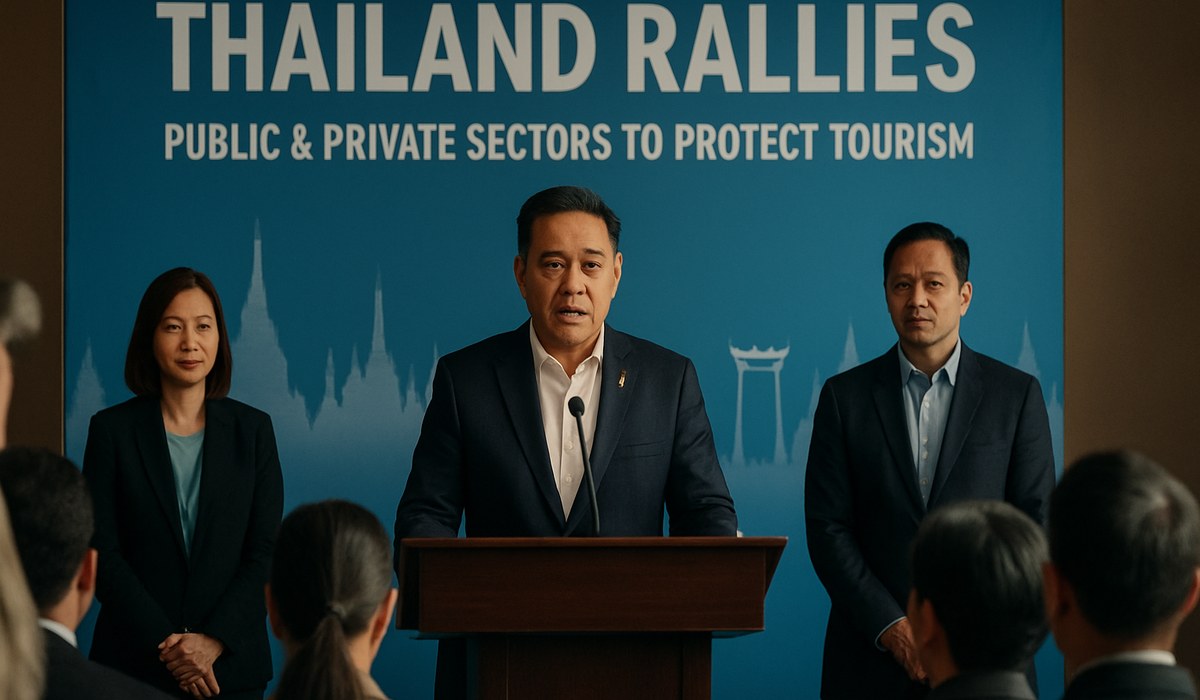
Image generated by AI
Thailand Mobilizes Tourism Defense Plan Amid Global Instability
Thailand is moving to shield its tourism-dependent economy from mounting geopolitical pressures by rallying both public agencies and private travel operators. The Tourism Authority of Thailand (TAT) now coordinates closely with airlines, hotel chains, and major travel platforms on joint contingency plans. These initiatives aim to maintain visitor numbers and traveler confidence throughout 2026 and beyond. Thailand rallies public awareness while implementing sector-wide strategies to protect one of its largest revenue sources.
Aviation Routes and the Middle East Corridor Challenge
Air connectivity has emerged as the critical vulnerability point for Thailand's tourism sector. The Middle East conflict has raised concerns about long-haul travel patterns worldwide, especially routes dependent on Gulf hubs for connections from Europe and North America to Asia. Flight diversions, extended routing times, and rising fuel surcharges are already reshaping passenger flows toward Thailand.
TAT has convened meetings with major carriers including Thai Airways International and smaller regional airlines to assess real-time impacts. According to Lonely Planet's travel advisory updates, these discussions focus on monitoring booking trends and identifying vulnerable source markets. Tourism planners recognize that visitors routed through Gulf hubs represent a meaningful share of premium long-haul travelers, even though Middle Eastern tourists comprise only a small percentage of total arrivals.
Higher ticket prices and capacity constraints could pressure luxury beach resort occupancy and wellness travel segments. Thailand rallies its hospitality partners to adopt joint yield-protection strategies rather than competing on volume alone.
Shifting Regional Focus: Asia-Pacific as the Stability Anchor
Rather than chasing volatile long-haul markets, Thailand is intensifying marketing efforts toward nearer Asian sources. China, Japan, South Korea, and neighboring Southeast Asian countries are becoming core demand pillars for 2026. TAT and private operators are aligning promotional campaigns and pricing strategies around these resilient regional segments.
Tourism analysts note that Asia-Pacific visitors face lower disruption risks since most fly direct or via North Asian and ASEAN hubs rather than Gulf corridors. Short-haul weekend trips and value-oriented beach packages are emerging as key promotional tools. Hotels and tour companies are encouraged to bundle premium experiences—wellness retreats, culinary tourism, soft adventure—that command better margins than volume-dependent charter operations.
This regional pivot also hedges against currency volatility and energy-driven inflation. By strengthening demand from markets with stable outbound travel capacity, Thailand protects itself against extended Middle East disruptions while remaining positioned as an affordable yet quality destination. Check TripAdvisor's destination guides for current offerings in secondary Thai cities.
Energy Markets and Cost Resilience Planning
Further disruption around the Strait of Hormuz poses direct risks to global oil and jet fuel prices. Rising energy costs translate immediately into airline operating expenses and ultimately higher ticket fares for travelers. Recognizing this threat, TAT and private partners have embedded scenario planning into their core tourism strategy for 2026.
These models simulate different pathways for fuel prices, flight capacity, and visitor numbers, then prepare corresponding promotional and pricing responses. Potential tactics include targeted fare-support campaigns with carriers or time-limited hotel discounts in key destinations. Tourism planners are also spreading demand beyond overcrowded hotspots toward secondary cities and lesser-known islands where infrastructure pressure is lower and per-visitor revenue can rise even if total arrivals soften.
Private sector partners are being encouraged to develop new experiences in emerging destinations like Chiang Mai, Phuket's quieter neighborhoods, and Krabi's outer islands. This distribution strategy allows the private sector to protect margins while operators avoid the profitability damage of blanket discounting. Near-term travelers may benefit from competitive deals as hotels and tour firms lock in bookings against uncertain conditions.
Safety Messaging and Traveler Confidence Building
Although Thailand sits geographically far from Middle East flashpoints, officials recognize that global headlines reshape international perceptions of safety across entire routes. Recent travel advisories have generally positioned Thailand favorably, but consistent communication remains vital to maintain booking momentum.
TAT and private-sector partners are aligning messaging around Thailand's domestic stability, modern airport infrastructure at Suvarnabhumi and Don Mueang, and proven ability to manage large visitor flows safely. Destination marketing emphasizes that Thailand has maintained transparent security protocols and tourism operations through previous global disruptions.
The private sector—hotels, restaurants, attractions—is being briefed to reinforce these safety messages in customer communications. Tour operators are highlighting Thailand's robust health standards and professional hospitality workforce. This coordinated confidence-building approach recognizes that traveler psychology often matters as much as actual risk in booking decisions.
Tourism Sector Data and Recovery Metrics
| Metric | 2026 Target | Primary Driver | Private Sector Role |
|---|---|---|---|
| Regional Visitor Growth (Asia-Pacific) | +12–15% YoY | Direct flights, marketing focus | Hotel partnerships, promotion |
| Premium Segment Resilience | Margin protection over volume | Yield management | Luxury resorts, wellness operators |
| Secondary City Distribution | +20% arrivals outside Bangkok/Phuket | Infrastructure investment | Tour operators, local hotels |
| Fuel Cost Hedging | Maintain base pricing despite energy spikes | Scenario planning | Airline collaboration, dynamic pricing |
| Booking Confidence Index | +8% vs. Q1 2026 baseline | Safety messaging, early warnings | All hospitality sectors |
| Average Length of Stay | +1–2 days regional visitors | Regional promotions | Activity providers, guides |
What This Means for Travelers in 2026
Travelers planning Thailand trips in 2026 should expect several concrete shifts:
-
Pricing opportunities exist in secondary cities. Hotels in Chiang Mai, Krabi, and quieter Phuket areas are offering competitive rates as operators incentivize regional market visits.
-
Regional flight options are more attractive. Direct flights from major Asian hubs are being prioritized and may offer better fares than indirect routes via Middle East gateways.
-
Bundled experiences offer better value. Wellness packages, culinary tours, and multi-destination trips provide better margins for operators and better value for travelers than standalone accommodation.
-
Early booking secures consistency. As private operators lock in capacity, early bookings benefit from transparent pricing rather than uncertain last-minute rates.
-
Safety protocols remain transparent. Expect clear communication from hotels, airlines, and tourism officials about health and security measures throughout your stay.
-
Peak season dynamics may shift. Traditional high seasons may soften while shoulder seasons see stronger demand as operators spread arrivals throughout 2026.
Frequently Asked Questions
How does Thailand rallies public and private coordination protect my travel plans? Thailand rallies public sector agencies and private tourism businesses to monitor real-time disruptions and adjust marketing and pricing proactively. This joint early-warning system means travelers benefit from transparent booking policies and stable pricing rather than sudden last-minute changes based on geopolitical shocks.
What Thailand rallies public sectors mean for airline ticket prices? Coordinated planning allows TAT and private airlines to manage capacity strategically. Rather than reactive price spikes, travelers may see targeted discounts in slower seasons or specific markets as operators balance yield with volume—potentially resulting in more predictable airfare costs.
Which Asia-Pacific routes see the strongest Thailand rallies public tourism efforts? Thailand rallies marketing focus toward China, Japan, South Korea, and ASEAN countries. Direct flights from these regions are prioritized, and tour operators offer region-specific packages. Regional travelers typically face lower overall travel costs and fewer routing disruptions.
Will Thailand tourism remain safe and accessible in 2026? Yes. Thailand maintains strong domestic security, modern airport infrastructure, and proven crisis management protocols. Private sector partners—hotels, attractions, transport operators—are briefed to maintain safety standards and communicate transparently with international visitors.
Related Travel Guides
Thailand Travel Safety Guide 2026: What Travelers Need to Know
Asia-Pacific Destinations Beyond Bangkok: Regional Gems and Hidden Islands
Wellness Retreats and Culinary Tourism in Thailand: Premium Experiences on a Budget
Best Time to Visit
March through May offers excellent conditions for visiting Thailand's secondary cities and less-crowded northern regions. Temperatures are warm, rainfall is minimal, and tourism operators are actively promoting shoulder-season packages through August. Visitors planning trips to Chiang Mai, Krabi, or quieter Phuket neighborhoods will find optimal weather, fewer crowds, and competitive pricing as the private sector distributes arrivals beyond traditional peak-season hotspots.
How to Get There
Most international travelers reach Thailand via Suvarnabhumi Airport (BKK) in Bangkok, served by Thai Airways International, Asia-Pacific carriers, and major global airlines. Don Mueang Airport (DMK) handles regional and budget flights, particularly from China, Japan, and Southeast Asia. Travelers from Europe and North America can book direct flights or connect through Asian hubs like Singapore (SIN), Kuala Lumpur (KUL), or Hong Kong (HKG). Check the Tourism Authority of Thailand's official site for current entry requirements and flight recommendations for 2026.
Disclaimer
This article is for informational and educational purposes only. It does not constitute legal, financial, or professional advice. While we strive to provide accurate and up-to-date information, travel policies, regulations, and conditions change rapidly. Always verify information with official sources before making travel decisions. Nomad Lawyer makes no representations about the accuracy, reliability, completeness, or suitability of the information provided. Readers should consult qualified professionals for advice specific to their circumstances. The views expressed in this article are those of the author and do not necessarily reflect the views of Nomad Lawyer.
Raushan Kumar
Founder & Lead Developer
Full-stack developer with 11+ years of experience and a passionate traveller. Raushan built Nomad Lawyer from the ground up with a vision to create the best travel and law experience on the web.
Learn more about our team →