
Tourism Updates: Thailand Deploys Cross-Border QR Payments to Create a Frictionless Haven Amid Global Travel Chaos
As airport disruptions paralyze Western transit, Thailand revolutionizes its tourism economy with the 'Pay Like a Local' QR payment system for global visitors.

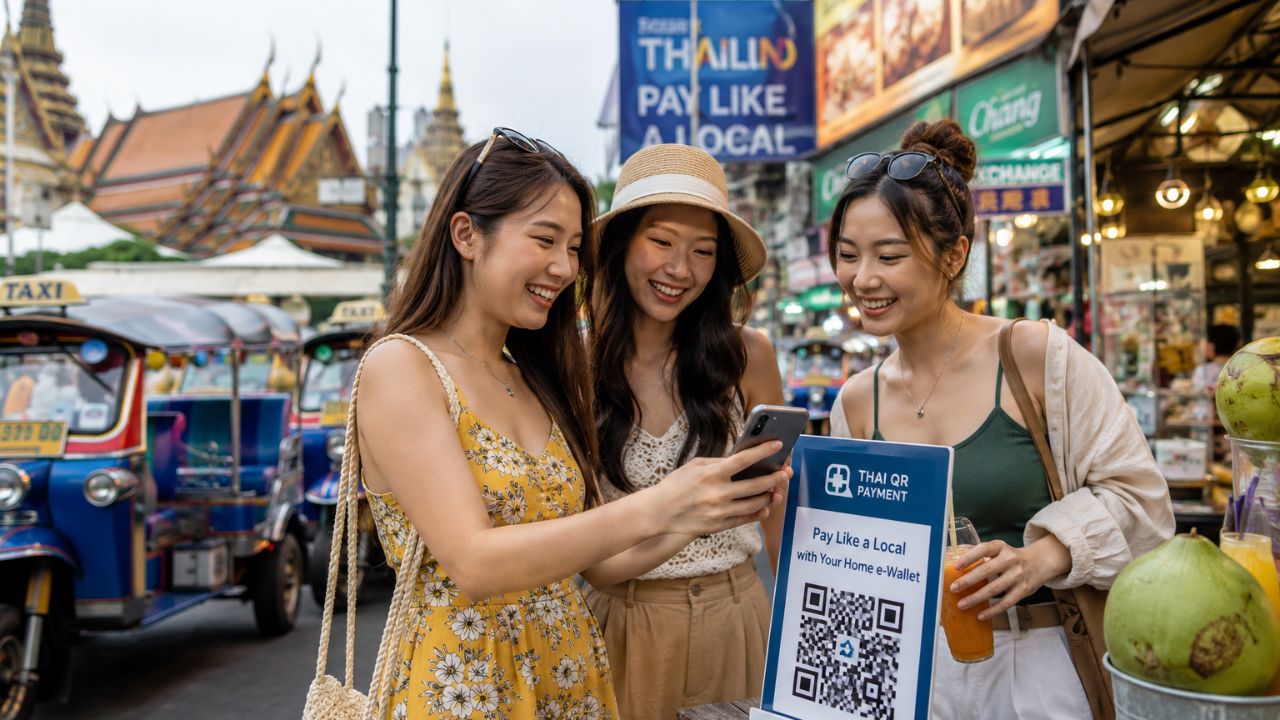
Image generated by AI
Tourism Updates: Thailand Deploys Cross-Border QR Payments to Create a Frictionless Haven Amid Global Travel Chaos
By completely eliminating the friction of physical currency exchange, Thailand is engineering a massively upgraded, digitally seamless tourism economy designed to attract travelers exhausted by global transit meltdowns.
Image generated by AI
As peak-season airline news and relentless aviation updates continue to broadcast an endless wave of brutal airport disruptions and crippling flight cancellations across Western travel corridors, high-yield international tourists are increasingly flocking to structurally stable, hyper-efficient destinations in Asia. Capitalizing on this massive pivot away from global travel chaos, Thailand is aggressively accelerating a massive transformation within its tourism economy. Led directly by the Tourism Authority of Thailand (TAT) under the Ministry of Tourism and Sports, the country has officially launched the highly ambitious “Pay Like a Local” initiative. This nationwide cross-border QR payment system is explicitly designed to integrate foreign visitors directly into Thailand’s advanced digital payment ecosystem. By allowing tourists spanning from Bangkok to Phuket and Chiang Mai to seamlessly pay for goods using their familiar home-country mobile banking apps and e-wallets, Thailand is completely eradicating physical currency friction and cementing its position as Asia's premier smart tourism destination.
Expanded Overview: The Digital Tourism Revolution
When analyzing modern traveler behavior, reducing friction at the destination level is critical to securing long-term tourism revenue.
Historically, international travelers arriving in Southeast Asia were immediately forced to navigate complex, highly predatory currency exchange networks. This physical cash dependency created massive operational bottlenecks at hotels, restaurants, and retail outlets. The “Pay Like a Local” model completely redefines this experience. By scanning standardized QR codes at participating merchants, tourists bypass cash handling entirely. Payments are instantly processed through their approved e-wallet systems, perfectly mirroring their domestic payment experiences. This structural shift not only hyper-accelerates transaction speeds but vastly improves security, ensuring that travelers who have already endured the grueling friction of modern air travel can finally experience a truly seamless holiday.
Section-Wise Breakdown: Banking and Global Network Integration
Executing a digital financial integration of this massive scale requires absolute coordination between sovereign banking authorities and global payment networks.
The expansion is being tightly coordinated by the Bank of Thailand in direct collaboration with exactly eight major financial institutions: Krungthai Bank, Bangkok Bank, Kasikornbank, Siam Commercial Bank, Bank of Ayudhya, ICBC Thai, Bank for Agriculture and Agricultural Cooperatives, and CIMB Thai Bank. Operating alongside these domestic titans, massive global payment networks and switching partners including National ITMX, Alipay, WeChat Pay, and UnionPay are providing the critical digital architecture required to enable cross-border QR interoperability. This highly structured financial ecosystem ensures that incoming tourists can seamlessly execute transactions in Thai baht without suffering massive currency exchange friction.
Section-Wise Breakdown: The Merchant Activation Roadshows
To guarantee massive, nationwide adoption by small and medium tourism enterprises, the Thai government executed highly tactical Merchant Activation Roadshows.
The primary activation occurred at Asiatique The Riverfront Destination in Bangkok, a massive tourism hub located directly along the Chao Phraya River. Held specifically between Warehouses 8 and 9, the event brought together thousands of retail merchants and food service providers for live system onboarding and technical readiness checks.
This massive Bangkok deployment was built upon a highly successful pilot program launched earlier in Udon Thani on 31 March 2026. Designed to prepare secondary cities for increased international arrivals, the Udon Thani pilot featured a structured seminar at the Monthathip Hall Convention Centre, where exactly 52 tourism operators received direct integration training. Simultaneously, mobile outreach units were deployed along Thong Yai Road and UD Town to execute real-time onboarding for street-level vendors.
Tourism Details: Thailand "Pay Like a Local" QR Integration Matrix
The exact operational telemetry outlining this highly complex financial modernization, detailing the involved financial institutions and supported global markets, has been consolidated into the mandatory matrix below.
Thailand "Pay Like a Local" QR Integration Matrix
| Operational Metric | Program Data & Infrastructure |
|---|---|
| Program Initiative | "Pay Like a Local" Cross-Border QR Payment |
| Leading Authorities | Tourism Authority of Thailand (TAT), Bank of Thailand |
| Financial Partners | 8 Major Thai Banks (Kasikornbank, Bangkok Bank, etc.) |
| Global Networks | National ITMX, Alipay, WeChat Pay, UnionPay |
| Supported Markets | China, Singapore, Malaysia, South Korea, etc. |
| Activation Hubs | Bangkok (Asiatique), Phuket, Chiang Mai |
| Initial Pilot Rollout | Udon Thani (31 March 2026) |
| Pilot Training Data | 52 Tourism Operators Trained |
Passenger Impact: Eliminating Currency Exchange Friction
For the global tourist, the immediate impact of this massive digital integration is total financial freedom and security.
Currently, the system is fully operational and securely supports users arriving from China, Singapore, Malaysia, Indonesia, Viet Nam, South Korea, Lao PDR, Cambodia, and Hong Kong. Because the system is seamlessly embedded across every critical tourism touchpoint—including luxury hotels, massive retail outlets, major attractions, and vital street-level businesses—tourists never have to carry massive amounts of physical Thai baht. This entirely eliminates the risk of theft and the massive financial losses typically incurred through predatory airport exchange rates, providing the traveler with absolute peace of mind.
Industry Analysis: Securing the East Asian Market
Tourism strategists note that the implementation of the "Pay Like a Local" system is a highly calculated move designed to secure absolute dominance over the massive East Asian tourism market.
Across East Asia, mobile payments already completely dominate daily consumer behavior. By precisely mirroring this domestic payment experience abroad, Thailand is providing these highly lucrative demographics with a deeply familiar spending journey. As adoption continues to rapidly expand beyond Bangkok, Phuket, and Chiang Mai, the country is officially positioning itself as the ultimate benchmark for cashless tourism infrastructure in Asia. This alignment of advanced financial technology with the visitor experience ensures that Thai merchants, particularly small and medium enterprises, can efficiently capture maximum visitor spending.
Conclusion: Asia's Leading Digital Tourism Economy
Ultimately, Thailand’s massive cross-border QR payment expansion represents a profound structural shift in how global tourism spending operates across Southeast Asia. By successfully integrating eight major Thai banks with massive global networks like Alipay and WeChat Pay, the TAT and the Bank of Thailand have successfully engineered a frictionless financial bridge between international travelers and local businesses. As global airline news continues to report on the travel chaos and flight cancellations severely damaging Western tourism markets, Thailand’s hyper-efficient, highly secure digital infrastructure serves as an absolute magnet for premium travelers. The "Pay Like a Local" initiative guarantees that from the mega-malls of Bangkok to the street vendors of Udon Thani, Thailand will remain the undisputed leader of the modern, cashless tourism economy well into the future.
Key Takeaways
- Digital Transformation: Thailand has officially launched the "Pay Like a Local" cross-border QR payment initiative for international tourists.
- Massive Integration: The system was developed by the TAT and the Bank of Thailand in direct partnership with eight major Thai banks and global networks (Alipay, WeChat Pay).
- Supported Markets: The system currently allows seamless digital payments for users from China, Singapore, South Korea, Malaysia, and other key Asian nations.
- Pilot Success: Initial field testing began in Udon Thani on March 31, 2026, successfully training 52 local tourism operators before expanding to Bangkok.
- Frictionless Travel: The system completely eliminates the need for physical currency exchange, massively improving security and convenience for travelers fleeing global transit disruptions.
FAQ: Thailand "Pay Like a Local" QR Payments 2026
What is the "Pay Like a Local" initiative in Thailand? It is a massive cross-border QR payment system that allows international tourists to pay for goods and services across Thailand using their familiar home-country mobile banking apps and e-wallets.
Which global payment networks are supported in Thailand's QR system? The system is heavily supported by massive global payment networks and switching partners including National ITMX, Alipay, WeChat Pay, and UnionPay.
Where was the Thailand QR payment system first tested? Before launching nationwide in major hubs like Bangkok and Phuket, the system was highly successfully piloted in Udon Thani on March 31, 2026, targeting secondary city tourism economies.
Related Travel Guides
Vietnam Tourism Visa Policies Destinations Travel Chaos 2026
Denver Airport Direct Flights Turks And Caicos United Airlines Travel Chaos 2026
Southeast Asia Cashless Travel Survival Guide 2026
Disclaimer: This article is strictly for informational purposes. The financial data regarding participating banks (Krungthai, Bangkok Bank, Kasikornbank, etc.), supported global networks (Alipay, WeChat Pay, UnionPay), and regional pilot operations (Udon Thani, March 31, 2026) are based on official Tourism Authority of Thailand (TAT) and Bank of Thailand announcements at the time of publication. Cross-border banking regulations, supported e-wallet applications, and specific merchant availability are highly dynamic and subject to continuous modification by international financial authorities. Travelers must explicitly verify their exact mobile banking app compatibility and international transaction fees with their home-country financial institution prior to travel.
Disclaimer
This article is for informational and educational purposes only. It does not constitute legal, financial, or professional advice. While we strive to provide accurate and up-to-date information, travel policies, regulations, and conditions change rapidly. Always verify information with official sources before making travel decisions. Nomad Lawyer makes no representations about the accuracy, reliability, completeness, or suitability of the information provided. Readers should consult qualified professionals for advice specific to their circumstances. The views expressed in this article are those of the author and do not necessarily reflect the views of Nomad Lawyer.
Kunal K Choudhary
Co-Founder & Contributor
A passionate traveller and tech enthusiast. Kunal contributes to the vision and growth of Nomad Lawyer, bringing fresh perspectives and driving the community forward.
Learn more about our team →