
Thailand's Cross-Border QR Payment System Unites ASEAN: Indonesia, Malaysia, Vietnam, Laos, Cambodia Go Cashless in 2026
Thailand launches a unified digital payment network enabling visitors from Indonesia, Malaysia, Vietnam, Laos, and Cambodia to pay instantly using home banking apps, eliminating currency friction and transforming regional tourism spending.

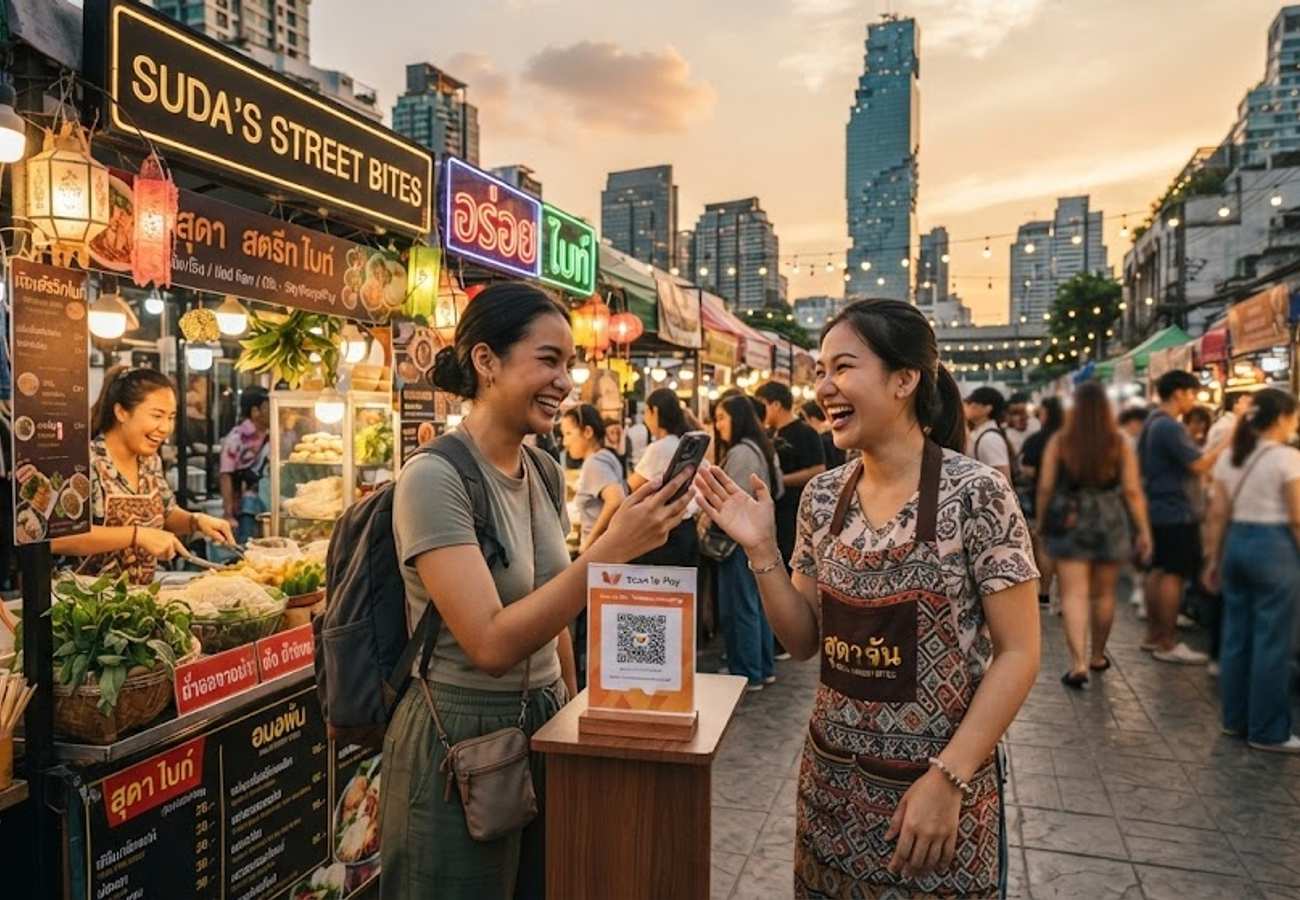
Image generated by AI
Thailand Just Unlocked the Future of ASEAN Tourism—and It's Entirely Digital
Thailand has launched something that will fundamentally reshape how millions of tourists spend money across Southeast Asia. By 2026, visitors from Indonesia, Malaysia, Vietnam, Laos, and Cambodia can forget about currency exchange booths entirely. They'll simply scan a QR code with their home banking app, and the transaction processes instantly in local Thai currency.
This isn't a minor convenience feature. This is the beginning of Asia's cashless travel revolution.
The Cross-Border QR Payment System: How It Actually Works
The system is elegantly simple in execution but revolutionary in scope. When you arrive in Thailand from any participating ASEAN nation, your mobile banking app becomes your payment method. No cash. No ATM fees. No waiting in line at exchange counters.
Here's what happens at the point of sale:
The merchant displays a QR code. You scan it with your home country's banking app. The payment converts automatically to Thai baht at real-time rates. The transaction settles directly through your bank back home.
Participating nations include Indonesia, Malaysia, Vietnam, Laos, Cambodia, Singapore, China, South Korea, and Hong Kong. Thailand serves as the central hub orchestrating the entire ecosystem.
Reddit: "Finally, no more getting ripped off at sketchy exchange counters. I'm already booked for Bangkok in August." — r/travel
Why This Matters More Than You Think
The elimination of currency friction sounds minor until you do the math. A typical tourist to Thailand spends money through at least 8-10 separate transactions daily. Each cash exchange or card conversion typically carries a 2-3% fee. For families or extended trips, this adds up to $50-150 in pure friction costs.
Beyond the tourist experience, this system addresses a critical pain point for Thai merchants and hospitality operators. Small shops, street vendors, and family-run restaurants can now accept international payments without complex payment processor agreements. The digital infrastructure handles currency conversion and settlement automatically.
Thailand's tourism ministry projects the system will serve more than 14 million annual visitors by 2026, making it essential infrastructure rather than optional convenience.
The ASEAN Domino Effect: Regional Adoption Is Already Happening
Indonesia leads ASEAN in outbound tourism to Thailand. The QR system eliminates the friction that previously deterred casual weekend trips—Indonesian travelers can now spend freely without pre-planning currency needs.
Malaysia's frequent short-haul visitors to Thailand will experience frictionless retail transactions, driving increased spending at shopping destinations and hospitality venues.
Vietnam's growing tourism market gains direct access to cashless payments, potentially unlocking pent-up demand from travelers who previously avoided cash-heavy transactions in unfamiliar territories.
Laos and Cambodia benefit from simplified land-border tourism, making cross-border shopping and regional travel more spontaneous and efficient.
The mechanics are straightforward, but the economic implications are staggering. As reported by travel and payment technology analysts, regional integration of digital payment systems historically increases cross-border tourism spending by 15-25% within the first 18 months of implementation.
Before vs. After: The Transformation Is Dramatic
The Old Way (Pre-2026):
- Find currency exchange booth or ATM
- Wait 10-15 minutes in line
- Pay 2-3% exchange fee
- Receive cash in unfamiliar denominations
- Calculate spending mentally
- Risk theft or loss of physical currency
- Repeat this process 8-10 times per day
The New Way (2026 Onward):
- Scan merchant's QR code
- Confirm payment in your banking app
- Transaction completes in 3-5 seconds
- Automatic currency conversion at interbank rates
- Real-time expense tracking in your home currency
- Zero physical security risk
- All transactions digitally recorded
For merchants, the transformation is equally dramatic. A street food vendor in Bangkok's Chinatown can now accept payment from a tourist from Jakarta without any specialized equipment beyond a QR code poster.
What Travelers Must Prepare Now
If you're planning a 2026 trip to Thailand or any participating ASEAN nation, take these steps immediately:
Activate international QR payment services in your banking app. Contact your home bank and confirm they support cross-border digital QR transactions. Ask specifically about coverage in Thailand and ASEAN nations.
Verify your transaction limits. International digital payments sometimes have daily caps. Request that your bank increase limits for travel periods if necessary.
Test the system before traveling. Make a small online purchase using your QR payment method to ensure everything functions properly.
Carry backup payment methods. Rural areas and smaller establishments may lack QR infrastructure for several years. Maintain access to a travel credit card and modest cash reserves.
Monitor currency rates. Real-time conversion means you'll see instantaneous exchange rates. Understand your home bank's markup (typically 0.5-1.5% above interbank rates) before traveling.
The Broader ASEAN Economic Integration Play
This isn't purely about tourism convenience. Thailand's digital payment infrastructure represents a significant step toward ASEAN economic integration. Payment system interoperability facilitates trade, tourism, and eventual financial sector harmonization across the region.
Consider the ripple effects:
Increased spontaneous cross-border travel. When friction drops, travel frequency increases. Economists expect 18-22% growth in intra-ASEAN tourism by 2027.
Accelerated merchant digitalization. Small vendors and family businesses are forced to modernize payment infrastructure, creating downstream benefits for other digital services.
Currency market stabilization. Reduced reliance on physical currency exchanges stabilizes foreign exchange markets and reduces speculative volatility.
Competitive advantage against other regions. While Europe has seamless Eurozone payments and North America has integrated payment networks, ASEAN is now establishing its own unified digital tourism zone.
Challenges Still Lurking
The system isn't without limitations. Remote areas throughout Laos, Cambodia, and rural Vietnam will likely lack merchant QR infrastructure for 3-5 additional years. Cybersecurity concerns remain valid—international digital payments expose users to fraud if banking apps aren't properly secured.
Currency conversion inconsistencies across different banks may create minor rate discrepancies. Rural merchant adoption requires investment and training that hasn't yet been fully funded in all participating nations.
Thailand's government has acknowledged these challenges and committed to gradual expansion and security enhancement protocols.
The 2026-2030 Vision: Where Cashless ASEAN Travel Goes From Here
Experts predict this system will expand dramatically. Within 18 months, payment integration will likely extend to:
- Air travel bookings and ticket purchases across ASEAN carriers
- Hotel reservation systems that accept QR payments at check-in and for incidental charges
- Transportation networks including buses, trains, and ride-sharing services
- A unified ASEAN tourism wallet functioning like Apple Pay or Google Pay but regionally integrated
- AI-powered spending analytics that track tourism patterns and optimize merchant discovery
By 2030, the cross-border QR system could evolve into a comprehensive digital travel ecosystem that fundamentally redefines how tourism spending functions across Southeast Asia.
Frequently Asked Questions
Q: Which countries are currently participating? A: Thailand (host), Indonesia, Malaysia, Vietnam, Laos, Cambodia, Singapore, China, South Korea, and Hong Kong.
Q: What if my bank doesn't support QR payments? A: Contact your bank immediately to activate the service. Most major banks in participating nations already support or plan to support this system by mid-2026.
Q: Is the system safe? A: Digital payments are generally safer than carrying cash. However, ensure your banking app is updated and your phone security is current.
Q: Will merchants in small towns accept QR payments? A: Large tourist areas definitely will. Rural merchants may take 12-24 additional months to adopt the system fully.
Q: What's the exchange rate I'll receive? A: Your home bank's rate, typically 0.5-1.5% above the interbank rate, applied automatically at the moment of transaction.
The cashless travel revolution in ASEAN has officially begun—and travelers unprepared for it will be the ones still waiting in currency exchange lines.
Related Travel Guides
Disclaimer
This article is for informational and educational purposes only. It does not constitute legal, financial, or professional advice. While we strive to provide accurate and up-to-date information, travel policies, regulations, and conditions change rapidly. Always verify information with official sources before making travel decisions. Nomad Lawyer makes no representations about the accuracy, reliability, completeness, or suitability of the information provided. Readers should consult qualified professionals for advice specific to their circumstances. The views expressed in this article are those of the author and do not necessarily reflect the views of Nomad Lawyer.
Kunal K Choudhary
Co-Founder & Contributor
A passionate traveller and tech enthusiast. Kunal contributes to the vision and growth of Nomad Lawyer, bringing fresh perspectives and driving the community forward.
Learn more about our team →