
Texas Lead Tourism: 2026 FIFA World Cup Becomes State's Biggest Event
Texas will capture the largest share of international 2026 World Cup tourism, outpacing California and Florida through strategic match allocation and geographic positioning as North America's premier tournament hub.

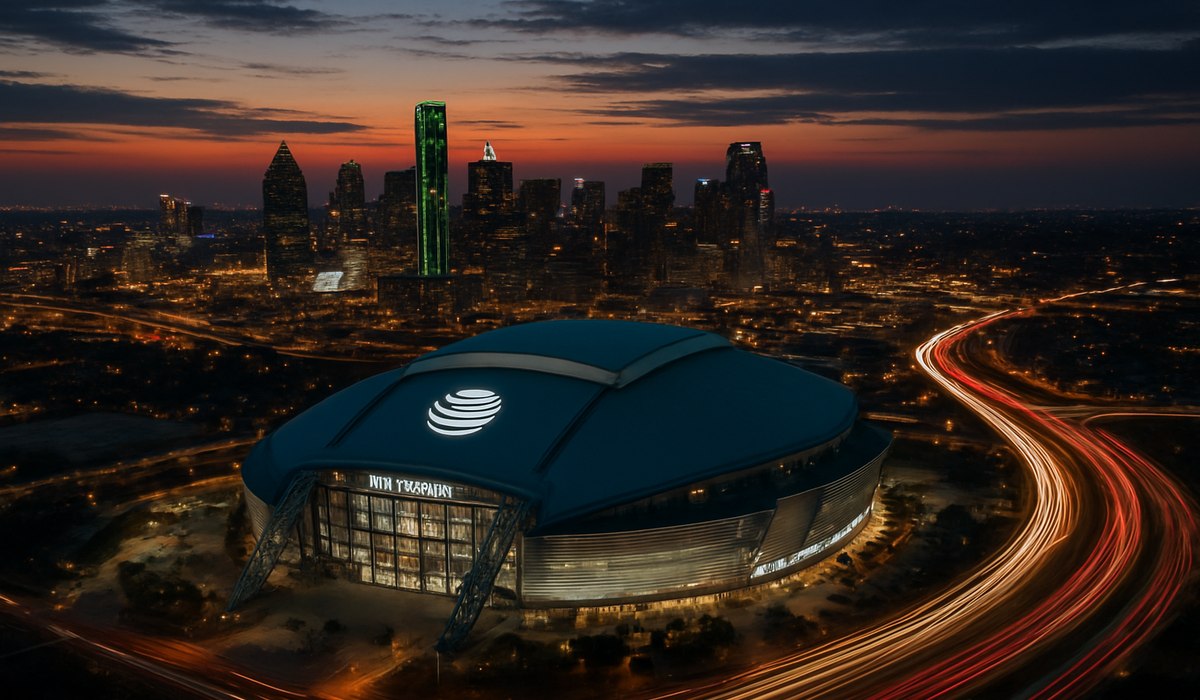
Image generated by AI
Texas Emerges as America's Premier World Cup Destination in 2026
Texas will dominate international tourism during the 2026 FIFA World Cup, hosting more matches than any other state and positioning itself as North America's strategic hub for global football fans. New projections show the Lone Star State will outpace traditional tourism powerhouses like California, Florida, and Georgia as millions of international visitors arrive for the expanded 48-team tournament across North America. The state's combination of world-class venues, geographic advantages, and dense match scheduling creates an unprecedented opportunity for extended visitor spending and elevated economic impact through summer 2026.
Texas Dominates 2026 World Cup Match Allocation
AT&T Stadium in Arlington claims the tournament's most coveted hosting role: nine total matches, including a high-stakes semifinal. This unprecedented allocation makes Texas the undisputed epicenter of World Cup activity in the United States. Houston's NRG Stadium adds substantial competitive weight with additional group-stage and knockout fixtures, cementing the state's position as the tournament's central nervous system.
Match frequency directly translates to extended tourism opportunities. Each fixture attracts not only ticketed spectators but also traveling companions, media personnel, corporate delegations, and neutral fans seeking iconic matchdays. Research from sports tourism analysts confirms that concentrated match schedules generate higher hotel occupancy rates, longer average stays, and increased spending on dining, entertainment, and local attractions. Texas's dual-stadium model distributes fan traffic strategically while maintaining sufficient density to create sustained hospitality demand throughout the tournament window.
For travelers, this concentration means earlier booking requirements and premium accommodation rates during core tournament weeks. Plan visits around less-competitive matchdays to secure better pricing and availability across Dallas-Fort Worth and Houston metropolitan areas. More information on 2026 World Cup official venue schedules helps optimize travel timing.
Strategic Geographic Positioning Drives Tourism Advantages
Texas lead tourism benefits substantially from continental geography that few rival host regions can replicate. The state serves as the geographic and transportation nexus linking Mexican tournament cities—Mexico City, Guadalajara, and Monterrey—with North American venues. International fans flying from Latin America, Europe, and beyond increasingly route connections through Dallas-Fort Worth International or Houston Intercontinental airports, transforming Texas gateways into primary entry points rather than secondary destinations.
This routing advantage reshapes visitor behavior fundamentally. Rather than arriving directly at alternative coastal hubs, international spectators now position themselves in Texas to stage matches across the Central region. Multi-city itineraries become natural extensions, with fans connecting Dallas-Houston-Mexico City circuits during their tournament stays. Secondary Texas destinations—San Antonio, Austin, the Hill Country wine region—benefit from spillover visitation as travelers extend stays beyond core match dates.
Regional connectivity infrastructure strengthens this positioning. Modern highway systems, domestic flight networks, and rental car availability enable seamless movement between Texas cities and neighboring states. Visitors gain flexibility to construct personalized World Cup experiences combining stadium attendance with cultural tourism, outdoor recreation, and culinary exploration across Texas's vast geographic footprint.
Infrastructure and Connectivity Create Extended Stay Opportunities
Texas's existing hospitality infrastructure undergoes substantial expansion to accommodate World Cup demand. Beyond Arlington and Houston's primary hotel markets, secondary cities activate significant lodging capacity through short-term rental platforms, boutique hotel openings, and temporary accommodation solutions specifically marketed toward international visitors.
Transportation networks facilitate multi-destination tourism that concentrates visitor spending across the state. Dallas-Fort Worth's position as a major American hub airport connects international travelers directly to Houston, San Antonio, and Austin with multiple daily flight options. Ground transportation—including enhanced bus services, rental car availability, and rideshare infrastructure—enables affordable movement between cities without requiring complex domestic flight arrangements.
The result positions Texas as uniquely competitive for extended-stay tourism. While traditional coastal hosts often concentrate visitors in single metropolitan areas, Texas's distributed venue model combined with superior connectivity encourages travelers to visit multiple cities during single World Cup trips. This geographic advantage translates directly into higher total visitor spending and economic impact compared to states with single-venue or geographically isolated hosting responsibilities.
Projected Economic Impact on Texas Tourism Sector
Economic modeling from hospitality research organizations projects extraordinary visitor spending across Texas markets during the June-August 2026 World Cup window. Arlington accommodation spending estimates suggest increases exceeding 300 percent compared to typical summer periods—among the sharpest revenue jumps of any American host city. Houston's economic impact assessments project approximately $1.5 billion in additional spending when combining lodging, dining, entertainment, retail, and ancillary tourism services.
Texas lead tourism gains further momentum from international visitor spending patterns. World Cup spectators from overseas markets demonstrate higher per-trip expenditure than average international tourists, driven by multi-city itineraries, elevated hospitality demand, and premium experiences. Combined with the tournament's extended duration compared to single-day sporting events, total economic stimulus substantially exceeds comparable Super Bowl impacts.
Comparative market analyses position Texas among the nation's top-performing host regions. While certain rival metropolitan areas generate higher absolute dollar volumes, Texas distinguishes itself through incremental hotel demand intensity, match scheduling concentration, and secondary destination spillover economics. The state's diversified tourism revenue streams—spanning Arlington's corporate hospitality markets, Houston's international business traveler base, and secondary city cultural tourism—create multiple pathways for visitor spending that transcend typical sports-event economics.
| Metric | Texas Value | Tournament Impact |
|---|---|---|
| Primary stadium venues | 2 (Arlington, Houston) | Most of any state |
| Total matches hosted | 13+ | Highest concentration |
| Projected Arlington accommodation spending increase | 300%+ | Peak US host city |
| Houston estimated additional spending | $1.5 billion | Combined tourism sectors |
| Regional connectivity hubs | 2 major airports | Central region staging |
| Secondary destination capacity | Multiple cities | Extended stay enablement |
| International visitor preference | Higher per-trip spending | Premium experience seeking |
| Tournament duration | June-August 2026 | 3-month activation window |
What This Means for Travelers
World Cup tourism to Texas requires strategic planning to maximize experiences while navigating unprecedented demand:
-
Book accommodations 8-12 months in advance across Dallas-Fort Worth, Houston, San Antonio, and Austin. Inventory constraints throughout summer 2026 will create rapidly escalating rates and limited availability.
-
Develop multi-city itineraries that combine stadium attendance with attractions in secondary destinations. Texas's geographic positioning and transportation infrastructure make three-city experiences economically viable compared to traditional single-venue World Cup trips.
-
Utilize Dallas or Houston as primary entry points for North American travel. Arriving through these major gateways provides flexibility for connecting onward to Mexican venues or competing stadium clusters in alternative regions.
-
Budget premium pricing for core tournament weeks (late June through mid-July). Peak demand periods will compress availability and elevate daily costs across hospitality, dining, and ground transportation significantly above standard summer rates.
-
Consider traveling during group-stage periods (early June) or late-stage matches beyond semifinals to access better pricing and availability. Secondary matches attract substantial fan bases while maintaining more accessible hospitality conditions than marquee fixtures.
Frequently Asked Questions
Which Texas cities host the most World Cup matches? Arlington's AT&T Stadium hosts nine total matches, including a semifinal—the tournament's highest single-venue allocation. Houston's NRG Stadium hosts additional group-stage and knockout fixtures. Combined, these venues establish Texas as the competition's central hub.
When should international travelers plan World Cup trips to Texas? Early June group-stage matches and late-round competitions beyond semifinals offer better pricing and accommodation availability. Avoid the final week of June through mid-July when peak demand compresses inventory and maximizes costs across all tourism sectors.
What makes Texas advantageous compared to other World Cup host states? Texas's geographic positioning as the North American gateway to Mexican cities
Disclaimer
This article is for informational and educational purposes only. It does not constitute legal, financial, or professional advice. While we strive to provide accurate and up-to-date information, travel policies, regulations, and conditions change rapidly. Always verify information with official sources before making travel decisions. Nomad Lawyer makes no representations about the accuracy, reliability, completeness, or suitability of the information provided. Readers should consult qualified professionals for advice specific to their circumstances. The views expressed in this article are those of the author and do not necessarily reflect the views of Nomad Lawyer.
Kunal K Choudhary
Co-Founder & Contributor
A passionate traveller and tech enthusiast. Kunal contributes to the vision and growth of Nomad Lawyer, bringing fresh perspectives and driving the community forward.
Learn more about our team →