
Taj Corbett Resort & Spa Marks 10-Year Milestone: Balancing Luxury Expansion and Wildlife Buffer Protections

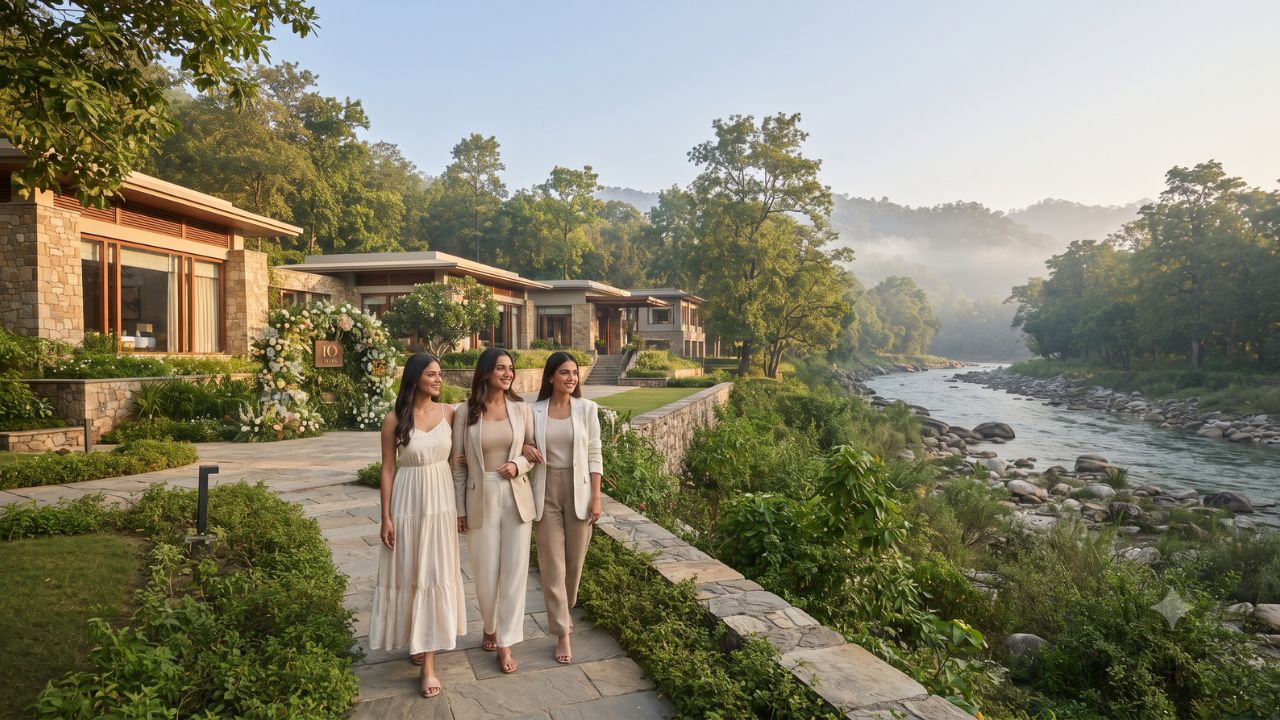
Expanding from an opening inventory of 55 rooms in 2016 to 75 luxury keys today, Taj Corbett Resort & Spa has completed its first decade of operation along the Kosi River, marking a 36.3% capacity expansion during a period of sweeping environmental reforms across India's tiger corridors. Situated on the forested periphery of Jim Corbett National Park in Uttarakhand, the property operates as a flagship retreat under The Indian Hotels Company Limited (IHCL), demonstrating how top-tier safari hospitality can coexist with strict conservation mandates monitored by the National Tiger Conservation Authority (NTCA). Over the past ten years, the resort has balanced high-end guest demand with ecosystem stewardship, expanding through an architecturally sensitive wing that houses luxury suites and a Grand Presidential Suite without encroaching into vulnerable riparian habitats.
The property's 10-year anniversary arrives at a defining moment for wildlife tourism across the Himalayan foothills. As state authorities under the Uttarakhand Tourism Development Board tighten building bylaws, noise regulations, and waste disposal codes along sensitive river corridors, luxury operators must prove their community and conservation value. Under the leadership of General Manager Nivedan Kukreti, the resort has commemorated its milestone with a week-long series of curated guest experiences, highlighted by celebratory culinary programs at Treetop Restaurant, bespoke turndown amenities, and the presentation of commemorative historic postcards and native saplings to departing travelers.
Infrastructure Evolution: From 55-Key Retreat to 75-Key Eco-Luxury Anchor
When Taj Corbett opened its doors in 2016, it established a refined base for travelers exploring India's oldest national park. The initial 55-room layout focused on low-impact, spread-out cottage architecture designed to preserve existing tree canopies and maintain continuous soil permeability. Over the subsequent decade, escalating interest in private nature retreats led IHCL to greenlight a calculated capacity addition, introducing an executive wing featuring premium suites and the flagship Grand Presidential Suite.
This phased expansion lifted total accommodation capacity to 75 keys while maintaining strict physical distance from the active riverbed. The physical layout deliberately minimizes artificial light spill and operational acoustic output, preventing disturbance to nocturnal wildlife crossing the river corridor. By capping ultimate density at 75 keys, management has resisted the overdevelopment that has saturated other commercial hospitality clusters around Ramnagar and Mohan.
Community Stewardship: The Kunkhet Village Walk and IHCL Paathya
Central to the resort's operating model is its structured integration with peripheral agrarian settlements. The resort's signature Kunkhet Village Walk exemplifies this community-based approach, guiding guests through working agricultural fields, terraced farms, fruit orchards, and village trails in Kunkhet hamlet. The experience provides travelers with authentic insight into traditional Kumaoni rural life while creating direct financial linkages for local farmers, artisanal producers, and regional guides.
| Operational Benchmark | Historic Launch (2016) | Current Profile (2026 Milestone) | Conservation & Guest Impact Parameter |
|---|---|---|---|
| Room Inventory | 55 keys | 75 keys | Controlled 36.3% growth adding luxury suites and Grand Presidential Suite |
| Riverfront Setting | Kosi River corridor | Preserved riparian buffer | Low-emission lighting and acoustic dampening protecting wildlife passages |
| Sustainability Charter | Initial green guidelines | IHCL Paathya Framework | Phased elimination of single-use plastics and local water replenishment |
| Signature Dining | Treetop Restaurant | Anniversary culinary showcase | Hyper-local Kumaoni ingredients sourced from surrounding village growers |
| Community Excursions | Basic guided nature walks | Structured Kunkhet Village Walk | Direct economic dispersal to local agrarian families and traditional craftspeople |
| Commemorative Offerings | Standard hotel amenities | Native plants & historic postcards | Guest education on regional endemic flora and decade-long preservation efforts |
Beyond guided village interactions, the resort anchors its daily operations in IHCL's Paathya sustainability framework. The Paathya charter establishes clear environmental and social governance standards, focusing on energy efficiency, rainwater harvesting, localized composting, and fair-wage hiring from surrounding rural communities. These initiatives ensure that the resort functions as an active regional partner rather than an isolated luxury compound.
Expert Analysis: Safari Economics and Buffer Zone Regulatory Scrutiny
The commercial evolution of Taj Corbett provides a critical case study in the economics of luxury wilderness hospitality operating along regulated forest buffer zones. Over the past decade, regulatory bodies including the NTCA and the Supreme Court of India have steadily increased oversight on commercial developments bordering Project Tiger reserves, imposing strict safari vehicle quotas and environmental impact assessments.
For travelers booking this route, the direct consequence is an operational environment where premium lodging must deliver comprehensive, self-contained experiences rather than relying exclusively on park safari permits. Because gypsy safari vehicle access into Corbett's core zones—such as Dhikala, Bijrani, and Jhirna—is strictly capped through government computerized lotteries that sell out months in advance, high-end guests frequently find themselves without daily core-zone safari permits. Properties like Taj Corbett have adapted by turning the riverfront itself into a primary destination, offering riverside birdwatching, private naturalist walks, and culinary workshops that insulate the guest experience from national park permit shortages.
The pricing pressure this creates means that full-service wilderness lodges can command average daily room rates exceeding 30,000 to 50,000 Indian rupees per night during the peak winter season from October to April, while unbranded budget motels along the Ramnagar highway face severe margin compression. Affluent travelers from the Delhi National Capital Region, driven by improved highway connectivity via the Delhi-Dehradun expressway corridor, are willing to pay significant premiums for verified environmental compliance, serene riverfront seclusion, and brand reliability. By capping capacity at 75 keys and investing heavily in the Paathya framework, the property captures high-yield travelers while insulating itself from potential regulatory clampdowns aimed at unchecked budget sprawl.
Key Takeaways
- Decade Milestone: Taj Corbett Resort & Spa marks its 10th anniversary in October 2026, celebrating ten years of operations along the Kosi River.
- Measured Expansion: The property has grown from 55 rooms in 2016 to 75 keys in 2026, incorporating luxury suites and a Grand Presidential Suite.
- Community Integration: The Kunkhet Village Walk connects guests directly with agrarian communities, supporting local livelihoods through experiential tourism.
- Sustainability Alignment: Operating under IHCL's Paathya charter, the resort prioritizes resource conservation, waste reduction, and native ecosystem protection.
- Buffer Zone Resilience: Controlled physical density and self-contained naturalist activities shield the property from core-zone national park safari permit restrictions.
FAQ: Taj Corbett Resort & Spa 2026
When did Taj Corbett Resort & Spa open, and how has it expanded?
Taj Corbett Resort & Spa opened in 2016 with 55 rooms and expanded to 75 keys by 2026, adding a suite wing with a Grand Presidential Suite.
What is the Kunkhet Village Walk?
It is a guided community excursion that takes resort guests through working fields, countryside trails, and fruit orchards in nearby Kunkhet village.
What is IHCL's Paathya framework?
Paathya is IHCL’s comprehensive sustainability charter that guides energy conservation, zero-single-use-plastic goals, and community development across its properties.
What dining options exist at the resort?
The resort features Treetop Restaurant, which serves regional Kumaoni specialties, North Indian cuisine, and international dining overlooking the forest canopy.
[As wilderness tourism faces rising ecological standards across India, a decade of disciplined stewardship along the Kosi River proves that luxury and conservation can advance together.]
Related Travel Guides
Disclaimer
This article is for informational and educational purposes only. It does not constitute legal, financial, or professional advice. While we strive to provide accurate and up-to-date information, travel policies, regulations, and conditions change rapidly. Always verify information with official sources before making travel decisions. Nomad Lawyer makes no representations about the accuracy, reliability, completeness, or suitability of the information provided. Readers should consult qualified professionals for advice specific to their circumstances. The views expressed in this article are those of the author and do not necessarily reflect the views of Nomad Lawyer.
Raushan Kumar
Founder & Lead Developer
Full-stack developer with 11+ years of experience and a passionate traveller. Raushan built Nomad Lawyer from the ground up with a vision to create the best travel and law experience on the web.
Learn more about our team →