
Taiwan Unveils NT$10 Million Tourism Incentive Campaign with EVA Air and Klook Across Four Southern National Scenic Areas
Taiwan launches an NT$10 million tourism incentive initiative with EVA Air and Klook, offering travel perks across four southern national scenic areas.

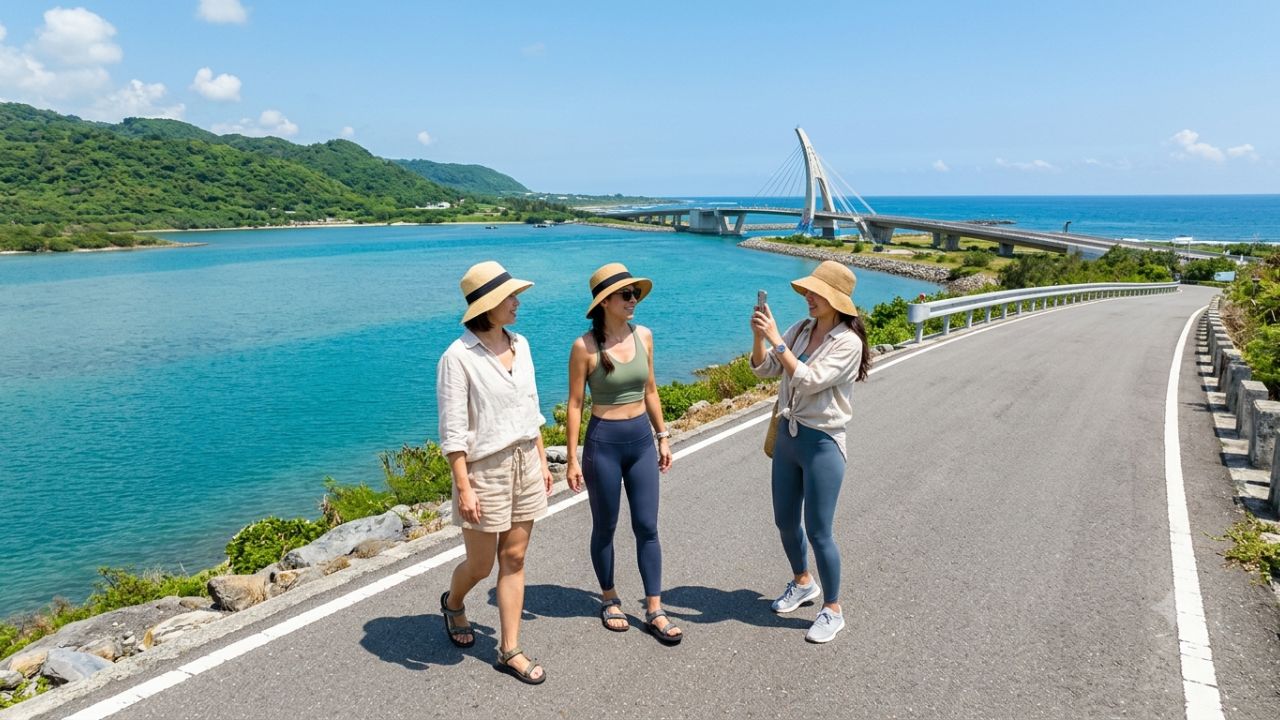
The Taiwan Tourism Administration has launched an extensive regional promotion campaign offering over NT$10 million (approximately US$330,000) in travel incentives and discounts to attract international visitors to Southern Taiwan.
Spearheaded by the Siraya National Scenic Area Administration under the newly formed Southern Tourism Union, the initiative unites four prominent administrative zones—the Southwest Coast, Siraya, Maolin, and Dapeng Bay—in a strategic partnership with national carrier EVA Air, online booking platform Klook, and international travel creators.
Designed to encourage independent overseas holidaymakers to venture beyond traditional northern metropolitan hubs like Taipei, the campaign offers direct ticket subsidies, packaged flight-and-hotel perks, and curated excursion vouchers spanning historic salt pans, indigenous mountain settlements, reservoir cruises, and coastal lagoons.
===================================================================================
     SOUTHERN TAIWAN TOURISM UNION: CAMPAIGN & INCENTIVE BENCHMARK 2026
===================================================================================
 [PROMOTIONAL CAMPAIGN SPECIFICATIONS]
  * Total Incentive Fund: Over NT$10 million (~US$330,000) in travel subsidies.
  * Lead Organizing Body: Siraya National Scenic Area Administration.
  * Strategic Alliance: Southern Tourism Union (4 National Scenic Areas).
  * Commercial Partners: EVA Air (Aviation) and Klook (Digital Experience Booking).
  * Target Audience: International Free Independent Travelers (FITs) and families.

 [REGIONAL SCENIC AREA ALLIANCE]
  1. Southwest Coast: Historic coastal salt fields, oyster beds, and lagoon ecology.
  2. Siraya: Zengwen Reservoir boat tours, mud hot springs, and plains indigenous lore.
  3. Maolin: Indigenous Rukai/Paiwan villages, mountain gorges, and butterfly valleys.
  4. Dapeng Bay: Marine sailing, lagoon wetlands, and Xiao Liuqiu coral island access.
===================================================================================
The Southern Tourism Union: Uniting Four Diverse Regional Administrations
Southern Taiwan offers a dramatic geographic contrast to the high-density urban environments of northern Taiwan.
Characterized by year-round subtropical sunshine, fertile agricultural plains, dramatic mountain ravines, and historic maritime shorelines, the southern counties of Chiayi, Tainan, Kaohsiung, and Pingtung represent the historical and cultural cradle of the island.
To eliminate promotional fragmentation, the Siraya National Scenic Area Administration spearheaded the formation of the Southern Tourism Union.
This administrative alliance coordinates destination marketing, transportation links, and private-sector partnerships across four National Scenic Areas under the jurisdiction of the Ministry of Transportation and Communications.
| Scenic Area Authority | Geographic Jurisdiction | Signature Natural Environment | Primary Tourism Experience |
|---|---|---|---|
| Southwest Coast | Tainan & Chiayi Coasts | Tidal flats, salt fields, mangrove wetlands | Black-faced spoonbill birding, salt pan heritage |
| Siraya | Tainan & Chiayi Foothills | Zengwen Reservoir, hot springs, orchards | Scenic lake cruises, Guanziling mud baths |
| Maolin | Kaohsiung & Pingtung Mountains | Deep river gorges, indigenous forests | Purple crow butterfly wintering, Rukai crafts |
| Dapeng Bay | Pingtung Coastal Lagoon | Single-opening lagoon, coral barrier reefs | Dinghy sailing, windsurfing, Xiao Liuqiu ferry |
By packaging these complementary environments under a unified digital umbrella, international travelers can seamlessly transition from cycling across coastal salt pans in the morning to soaking in mineral-rich volcanic mud springs in the afternoon, followed by fresh seafood dining on the coast.
Coastal Scenery and Natural Terrains: Exploring the Four National Scenic Areas
Each of the four National Scenic Areas within the Southern Tourism Union offers distinct ecological, recreational, and cultural attractions designed to appeal to independent travelers.
SOUTHERN TAIWAN FOUR SCENIC AREAS PORTFOLIO
| Entity / Route | Metrics | Operational Status |
|---|---|---|
| SCENIC REGION | CORE NATURAL ATTRACTIONS | SIGNATURE CULTURAL HERITAGE |
| Southwest Coast | Beimen Salt Fields, Qigu Salt | Jingzaijiao Tile-paved Salt |
| Mountain, Taijiang Lagoons | Fields, Oyster aquaculture | |
| Siraya | Zengwen Reservoir, Wushantou | Siraya Plains indigenous |
| Reservoir, Guanziling Springs | heritage, fruit picking | |
| Maolin | Maolin Gorge, Zhuokou River, | Duona stone slab village, |
| Purple Butterfly Valley | Rukai and Paiwan traditions | |
| Dapeng Bay | Dapeng Bay Lagoon, Donggang | Donggang King Boat Festival, |
| Fishing Port, Xiao Liuqiu | Marine water sport regattas |
1. Southwest Coast National Scenic Area: Salt Heritage and Coastal Birding
Stretching along the maritime border of Tainan City and Chiayi County, the Southwest Coast National Scenic Area is famous for its extensive tidal wetlands, coastal lagoons, and century-old salt manufacturing heritage:
- Jingzaijiao Tile-Paved Salt Fields: Located in Beimen, this is the oldest existing tile-paved salt field in Taiwan, dating back to 1818. Travelers can walk along the checkerboard evaporation ponds and experience hands-on salt raking while observing brilliant sunset reflections across the water.
- Qigu Salt Mountain and Lagoon: A massive six-story pyramid of compacted solar salt remnants celebrating Tainan's historical position as Taiwan's primary salt supplier. Nearby, travelers can board motorized rafts to explore oyster farming beds in Qigu Lagoon.
- Wintering Sanctuary for Black-Faced Spoonbills: The shallow estuaries and mangrove swamps of the Southwest Coast serve as the primary global wintering haven for the endangered black-faced spoonbill (Platalea minor), attracting birdwatchers from across the globe between October and March.
2. Siraya National Scenic Area: Reservoir Cruises and Mud Hot Springs
Covering the foothill transition zone of Tainan and Chiayi, Siraya is named in honor of the indigenous Siraya people of the southwestern plains:
- Zengwen Reservoir Eco-Cruises: As the largest water reservoir in Taiwan by storage capacity, Zengwen Reservoir offers tranquil sightseeing yacht excursions. Cruising through the forested mountain valleys, passengers can observe wild boar gatherings on secluded lake islands and watch black kites dive for fish.
- Guanziling Mud Hot Springs: Recognized as one of the world's rare natural mud hot spring sources (alongside Kagoshima in Japan and Calistoga in California), Guanziling's mineral-dense grey alkaline waters emerge from subterranean strata enriched with therapeutic volcanic mud.
- Agritourism and Orchard Trails: The rolling hills of Dongshan, Baihe, and Nanxi produce award-winning specialty coffee beans, sweet pomelos, and mangoes, supporting farm-to-table culinary tours.
3. Maolin National Scenic Area: Indigenous Cultures and Butterfly Valleys
Situated in the rugged mountain foothills spanning northern Kaohsiung and western Pingtung, Maolin is a sanctuary of biological diversity and indigenous craft traditions:
- Purple Crow Butterfly Valley Winter Migration: Every winter from November through March, millions of Euploea (purple crow) butterflies migrate from northern and central Taiwan to seek refuge in the sheltered, frost-free ravines of Maolin, forming one of only two mass wintering butterfly phenomenons in the world (alongside the monarch butterflies of Mexico).
- Duona Rukai Slate Village: Perched in the upper reaches of the Zhuokou River valley, Duona preserves authentic Rukai tribal architecture constructed entirely from local black slate slabs. Visitors can observe traditional woodcarving, glass bead crafting, and taste mountain culinary staples such as cinavu (millet and pork dumplings wrapped in trichodesma leaves).
- Maolin and Duona Suspension Bridges: Suspended hundreds of feet above turbulent mountain rivers, these pedestrian suspension bridges offer panoramic vistas across deep forested canyons and sharp river bends.
4. Dapeng Bay National Scenic Area: Marine Recreation and Offshore Coral Atolls
Positioned along the southwestern coast of Pingtung County, Dapeng Bay surrounds Taiwan's largest natural single-opening coastal lagoon:
- Dapeng Bay Lagoon Water Sports: The sheltered, non-tidal lagoon serves as Taiwan's premier sailing, canoeing, and windsurfing venue. An expansive 12-kilometer ring-bay cycling path allows visitors to ride completely around the lagoon past mangrove conservation wetlands.
- Dapeng Bay Sail-Shaped Cross-Sea Bridge: Taiwan's first movable cable-stayed bridge features a lifting section that opens on weekends to allow tall-masted sailboats and luxury yachts to pass between the lagoon and the open Taiwan Strait.
- Xiao Liuqiu Coral Island Gateway: From nearby Donggang Port, passenger ferries connect travelers in just 20 minutes to Xiao Liuqiu (Lambai Island), Taiwan's only coral reef offshore island, renowned for year-round shore snorkeling with wild green sea turtles.
EVA Air and Klook Partnership: Unlocking NT$10 Million in Travel Incentives
To transform regional destination awareness into verified bookings, the Southern Tourism Union partnered with EVA Air and global travel platform Klook to deploy a tiered incentive framework valued at over NT$10 million.
===================================================================================
               EVA AIR & KLOOK TRAVEL INCENTIVE REDEMPTION STRUCTURE
===================================================================================
 [TIER 1: EVA AIR INTERNATIONAL FLIGHT-AND-HOTEL SUBSIDIES]
  * Target Passengers: Inbound international travelers booking on EVA Air.
  * Incentive Value: Up to NT$2,000 (~US$65) direct airfare/hotel accommodation credit.
  * Qualifying Destinations: Hotel stays in Tainan, Kaohsiung, Chiayi, or Pingtung.

 [TIER 2: KLOOK EXPERIENCE & TRANSPORTATION VOUCHERS]
  * Booking Mechanism: Dedicated "Southern Taiwan Escapes" portal on Klook.
  * Direct Discounts: Up to 25% off participating guided day tours and experiences.
  * Covered Products: Zengwen Reservoir yacht passes, Guanziling hot spring packages,
    Xiao Liuqiu snorkeling tickets, and Southwest Coast oyster raft excursions.

 [TIER 3: HIGH-SPEED RAIL BUNDLE PROMOTIONS]
  * Taiwan High-Speed Rail (THSR) Tourist Pass: Buy-One-Get-One-Free (BOGO)
    promotions for international short-stay visitors entering via Taipei/Taoyuan.
===================================================================================
| Incentive Category | Funding Source & Partner | Value per Eligible Booking | Qualifying Travel Product |
|---|---|---|---|
| Inbound Flight Rebates | EVA Air Global Network | NT$1,000–NT$2,000 Credit | Direct international flights booked into Taiwan |
| Experience Vouchers | Klook Digital Campaign | NT$300–NT$800 Discount Code | Day tours, attraction entry, guided workshops |
| THSR Rail Pass Bonus | Tourism Administration | 50% Subsidy / BOGO Pass | High-Speed Rail tickets to Tainan or Zuoying |
| Attraction Gift Packs | Scenic Area Administrations | Free Gift Box (~NT$500) | Local specialty products (salt bath salts, tea) |
How International Travelers Redeem the Perks
International visitors planning to visit Southern Taiwan can secure these promotional savings through clear digital steps:
- Book Qualifying EVA Air Flights: Purchase round-trip international air tickets to Taiwan (arriving at Taoyuan International Airport [TPE] or Kaohsiung International Airport [KHH]). Enter the designated promotional campaign code on EVA Air's official portal to unlock regional lodging vouchers.
- Access the Dedicated Klook Campaign Hub: Navigate to Klook's dedicated "Southern Taiwan Tourism Union" campaign page. Browse eligible activities across Siraya, Southwest Coast, Maolin, and Dapeng Bay.
- Apply Instant Voucher Codes: Apply the active discount code at digital checkout to receive immediate reductions on admission tickets, guided cycling tours, water sports rentals, and hot spring passes.
- Present Digital Confirmation On-Site: Show the mobile voucher with QR code at participating scenic area visitor centers or attraction kiosks to gain expedited entry.
Traveler Logistics Guide: Navigating Southern Taiwan (Information Gain)
Southern Taiwan features exceptional domestic transportation infrastructure, allowing overseas travelers to transition smoothly from international arrival airports into rural scenic destinations.
===================================================================================
               SOUTHERN TAIWAN TRANSIT & LOGISTICS CHECKLIST
===================================================================================
 [INTERMODAL RAIL ARTERIES]
  * Taiwan High-Speed Rail (THSR):
    - Taipei to Tainan: 80 to 95 minutes.
    - Taipei to Zuoying (Kaohsiung): 90 to 105 minutes.
    - Taoyuan Airport (THSR Station) to Zuoying: Direct high-speed run (90 mins).

 [LOCAL TRANSIT & TAIWAN TOURIST SHUTTLE]
  * Smart Transit Cards: EasyCard and iPASS work universally on buses, light rail,
    local trains, and convenience store retail across the southern region.
  * Dedicated Tourist Bus Routes:
    - Southwest Coast: Taiwan Tourist Shuttle Route 99 (Anping Taijiang Line).
    - Siraya: Taiwan Tourist Shuttle Route 33 (Guanziling Line).
    - Dapeng Bay: Taiwan Tourist Shuttle Route 9127D (Dapeng Bay Liuchiu Line).

 [CLIMATE & PACKING CONSIDERATIONS]
  * Southern Weather: Subtropical, warm year-round; light clothing suitable.
  * Sun Protection: High UV indices along coastal salt flats and lagoons; carry
    sunscreen, wide-brim hats, and reusable water bottles.
===================================================================================
High-Speed Rail and Air Arrival Gateways
International visitors have two primary entry gateways:
- Kaohsiung International Airport (KHH): Situated directly in Southern Taiwan, KHH receives direct flights from major Asian hubs (Tokyo, Osaka, Seoul, Hong Kong, Singapore, Bangkok). From the terminal, the Kaohsiung MRT Red Line connects directly to downtown and Zuoying THSR Station in 25 minutes.
- Taoyuan International Airport (TPE): For travelers arriving on long-haul flights from North America or Europe, the Taoyuan Airport MRT connects in 15 minutes to THSR Taoyuan Station. Boarding a southbound high-speed train delivers travelers to Chiayi Station in 65 minutes, Tainan Station in 80 minutes, and Zuoying (Kaohsiung) in 95 minutes.
| Origin Station | Destination Hub | High-Speed Rail Travel Time | Onward Scenic Area Access |
|---|---|---|---|
| THSR Taoyuan (TPE Airport) | THSR Chiayi Station | 65 Minutes | Transfer to Southwest Coast / Siraya buses |
| THSR Taoyuan (TPE Airport) | THSR Tainan Station | 80 Minutes | Transfer to Beimen salt pans & Guanziling |
| THSR Taoyuan (TPE Airport) | THSR Zuoying Station | 95 Minutes | Direct bus link to Maolin & Dapeng Bay |
| THSR Zuoying (Kaohsiung) | Dapeng Bay Visitor Center | 45 Minutes (Express Bus) | Taiwan Tourist Shuttle 9127D direct link |
| THSR Chiayi Station | Jingzaijiao Salt Fields | 50 Minutes (Taxi/Shuttle) | Direct highway link via Expressway 82 |
Essential Tourist Shuttle Bus Corridors
For independent travelers without a personal vehicle, the government-operated Taiwan Tourist Shuttle network provides reliable, English-friendly bus links directly from major train stations to scenic area gates:
- Taiwan Tourist Shuttle 99 (Taijiang Line): Departs Tainan TRA Train Station, connecting directly to the Sicao Green Tunnel mangrove wetlands, Qigu Salt Mountain, and the Black-Faced Spoonbill Ecology Exhibition Hall.
- Taiwan Tourist Shuttle 33 (Guanziling Line): Operates from THSR Chiayi Station and TRA Xinying Station, climbing directly into the mountains to terminate at the Guanziling mud hot spring village.
- Taiwan Tourist Shuttle 9127D (Dapeng Bay Liuchiu Line): Departs THSR Zuoying Station, serving Donggang Ferry Pier (for boats to Xiao Liuqiu) before terminating at the Dapeng Bay Visitor Center.
Infrastructure and Regional Dispersal Assessment
The deployment of the NT$10 million tourism incentive campaign reflects a deliberate structural policy designed to rebalance Taiwan's tourism economy.
TOURISM REGIONAL DISPERSAL MULTIPLIER EFFECT
| Category / Entity | Details / Impact |
|---|---|
| STRUCTURAL FACTOR | BENEFIT TO SOUTHERN TAIWAN REGIONAL ECONOMY |
| Overcoming Urban Overcrowd | Diverts visitor load away from saturated northern sites |
| Preserving Indigenous Lore | Generates direct income for Rukai & Paiwan artisans |
| Sustaining Heritage Crafts | Revitalizes traditional solar salt harvesting at Beimen |
| Decentralized Spending | Channels lodging revenue into rural family guesthouses |
| Transport Utilization | Maximizes capacity on southbound High-Speed Rail runs |
De-Concentrating Tourism Beyond Greater Taipei
Historically, over 65% of international visitor overnights in Taiwan have remained concentrated within the Taipei-New Taipei-Keelung metropolitan corridor.
While visitors explore famous landmarks such as Taipei 101, the National Palace Museum, and Jiufen, regional communities in the south have often been relegated to day trips.
By bundling high-value financial incentives with flight and rail packages, the Southern Tourism Union campaign incentivizes multi-day stays in Tainan, Chiayi, and Pingtung.
This geographic dispersal eases urban congestion in the north while injecting foreign exchange directly into provincial economies, supporting small-scale guesthouse operators, family-run fruit farms, and traditional dining establishments.
Cultural Preservation and Sustainable Rural Employment
In mountainous indigenous districts like Maolin, tourism revenue provides a sustainable economic alternative that allows younger tribal generations to remain in their ancestral homelands rather than migrating to industrial coastal cities.
Income generated from guided eco-walks, slate masonry demonstrations, and culinary workshops directly finances tribal community education and ecological preservation programs.
Similarly, along the Southwest Coast, consumer interest in the Jingzaijiao Tile-Paved Salt Fields has prevented the extinction of two-century-old solar evaporation techniques, transforming an obsolete industrial process into a thriving heritage education asset.
Through the powerful combination of commercial airline reach, user-friendly digital booking platforms, and coordinated scenic area stewardship, Taiwan's southern destinations are establishing a compelling blueprint for regional tourism development.
Frequently Asked Questions
What is the total value of Taiwan's new southern tourism incentive campaign?
The campaign provides more than NT$10 million (approximately US$330,000) in travel perks, discounts, and vouchers distributed through partnerships with EVA Air, Klook, and the Southern Tourism Union.
Which four National Scenic Areas are included in the promotion?
The campaign covers the Southwest Coast National Scenic Area, Siraya National Scenic Area, Maolin National Scenic Area, and Dapeng Bay National Scenic Area, spanning Chiayi, Tainan, Kaohsiung, and Pingtung.
How can international travelers book and redeem these Southern Taiwan perks?
Travelers can access promotional flight-and-hotel credits through EVA Air's booking channels or redeem instant experience discount vouchers on Klook's dedicated Southern Taiwan campaign portal before visiting participating attractions.
How do travelers travel from Taipei to Southern Taiwan's scenic areas?
Travelers can board the Taiwan High-Speed Rail (THSR) from Taipei or Taoyuan Airport Station, reaching Tainan or Zuoying (Kaohsiung) in 80 to 95 minutes, before transferring to dedicated Taiwan Tourist Shuttle buses.
Related Travel Guides
Disclaimer
This article is for informational and educational purposes only. It does not constitute legal, financial, or professional advice. While we strive to provide accurate and up-to-date information, travel policies, regulations, and conditions change rapidly. Always verify information with official sources before making travel decisions. Nomad Lawyer makes no representations about the accuracy, reliability, completeness, or suitability of the information provided. Readers should consult qualified professionals for advice specific to their circumstances. The views expressed in this article are those of the author and do not necessarily reflect the views of Nomad Lawyer.
Preeti Gunjan
Contributor & Community Manager
A passionate traveller and community builder. Preeti helps grow the Nomad Lawyer community, fostering engagement and bringing the reader experience to life.
Learn more about our team →