
Syria Re-establishes European Air Links with New Sundair Berlin-Damascus Flight Route in 2026
Damascus International Airport launches a landmark direct flight connection to Berlin via Sundair, marking a pivotal step in Syria's effort to restore international aviation networks.

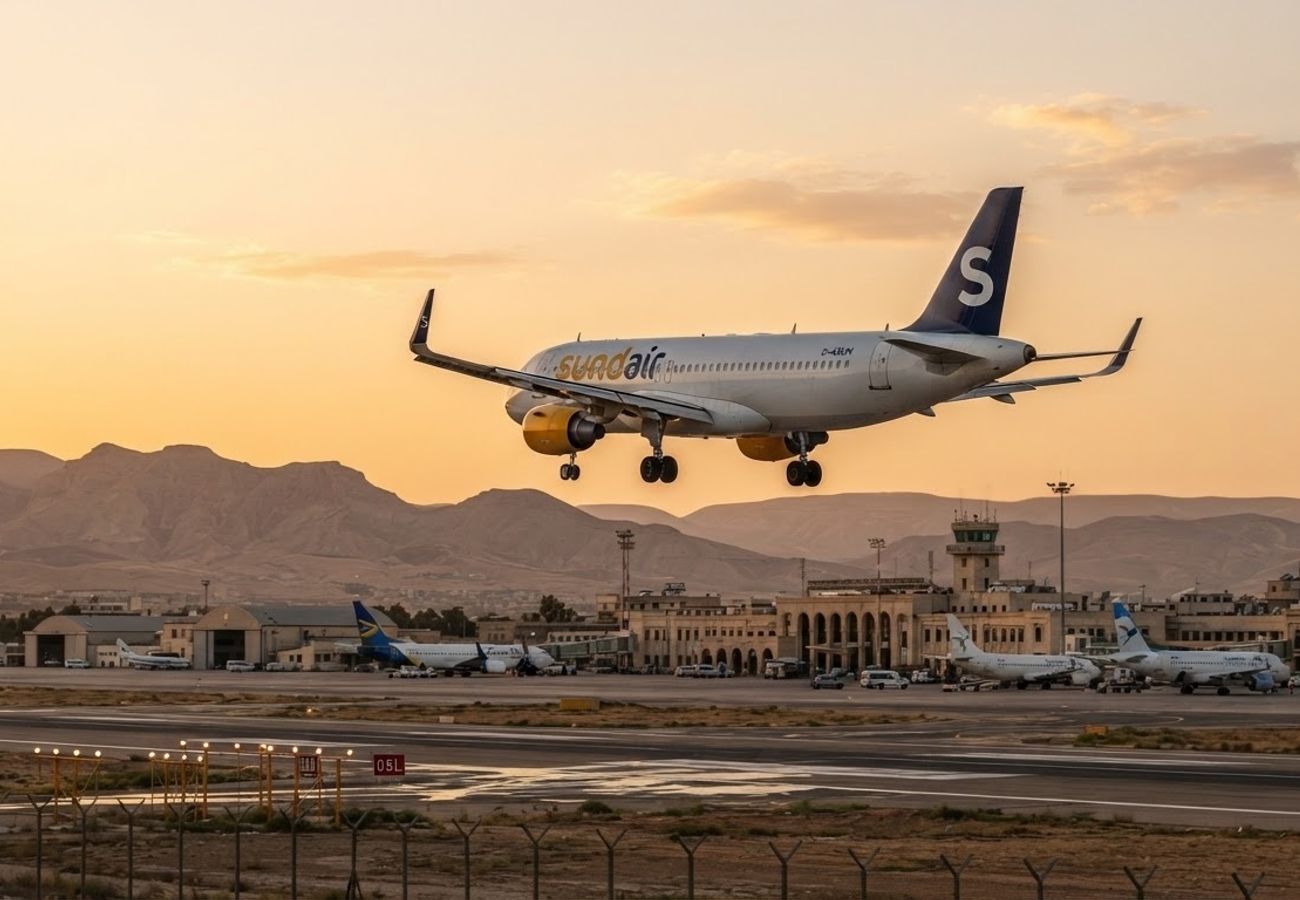
Image generated by AI
A landmark shift in Middle Eastern aviation is underway as Damascus International Airport launches direct flights to Berlin, ending years of severed air links between the Syrian capital and major European hubs. This strategic reconnection, facilitated by the German carrier Sundair, represents a calculated effort to reintegrate Syria into the global transport grid.
The restoration of these flight paths is not merely a logistical update but a significant move toward normalizing travel for thousands of passengers. By establishing a direct corridor between Berlin and Damascus, aviation authorities aim to facilitate a surge in business exchanges, humanitarian movement, and tourism.
Sundair Launches Direct Berlin to Damascus Service
The inaugural Sundair flight from Berlin is scheduled to touch down in Damascus on Saturday, officially opening a direct aerial artery between the two capitals. This service marks the first time the German airline has operated on this specific route, filling a critical void in the region's international connectivity.
For the Syrian diaspora in Germany, this route is a vital development. Germany currently hosts one of the largest Syrian communities globally; previously, these passengers were forced to utilize complex, multi-leg journeys through third-party hubs. The direct service drastically reduces transit times and simplifies the process for family visitations and the management of personal legal and cultural affairs.
Beyond the immediate convenience for travelers, the route is designed to act as a catalyst for economic revitalization. By lowering the barriers to entry for international professionals and investors, the Berlin-Damascus link is expected to stimulate commercial activity and encourage a slow but steady return of foreign business interests to the Syrian capital.
Expanding the German-Syrian Aviation Corridor
The Berlin connection is not an isolated event but the first phase of a broader strategy to diversify Syria's international air access. Aviation officials are actively courting foreign carriers to establish a presence in Syrian airspace to reduce the country's reliance on a few limited regional hubs.
Further expansion is already slated for early September. Reports indicate that a regular direct service between Cologne and Deir Ezzor is set to commence on September 1. This route will be operated by the German carrier LEAV Aviation, with flights scheduled to run on a weekly basis.
By extending international connectivity to cities like Deir Ezzor, authorities are attempting to decentralize air traffic. Moving beyond the Damascus-centric model allows for a more balanced distribution of international arrivals, potentially sparking localized economic growth in regional provinces and reducing the congestion at the primary capital hub.
Strategic Role of Aleppo International Airport in Recovery
While Damascus and Deir Ezzor are seeing new growth, Aleppo International Airport is being positioned as a cornerstone of the national aviation recovery plan. Recent data suggests that the arrival of flights from three different international airlines has already occurred, signaling a renewed confidence in the safety and viability of northern Syrian airspace.
Aleppo's transition back into a regional transport hub is intended to link northern Syria directly with global destinations. This is viewed as a critical step for the civil aviation sector, as increased operational capacity at Aleppo can support the movement of goods and services more efficiently than road transport alone.
The focus at Aleppo involves a three-pronged approach:
- Increasing overall airport capacity to handle larger aircraft.
- Attracting a diverse array of foreign carriers to prevent monopolies.
- Creating a synchronized aviation system that connects various Syrian cities to a wider global network.
Rebuilding Trust in Syrian Civil Aviation
The return of European carriers like Sundair and LEAV Aviation suggests a shifting outlook for the region. After a prolonged period of disruption and limited flight options, the gradual introduction of scheduled services indicates that international airlines are beginning to re-evaluate the risks and rewards of the Syrian market.
The success of these routes depends heavily on sustained cooperation between Syrian aviation authorities and international regulatory bodies. To maintain these links, the focus must remain on improving ground operations, ensuring stringent safety protocols, and developing sustainable route networks that can withstand geopolitical fluctuations.
For the aviation industry, these developments are a litmus test for the scalability of Syria's reconnection efforts. If the Berlin and Cologne routes prove profitable and operationally stable, it is likely that other European and Asian carriers will explore similar opportunities.
Why This Matters: The Impact on Global Mobility
From a logistical and legal standpoint, the reopening of these routes creates a significant shift in how people move between the Levant and Western Europe. For the traveler, this means a transition from "survival travel"—characterized by expensive, unpredictable layovers in third countries—to "standard travel."
The ability to fly directly into Damascus or Deir Ezzor removes a layer of bureaucratic and financial friction. For legal professionals, NGO workers, and business consultants, the reduction in travel time allows for more frequent and efficient site visits, which is essential for any long-term rebuilding process.
Furthermore, the presence of German carriers provides a layer of operational standardization. When established European airlines operate in a region, they bring specific safety and service benchmarks that can encourage other international carriers to follow suit, effectively "de-risking" the destination for the broader aviation community.
The return of direct European flights signals a cautious but definitive step toward the reintegration of Syrian airspace into the global network.
Related Travel Guides
Disclaimer
This article is for informational and educational purposes only. It does not constitute legal, financial, or professional advice. While we strive to provide accurate and up-to-date information, travel policies, regulations, and conditions change rapidly. Always verify information with official sources before making travel decisions. Nomad Lawyer makes no representations about the accuracy, reliability, completeness, or suitability of the information provided. Readers should consult qualified professionals for advice specific to their circumstances. The views expressed in this article are those of the author and do not necessarily reflect the views of Nomad Lawyer.
Kunal K Choudhary
Co-Founder & Contributor
A passionate traveller and tech enthusiast. Kunal contributes to the vision and growth of Nomad Lawyer, bringing fresh perspectives and driving the community forward.
Learn more about our team →