
Switzerland Ranks Second in 2026 Global Passport Index as Europe Dominates International Travel Mobility
Switzerland has secured the second position in the 2026 Global Passport Index, joining Sweden, Finland, and Germany in a European-led surge of global travel mobility and investment attractiveness.

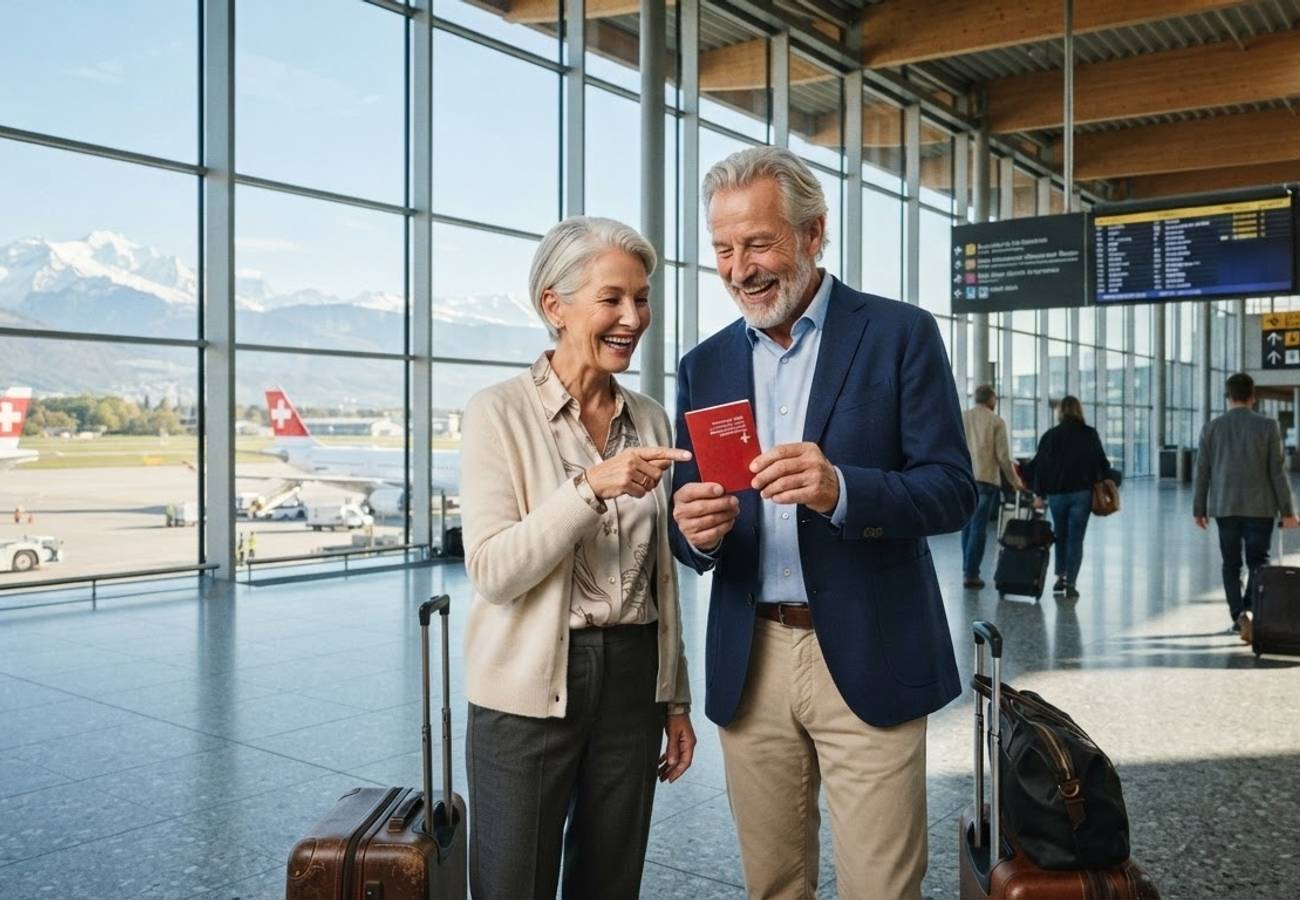
Image generated by AI
[Geneva, July 8, 2026] — Switzerland has cemented its status as a global leader in international accessibility, claiming the second spot in the 2026 Global Passport Index. This latest ranking sees the Swiss nation aligning with other European powerhouses including Sweden, Finland, Germany, and the Netherlands in a report that underscores the continent's overwhelming control over global travel mobility.
The assessment reveals a broader trend where European nations continue to provide their citizens with unparalleled visa-free opportunities, reinforcing the region's role as the primary hub for seamless international connectivity. Beyond mere travel access, the index highlights a correlation between passport strength and a nation's overall investment appeal and systemic stability.
European Nations Lead 2026 Global Mobility Rankings
The 2026 Global Passport Index, released by Global Citizen Solutions, identifies Sweden as the top-ranked nation for global mobility. Switzerland follows closely in second place, with Finland taking third. The top five is rounded out by Germany and the Netherlands, signaling a concentrated European dominance in the realm of international diplomacy and travel ease.
Unlike traditional metrics that focus exclusively on the number of visa-free destinations, this specific index utilizes a multi-dimensional approach. It evaluates countries based on a combination of mobility access, the attractiveness of investment opportunities, and general quality-of-life indicators.
The following table details the top ten performing countries according to the 2026 index:
| Rank | Country | Key Strength |
|---|---|---|
| 1 | Sweden | Overall global leadership |
| 2 | Switzerland | Investment and mobility |
| 3 | Finland | Balanced performance |
| 4 | Germany | Strong mobility and economy |
| 5 | Netherlands | International connectivity |
| 6 | Denmark | High living standards |
| 7 | Ireland | Economic stability |
| 8 | United Kingdom | Global business reach |
| 9 | Norway | Quality of life |
| 10 | Singapore | Leading Asian passport |
Analyzing the Value of the Swiss Passport
Switzerland's high standing is not accidental but is the result of long-term political neutrality, a resilient economy, and strategic international partnerships. These factors collectively enhance the utility of the Swiss passport for both corporate executives and leisure travelers.
Reports indicate that Swiss passport holders currently enjoy visa-free or visa-on-arrival access to approximately 120 countries and territories. This network is vital for maintaining the country's edge in educational exchanges, corporate expansion, and high-net-worth mobility.
While the passport provides the means to leave, Switzerland remains a primary destination for others. Its commitment to sustainable tourism, luxury hospitality, and world-class transport infrastructure continues to draw millions of visitors to its Alpine regions and urban centers.
The Swiss performance across specific metrics further illustrates this balance:
| Category | Global Ranking |
|---|---|
| Overall Passport Index | 2 |
| Investment | 2 |
| Mobility | 7 |
| Quality of Life | 36 |
Europe's Strategic Dominance in Global Travel
The 2026 data confirms a striking trend: nine of the top ten most powerful passports in the world belong to European states. This concentration is a direct result of decades of regional integration and the establishment of comprehensive visa agreements.
This regional strength provides a significant competitive advantage for the European tourism sector. Because European travelers face fewer bureaucratic hurdles, they are more likely to engage in multi-destination itineraries, which in turn boosts spending across hotels, airlines, and local tour operators.
The regional breakdown of the top ten highlights this disparity:
| Region | Countries in Top 10 |
|---|---|
| Europe | Sweden, Switzerland, Finland, Germany, Netherlands, Denmark, Ireland, United Kingdom, Norway |
| Asia | Singapore |
Comparative Methodology of the Global Passport Index
The Global Passport Index distinguishes itself from other rankings by moving beyond a simple "visa count." The methodology relies on three primary pillars to determine a country's global standing.
First, mobility is assessed by tracking visa-free and visa-on-arrival agreements. Second, investment attractiveness is measured by analyzing financial stability and the ease of doing business. Finally, quality of life is factored in through social indicators and living standards.
This comprehensive approach provides a more nuanced view of a nation's "soft power." For global investors and digital nomads, these metrics are often more relevant than travel access alone, as they indicate the long-term viability and security of a jurisdiction.
Switzerland's Standing Across Different Metrics
To provide a complete picture, industry observers often compare the Global Passport Index with the Henley Passport Index. In the 2026 Henley rankings, Switzerland maintains a strong position, ranking fifth globally with visa-free access to 185 destinations.
While the two indexes use different calculations—one focusing more on raw access and the other on a blend of economic and social factors—both consistently place Switzerland in the global elite. This consistency reinforces the nation's reputation as one of the most connected and stable countries on earth.
The Intersection of Mobility and Tourism Growth
There is a symbiotic relationship between passport strength and the development of a tourism industry. Nations with high mobility typically foster stronger aviation networks and more robust diplomatic ties, which naturally increase inbound tourism.
Switzerland leverages this connectivity through its high-capacity airports in Zurich and Geneva and an integrated high-speed rail network. The country's ability to host major international conferences and financial summits is directly linked to its openness and the ease with which its citizens and guests can move across borders.
The following table outlines the specific tourism advantages linked to this global connectivity:
| Advantage | Tourism Impact |
|---|---|
| Extensive visa access | Simplified international travel planning |
| Strong diplomatic ties | Higher levels of visitor confidence |
| Global aviation links | Increased flight frequency and connectivity |
| Stable economy | Sustained growth in high-end business tourism |
| Premium infrastructure | Enhanced overall visitor satisfaction |
Why This Matters (Information Gain)
The 2026 rankings signal a shift in how "passport power" is perceived. It is no longer just about where a citizen can go, but what that access represents regarding a nation's geopolitical health. When Switzerland ranks second globally, it isn't just a win for travelers; it is a signal to the global market that the country remains a safe haven for capital and a leader in diplomatic agility.
For the aviation and travel industry, the dominance of European passports suggests that the "premium traveler" demographic will continue to be centered in Europe. This likely means that airlines will continue to prioritize hubs that connect these high-mobility citizens to emerging markets. Furthermore, the inclusion of "investment attractiveness" in the index suggests that passports are increasingly being viewed as financial assets—tools that facilitate wealth preservation and global business agility.
As borders evolve, the Swiss passport remains a gold standard for global freedom and economic security.
Related Travel Guides
Disclaimer
This article is for informational and educational purposes only. It does not constitute legal, financial, or professional advice. While we strive to provide accurate and up-to-date information, travel policies, regulations, and conditions change rapidly. Always verify information with official sources before making travel decisions. Nomad Lawyer makes no representations about the accuracy, reliability, completeness, or suitability of the information provided. Readers should consult qualified professionals for advice specific to their circumstances. The views expressed in this article are those of the author and do not necessarily reflect the views of Nomad Lawyer.
Preeti Gunjan
Contributor & Community Manager
A passionate traveller and community builder. Preeti helps grow the Nomad Lawyer community, fostering engagement and bringing the reader experience to life.
Learn more about our team →