
Switzerland and France Lead Europe's 2026 Coolcation Trend for Hiking and Cycling Holidays
European summer travel is shifting toward 'coolcations' as hikers and cyclists abandon Mediterranean heat for the Alpine regions of Switzerland, France, and Austria in 2026.

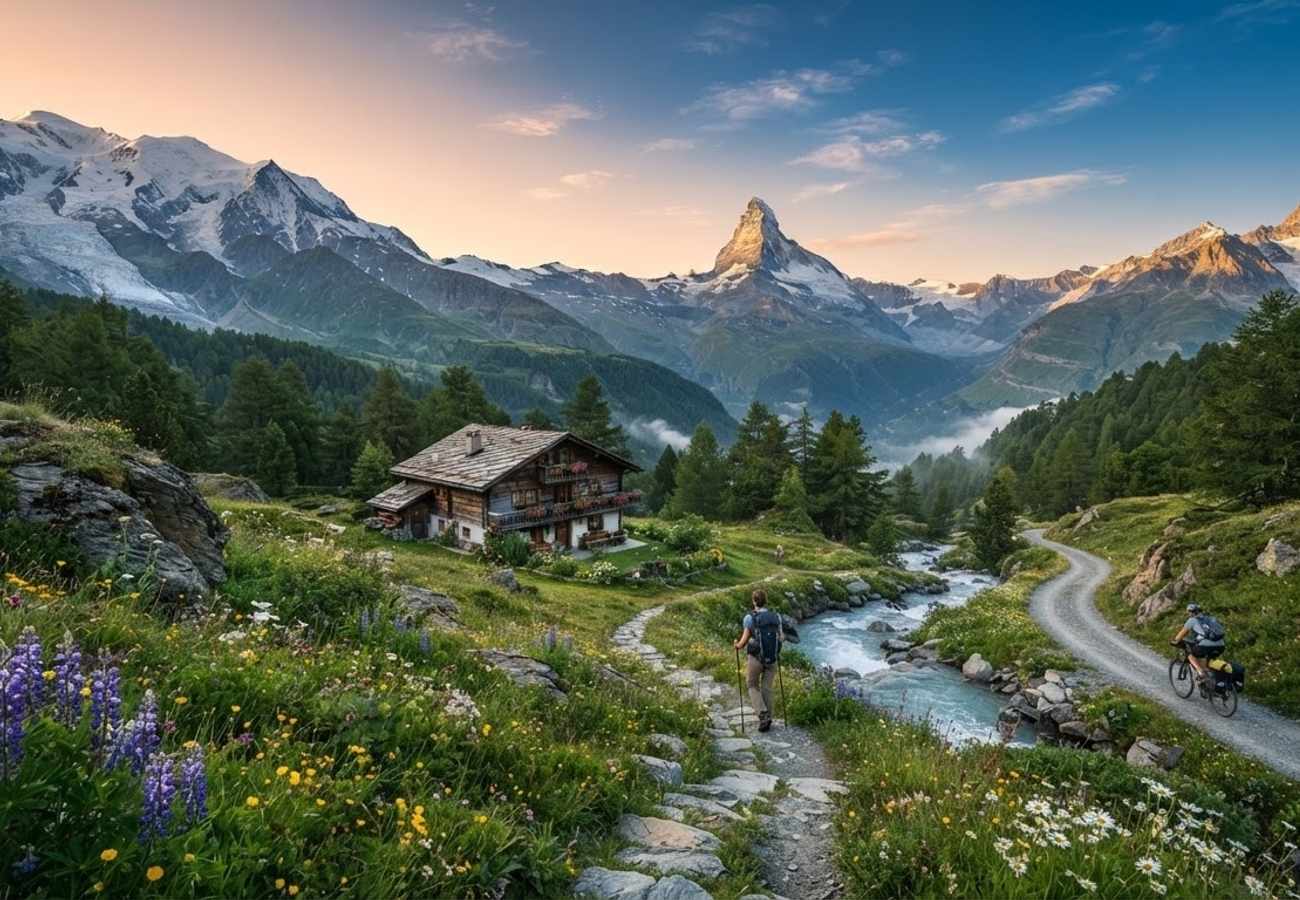
Image generated by AI
Summer travel patterns across Europe are undergoing a fundamental transformation as holidaymakers abandon sweltering Mediterranean coastlines in favor of "coolcations." New data indicates a surge in visitors heading to the Alpine regions and Northern Europe to pursue hiking and cycling in moderate climates.
The traditional pursuit of "sun and sand" is being replaced by a preference for active exploration in temperature-stable environments. This shift is driven by a combination of intensifying summer heatwaves and a growing consumer desire for wellness-oriented, nature-based tourism. Destinations that offer high-altitude landscapes and robust outdoor infrastructure are seeing a significant increase in summer bookings.
The Rise of the European Coolcation Movement
The "coolcation" phenomenon represents more than a simple desire to avoid heat; it is a systemic change in how travelers perceive the ideal summer break. Rather than spending vacations seeking shade or confined to air-conditioned interiors, modern tourists are prioritizing destinations where the environment encourages physical activity.
Industry analysis of 30 prominent European adventure hubs reveals that the most successful destinations are those that balance climate comfort with accessibility. Key metrics used to identify these hotspots include average summer temperatures, humidity levels, the density of established cycling and hiking trails, and the ease of transport from major urban centers.
This trend highlights a pivot toward "slow travel," where the journey through a landscape—whether by foot or bike—becomes the primary objective of the trip. As Mediterranean hotspots face challenges with overtourism and extreme weather, the Alpine and Nordic regions are emerging as the new gold standard for summer leisure.
France's Mont Blanc Region Claims Top Spot for Active Travel
The Mont Blanc region in France has been identified as the premier destination for active coolcations in Europe. Its success is attributed to a sophisticated network of trails and its proximity to major European transport hubs, allowing travelers to transition from city to summit with minimal friction.
The Chamonix valley serves as the epicenter of this movement, providing hundreds of curated routes across diverse alpine terrains. A primary driver of the region's popularity is the Tour du Mont Blanc, a world-renowned long-distance trek that traverses France, Italy, and Switzerland. This multi-national route exemplifies the coolcation appeal by combining physical challenge with a temperate climate.
Switzerland’s Valais Region and the Alpine Advantage
Switzerland continues to solidify its reputation as a luxury active destination, with the Valais region emerging as a top performer. Situated among some of the continent's highest peaks, Valais offers a natural cooling effect that makes high-intensity activities viable even in August.
The region is particularly noted for its blend of rugged wilderness and high-end tourism infrastructure. From the iconic slopes of Zermatt to remote mountain hamlets, Valais provides a tiered experience that caters to both elite mountaineers and casual walkers. Switzerland’s integrated transport system further enhances this appeal, enabling visitors to reach high-altitude trailheads efficiently, thereby reducing the carbon footprint of the journey.
Austria’s Strategic Expansion in Alpine Tourism
Austria has leveraged its natural geography to capture the growing coolcation market, specifically through the Tyrol and Hohe Tauern regions.
In Tyrol, the focus has been on expanding cycling infrastructure and maintaining peaceful valley retreats that avoid the congestion seen in coastal resorts. The region's ability to offer "silent tourism"—where nature and quietude are the primary products—has attracted a demographic of travelers seeking mental decompression.
Simultaneously, the Hohe Tauern National Park has gained traction as a sanctuary for immersive nature experiences. As a protected area, it offers a blueprint for sustainable coolcations, focusing on wildlife preservation and low-impact trekking routes that appeal to the environmentally conscious traveler.
Nordic Challenges and the Appeal of the Far North
While Sweden and Norway offer some of the lowest summer temperatures in Europe, they face specific logistical hurdles that affect their ranking compared to the Alps.
In Sweden, the Åre and Jämtland Mountains remain highly attractive for their serene landscapes and expansive hiking networks. However, the sheer distance from Central Europe's population centers often makes these destinations a secondary choice for short-term holidaymakers.
Similarly, Norway’s Lofoten Islands provide some of the most dramatic coastal and mountain scenery in the world. Despite their visual appeal, the islands struggle with higher humidity levels and longer travel times, which can detract from the perceived convenience of the trip.
UK and Ireland Emerge as Competitive Coolcation Hubs
The trend is not limited to the Alps; the British Isles are seeing a resurgence in summer activity tourism.
The Scottish Highlands have become a powerhouse in the coolcation sector due to their accessibility for UK and European residents. The region offers a combination of remote wilderness and established hiking paths, allowing travelers to experience "wild" nature without the need for long-haul flights.
In Wales, Eryri (Snowdonia) National Park has seen a spike in popularity. Its high trail density makes it an ideal location for those seeking a concentrated hiking experience. Meanwhile, Ireland’s Connemara region offers a different pace, focusing on rugged coastal scenery and slow-paced cycling, proving that coolcations can vary from high-adrenaline trekking to meditative exploration.
Comparative Analysis of Top Coolcation Regions
| Destination | Primary Appeal | Key Activity | Accessibility | Climate Profile |
|---|---|---|---|---|
| Mont Blanc, France | High-altitude peaks | Long-distance trekking | High | Cool/Alpine |
| Valais, Switzerland | Luxury infrastructure | Mountain biking/Hiking | High | Cool/Alpine |
| Tyrol, Austria | Valley retreats | Cycling/Hiking | Medium-High | Moderate/Cool |
| Scottish Highlands, UK | Remote wilderness | Hiking/Nature walks | High (Regional) | Cool/Temperate |
| Lofoten, Norway | Dramatic coastlines | Coastal trekking | Low | Cool/Humid |
| Connemara, Ireland | Rugged landscapes | Scenic cycling | Medium | Cool/Temperate |
Why This Matters for the Modern Traveler
For the traveler, the shift toward coolcations is a practical response to a changing planet. It transforms the summer holiday from a passive experience of "enduring the heat" into an active pursuit of health and discovery. From a logistical standpoint, this trend encourages a redistribution of tourism wealth away from overcrowded Mediterranean cities and toward rural mountain economies.
Furthermore, this movement signals a change in luxury. In 2026, luxury is no longer defined by a five-star beach resort, but by the ability to access clean air, silence, and a comfortable temperature. For the active traveler, this means more options for high-quality gear, better-marked trails, and a travel itinerary that prioritizes physical well-being over traditional sightseeing.
The era of the scorching summer getaway is fading, replaced by a quest for the crisp air of the peaks.
Related Travel Guides
Disclaimer
This article is for informational and educational purposes only. It does not constitute legal, financial, or professional advice. While we strive to provide accurate and up-to-date information, travel policies, regulations, and conditions change rapidly. Always verify information with official sources before making travel decisions. Nomad Lawyer makes no representations about the accuracy, reliability, completeness, or suitability of the information provided. Readers should consult qualified professionals for advice specific to their circumstances. The views expressed in this article are those of the author and do not necessarily reflect the views of Nomad Lawyer.
Preeti Gunjan
Contributor & Community Manager
A passionate traveller and community builder. Preeti helps grow the Nomad Lawyer community, fostering engagement and bringing the reader experience to life.
Learn more about our team →