
SWISS Retires Final Airbus A340-300 as Historic Museum Centerpiece at Lucerne Swiss Museum of Transport

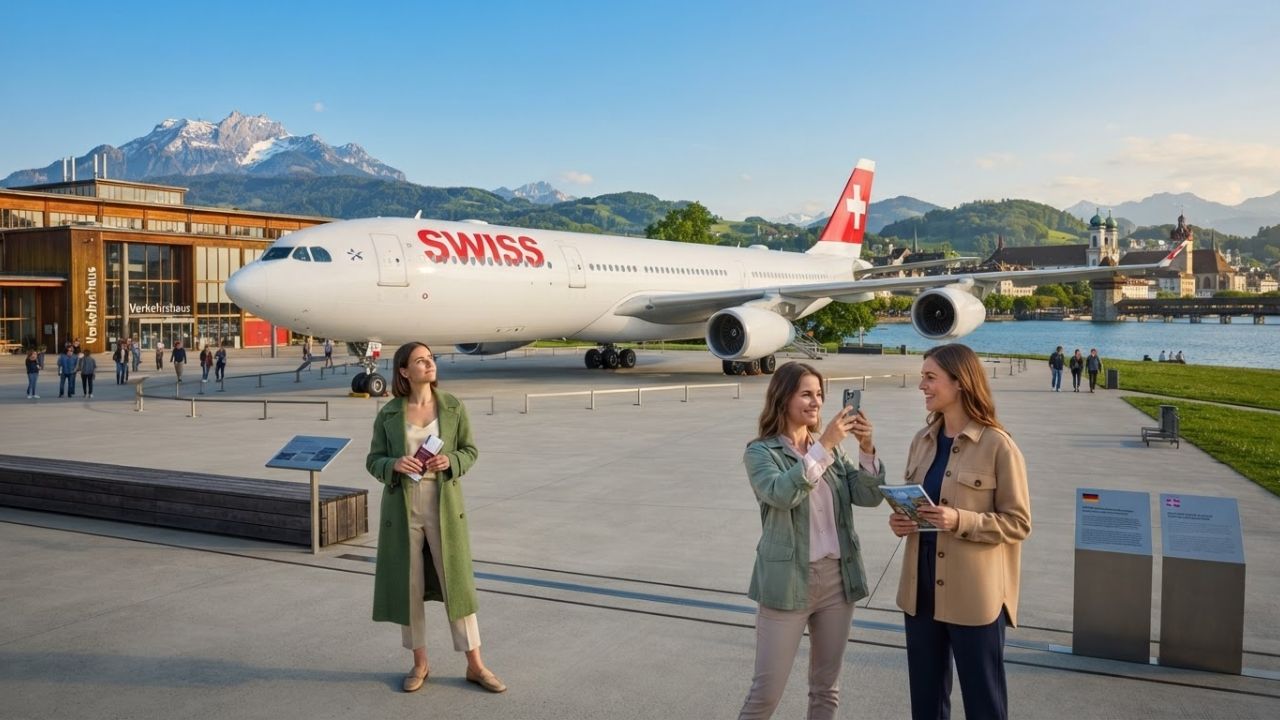
SWISS and the Swiss Museum of Transport have formed a landmark preservation partnership to transfer the airline’s final retiring Airbus A340-300—a 125-tonne quad-jet wide-body—from Zurich Airport to Lucerne by early 2028. Closing the chapter on four-engine long-haul flying in Switzerland, this high single-digit million-franc cultural venture will convert the flagship aircraft into an interactive, walk-through exhibition commemorating decades of Swiss civil aviation.
The retirement of the Airbus A340-300 signals the conclusion of a defining era for Swiss International Air Lines (SWISS). For decades, the four-engine long-haul jet served as the backbone of the nation's intercontinental network, linking Switzerland with destinations worldwide. As modern twin-engine aircraft take over transcontinental routes to optimize efficiency and reduce emissions, SWISS has pledged to donate the last A340-300 in its fleet to Switzerland's most popular cultural institution: the Swiss Museum of Transport (Verkehrshaus der Schweiz) in Lucerne.
The venture seeks to transform the aircraft into an immersive walk-through centerpiece on the museum's open-air grounds, providing travelers, students, and aviation historians with hands-on access to a historic wide-body jetliner.
The Local Trend Revealed: Preserving Switzerland’s Final Quad-Jet Giant
Across global commercial aviation, the four-engine jetliner is rapidly vanishing from passenger schedules in favor of lighter, twin-engine wide-bodies like the Airbus A350 and Boeing 787. SWISS's decision to preserve its final A340-300 in its home country rather than sending it to an overseas desert storage facility or scrapping yard highlights a growing commitment to cultural transport preservation.
Under the agreed roadmap, the aircraft will be positioned in the dedicated open-air courtyard in front of the Aviation and Space Travel Hall at the Swiss Museum of Transport in Lucerne. Martin Ettlinger, Director of the Swiss Museum of Transport, emphasized the cultural significance of the acquisition:
"Having an Airbus A340 at the Swiss Museum of Transport represents a unique opportunity to preserve an important piece of Swiss aviation history and make it accessible to the public. This majestic aircraft would be a tremendous addition to our Aviation and Space Travel exhibition. The A340-300 fits perfectly into the outdoor area designated for it in front of the Aviation and Space Travel Hall. Bringing an aircraft of this size to Lucerne, however, is an enormous and highly complex undertaking. We are doing everything we can, together with SWISS and other partners, to make this extraordinary project possible."
Jens Fehlinger, CEO of SWISS, noted that transferring the aircraft back to the Swiss public honors its long operational service:
"For many years, the Airbus A340 connected people in Switzerland with the world and, in doing so, became a piece of Swiss aviation history in its own right. If one of these aircraft can live on at the Swiss Museum of Transport, it would bring this story full circle in a very special way. Our goal is therefore clear: we want to bring this A340 to Lucerne in early 2028. The task now is to work with our many partners to make its extraordinary journey there possible."
| Operational & Preservation Metric | Detail / Specification |
|---|---|
| Aircraft Model | Airbus A340-300 (Four-Engine Long-Haul Wide-Body) |
| Operating Empty Weight | Approximately 125 tonnes |
| Current Operating Base | Zurich Airport (ZRH), Switzerland |
| Preservation Destination | Swiss Museum of Transport (Verkehrshaus), Lucerne |
| Display Location | Open-air area fronting the Aviation and Space Travel Hall |
| Target Relocation Date | Early 2028 |
| Estimated Project Budget | High single-digit million amount (covered via donors/partners) |
| Secured Funding Deadline | By end of 2026 |
Engineering Logistics: Moving a 125-Tonne Wide-Body to Lake Lucerne
Transporting an intercontinental airliner measuring over 63 meters in length and weighing approximately 125 tonnes from Zurich Airport across the Swiss canton boundaries to Lucerne presents an extraordinary logistical and engineering undertaking.
Unlike smaller vintage aircraft that can be broken down onto standard flatbed trucks, the A340-300 requires comprehensive structural assessments, partial disassembly of its wings and empennage, specialized multi-axle heavy-transport platforms, and coordinated road closures. The route must negotiate highway bridges, overhead catenary rail lines, and lakeside access roads around Lake Lucerne (Vierwaldstättersee).
Every phase demands stringent technical coordination alongside the Federal Office of Civil Aviation (BAZL / FOCA), Swiss transport police, municipal highway departments, and specialized heavy-haul contractors.
Financial mobilization is progressing in parallel. While SWISS will donate the airframe at zero cost, the museum must finance transportation, site preparation, reinforced foundations, and interior exhibition design. Total costs are projected in the high single-digit millions. A dedicated fundraising committee headed by Christoph Franz, President of the Swiss Museum of Transport Association and former CEO of SWISS, is actively securing contributions from foundations, private patrons, and corporate sponsors ahead of the strict end-of-2026 financial approval deadline.
Cultural Heritage and Aviation Legacy: From the Convair 990 Coronado to the A340
The integration of the A340-300 will mark the second major four-engine intercontinental airliner preserved at the Lucerne museum.
Decades ago, the Swiss Museum of Transport acquired the legendary Swissair Convair 990 "Coronado," one of the fastest jetliners of the early jet age. Positioned alongside the Coronado, the A340-300 will create an unparalleled physical timeline showcasing how Swiss long-haul aviation evolved across the late 20th and early 21st centuries.
Beyond static appreciation, the project will reimagine the aircraft as an interactive exhibition space. Visitors will be invited to step inside the passenger cabins, explore original flight deck controls, examine avionics, and learn about the aeronautical science that enabled non-stop transcontinental voyages from Switzerland to Tokyo, Johannesburg, São Paulo, and North America.
This conservation effort also reinforces sustainability education. By retiring four-engine airliners in favor of state-of-the-art twin-jet fleets, SWISS highlights the aviation sector's environmental transition toward lower carbon emissions, quieter skies, and enhanced fuel efficiency, while permanently archiving industrial heritage for future generations.
Visitor Insider Tips: Exploring Lucerne and the Swiss Museum of Transport
Travelers and aviation enthusiasts planning a visit to Lucerne can use these local insights to enrich their journey:
- Arriving by Water or Rail: Reach the Swiss Museum of Transport via a direct 8-minute train ride on S-Bahn line S3 or the Voralpen-Express from Lucerne Central Station (Luzern Bahnhof) to the dedicated Luzern Verkehrshaus station. Alternatively, board a historic paddle steamer or motor ferry from Lucerne Pier 1 to Verkehrshaus-Lido for scenic views across Lake Lucerne toward Mount Pilatus and the Bürgenstock ridge.
- Optimal Visiting Periods: Visit on weekday mornings during mid-spring (April to May) or mid-autumn (late September to October). These shoulder months provide clear alpine vistas, comfortable walking temperatures (12°C to 18°C), and fewer school excursions inside the exhibition halls.
- Museum Admission Advantage: Holders of the Swiss Travel Pass receive a 50% discount on standard adult entry to the Swiss Museum of Transport. Ensure you allow at least three to four hours to explore the aviation pavilion, the Swiss Chocolate Adventure, and the historic open-air locomotive roundhouse.
- Local Culinary Traditions: In Lucerne’s historic center, taste authentic Luzerner Chügelipastete, a dome-shaped puff pastry crust filled with tender diced veal, sweetbreads, and mushrooms in a creamy white wine sauce. Pair your meal with artisanal Sbrinz AOP hard cheese produced on nearby alpine pastures.
- Under-the-Radar Cultural Stops: After exploring the transport exhibits, walk 20 minutes along the lakeside promenade to the historic Museggmauer (Musegg Wall). This remarkably preserved 14th-century defensive fortification features nine intact towers. Climb the Zytturm to admire the oldest operational tower clock in Lucerne, which rings the hour precisely one minute ahead of all other church bells in the city.
Tourism Outlook: Transforming Swiss Transit History into an Immersive Landmark
The agreement between SWISS and the Swiss Museum of Transport sets a benchmark for national industrial preservation. If technical assessments and final funding clear the end-of-2026 milestone, the arrival of the A340-300 in early 2028 will establish Lucerne as a premier aviation heritage capital in central Europe.
For international visitors and families traveling through Switzerland, the permanent display will offer an educational experience that bridges historic Swiss engineering precision with the ongoing evolution of sustainable global mobility.
Related Travel Guides
Disclaimer
This article is for informational and educational purposes only. It does not constitute legal, financial, or professional advice. While we strive to provide accurate and up-to-date information, travel policies, regulations, and conditions change rapidly. Always verify information with official sources before making travel decisions. Nomad Lawyer makes no representations about the accuracy, reliability, completeness, or suitability of the information provided. Readers should consult qualified professionals for advice specific to their circumstances. The views expressed in this article are those of the author and do not necessarily reflect the views of Nomad Lawyer.
Raushan Kumar
Founder & Lead Developer
Full-stack developer with 11+ years of experience and a passionate traveller. Raushan built Nomad Lawyer from the ground up with a vision to create the best travel and law experience on the web.
Learn more about our team →