
Sun PhuQuoc Airways Launches Historic Taipei-Phu Quoc Direct Route—What This Means for Asia-Pacific Travel
Vietnam's newest international carrier, Sun PhuQuoc Airways, took to the skies this week with its maiden international route linking Phu Quoc and Taipei. The launch opens 3-hour-50-minute direct connections between two of Asia's hottest travel destinations, promising to reshape regional air connectivity and accelerate tourism growth.

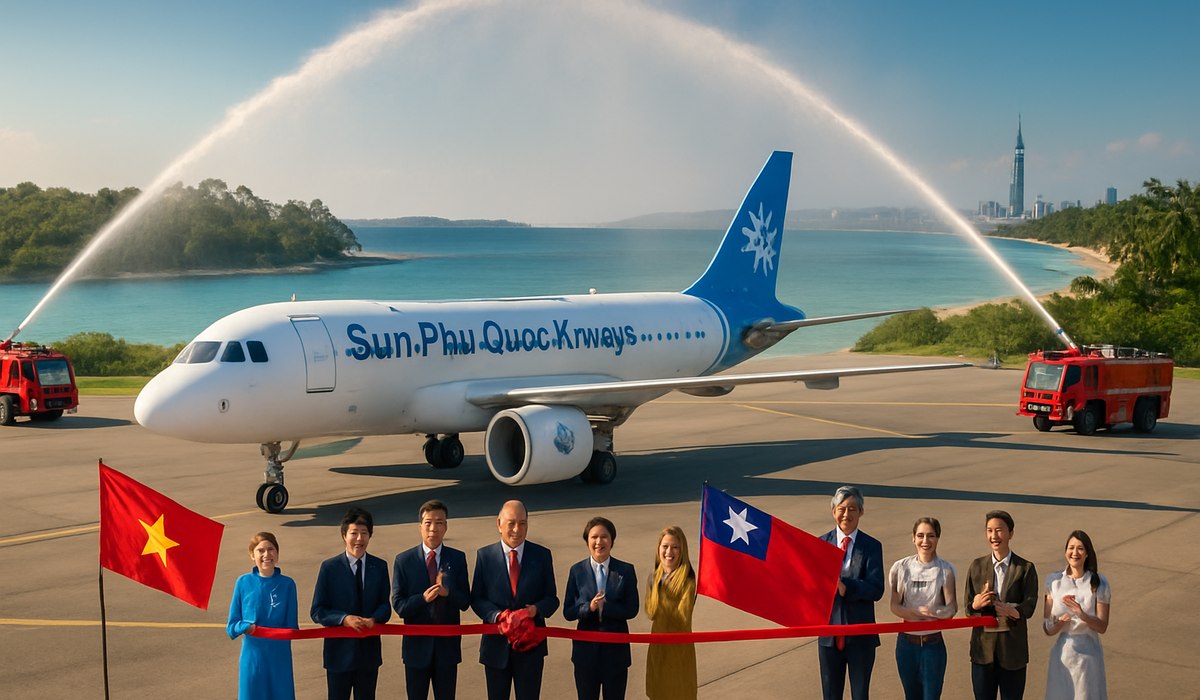
Image generated by AI
**> Quick Summary
- Sun PhuQuoc Airways launches first international service on March 29, 2026, connecting Phu Quoc and Taipei
- Five weekly nonstop flights cut travel time to 3 hours 50 minutes (versus multi-stop alternatives)
- Ticket sales opened January 21 with promotional pricing to stimulate early demand
- Future expansion planned to Busan, Singapore, Bangkok, Hong Kong, Mumbai, and New Delhi through 2026-2027**
Vietnam's Bold New Carrier Transforms Asia-Pacific Connectivity with Historic Taiwan Flight
Vietnam's newest international airline officially commenced operations this week, marking not just a corporate milestone but a watershed moment for regional aviation architecture. Sun PhuQuoc Airways' inaugural Taipei-bound flight on March 29, 2026, represents the carrier's transition from domestic operator to international player—and signals accelerating air connectivity investments across Southeast Asia's fastest-growing tourism corridor.
The maiden flight between Phu Quoc International Airport and Taipei Taoyuan International Airport occurred amid ceremonial fanfare: water cannon salutes, ribbon-cutting events, and remarks from government and tourism officials underscoring the route's significance for bilateral travel, commerce, and cultural exchange. This wasn't merely an airline moment—it was a symbolic opening of aviation doors between Vietnam and Taiwan.
From Domestic Operator to International Player: Sun PhuQuoc Airways' Rapid Ascent
Understanding Sun PhuQuoc Airways requires context about its ambitious timeline. The carrier, backed by Vietnam's Sun Group tourism and hospitality conglomerate, launched domestic operations barely six months earlier in November 2025. Within a single calendar year—from conception to international service—the airline had secured regulatory approvals, financed aircraft acquisitions, trained crews, and established an international network capable of cross-border operations.
The expansion reflects an expanded Air Operator Certificate (AOC) authorizing international flight operations. This regulatory clearance from Vietnam's aviation authority, combined with approvals from Taiwan's Civil Aeronautics Administration, enables the carrier to operate scheduled international service with full regulatory compliance and safety oversight.
The rapid scaling wasn't accidental. Sun Group's existing dominance in Vietnamese tourism positioned the airline perfectly to capitalize on Asia-Pacific travel recovery. Rather than building regional routes through years of incremental network expansion, Sun PhuQuoc pursued aggressive international launch strategies timed to maximize booming post-pandemic leisure travel demand.
Direct Flights: Eliminating Friction from Asia-Pacific Routes
Previously, travelers from Taipei seeking Phu Quoc beach vacations faced routing complications. Multi-stop journeys through Bangkok, Ho Chi Minh City, or other hubs added 6-12 hours to itineraries. More frustrating: connection logistics, baggage transfers, and potential missed connections transformed what should be a simple island getaway into a complex operational puzzle.
The Sun PhuQuoc Airways route eliminates this friction entirely. At 3 hours and 50 minutes of actual flight time, passengers depart Taipei in morning, afternoon, or evening windows and arrive in Phu Quoc with the same calendar day. For island tourism—where arrival and settlement at a beachfront property represent the vacation's first-day experience—this directness proves transformative.
Five weekly frequencies accommodate both peak-season surge demand and shoulder-season travelers. Industry data suggests this frequency level addresses core market demand from Taiwanese families and business visitors exploring Vietnam's premier island destination without requiring massive aircraft capacity.
Competitive Pricing Strategy: How Sun PhuQuoc Captured Early Demand
Ticket sales commenced January 21, 2026—two months ahead of service launch. This early-booking window enabled promotional pricing and special discounts that stimulated demand during a crucial pre-launch phase. The strategy accomplished multiple objectives simultaneously: building load factor predictions, establishing brand awareness, and capturing price-sensitive leisure travelers committed to booking well in advance.
Industry analysts note that promotional pricing during launch phases often reflects airline capacity strategy. By offering attractive introductory fares, Sun PhuQuoc secured passenger commitments ensuring aircraft utilization rates sufficient to maintain profitability from service start-date forward.
The nonstop convenience combined with competitive pricing created a powerful value proposition that legacy carriers operating to Phu Quoc through hubs struggled to match. For Taiwanese leisure travelers, the offer was compelling: equivalent or lower fares with substantially shorter travel time.
Phu Quoc's Tourism Momentum: Direct Air Links as Catalyst
Phu Quoc Island's transformation into an Asia-Pacific tourism powerhouse is recent but remarkable. The southern Vietnamese destination has earned recognition as among Asia's most beautiful island experiences—ranking alongside Thai islands, Philippine destinations, and Indonesian properties in global travel rankings.
What differentiated Phu Quoc from similar island destinations was institutional support and investment. Clear regulatory frameworks for 30-day visa-free entry for international visitors removed bureaucratic friction. Luxury resort development—including flagship properties from international hospitality brands—provided high-end accommodation infrastructure. Infrastructure investments in airports, roads, and utilities transformed the island from remote locale into accessible world-class destination.
Direct air connectivity represented the remaining infrastructure missing piece. Airlines serving secondary markets often prioritize established leisure destinations (Bali, Phuket, Nha Trang). By establishing this Taiwan route, Sun PhuQuoc Airways essentially declared Phu Quoc equally worthy of direct international service—signaling market validation to other carriers, tourism operators, and potential visitors worldwide.
Tourism industry economists project that eliminating layover requirements will increase Taiwanese visitor arrivals substantially. Hospitality operators reported booking increases immediately following announcement, suggesting tourism demand was latent—merely awaiting convenient routing options.
The Broader Asia-Pacific Aviation Perspective
Sun PhuQuoc Airways' Taipei route reflects a wider trend: regional airlines increasingly connecting secondary city pairs that capacity constraints or economic considerations prevented legacy carriers from serving directly.
Why this matters for travelers:
- Route competition increases — Where only one or two carriers previously served a market, new entrants introduce price competition and service differentiation
- Underserved destinations become accessible — Islands, secondary cities, and emerging tourist destinations gain direct connectivity previously impossible
- Regional aviation consolidates — Rather than hub-centric networks, Asia-Pacific aviation increasingly features point-to-point services connecting previously fragmented travel corridors
Sun PhuQuoc's announced expansion plans—incorporating Busan (South Korea), Singapore, Bangkok, Hong Kong, Mumbai, and New Delhi through 2026-2027—position Phu Quoc as an emerging regional hub. Taiwanese travelers need not accept that this route will remain unique; soon, they'll access diverse Asian destinations through Phu Quoc's emerging international network.
What This Route Enables: Tourism, Economic Ties, and Cultural Exchange
The Taipei-Phu Quoc flight service operates at multiple strategic levels simultaneously.
Leisure tourism remains primary—families and couples escaping Taiwan's urban density for island sun, pristine beaches, and Southeast Asian hospitality represent the initial target market.
Cultural exchange follows naturally. Taiwanese visitors engaging with Vietnamese communities, cuisine, and traditions deepen bilateral understanding. Business conferences, educational tours, and cultural festivals become feasible when direct flights eliminate multi-hour connections.
Economic activity accelerates. Tour operators design Taiwan-specific packages. Restaurants adjust menus for Taiwanese palates. Hotels staff bilingual reception desks. The multiplier effects of direct air service extend throughout Phu Quoc's tourism and hospitality ecosystems.
Business travel enables previously impractical transactions. Investors exploring Vietnam opportunities, executives attending regional conferences, and consultants managing cross-border projects—all benefit from direct flight convenience.
Frequently Asked Questions
How often do flights operate on this route? Sun PhuQuoc Airways operates five weekly nonstop flights between Taipei and Phu Quoc, providing multiple daily departure options across the week's schedule.
What's the flight duration? The nonstop flight takes approximately 3 hours and 50 minutes, comparing favorably to multi-stop alternatives requiring 6+ hours including layovers and transfers.
When did ticket sales open? Advance bookings opened January 21, 2026, approximately two months before service launch, with promotional fares offered during the initial booking period.
Does Phu Quoc have visa requirements for international visitors? Vietnam's Phu Quoc special economic zone offers visa-free entry for international visitors staying up to 30 days—eliminating traditional visa bureaucracy for most travelers.
What other destinations is Sun PhuQuoc planning? The airline has announced expansion plans to Busan, Singapore, Bangkok, Hong Kong, Mumbai, and New Delhi through 2026-2027, positioning Phu Quoc as an emerging regional aviation hub.
Is the airline safe and properly regulated? Sun PhuQuoc Airways operates under an expanded Air Operator Certificate from Vietnam's aviation authority and received clearance from Taiwan's Civil Aeronautics Administration, ensuring full regulatory oversight and safety compliance.
Suggested Internal Links:
- Complete Guide to Phu Quoc Island: Beaches, Resorts, and Hidden Gems
- Vietnam Visa-Free Travel: 30-Day Rule for Phu Quoc and Southeast Asia
- Emerging Airlines Reshaping Asia-Pacific: New Direct Routes You Need to Know
Authoritative External Sources to Cite:
- Taiwan Civil Aeronautics Administration: Safety and regulatory compliance records
- Vietnam Civil Aviation Authority: International flight authorization and Air Operator Certificates
- Phu Quoc Tourism Board: Destination data and visitor statistics
Disclaimer
This article is for informational and educational purposes only. It does not constitute legal, financial, or professional advice. While we strive to provide accurate and up-to-date information, travel policies, regulations, and conditions change rapidly. Always verify information with official sources before making travel decisions. Nomad Lawyer makes no representations about the accuracy, reliability, completeness, or suitability of the information provided. Readers should consult qualified professionals for advice specific to their circumstances. The views expressed in this article are those of the author and do not necessarily reflect the views of Nomad Lawyer.
Preeti Gunjan
Contributor & Community Manager
A passionate traveller and community builder. Preeti helps grow the Nomad Lawyer community, fostering engagement and bringing the reader experience to life.
Learn more about our team →