
Strait of Hormuz Crisis 2026: Iran Targets USS Abraham Lincoln, Severing Energy Links
A geopolitical crisis has erupted in the Strait of Hormuz following a missile strike on the USS Abraham Lincoln, disrupting nearly 20% of the world’s oil and LNG supply.

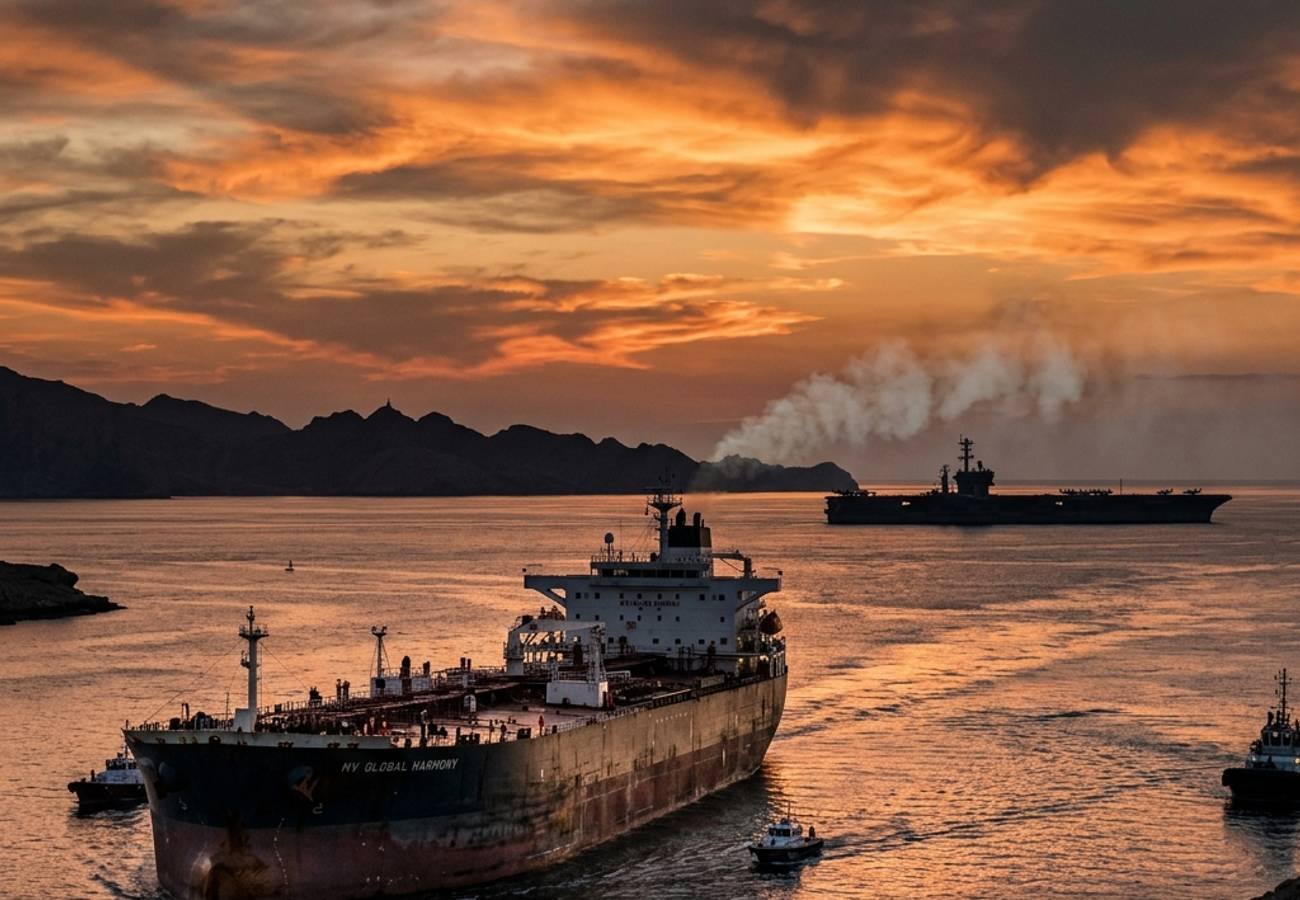
Image generated by AI
Quick Summary
- The Strait of Hormuz, a vital chokepoint through which 20% of global oil, LNG, and LPG passes, has been declared unsafe following a missile strike on the USS Abraham Lincoln.
- China, India, South Korea, and Thailand have joined West Asian nations in an urgent response to protect vital energy supply chains and regional tourism.
- The attack has triggered a surge in global oil prices and forced multiple nations to explore alternative maritime routes or ramp up naval presence in the Arabian Sea.
- Regional powers including Saudi Arabia, Qatar, and Bahrain have activated emergency defense protocols to secure critical infrastructure and maintain economic stability.
The world’s most critical energy corridor has become the epicenter of a dangerous geopolitical standoff as Iran reportedly targeted the USS Abraham Lincoln aircraft carrier in the Strait of Hormuz. The incident has severed vital energy and tourism links, prompting immediate diplomatic and military reactions from nations heavily reliant on these trade routes. With nearly one-fifth of the global energy supply at risk, the international community is now navigating a complex crisis to prevent a broader regional conflict and ensure the free flow of essential resources.
Strait of Hormuz Crisis: National Impact & Energy Reliance 2026
The disruption has forced major importers and exporters into high-alert coordination.
| Nation | Key Action | Energy Dependency / Context |
|---|---|---|
| China | UN Discussion Call | World's largest crude/gas importer; 20% via Hormuz |
| India | Navel Ramp-up | 60% of oil imports pass through the region |
| South Korea | Multilateral Patrols | Industrial output heavily reliant on Middle East oil |
| Saudi Arabia | Infrastructure Safeguards | World's largest oil exporter; GDP at immediate risk |
| Qatar | Naval Patrol Increase | World's largest LNG exporter; rerouting contingency |
| Bahrain | Strategic Coordination | Vital transit point for crude oil exports |
| Thailand | ASEAN Collaboration | Highly vulnerable to rising LNG and petroleum costs |
Global Energy Flows at Risk: The 20% Chokepoint
The Strait of Hormuz is the world’s most significant oil transit chokepoint. The current instability has immediate and far-reaching consequences:
- Supply Chain Disruption: The flow of Liquefied Natural Gas (LNG), Liquefied Petroleum Gas (LPG), and crude oil has been severely impeded, leading to record-high energy prices.
- Maritime Security: International shipping lanes have been declared high-risk zones, forcing vessels to reconsider their passage or seek military escorts.
- Economic Pressure: Nations like China and India are facing heightened inflationary pressures on domestic energy costs as access to resources becomes restricted.
Strategic Responses: China, India, and South Korea
As the primary importers of Gulf energy, Asian powers are taking decisive steps. China has called for urgent UN Security Council discussions to avert a wider conflict while aligning with regional partners to bolster maritime security. India has initiated diplomatic talks with Saudi Arabia to explore alternative routes and has increased its naval presence in the Arabian Sea to monitor the situation. South Korea is pushing for multilateral maritime patrols with its allies to ensure the safe passage of goods essential for its industrial output.
Regional Stability: Saudi Arabia, Qatar, and Bahrain
The crisis directly threatens the GDP and infrastructure of Gulf nations. Saudi Arabia is working to safeguard its oil export facilities while engaging in strategic negotiations with both the U.S. and China. Qatar, the world's leading LNG exporter, has increased its own naval patrols and is working on contingency plans to reroute shipments to Europe and Asia. Bahrain serves as a key transit coordinator, holding emergency meetings with regional allies to assess the risk to financial stability.
Implications for Tourism and Global Markets
Beyond energy, the conflict has endangered regional tourism, with multiple airlines rerouting around the Gulf (see Middle East Flight Disruption 2026). The uncertainty is affecting industrial sectors globally, as manufacturing and transportation costs rise in response to the volatile oil market.
FAQ: Strait of Hormuz Energy Crisis 2026
Why is the Strait of Hormuz so important for travel and energy? Nearly 20% of the world's liquid energy passes through this narrow strait. Any closure or instability affects everything from gas prices at the pump to aviation fuel costs and airline routes.
Is it safe to travel to the Gulf region right now? While major cities remain operational, airspace and maritime routes are under strict monitoring. Travelers should check for updated advisories regarding flight reroutes and potential delays.
How will this affect global oil prices? Historically, tension in the Strait of Hormuz leads to a rapid increase in crude oil prices. As of May 2026, prices have already surged to record levels following the reports of the missile strike.
Related Travel Guides
Disclaimer
This article is for informational and educational purposes only. It does not constitute legal, financial, or professional advice. While we strive to provide accurate and up-to-date information, travel policies, regulations, and conditions change rapidly. Always verify information with official sources before making travel decisions. Nomad Lawyer makes no representations about the accuracy, reliability, completeness, or suitability of the information provided. Readers should consult qualified professionals for advice specific to their circumstances. The views expressed in this article are those of the author and do not necessarily reflect the views of Nomad Lawyer.
Kunal K Choudhary
Co-Founder & Contributor
A passionate traveller and tech enthusiast. Kunal contributes to the vision and growth of Nomad Lawyer, bringing fresh perspectives and driving the community forward.
Learn more about our team →